

Moving from California to the Texas Hill Country is not a single event. It is two parallel transactions, a tax-transition puzzle, a school-enrollment timeline, and a cross-country logistics project, all running on different clocks. This checklist organizes those moving parts into a six-month countdown that syncs your California home sale with your Texas purchase. Use it as a working reference and master checklist, not a one-time read.

The Big Picture: Two Transactions, One Timeline
A cross-state move from California to the Texas Hill Country involves two real estate transactions that must be carefully coordinated. This checklist walks through each phase of the six-month countdown so you can manage both simultaneously.
CALIFORNIA SALE
Months 6-4
Select the listing agent; obtain a preliminary net sheet; review Section 121 eligibility and Form 593 withholding; establish a repair, preparation, and launch plan.
Months 3-2
List the property; evaluate offers; select an offer based on price, financing strength, contingencies, closing date, and any requested rent-back.
Months 2-1
Complete the buyer's inspections, appraisal, loan approval, disclosures, and escrow requirements; confirm recording and release-of-proceeds timing.
TEXAS PURCHASE
Months 6-4
Consult lenders; determine whether qualification depends on the California sale; identify target communities, school districts, tax rates, and insurance constraints.
Months 3-2
Tour properties and prepare to make an offer when the California sale and financing timetable support it.
Months 2-1
After a Texas contract is executed, deliver earnest money and the option fee, complete inspections, obtain insurance, review the title commitment and survey, satisfy financing deadlines, and close.
These are planning ranges, not guaranteed transaction lengths. Marketing time, escrow length, lender requirements, new-construction schedules, and negotiated contract dates vary. Build the final timeline backward from the required Texas possession date using the actual dates in both contracts.
6 Months Out: Planning, Tax Strategy, and School Research
Review Your California Tax Position and Home-Sale Gain
Six months before your target move date, begin reviewing the financial and legal implications of leaving California. This phase should focus on planning, record collection, and professional advice. Sign only those agreements that fit the actual transaction schedule after reviewing their terms.
Action items:
- Interview at least two cross-state CPAs who have experience with California-to-Texas relocations. You are looking for someone who understands both California's residency rules and Texas's lack of state income tax [3].
- Review your federal and California home-sale gain exposure. The Section 121 exclusion generally requires both ownership of the home and use of it as your principal residence for at least two years during the five-year period ending on the sale date. A qualifying individual may exclude up to $250,000 of gain. Married taxpayers filing jointly may qualify for up to $500,000 only if the joint-return requirements are satisfied, including the applicable ownership and use tests and the rule restricting use of another home-sale exclusion during the preceding two years [4]. Moving out before the sale does not automatically eliminate the exclusion, provided the ownership and use tests remain satisfied on the sale date. However, prior rental or business use, depreciation deductions, a previous home-sale exclusion, a reduced-exclusion event, or a long delay before selling can change the result. Gain attributable to depreciation deductions allowed or allowable for business or rental use for periods after May 6, 1997, generally cannot be excluded under Internal Revenue Code Section 121 and may be subject to depreciation-recapture rules. Have the CPA calculate both federal and California consequences before relying on the exclusion. For a deeper walkthrough, see our Section 121 exclusion guide for cross-state relocators.
- Retain the original purchase closing statement, invoices and proof of payment for qualifying capital improvements, records of casualty losses or insurance reimbursements, depreciation schedules for any rental or business use, and documents showing selling expenses. These records may affect adjusted basis and taxable gain.
Understand the "California Exit Tax" -- What It Is and What It Is Not
California does not currently impose a general tax merely because an individual changes residence to another state. The phrase "California exit tax" is an informal and often misleading label. California instead taxes residents on income from all sources until residency ends and continues to tax nonresidents on California-source income after they leave. Gain from California real estate remains California-source income even when the seller is a Texas resident [16].
What California does enforce:
- Real estate withholding: For transactions subject to California real-estate withholding, the real-estate escrow person or remitter generally withholds either 3 1/3% (.0333) of the seller's share of the sales price or an alternative amount calculated from the estimated taxable gain, as elected and certified on Form 593 [6]. Exemptions and no-withholding certifications may apply. Withholding is a prepayment credited on the seller's California return; it is not the final tax liability.
- Ongoing California-source income tax: California taxes nonresidents on income derived from California sources, including rental property, business income, and capital gains on California real estate [3].
- Residency determination: California residency is determined from domicile and whether a person's presence in or absence from California is temporary or transitory. There is no universal 183-day rule that automatically establishes or ends California residency. Spending more than nine months in California during a taxable year creates a rebuttable presumption of residency, but shorter periods can still result in residency depending on the facts. A former California domiciliary must show both abandonment of the California domicile and establishment of a new domicile elsewhere [3].
California Form 593 Reality Check
The 3 1/3% (.0333) withholding on your California home sale is not an extra tax or a penalty for moving. It is a mandatory prepayment of your estimated state capital gains tax. If your transaction qualifies for the Section 121 principal residence exclusion, or if your actual tax liability is lower than 3 1/3% (.0333) of the gross sales price, you will claim a refund for the overpayment when you file your final California return the following spring [6].
The practical takeaway: California does not currently impose a general tax merely because a person leaves the state. However, a former resident may continue to owe California tax on California-source income and may need to substantiate the date and circumstances of the residency change.

Start Tracking Your Days
If you are working remotely for a California employer while establishing Texas residency, day tracking matters. Day count is one factor in California's facts-and-circumstances residency analysis. Extended or recurring California presence, especially when combined with failure to abandon a California domicile or establish a new domicile elsewhere, can support a residency finding; no single day-count threshold controls in every case [3].
For an employee who becomes a nonresident, the employer's California location alone generally does not make wages California-source income. Compensation is generally sourced to where the employee physically performs the services. Workdays physically spent in California can remain California-source days. Stock options, RSUs, deferred compensation, partnership income, consulting income, and business ownership require separate analysis [3].
Action items:
- Begin a daily log noting your physical location, work activities, and any California-based business activities.
- California's 546-day safe harbor treats a California domiciliary who leaves the state under an employment-related contract for at least 546 consecutive days as a nonresident, provided income from intangible property does not exceed $200,000 in any covered tax year and you spend no more than 45 days in California per year [3]. The safe harbor also does not apply when the principal purpose of the absence from California is to avoid personal income tax. This provision is designed for people who retain their California domicile while working elsewhere on a defined-term contract -- most commonly a temporary overseas assignment -- and intend to return. If you are permanently relocating to Texas and establishing a genuine new domicile here, you generally do not need to satisfy the 546-day rule at all; you can establish nonresidency under the standard facts-and-circumstances domicile test once you have actually moved, bought or leased a Texas home, obtained a Texas driver's license, and taken the other steps outlined in this checklist. The 546-day safe harbor is a narrow employment-contract rule, not a general waiting period that permanent relocators must satisfy. A person permanently abandoning California domicile ordinarily relies on the standard residency analysis. Confirm which framework applies to your situation with your CPA.
- Maintaining a contemporaneous travel and residency log can help substantiate the timing and circumstances of the residency change, but no single record is conclusive; the FTB considers the totality of the taxpayer's connections and conduct.
Watch Out for the Mid-Year Move Split-Income Trap
When you move during the year, California generally taxes your worldwide income received while you were a California resident, plus California-source income received while you were a nonresident. This includes wages earned in California, rental income from California property, and capital gains on California real estate.
Continuing California connections can affect the residency analysis, but no single item is decisive. After the actual move, update voter registration, driver license, vehicle registration, mailing addresses, insurance, financial records, professional relationships, and other records consistently with the facts. Do not change records before the move if doing so would inaccurately suggest that California residency ended earlier than it did. Retaining a California account or relationship for a legitimate reason does not by itself establish residency; document the reason and discuss material continuing ties with the CPA.
Your CPA should prepare California Form 540NR for the move year. Schedule CA (540NR) identifies total full-year income for purposes of determining the effective California tax rate and separately identifies the amount taxable by California: worldwide income received while you were a California resident plus California-source income received while you were a nonresident. California generally applies an effective rate based on total taxable income to the portion taxable by California. Therefore, retain complete records for the entire year; do not omit post-move non-California income from the information provided to your tax professional merely because that income is not itself California-source income. Match your moving-day logs to the return. The California departure date is a facts-and-circumstances determination. Physical departure, abandonment of the former California domicile, establishment of a Texas domicile, family location, employment activity, housing, and continuing California connections can affect the date. Ask the CPA to document the support for the date reported on Form 540NR [5][7].
Documenting a Defensible Change of California Residency
California evaluates the totality of a taxpayer's connections. Housing, spouse and dependent locations, employment, time spent in each state, voter registration, driver's license, vehicle registration, professional relationships, financial addresses, and intent may all matter. No single action -- such as changing a mailing address or closing a gym membership -- establishes nonresidency by itself. Document the actual move, establish a Texas home, update legal and financial records consistently, and ask the CPA which facts are most important in your situation.
Research School Districts
If you have school-age children, begin researching enrollment requirements now. Texas school districts require specific documentation, and some items take time to obtain from California schools.
- Review the current online enrollment instructions before uploading documents. The district currently lists a full-page, recent water, gas, or electric utility bill for a homeowner; it states that a cell-phone bill is not accepted.
- A renter should provide a current signed lease.
- The enrolling parent or guardian should also provide a current government-issued photo ID and the student's birth certificate, valid passport, or other accepted vital-statistics document.
- A Social Security number is recommended but not required.
Comal ISD new-student enrollment [9]:
- Proof of residency dated within the preceding 30 days
- The student's immunization record
- An unofficial transcript or most recent report card
- The student's birth certificate
- The parent or guardian must provide proof of identity and custody documentation when required. Follow the district's current Skyward instructions and campus-specific follow-up process.
Verify School Assignments Before You Buy
Do not rely on the city name, ZIP code, MLS entry, builder representation, or mailing address to determine the school. Verify the district and assigned campus directly with the district using the exact property address before making an offer. Boundaries can change, and transfer or overflow assignments are not guaranteed.
Action items:
- Request transcripts, report cards, special-education records, evaluations, accommodation plans, discipline records when relevant, and course descriptions early enough to resolve any delay before enrollment.
- Compare the student's record with the current Texas DSHS grade-specific requirements. For 2026-27, Texas requires vaccines including two Hepatitis A doses for K-12 students and a meningococcal dose for grades 7-12, subject to age, interval, provisional-enrollment, and exemption rules. Do not assume a California-compliant record automatically satisfies Texas requirements [15].
- Identify the specific campus your child will attend based on your prospective Texas address. Both Boerne ISD and Comal ISD assign schools by attendance zone.

3 Months Out: Listing, Searching, and Due Diligence
List Your California Home
Approximately three months before the target move can be a useful planning checkpoint, but the actual listing date should be set with the California listing agent after considering property preparation, local inventory, expected market time, buyer financing, the desired possession date, and the Texas purchase strategy. Listing preparation, market time, contract negotiation, and escrow length vary with the property, market, buyer financing, contingencies, and negotiated contract [1].
Action items:
- Interview listing agents who have experience with cross-state transitions. You need someone who understands the coordination required when the seller is simultaneously purchasing out of state.
- Discuss pricing strategy with the listing agent. The market-supported list price should be based on the property's condition, comparable sales, competing inventory, buyer demand, and the chosen marketing strategy. Capital-gains exposure and the Texas purchase budget affect the seller's net-proceeds requirements and whether to accept an offer; they do not change the California property's market value.
- Prepare the home for sale. Address deferred maintenance, declutter, and consider pre-inspection to identify issues before the buyer's inspection period.
- Confirm your Section 121 exclusion eligibility with your CPA before listing.
Begin Your Texas Property Search
Simultaneously begin searching for your Texas Hill Country home. The Texas contract controls the closing date. Financing, appraisal, title, survey, HOA document, repair, and sale-contingency requirements can affect whether that date is achievable. [2] If you are considering new construction, your timeline may be significantly longer, particularly for a to-be-built home rather than a completed or nearly completed inventory home.
A six-month resale timeline may not work for a home built from the ground up. A completed inventory home or nearly completed production home may fit the countdown, but a to-be-built production or custom home can require substantially more time. Builder contracts often do not use the standard TREC resale form or provide the same option-period rights. Before relying on this checklist, obtain the builder's written construction schedule, deposit and cancellation rules, financing deadlines, inspection rights, change-order procedures, completion standard, warranty, and remedies for delay. Maintain a temporary-housing and storage contingency.
Action items:
- Get preapproved with a Texas lender. Preapproval letters are time-sensitive, but validity and reverification requirements vary by lender and loan program. Ask exactly what has been verified, how long the letter may be used, what remains conditional, and what must be updated before underwriting and closing. Do not assume that "prequalification" and "preapproval" represent an identical level of review; ask the lender to explain what information and documentation were evaluated.
- From preapproval through closing, do not change jobs, open or close credit accounts, finance a vehicle, co-sign a loan, move large undocumented sums, or materially change the source of the down payment without first consulting the lender. Continue responding promptly to requests for updated bank, employment, sale-proceeds, and tax documents.
- If you are financing, discuss construction-to-permanent loans versus standard purchase mortgages with your lender.
- Work with a local agent who knows the Hill Country market, school zones, commute patterns, and neighborhood characteristics. For a side-by-side comparison of the most popular family communities, see Boerne vs. Fair Oaks Ranch.
- Do not use the seller's current tax bill as the buyer's future tax estimate. The seller may have a homestead appraisal cap, age-65 tax ceiling, disabled-veteran exemption, or other exemption that will not transfer. See our Boerne property tax guide for local tax details. New-construction tax records may reflect only the lot or an incomplete improvement. Estimate the buyer's taxes using the relevant taxing units, current tax rates, likely appraised value, expected exemptions, and any MUD, PID, ESD, or other special-district charges. Provide the estimate to the lender before finalizing the budget.
Execute the Texas Option Period Framework
Texas real estate contracts include a unique feature called the "option period". A negotiated termination option may give the buyer an unrestricted right to terminate until the deadline written into the contract. The number of days and option-fee amount are negotiable; TREC does not prescribe a standard five-to-ten-day period or a standard $100-to-$500 fee. The right must be created and exercised under the actual contract terms. Builder, auction, commercial, farm-and-ranch, and other nonstandard contracts may work differently [2].
How it works:
- Under the current TREC resale contract, the buyer delivers the earnest money and option fee to the named escrow agent, generally within three days after the effective date, subject to the contract's weekend and legal-holiday rule. Time is of the essence. The escrow agent is authorized to release the option fee to the seller [2].
- If the buyer timely terminates under the termination option, the option fee is generally not refunded and the earnest money is generally returned, subject to the contract. If the transaction closes, the TREC resale contract credits the option fee to the sales price [2].
Action items:
- Plan your option-period inspections to coincide with a visit to Texas. You will want to be physically present for the home inspection, or designate someone you trust to attend on your behalf.
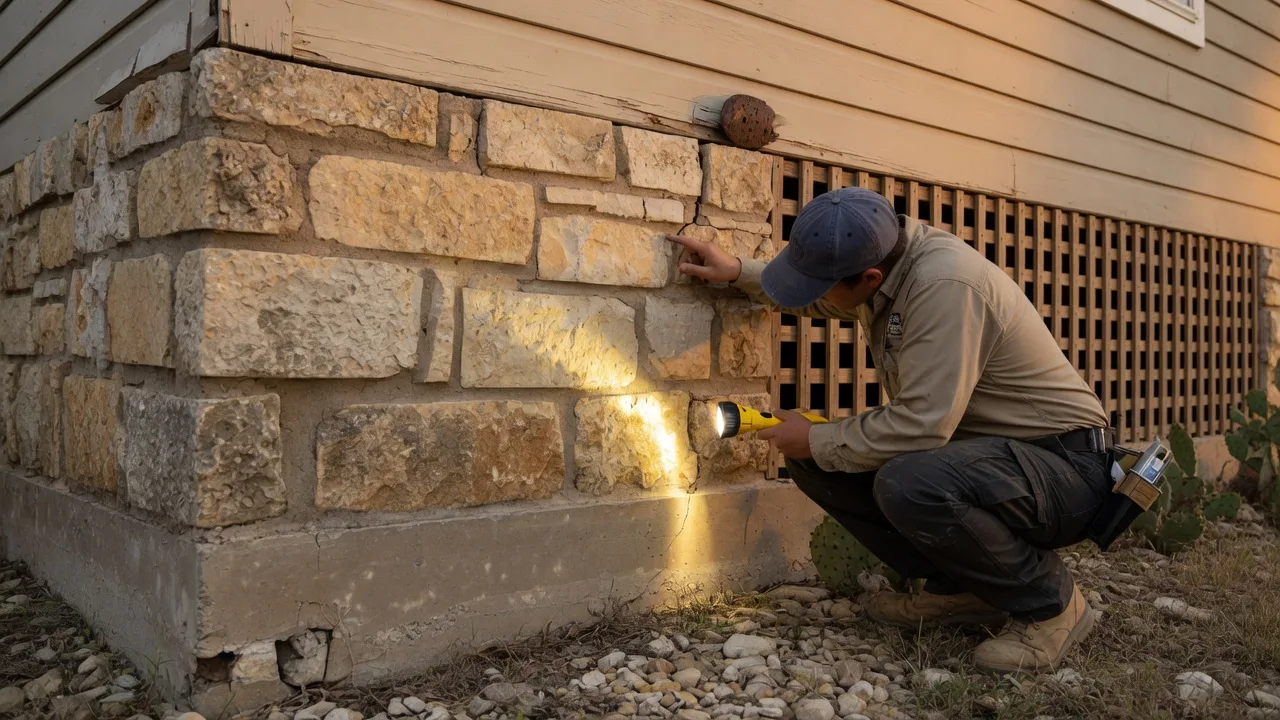
- Schedule specialty inspections as appropriate for the specific property. The buyer and appropriate professionals should select inspections based on the property's characteristics. Common Hill Country considerations include: foundation and drainage; roof and hail history; HVAC sizing and age; wood-destroying insects; private well production, storage, treatment, and water quality; septic design, permit, maintenance records, and inspection; pool and related equipment; floodplain and drainage channels; wildfire and brush exposure; propane tank ownership or lease; internet provider and actual service availability; private-road maintenance and legal access; surveyed boundaries and encroachments; HOA/POA restrictions and resale certificate; MUD, PID, ESD, and other special-district costs; mineral reservations, easements, and deed restrictions. Our guides to sellers disclosure, septic systems, and well water in the Hill Country can help.
- During the negotiated option period, the buyer should prioritize inspections, specialist evaluations, repair estimates, and any related decision about terminating or proceeding. Title, survey, financing, appraisal, homeowners-association, and other deadlines are separately governed by the contract and may not coincide with the option-period deadline [2].
- Review the entire title commitment, exception documents, and survey. Schedule B generally identifies exceptions that may remain outside the title policy's coverage, including recorded easements, restrictions, mineral reservations, and other matters. Schedule C generally identifies requirements that must be satisfied before the title company will issue the policy, such as releases, payoffs, corrective documents, or proof of authority. Do not rely on the title commitment alone to determine physical access, boundaries, encroachments, or visible uses of the land. Compare it with the survey and on-site conditions. If an exception, access issue, mineral reservation, restriction, or Schedule C requirement is unclear, ask the title company for factual information and have a Texas real-estate attorney advise you on its legal effect [14]. A title commitment does not necessarily determine the complete ownership or value of minerals, water rights, or other severed interests. If those rights are material to the purchase, ask the title company and a qualified Texas real-estate attorney what the proposed policy will and will not insure and whether a separate mineral-title investigation is appropriate [14].
- Obtain written homeowners-insurance quotes during the option period, not shortly before closing. Confirm whether the insurer will cover the roof at replacement cost or actual cash value; review wind, hail, wildfire, water-damage, foundation, service-line, pool, outbuilding, and animal-liability provisions; and compare deductibles as dollar amounts. Ask whether roof age, prior claims, brush exposure, distance from a fire station or hydrant, or property condition affects eligibility. Check the FEMA flood designation and obtain a separate flood quote when appropriate. Most homeowners policies do not cover flood damage. Insurance cost or unavailability can affect the monthly payment and the lender's ability to close [18][19].
The signed contract controls. Option, earnest-money, title-objection, financing, appraisal, HOA document, closing, and possession deadlines should be calculated from the executed contract and any amendments rather than from this general checklist.
Confirm Healthcare and Prescription Coverage
Confirm whether employer, Marketplace, Medicare Advantage, Medicare Part D, or other coverage will serve the new Texas address and providers. A move can create a special enrollment opportunity, but eligibility and timing depend on the plan and prior coverage. Compare networks, prescriptions, specialists, and effective dates before canceling existing coverage. Refill critical prescriptions, obtain copies of medical records, and identify new primary, specialty, dental, behavioral-health, and veterinary providers [20][21].
1 Month Out: Closing Coordination and Logistics
Align the Two Closing Dates
This is the most critical coordination point. Your California sale and Texas purchase must close within a compatible window to avoid a gap in housing or a cash-flow crunch.
The typical timeline:
- Listing preparation, market time, contract negotiation, and escrow length vary with the property, market, buyer financing, contingencies, and negotiated contract. Establish the working schedule with the California listing agent and escrow holder. In California, escrow ordinarily releases sale proceeds only after the escrow conditions are satisfied and recording is confirmed. Exact availability depends on the escrow holder, recording time, banking cutoff times, weekends, holidays, and the seller's bank. In Texas, signing documents does not by itself guarantee that the purchase is funded or that keys can be released. Confirm the actual sequence with both settlement offices [1].
- The Texas contract controls the closing date. Financing, appraisal, title, survey, HOA document, repair, and sale-contingency requirements can affect whether that date is achievable. In a typical Texas transaction, a title company often serves as title insurer, escrow agent, and settlement agent. Signing, funding, recording, possession, and release of keys are related but not necessarily simultaneous events. The contract, lender, and title company determine when the transaction is funded and when possession transfers. A seller's temporary lease can move possession to a later date [2].
Before making the Texas offer, determine whether the purchase is contingent on the California sale, whether the lender requires that sale to close, and whether the buyer can qualify while carrying both homes. Ask the Texas agent and lender whether the transaction calls for the TREC Addendum for Sale of Other Property by Buyer or another written contingency. Alternatives may include a California seller rent-back, temporary housing, bridge financing, a home-equity strategy established before listing, or purchasing after the sale. Each alternative has qualification, tax, cost, and possession risks.
Action items:
- Confirm the funding, recording, possession, and disbursement sequence with the California escrow holder and the Texas title company or settlement agent. Also confirm the lender's requirements and create a written contingency plan in case the California proceeds are delayed.
- If there is a gap between closings, arrange temporary housing. If temporary housing may be needed, verify actual availability, price, pet restrictions, lease terms, and cancellation rules early; do not assume that a suitable short-term rental will be available for the required dates.
Wire-Fraud Protection
Treat every emailed change to wiring instructions as fraudulent until independently verified. Before sending California sale proceeds or Texas closing funds, call the escrow or title company using a previously verified telephone number — not a number contained in the wiring email. Confirm the receiving bank, account name, account number, and amount verbally. Do not email banking credentials, and do not rely on last-minute instructions from an agent, lender, attorney, or title-company look-alike address [17].
Wire Payout and Buffer Warning
A same-day dependent sale and purchase carries substantial failure risk and should be attempted only when the agents, lender, escrow holder, title company, and banks have confirmed a workable backup plan. If the Texas purchase depends on proceeds from the California sale, a three-to-five-business-day buffer is a conservative planning target, not a legal requirement or guarantee. Have the California escrow holder, Texas title company, lender, and banks confirm the sequence. Account for recording times, wire cutoffs, weekends, holidays, lender conditions, and possible bank reviews.

Schedule the Cross-Country Move
One month before your move date, confirm all logistics for the physical relocation.
Action items:
- Obtain written estimates from several interstate movers based on a detailed inventory or physical/virtual inspection. Confirm each company's U.S. DOT number, federal operating status, insurance, complaint history, and whether it is the actual carrier or only a broker. Require the mover or broker to provide the FMCSA 'Your Rights and Responsibilities When You Move' booklet. Compare written binding and nonbinding estimates, and ask whether the mover offers a written guaranteed-not-to-exceed arrangement. Review the conditions under which the mover may issue a revised estimate or impose additional charges. Inventory every item; and understand all packing, shuttle, stair, long-carry, storage, and delivery charges [10].
- Choose valuation protection deliberately. Full Value Protection and Released Value are not equivalent. Released Value generally limits the mover's liability to 60 cents per pound per article, which can produce almost no recovery for valuable lightweight property.
- Carry identification, closing documents, medication, medical equipment, jewelry, irreplaceable records, computers and backups, chargers, pet records, several days of clothing, and essential school or employment materials with you. Do not place these items in the moving truck. Confirm prohibited and hazardous items with the mover before packing.
- Reserve the mover as early as practical after the moving dates are dependable; availability varies by route, mover, shipment size, and season.
- Confirm the mover's delivery window.
- Arrange for electricity, water, gas or propane, internet, security, trash, and any required rural services to begin no later than the date possession transfers. In Texas heat, do not permit electricity or HVAC service to lapse. If possession is delayed by a seller lease, use the contractual possession date rather than the signing date.
- Arrange for utility disconnection at your California home for the date possession transfers, accounting for any rent-back.
- File a change of address with USPS at least two weeks before the move.
- Notify your employer, banks, insurance companies, and subscription services of your new address.
Gather Final California Documents
Before leaving California, gather documents you may need for the California and federal tax returns, Texas vehicle and driver-license transactions, school enrollment, insurance, the Texas closing, and future residency documentation.
Action items:
- California school records and immunization forms
- Vehicle registration and driver's license documents -- note these have different deadlines: Vehicle registration must be completed within 30 days of moving to Texas, while a new resident may drive on a valid, unexpired out-of-state license for up to 90 days after moving and must obtain the Texas license within that period [12][13].
- Pet vaccination records (Texas counties may have specific requirements)
Moving Week and Beyond: Establishing Your Texas Life
Apply for the Texas Residence Homestead Exemption After You Qualify
To qualify for the general residence homestead exemption, an individual must own an interest in the property, occupy it as the principal residence, and not claim another residence homestead in or outside Texas. To apply, file Texas Comptroller Form 50-114 with the appraisal district for the county in which the property is located. Filing directly with the appraisal district is free. Verify the district's current identification, ownership, occupancy, and supporting-document requirements before submitting the application [11].
Current statewide school-district exemptions include:
- A $140,000 general residence homestead exemption from school-district taxable value.
- An additional $60,000 school-district exemption for a qualifying person age 65 or older or disabled.
These amounts reduce taxable value for school-district taxation; they do not reduce the home's market value or automatically produce an equal reduction for every taxing unit. Counties, cities, and other taxing units may offer separate local exemptions.
Apply promptly after establishing the property as your principal residence and updating the required identification. The regular filing deadline is April 30. Texas permits certain late residence-homestead applications for up to two years after the tax delinquency date, but owners should not rely on late filing. A purchaser who qualifies after January 1 may receive the exemption for the applicable portion of that tax year when statutory conditions are satisfied, including rules concerning any exemption received by the prior owner. Confirm the application and effective date with the county appraisal district.
The residence-homestead appraisal limitation generally takes effect on January 1 of the tax year following the year the owner qualifies for the homestead exemption. Therefore, if an owner qualifies during 2026, the limitation generally takes effect January 1, 2027. The limitation generally restricts appraised value to the lesser of market value or the prior year's appraised value plus 10%, plus the market value of new improvements. It does not cap the market value, tax rate, total tax bill, or value attributable to new improvements. A tax bill can increase by more than 10% if tax rates, exemptions, taxing jurisdictions, or new improvements change [22].
Transfer Your Driver's License and Vehicle Registration
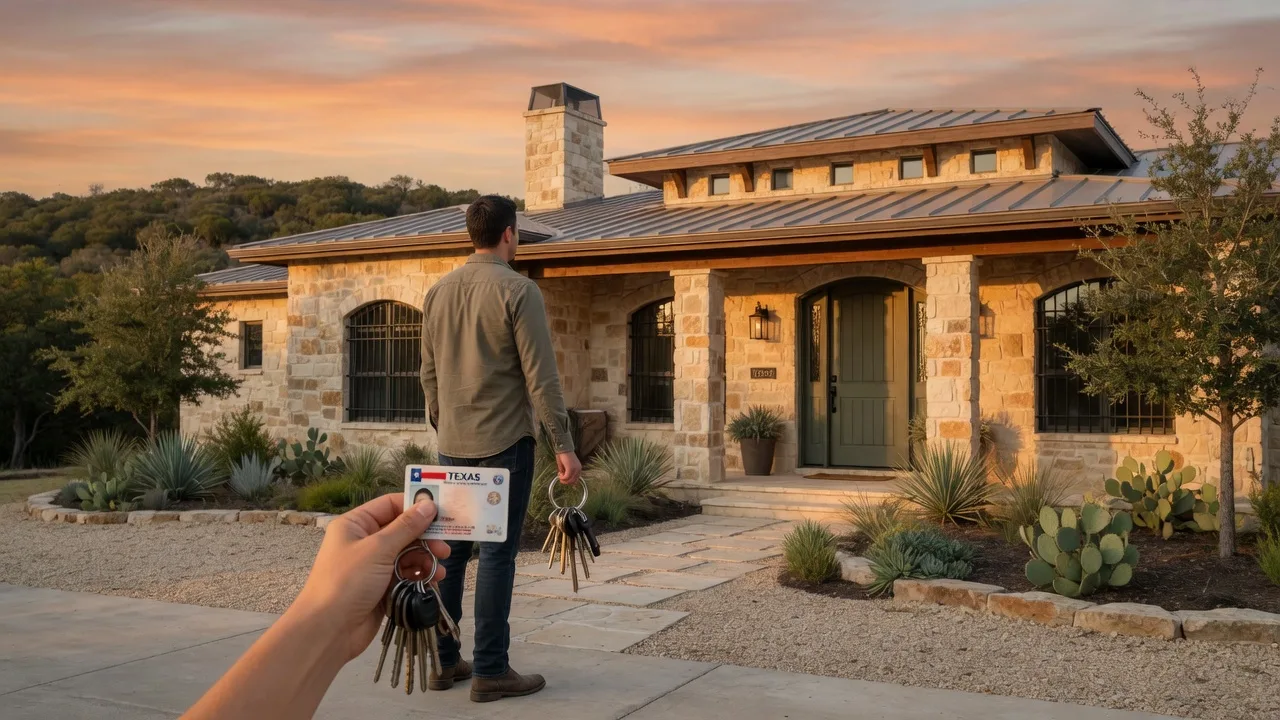
Texas requires new residents to transfer their driver's license within 90 days of establishing residency, and vehicle registration must be completed within 30 days [12][13].
Action items:
- Obtain a Texas auto-insurance policy that satisfies Texas requirements. Texas requires minimum liability coverage of $30,000/$60,000/$25,000 [12][13].
- Determine whether the vehicle and registration county require an emissions or other applicable inspection, and complete it when required. For the principal Hill Country counties discussed in this guide — Bexar, Kendall, Comal, and Bandera — ordinary noncommercial vehicles are not currently subject to an annual emissions-inspection program. Texas has eliminated most annual noncommercial safety inspections, but emissions testing continues in designated counties, and different rules may apply to commercial or otherwise specially regulated vehicles. Verify the current rule for the vehicle type and registration county before registering.
- Within 30 days of moving to Texas, register the vehicle through the county tax assessor-collector. A new resident generally pays the $90 new-resident motor-vehicle tax when the vehicle was previously registered in the resident's name, plus registration, local, processing, and applicable title or inspection-replacement fees. Texas does not require an owner to surrender the out-of-state title merely to obtain registration; "registration purposes only" may be available. Electric vehicles, leased vehicles, recently purchased vehicles, military members, and vehicles not previously registered in the owner's name can be treated differently. Obtain the exact amount from the county tax office.
- Within 90 days of moving to Texas, apply for a Texas driver license through the Texas Department of Public Safety. Schedule a Texas DPS appointment and review the current document checklist. A new resident generally must present proof of identity, U.S. citizenship or lawful presence, Social Security number, and two documents showing the same Texas residential address. A person surrendering a valid, unexpired out-of-state license is excused from the 30-day residency-document aging requirement but still needs two residency documents. A vehicle owner must also provide evidence of Texas vehicle registration and insurance for each owned vehicle, or affirm that no vehicle is owned. The California license must be surrendered.
Enroll Your Children in School
If you have not already completed school enrollment, finalize it now.
Action items:
- Begin enrollment through the district's online Skyward process and upload the required records as directed. Follow any subsequent campus instructions. For Comal ISD secondary students, the district states that the student will meet with a counselor after registration to develop a class schedule.
- Both Boerne ISD and Comal ISD use the Skyward Family Access portal for enrollment. Create your account online and submit enrollment forms before visiting the campus [8][9].
- Ask the receiving district to evaluate grade placement, course equivalencies, credits, graduation-plan requirements, prerequisites, and athletic eligibility. Provide course descriptions or syllabi when requested; do not assume that California course titles will map automatically to Texas requirements.
Review Estate and Incapacity Documents
Have a Texas estate-planning attorney review wills, revocable trusts, beneficiary designations, guardianship provisions, durable financial powers of attorney, medical powers of attorney, directives to physicians, and disposition-of-remains instructions. For inherited property situations, see our probate guide. If you are handling a family member's estate while relocating, our Texas probate executor's guide walks through every stage of managing and selling an estate home. Review how the move affects community-property characterization and any California real estate or business interest retained after relocation. Do not retitle mortgaged real estate or transfer it to a trust without coordinating with the attorney, lender or servicer, title insurer, and homeowner's insurer.
The Complete Timeline at a Glance
| Timeframe | California Side | Texas Side | Personal / Logistics |
|---|---|---|---|
| 6 Months Out | Interview cross-state CPA; review capital-gains exposure and Section 121 eligibility; begin day tracking. Plan and document the residency transition: identify the accounts, registrations, insurance policies, professional relationships, and mailing records that will require an address or status change. Make each change consistently at the appropriate time, generally on or after the actual departure and Texas-establishment dates; do not create records that inaccurately suggest you moved before you did. | Research school districts (Boerne ISD, Comal ISD); review immunization requirements; request transcripts from California schools | Interview long-distance movers; begin decluttering and packing |
| 3 Months Out | List home for sale; confirm Section 121 exclusion eligibility. Determine whether a Form 593 exemption or no-withholding certification applies. If withholding is required, review the standard sales-price method and the alternative gain-based method with the escrow holder and tax professional. | Get Texas lender preapproval; begin property search. Understand the negotiated termination-option provision. The length of the option period and the option fee are negotiable; TREC does not prescribe a standard 5-10-day period or $100-$500 fee. Calendar the contractual deadlines for delivering the option fee and earnest money and the exact time at which the termination option expires. | Request school transcripts; identify inspectors and determine availability. Schedule property-specific inspections immediately after a Texas contract is executed and access is authorized. |
| 1 Month Out | Complete California escrow requirements; confirm the expected recording, possession, and proceeds-disbursement sequence; finalize the contingency plan if Texas funding depends on the sale. | If under contract, confirm delivery of earnest money and the option fee; complete inspections and any option-period decision; review title, survey, HOA documents, financing, appraisal, insurance, and all applicable contractual deadlines; confirm closing and possession arrangements. | Book movers 4+ weeks in advance; file USPS change of address; arrange utility disconnection and connection |
| Moving Week | Complete move-out and any remaining seller-side escrow requirements; transfer possession as required by the California contract; retain the final settlement statement, Form 593 documentation, and proof of withholding. | Confirm funding and contractual possession before accepting keys; receive keys only when authorized; retain the final settlement statement and obtain the recorded deed when available. | Move in; unpack essentials; begin establishing Texas domicile |
| Immediately After | — | After acquiring and occupying the property as the principal residence — and after satisfying the appraisal district's identification and documentation requirements — apply for the applicable residence-homestead exemptions (Form 50-114, filed with the appraisal district). Do not assume that closing alone establishes eligibility. $140,000 school-district reduction; 10% annual appraisal cap takes effect January 1 of the tax year following qualification | Establish healthcare providers; update employer, banks, insurers, voter registration, and other legal and financial records consistently with the actual move; retain residency documentation. |
| Before Moving or Immediately Upon Arrival | — | Complete district enrollment before the student's first day of attendance or by the district's required registration date. Resolve immunization, residency, special-education, course-credit, athletic-eligibility, and transfer questions before the move whenever possible. | — |
| Within 30-90 Days After Moving | — | Within 30 days of moving to Texas, obtain compliant Texas vehicle insurance, complete any inspection required for the registration county and vehicle type, and register the vehicle. Within 90 days of moving, apply for the Texas driver license and bring the required identity, citizenship or lawful-presence, Social Security number, Texas-residency, vehicle-registration, and insurance documentation. $90 new-resident motor-vehicle tax plus registration, local, processing, and applicable title or inspection-replacement fees may apply; verify the exact amount with the county tax office. | — |
| Next Tax-Filing Season | Prepare and file the move-year Form 540NR, report the residency change and applicable California-source income correctly, and claim any verified Form 593 withholding credit. | — | Provide the tax professional with complete full-year income records, the residency log, closing statements, Form 593, basis records, and moving and residency documentation. |
Coordinating an interstate move requires local precision on both ends of the state line. If you are starting to map out your timeline, reach out for a private, data-driven strategy session. We will align your California sale contingencies with a targeted Texas neighborhood search — no pressure, just engineering the logistics of your move.
Frequently Asked Questions
Do I really have to pay a California exit tax when I move to Texas?
No. California does not currently impose a general tax merely because a resident moves to another state. The phrase 'California exit tax' is an informal and potentially misleading label. California instead taxes worldwide income received while a person is a resident and generally continues to tax California-source income received after that person becomes a nonresident. California real-estate withholding is a prepayment of tax, not necessarily the seller's final tax liability. When withholding is required, the standard method generally uses 3 1/3% (.0333) of the seller/transferor's share of the sales price, while an eligible seller may elect an alternative calculation based on estimated gain. Exemptions or reduced/no-withholding certifications may apply depending on the seller and transaction. The escrow holder should provide the applicable Form 593 documentation, and the seller should retain it to claim the withholding credit on the California return [5][6].
How do I coordinate the closing dates for both states?
Listing preparation, market time, contract negotiation, and escrow length vary with the property, market, buyer financing, contingencies, and negotiated contract. Establish the working schedule with the California listing agent and escrow holder, and confirm the funding, recording, possession, and disbursement sequence with the California escrow holder and the Texas title company or settlement agent [1][2].
What if there is a gap between my California closing and my Texas closing?
If temporary housing may be needed, verify actual availability, price, pet restrictions, lease terms, and cancellation rules early; do not assume that a suitable short-term rental will be available for the required dates. Some buyers negotiate a seller leaseback in the California contract to extend their stay while the Texas purchase closes.
When should I file the Texas homestead exemption?
Apply after you own and occupy the property as your principal residence and satisfy the appraisal district's identification and documentation requirements. Do not assume that the closing date alone establishes eligibility. Although the regular application deadline is generally April 30, Texas law permits certain late applications; verify the applicable deadline and procedure with the county appraisal district. The homestead appraisal limitation takes effect on January 1 of the tax year following the year in which you qualify [11].
What documents do I need to enroll my children in Boerne ISD or Comal ISD?
Boerne ISD and Comal ISD both begin new-student enrollment online through Skyward, but their document lists are not identical. Boerne ISD currently asks homeowners for a full-page, recent water, gas, or electric bill, not a cell-phone bill; renters for a current signed lease; a current government-issued photo ID for the enrolling parent or guardian; and the student's birth certificate, valid passport, or other accepted vital-statistics document. Boerne recommends but does not require the student's Social Security number. Comal ISD's 2026-27 list currently asks for proof of residency dated within the preceding 30 days, immunization records, an unofficial transcript or most recent report card, the student's birth certificate, proof of the parent's identity, and custody documents when required. Comal's published list does not identify a student Social Security number as a required document. Confirm the live district and campus instructions before uploading records [8][9].
How long do I have to transfer my driver's license and vehicle registration?
Register each vehicle within 30 days of moving to Texas. A new resident may drive with a valid, unexpired out-of-state license for up to 90 days after moving and must obtain the Texas driver license within that period. Register owned vehicles before the DPS appointment because new residents surrendering an out-of-state license generally must provide evidence of Texas registration for each owned vehicle. DPS also generally requires proof of identity, U.S. citizenship or lawful presence, Social Security number, Texas residency, and insurance or the applicable non-ownership statement. Review the current TxDMV and DPS checklists before each appointment [12][13].
Should I sell my California home first or buy in Texas first?
Three common approaches are selling first, buying first, or coordinating the transactions concurrently. No single sequence is best for every household. The appropriate choice depends on loan qualification, available liquidity, tolerance for carrying two homes, sale-contingency terms, possession dates, temporary-housing options, and the consequences of a delayed closing. Discuss both scenarios with your CPA and lender to determine which approach fits your financial situation.
Appendix: CPA Consultation Checklist - California Residency, Home-Sale, and Income-Sourcing Questions
Before you move, bring this list of questions to your cross-state CPA. Each one addresses a specific issue that affects California-to-Texas relocations. Write down the answers and keep them with your moving-day logs.
Residency and Domicile
- On what date will I be considered to have abandoned my California domicile for tax purposes? What specific facts establish that date?
- What actions and records will best support the conclusion that I abandoned my California domicile and established a Texas domicile on the reported date?
- If I retain any California ties (bank account, mailing address, professional license, voter registration), how do those affect my residency status?
- How does my California departure date affect my move-year California return?
Day-Count and Travel Tracking
- How should I track my days in and out of California during the transition year? What level of detail do you need?
- If I travel back to California after the move (for the home sale closing, family visits, or work), how do those days affect my nonresident status?
- Does the 546-day safe harbor apply to my situation, or should I rely on the standard domicile-based nonresidency test?
- If I work remotely for a California employer while physically in Texas, does that create California-source income?
Income Sourcing
- How should my W-2 income be divided between the California-resident period, the California-nonresident period, California workdays, and non-California workdays?
- If I have stock options, RSUs, or equity compensation that vest after I leave California, does California tax the vesting income?
- How should interest, dividends, and capital gains be treated during the resident and nonresident portions of the year, and do any items remain California-source after the move?
- If I retain California rental property after moving, how should the income, expenses, depreciation, and eventual sale be reported for federal and California purposes, and could any Texas business-entity or franchise-tax obligations apply?
Real Estate Sale
- What is my California capital-gains exposure on the home sale, and do I qualify for the Section 121 exclusion?
- If the California home was my primary residence for only part of the five-year lookback period, how does that affect the exclusion amount?
- Will California real-estate withholding apply to my sale, do I qualify for an exemption, and should the transaction use the standard 3 1/3%-of-sales-price method or the alternative gain-based method? How and when will I claim any amount withheld as a credit?
- If I have already moved to Texas and the California home sits vacant while listed, does the vacancy period affect my Section 121 eligibility?
Filing Obligations
- Which California tax forms will I need to file for the transition year?
- What is the deadline for filing my California part-year resident return?
- Will I be required to file any Texas individual income-tax return? Texas has no individual state income tax, but ask whether any Texas business, franchise, sales-tax, payroll, or other filing obligation applies to me.
- Could another-state tax credit, community-property allocation, or sourcing rule apply to income taxed by California or another state?
Ongoing Compliance
- After I establish Texas residency, under what circumstances could California still tax my income?
- If I continue to earn California-source income after the move (rental property, business income, consulting), what are my ongoing California filing obligations?
- How long should I keep my California moving-day logs and relocation documentation?
- If the California FTB audits my residency determination, what documentation do I need to have prepared?
This checklist does not constitute tax advice. It is a starting-point guide for your conversation with a licensed cross-state CPA who is familiar with both California and Texas tax law. Every individual's situation is different, and the answers above will depend on your specific facts and circumstances.
Common Questions About Cross-State Moves
What is the first thing I should do when planning a move from California to Texas?
Start by interviewing a cross-state CPA who understands both California's residency rules and Texas's lack of state income tax. They can help you plan your departure date, understand Form 593 withholding on your California home sale, and file the correct California return for your move year. See our full 6-Month Cross-State Master Checklist for the complete timeline.
How long does it take to close on a house in Texas after selling in California?
A typical Texas purchase closes 30 to 45 days after the contract is executed, but coordinating with a California sale requires careful timing. Build a three-to-five-business-day buffer between closings and confirm wire-transfer timing with both title companies. Our cross-state closing guide walks through the coordination step by step.
Do I need to register my car in Texas if I just moved from California?
Yes, Texas requires vehicle registration within 30 days of moving to Texas. You will also need to obtain a Texas driver license within 90 days. The process involves getting Texas auto insurance, completing any required vehicle inspection, and visiting your county tax assessor-collector for registration. See our full settling-in guide for the complete checklist.
Related Reading
12-Month California to Hill Country Relocation Timeline
A month-by-month checklist for California families relocating to the Texas Hill Country.
Moving to Boerne from California
Housing, schools, cost of living, property taxes and lifestyle compared for California families.
California to Texas School Comparison Guide
Side-by-side comparison of California and Texas school systems for relocating families.
Hill Country Community Comparison
Compare Boerne, Bandera, Comfort, Kerrville and Fair Oaks Ranch on housing, schools, commutes, and taxes.
Custom Build vs. Resale in the Texas Hill Country
A real cost and timeline comparison for California buyers.
Boerne Property Tax Guide
Detailed property tax information for Boerne and Kendall County.
Property Insurance in the Texas Hill Country
Understanding homeowners, flood, and wind-hail insurance in the Hill Country.
Home Inspection Checklist for Boerne TX
What to look for during your Texas option period home inspection.
Sources
- [1] California Department of Real Estate. Escrow information and consumer guidance. Source: dre.ca.gov
- [2] Texas Real Estate Commission. One to Four Family Residential Contract (Resale), Form 20-19, effective July 1, 2026. Source: trec.texas.gov
- [3] California Franchise Tax Board. Publication 1031, Guidelines for Determining Resident Status. Source: ftb.ca.gov
- [4] Internal Revenue Service. Publication 523, Selling Your Home. Source: irs.gov
- [5] California Franchise Tax Board. Part-Year Resident and Nonresident. Source: ftb.ca.gov
- [6] California Franchise Tax Board. 2026 Instructions for Form 593, Real Estate Withholding Statement. Source: ftb.ca.gov
- [7] California Franchise Tax Board. 2025 Form 540NR Booklet, the latest published Form 540NR instructions available when this article was verified. Source: ftb.ca.gov
- [8] Boerne Independent School District. Enrollment. Source: boerneisd.net
- [9] Comal Independent School District. 2026-27 New Student Enrollment. Source: comalisd.org
- [10] Federal Motor Carrier Safety Administration. Protect Your Move and interstate-mover consumer guidance. Source: fmcsa.dot.gov
- [11] Texas Comptroller of Public Accounts. Property Tax Exemptions. Source: comptroller.texas.gov
- [12] Texas Department of Motor Vehicles. New to Texas. Source: txdmv.gov
- [13] Texas Department of Public Safety. Apply for a Texas Driver License. Source: dps.texas.gov
- [14] Texas Department of Insurance. Title Insurance FAQ and Title Insurance Basic Manual, including Form T-7. Source: tdi.texas.gov/title/titlefaqs.html and tdi.texas.gov/title/titlemanalpha.html
- [15] Texas Department of State Health Services. Texas Minimum State Vaccine Requirements for Students. Source: dshs.texas.gov
- [16] California Franchise Tax Board. Sale of Your Principal Residence. Source: ftb.ca.gov
- [17] Consumer Financial Protection Bureau. Mortgage Closing Scams: How to Protect Yourself and Your Closing Funds. Source: consumerfinance.gov
- [18] Consumer Financial Protection Bureau. Homeowners Insurance. Source: consumerfinance.gov
- [19] National Flood Insurance Program. FloodSmart. Source: floodsmart.gov
- [20] HealthCare.gov. Moving and Qualifying for a Special Enrollment Period. Source: healthcare.gov
- [21] Medicare. Moving and Special Enrollment Periods. Source: medicare.gov
- [22] Texas Comptroller of Public Accounts. Valuing Property. Source: comptroller.texas.gov
Last verified: August 13, 2026. Legal, tax, school, insurance, and vehicle requirements can change. Confirm current requirements with the responsible agency or licensed professional before relying on this article.

Written by
Bill Ross
Hill Country Homesteads Group, brokered by KW Boerne
Bill Ross is a licensed Texas real estate agent (#778434) with nearly four decades of high-tech sales and marketing experience and a professional network of more than 1,000 California real estate agents. After relocating from California to Boerne in 2021, his move was featured in USA Today and The Washington Post.