
Last updated: July 2026 — reflects current Texas and California statutory requirements.
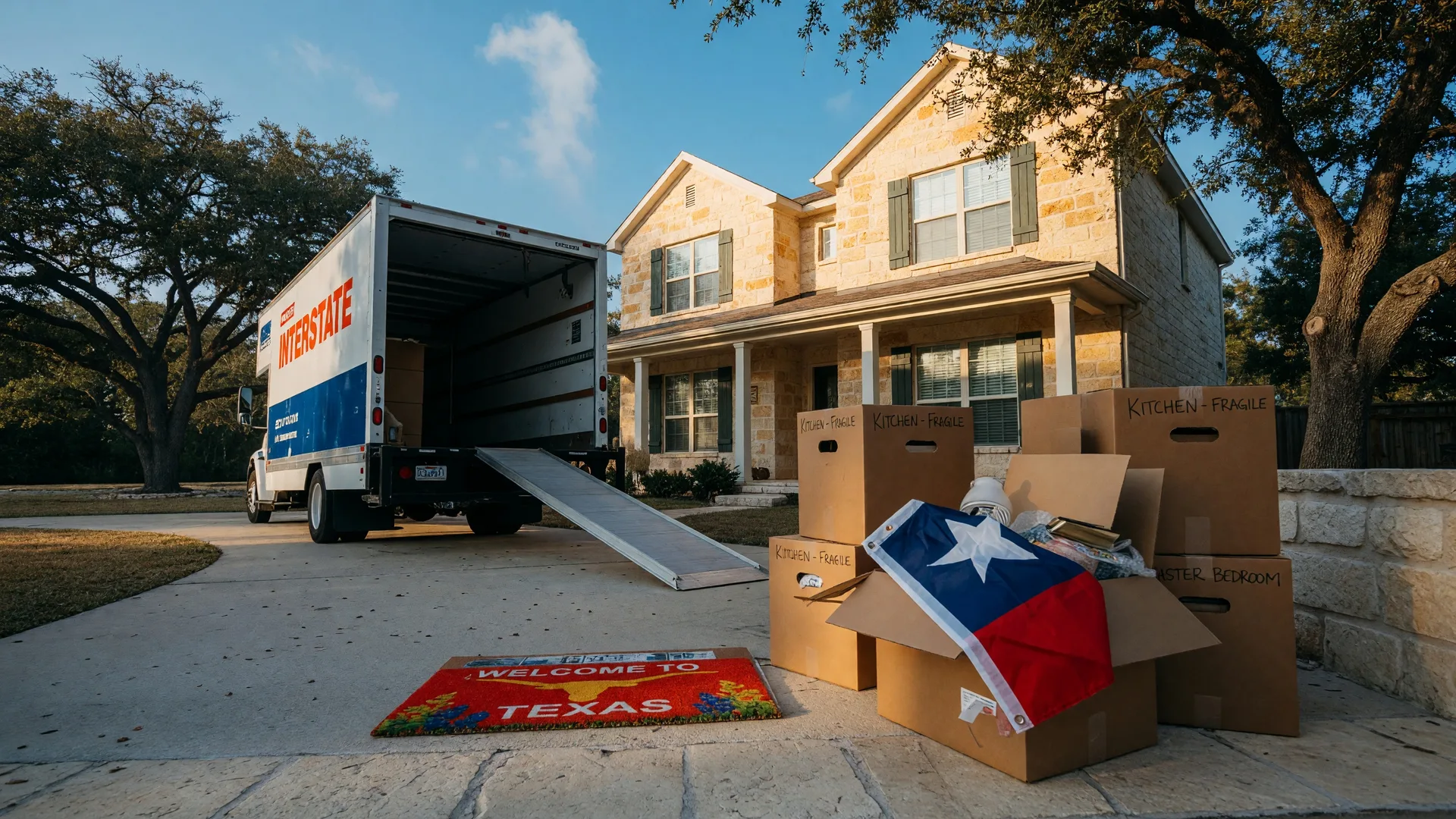
You have signed the closing documents, loaded the moving truck, and driven east on I-10. Physically, the move is done. Legally and financially, the most important work is just beginning.
Establishing Texas residency is not a single action — it is a pattern of actions, taken deliberately and documented carefully, that collectively demonstrate you have changed your domicile from California to Texas. Physical presence alone is not enough. The California Franchise Tax Board (FTB) evaluates residency based on your "closest connections," and no single factor is determinative [10]. What matters is the totality of evidence.
This article walks through the first 90 days after leaving California — the specific actions to take, the order to take them in, and why each one matters. It is written for higher-income households, retirees, entrepreneurs, and remote employees who understand that the details of this transition have real financial consequences.
For the practical post-move admin checklist — driver license, vehicle registration, homestead exemption, and address changes — see our Settling In guide.
Domicile vs. Occupancy: The Legal Distinction That Matters
Texas domicile and physical occupancy are not the same thing. Occupancy means you are physically present in a Texas home. Domicile means you have made Texas your permanent home — the place you intend to remain indefinitely and to which you intend to return when you are away [10].
You can live in a Texas house for months and still be legally domiciled in California if you have not taken the steps to demonstrate intent. The FTB looks at a constellation of factors to determine where your "closest connections" lie: where your driver's license was issued, where your vehicles are registered, where you vote, where your bank accounts are, where your doctors and attorneys are, where your social ties are, and where you spend the majority of your time [10].
This is why the steps in this article matter individually and as a group. Each action you take sends a signal. Together, they build an unambiguous record of domicile change.
Common Residency Indicators the FTB May Consider
| Action | California Signal | Texas Signal |
|---|---|---|
| Texas driver's license | Keep | Obtain |
| Vehicle registration | Transfer out | Register within 30 days |
| Voter registration | Cancel | Register at TX address |
| Bank accounts | Close or downgrade | Open and use as primary |
| Mail forwarding | Set up USPS forwarding | Receive at TX address |
| Insurance policies | Cancel CA policies | Obtain TX policies |
| Healthcare providers | Transfer records | Establish with TX providers |
| Estate documents | Update to remove CA references | Execute under TX law |
| Social ties & community | Reduce CA involvement | Join TX organizations |
| Physical presence log | Document CA visit dates | Document TX residence days |
The FTB evaluates residency under a facts-and-circumstances test. The strength and substance of a person's connections matter more than the number of administrative changes completed, and no single factor—including a driver's license, voter registration, vehicle registration, or bank location—is determinative.
Texas Driver's License: An Important Dated Record
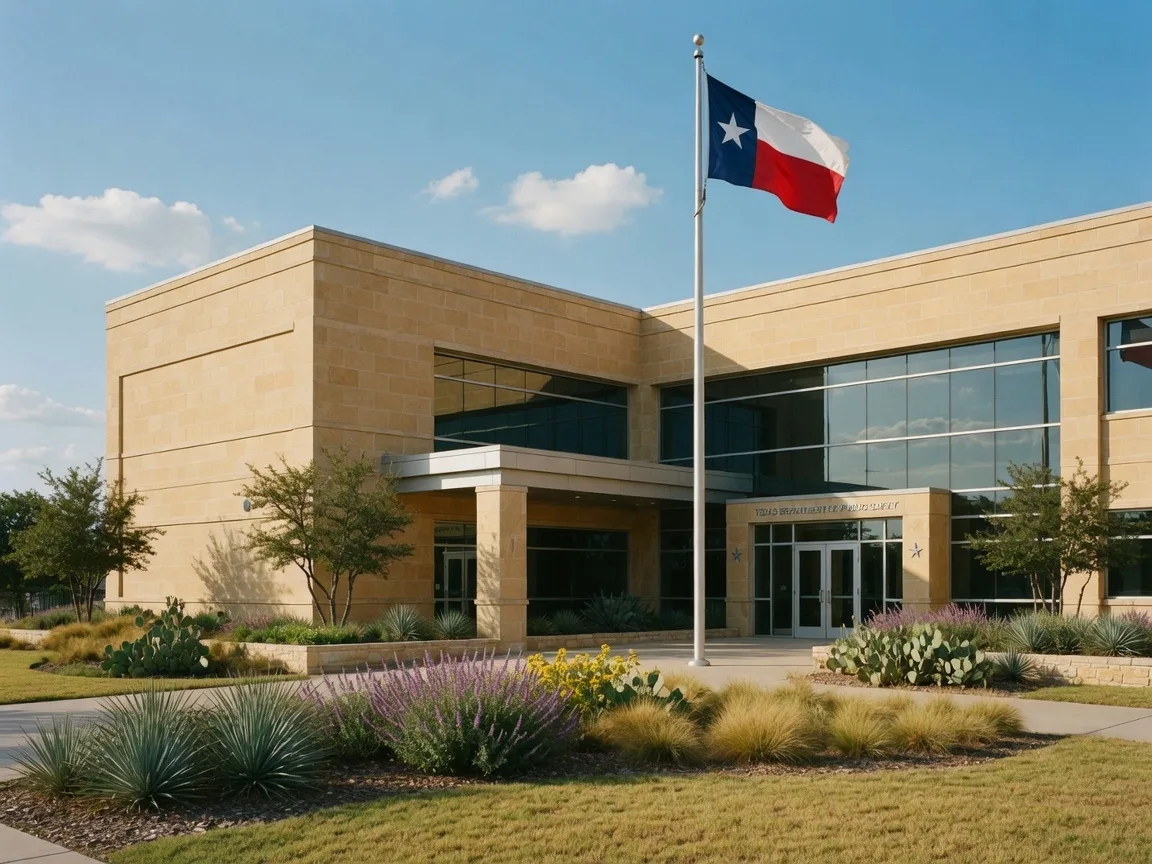
Texas law requires new residents to obtain a Texas driver's license within 90 days of establishing residency [1][2]. During that 90-day window, your valid California driver's license remains legal for driving in Texas. But waiting until day 89 is a missed opportunity.
A Texas driver's license creates a useful, government-issued record of the date on which you formalized an important Texas connection. It should be consistent with where you actually live, work, keep your home, and center your family and financial life.
What you need to bring to DPS
To apply for a Texas driver's license, review the personalized document checklist on the Texas DPS website before your appointment. A new resident will generally need:
- Proof of U.S. citizenship or lawful presence
- Proof of identity
- Social Security number
- Two printed documents showing the applicant's name and Texas residential address
- Current Texas registration for every vehicle the applicant owns
- Proof of insurance for every owned vehicle, or a statement that the applicant owns no vehicle
- The valid out-of-state license, which must be surrendered when the Texas license is issued
The normal requirement that one residency document show at least 30 days of Texas residence is waived immediately upon surrendering a valid, unexpired out-of-state license. You do not need to wait 30 days after establishing residency — once you have your Texas-resident documentation (such as a lease, closing documents, or utility bill in your name) and your current valid out-of-state license, you can go to DPS right away. Surrendering the out-of-state license satisfies the 30-day residency-document requirement on the spot.
Action item: Schedule your DPS appointment as early as possible — ideally before or within the first week of arrival. Appointment availability changes frequently. Schedule early and check more than one nearby DPS office if the first location has limited availability. Schedule online at the Texas DPS portal.
Texas permits a new resident to drive with a valid out-of-state license for up to 90 days, but DPS requires surrender of the former license and evidence of Texas registration and insurance for owned vehicles.
Vehicle Registration: 30 Days, Not 90
While you have 90 days for a driver's license, Texas requires most new residents to register their vehicles within 30 days of moving to the state [3].

For a noncommercial passenger vehicle:
- Obtain insurance that satisfies Texas financial-responsibility requirements.
- Determine whether an emissions inspection applies in your county. While Texas eliminated annual vehicle safety inspections for noncommercial vehicles on January 1, 2025, it explicitly retained mandatory annual emissions testing for noncommercial vehicles registered in 17 major urban counties (including Bexar, Travis, Dallas, Harris, and Tarrant). If you reside in one of these covered jurisdictions, passing an emissions test remains a mandatory condition for initial registration. Commercial vehicles remain subject to full safety-inspection requirements.
- Visit the county tax assessor-collector with proof of insurance, proof of ownership such as the prior-state title or registration, identification, and a completed Form 130-U.
- Pay the applicable registration, county, inspection-replacement, new-resident sales-tax-related, and other required fees.
Texas does not require every new resident to obtain a Texas title merely to register the vehicle, although an owner may choose or need to title it depending on the circumstances.
Bexar County emissions testing does not begin until November 1, 2026. Before that date, Bexar County is not an emissions-inspection county. Kendall, Comal, and Bandera counties are not currently included in the emissions program.
March 2026 TxDMV Update
As of March 5, 2026, Texas has introduced stricter verification-document requirements for first-time out-of-state vehicle registration and title changes. Check the TxDMV website or contact the county tax office to confirm which identification and ownership documents are currently required before scheduling the registration appointment.
Registering your vehicle in Texas is a clear, public signal of domicile intent. The FTB lists vehicle registration as a specific factor it examines [10]. Keeping California plates on your car while claiming Texas residency is an inconsistency that may draw scrutiny in an audit.
Voter Registration: A Public Declaration of Intent
Voter registration is one of the most visible domicile signals because it is a public record. When you register to vote in Texas at your Texas address, you are making a publicly recorded statement that Texas is your permanent home [5].
Texas does not currently provide ordinary first-time voter registration as a fully online transaction. You may enter your information through the Secretary of State's online application module, but you must print, sign, and mail or deliver the application to your county voter registrar. You may also register in person or submit a paper registration form. Eligible applicants can also register during a Texas driver's-license transaction.
Critical step: Cancel your California voter registration. You can do this through the California Secretary of State's office or by contacting your county elections office. Maintaining an active California voter registration after registering in Texas creates an avoidable inconsistency. Submit California's voter-registration cancellation form or contact the former county elections office.
Declaration of Domicile: A Formal, Recorded Marker
File a formal Declaration of Domicile with the Texas county clerk in your new county (for example, Kendall County or Bexar County). This is a notarized public document that tax attorneys use to establish the precise date of intent when the FTB audits a residency change. While not required by Texas law, it creates a clear, recorded marker of the exact date the person declared Texas as their permanent home. Prepare the declaration, have it notarized, and file it with the county clerk's office. Keep a certified copy in the residency file alongside the move-year evidence.
While voluntary, this step carries outsized weight in an audit because it is a contemporaneous, government-filed record of domicile intent — not a retrospective reconstruction. Tax professionals who handle FTB residency disputes consistently identify a filed Declaration of Domicile as one of the strongest single pieces of evidence a relocating taxpayer can produce.
Homestead Exemption: Timing, Savings, and Domicile Documentation
The Texas homestead exemption serves two purposes for relocators: meaningful annual tax savings and a dated, filed record of Texas domicile intent.

A Texas residence-homestead exemption is generally available when an individual owns an interest in the property, uses it as the individual's principal residence, and does not claim another residence-homestead exemption in or outside Texas. Applications are filed with the county appraisal district, and the general filing deadline is before May 1.
Under current Texas law, a homeowner can file for a prorated homestead exemption immediately upon moving in and establishing the homestead as their principal residence — they do not need to wait for the next calendar year. The exemption is prorated from the date the homestead is established. A buyer who acquires and qualifies a home after January 1 may receive the general residence-homestead exemption for the applicable portion of that same tax year if the previous owner did not receive the same exemption for that year. Do not assume that a new owner must always wait until the following January.
Current principal exemptions include:
- A mandatory $140,000 school-district residence-homestead exemption
- A $3,000 county exemption only in counties that levy farm-to-market or flood-control taxes
- Optional local exemptions of up to 20% of appraised value, with a minimum exemption of $5,000, when adopted by the taxing unit
- An additional mandatory $60,000 school-district exemption for qualifying owners who are age 65 or older or disabled
Local exemptions vary. Readers should verify current amounts and filing procedures with their county appraisal district.
Filing the homestead exemption creates a dated government record linking you to a Texas principal residence. For the FTB, this is evidence of domicile intent — not just occupancy — because the exemption is only available to people who intend to make Texas their permanent home.
Updating Insurance: Health, Auto, and Property
Insurance is one of those areas where the practical and the strategic overlap. You need Texas-based policies because your risks have changed. See our property insurance guide for Hill Country coverage requirements. But maintaining California insurance policies while claiming Texas residency also sends a signal — that your real connections are still in California.
Auto insurance
Notify the insurer before or immediately after the move and obtain or re-rate coverage for the Texas garaging address. Texas generally requires minimum liability limits of $30,000 per injured person, $60,000 per accident, and $25,000 for property damage. Do not assume an existing California policy remains appropriate or valid after a permanent move. An out-of-state policy may be accepted in limited circumstances if the insurer is authorized in Texas and the policy satisfies Texas requirements.
Homeowner's or renter's insurance
If you have purchased a home, your lender will require a homeowner's insurance policy with a Texas address. If you are renting, obtain renter's insurance at your Texas address. The key point: the policy should be issued to your Texas address, reflecting your Texas residence. Flood coverage is separate from a standard homeowners or renters policy, so buyers and renters should evaluate flood exposure rather than assuming it is included.
Health insurance
Do not assume an employer health plan will automatically transition. Notify the employer and plan administrator, confirm whether the Texas address is within the plan's service area, identify in-network physicians and hospitals, and determine whether a plan change is required. A permanent move may create a Marketplace Special Enrollment Period when the eligibility conditions are met. Medicare Advantage and Part D enrollees should contact their plan before moving because a move outside the service area can trigger a separate Medicare enrollment period. Original Medicare, Medicare Advantage, Medigap, and Part D have different portability and enrollment rules.
Banking: Where Your Financial Life Is Centered
The FTB explicitly examines "the location of the banks where you maintain accounts" as a residency factor [10]. This means that where you bank is not just a convenience question — it is a domicile signal.

Within your first week in Texas, open a checking and savings account at a Texas-based bank or credit union. Several regional options serve the Hill Country: Frost Bank, Broadway Bank, Randolph-Brooks Federal Credit Union, and USAA (headquartered in San Antonio). National banks with extensive Texas operations — Chase, Bank of America, Wells Fargo — also work.
The FTB may consider where accounts are maintained and where financial transactions originate, but opening an account at a Texas-headquartered institution is not a legal residency requirement and is not inherently stronger than using a national bank. The more important steps are to update the residential address on every financial account, conduct ordinary financial activity from Texas, and ensure direct deposit, bill payment, brokerage, retirement, and credit-card records are consistent with the actual move.
Once the new accounts are open, move your primary financial activity to them: set up direct deposit, automatic bill payments, and link them to your investment and retirement accounts. You do not need to close your California accounts immediately, but they should be downgraded from primary to secondary status. Ensure that any retained California accounts have your Texas address on file — not a California address.
Physicians and Healthcare Providers: Practical and Strategic
Transferring medical records and establishing care with Texas healthcare providers is a practical necessity — and a domicile signal. The FTB lists "the location of your medical professionals and other healthcare providers" as a factor in residency determinations [10].
Begin by requesting your medical records from your California providers. Most offices require a signed authorization form and may charge a per-page fee. Then select and establish care with a primary care physician, dentist, and any specialists in your Texas area. Our Boerne relocation guide covers everything you need to know about settling in. Hill Country communities like Boerne and Fair Oaks Ranch are served by multiple medical groups, and San Antonio — home to the South Texas Medical Center — offers specialty medical care within driving distance of most Hill Country communities. The specific drive time depends on your home location and the medical facility.
Establish routine care in Texas as practical, including a primary-care physician, dentist, pharmacy, and necessary specialists. Continuing a legitimate relationship with a California specialist does not by itself determine residency, particularly when continuity of care is medically appropriate. The records should accurately show the Texas residential address and the reason for any continuing out-of-state care.
Estate Documents: Updating for Texas Law
If your will, trust, power of attorney, or beneficiary designations reference California law or a California address, they need to be updated. Moving to Texas is a strong reason to have the documents reviewed by a Texas estate-planning attorney, but the move does not automatically invalidate a properly executed California will or advance directive.
Texas has its own estate and trust laws (the Texas Estates Code) that differ from California in important ways [6]. For example, Texas has specific community property rules that affect how assets are titled and distributed. A will drafted under California law may not be invalid in Texas, but it may not achieve your intentions under Texas legal frameworks.
Ask a Texas estate-planning attorney to review:
- The will and any self-proving affidavit
- Revocable and irrevocable trusts
- Financial and medical powers of attorney
- Directive to physicians and HIPAA authorizations
- Community-property characterization and title
- Executor, trustee, guardian, and agent selections
- Beneficiary and transfer-on-death designations
The attorney can determine which documents remain effective, which should be amended, and which should be replaced with Texas forms.
While estate document updates do not carry the same weight as a driver's license in an FTB audit, they are evidence of intent and practical protection for your family. A trust or will referencing a California address while you claim Texas domicile creates an inconsistency that is easy to resolve and costly to overlook.
Professional Licenses: California to Texas Transfer
If you hold a professional license in California — whether in real estate, medicine, law, engineering, accounting, or another field — you need to address it when you move. The FTB lists "the state where you maintain your professional licenses" as a residency factor [10].
Licensing rules are profession-specific. Before providing regulated services in Texas, contact the applicable Texas board to determine whether endorsement, reciprocity, examination, education, fingerprinting, or other requirements apply. Retaining a California license may be entirely legitimate, particularly when the person continues lawful California work, but it should be consistent with the person's actual professional activities. Do not present licensure as a one-size-fits-all transfer process.
Corporate and Entity Moving Nuances
Moving your personal residence does not automatically address California business entities. If you own an LLC, S-Corp, or other entity registered with the California Secretary of State, you may need to file foreign entity registration in Texas and either formally dissolve the California entity or file a certificate of withdrawal.
The California $800 minimum franchise tax applies to entities registered in California regardless of where the owner lives. An LLC or corporation that remains on the California Secretary of State's books will continue to owe the annual franchise tax and fee obligations, even if all operations and the owner have moved to Texas. Failure to file required returns or pay the franchise tax can result in penalties, interest, and administrative dissolution or suspension of the entity.
A multistate CPA or business attorney should evaluate entity structure, tax nexus, and filing obligations before or immediately after the move. The analysis should address whether the entity should be dissolved in California, converted, maintained as a California-registered entity with Texas foreign registration, or restructured entirely. Entity decisions have downstream consequences for licensing, contracts, banking, and liability protection — this is not an area to handle without professional guidance.
Maintaining a Travel Log and Calendar
Of all the recommendations in this article, maintaining a contemporaneous travel log may be the most valuable in the event of an FTB audit — and the most commonly neglected.
A contemporaneous record is one that is created at or near the time of the events it documents. In an audit, a spreadsheet or calendar you maintained in real time, recording the dates you were in Texas versus California, is far more persuasive than a reconstructed timeline assembled months later from memory [10].
The FTB may request documentation of your physical presence, including bank transaction records, credit card statements, and airline records [10]. A simple travel log that corroborates these records strengthens your position significantly.
What to record
- The date you established physical residence in Texas
- Every day you are in Texas (a simple daily check mark is sufficient)
- Every trip to California — the dates, the purpose (family visit, business meeting, property management), and the duration
- Any trips to other states
California has no general 30-day or 45-day safe harbor for a person who has permanently moved to another state. Time spent in California is one factor in the broader facts-and-circumstances analysis. The 45-day provision sometimes cited in residency discussions applies only within California's specific 546-consecutive-day employment-contract safe harbor; it should not be generalized to ordinary interstate relocations. Record every California visit accurately, including dates, purpose, lodging, and any work performed.
California-Source Income After You Leave: Filing Form 540NR (Part-Year Resident)
One of the most common misconceptions among relocators is that leaving California eliminates all California tax liability. It does not. Income from California sources remains subject to California tax even after you become a nonresident [9][11].

Under California Revenue and Taxation Code § 17951, a nonresident's gross income includes only income from sources within California [9]. California sources income based on where the activity generating the income occurs, not where the recipient lives. Common examples of California-source income that persist after you leave:
- Rent and gain from California real property
- Compensation for services physically performed in California
- Income from a California trade, business, partnership, or S corporation, subject to the applicable sourcing and apportionment rules
- Bonuses, severance, deferred compensation, stock options, restricted stock, and other equity compensation to the extent California sourcing rules allocate the income to California service periods or workdays
- Income received during the California-resident portion of the move year
If you left California during the tax year, your California return should be filed using Form 540NR (Part-Year Resident) — not Form 540 (Full-Year Resident). Filing Form 540 would incorrectly signal that you were a California resident for the entire year. Form 540NR is the correct form for someone who was a California resident for only part of the tax year and earned California-source income during the remainder. A nonresident may be required to file Form 540NR when the person has California-source income and meets California's annual filing requirements. Filing obligations depend on factors including filing status, age, dependents, California-source taxable income, and worldwide gross income or adjusted gross income. Review the applicable year's FTB filing thresholds with a qualified multistate tax professional [8]. When a California return is required but not filed, the FTB may assess tax without the normal four-year limitation period. Whether a return is required should be determined from the applicable filing rules, not merely from the existence of a California connection.
The Clawback Myth: There Is No Exit Tax, But Trailing Income Remains Taxable
California does not impose an "exit tax" in the way some other states have been discussed. However, the state aggressively taxes income earned while the person was still a California resident — even after they move. The most common example is restricted stock units (RSUs). If an employer grants RSUs that vest over four years and the employee relocates to Texas in year two, California will tax the portion of those RSUs that vest during the California residency period. The FTB traces the source of income back to employment performed in California, regardless of where the employee lives when the RSUs settle. Stock options, deferred compensation, partnership allocations, and other equity-based compensation follow similar source rules. The key point: leaving California stops future California taxation on income earned after the move, but it does not eliminate California's claim on income earned during the residency period.
Remote Work for a California Employer: Wage Sourcing and Payroll
If you work remotely for a California employer while physically living in Texas, a natural question arises: does your California employer create California tax liability for you?
For ordinary W-2 wages earned by a nonresident, California generally sources the compensation to where the employee physically performs the services, not to the employer's headquarters or the location from which the paycheck is issued. Workdays physically spent in California can create California-source wages. Bonuses, commissions, stock options, RSUs, and other deferred or equity compensation may require separate allocation.
The short answer: generally, no — but the facts matter, and this area requires professional guidance [10][12].
California sources W-2 wage income for nonresidents based on where the work is physically performed. If you perform all of your work in Texas, your W-2 income is not California-source income, and you would not owe California state income tax on those wages [12]. This is the practical foundation for most remote-worker relocations.
However, complications arise in several scenarios:
- Sporadic California work: If you travel to California for meetings, training, or client visits, income attributable to the days you work in California is still California-source income
- Deferred compensation: If your employer pays deferred compensation (stock options, RSUs, bonuses) that was earned while you were a California resident, the sourcing rules become more complex
- Employer withholding: Some California employers continue withholding California state income tax even after an employee relocates to Texas. If this happens, you should work with your employer's payroll department to correct the withholding and file a California nonresident return to recover any overpayment
The FTB Publication 1031 examines "the permanence of your work assignments in California" as a residency factor [10]. If your work has become entirely Texas-based with only occasional California visits, this factor supports your nonresident status. If you still regularly perform work in California, the analysis is more nuanced.
Before or immediately after the move, notify human resources and payroll in writing of the permanent Texas work location. Confirm the effective date, state withholding, W-2 state-wage reporting, benefits service area, and any employer-required remote-work approval. The employer must separately evaluate its own Texas payroll, unemployment, registration, and employment-law obligations.
If one spouse remains a California resident, California's community-property rules can affect how each spouse reports income. Couples who move at different times should obtain individualized advice rather than assuming each return is independent.
Actions That Unintentionally Preserve California Connections
Many relocators inadvertently undermine their Texas residency by maintaining California connections they do not realize carry weight. These are the most common mistakes:
Active California Driver's License, Voter Registration, or Personal-Use Home
An active California driver's license, voter registration, residential mailing address, or personal-use home can create inconsistencies when the person claims a permanent Texas move. The significance depends on the complete facts. Correct records promptly, and document legitimate California connections such as rental-property management, family visits, retained professional licenses, or continuing business activities.
Keeping a California Address on Financial Accounts
If your bank statements, credit card statements, brokerage statements, and retirement account records all show a California address, that is where the FTB will look for your financial center of gravity. Update every account to your Texas address [10].
Filing California Returns as a Resident After Your Move Year
In the year you move, you will file a part-year resident return using Form 540NR (Part-Year Resident) — not Form 540 (Full-Year Resident). In subsequent years, you should file as a nonresident only if you have California-source income. Filing as a California resident after your move year signals that you consider yourself a California resident [8].
Storing Personal Property at a California Residence
Retaining property in California does not by itself establish residency. The more relevant questions are what was retained, why it remained there, whether a California dwelling remained available for personal use, and where the person's principal home and ordinary possessions were actually located.
Using a California Address for Mail
Use the Texas residence as the primary residential and mailing address across personal, tax, financial, insurance, employment, licensing, and healthcare records. A California address may still be appropriate for a California rental property, business, or legal matter, but it should not be presented as the person's residence.
Retaining Records: What to Keep and for How Long
California's normal assessment period is generally four years, but the FTB has up to six years to assess additional tax when omitted income exceeds 25% of gross income reported. For relocators, this means you should keep all residency-related and tax records for at least six to eight years after the move year — long enough to cover the extended assessment window plus a safety margin. This timeframe accounts for the potential six-year assessment window for income omissions and any related federal adjustments that could extend the California limitations period.
Do not prescribe a universal eight- or ten-year destruction date. Ask the taxpayer's CPA or attorney to establish a retention schedule. Keep property-basis records as long as needed to establish basis, and preserve move-year residency evidence through every potentially applicable federal and California limitations period, including extensions and unresolved examinations.
Records to retain
- Copies of your Texas driver's license and the date it was issued
- Texas voter registration confirmation
- Bank account opening confirmations and statements (showing Texas address)
- Vehicle registration, ownership, insurance, and any required emissions or commercial-safety-inspection documents
- Homestead exemption filing confirmation
- IRS address-change documentation, if Form 8822 or another IRS-approved method was used
- Moving company receipts, closing documents, and lease agreements
- Your contemporaneous travel log
- All California tax returns filed after your move (Form 540NR)
- Medical records transfer confirmations
- Estate document execution records
- Insurance policy declarations showing Texas address
- Written employer confirmation of the Texas work location and payroll effective date
- California DMV address-change confirmation
- Documents showing the disposition or use of the former California residence
- School-enrollment, spouse-move, dependent, and pet or veterinarian records when relevant
- A copy of the move-year Form 540NR and the workpapers supporting the residency-change date and income sourcing
Store these records in both digital and physical formats. A secure cloud backup ensures the records survive even if physical copies are lost or damaged. Many of these documents — bank statements, tax returns, insurance declarations — are already digital. The ones that are not (moving receipts, inspection reports, DPS documents) should be scanned and saved.
90-Day Residency Establishment Checklist
This table organizes every action in this article into a practical timeline. Print it, save it, and check items off as you complete them.

Days 1–10
- Take possession of the Texas residence and retain closing or lease documents
- Start a contemporaneous location and travel log
- Notify the employer, payroll, insurers, financial institutions, and healthcare plans
- Set USPS forwarding, but separately update each important sender
- Report the address change to California DMV within 10 days
- Schedule the Texas DPS appointment
- Determine whether an emissions inspection applies
- Obtain Texas-address auto and property coverage
Days 11–30
- Register vehicles in Texas within 30 days
- Obtain the Texas driver's license and surrender the California license
- Submit the signed Texas voter-registration application
- Cancel California voter registration
- Update IRS, SSA or Medicare, licensing, brokerage, retirement, and business records as applicable
- Apply for the Texas residence-homestead exemption when eligible
Days 31–60
- Establish routine Texas healthcare and pharmacy relationships
- Review estate-planning documents with Texas counsel
- Resolve professional licensing and employer-compliance issues
- Document the sale, lease, or retained use of the former California home
- Review California-source income, withholding, equity compensation, and entity interests with a multistate CPA
Days 61–90
- Audit every major record for address and move-date consistency
- Assemble a digital residency file
- Prepare a one-page residency-date memorandum
- Confirm the anticipated move-year federal and California filing treatment with the tax adviser
Frequently Asked Questions
These are the questions most frequently raised by California households in the process of establishing Texas residency. Every situation has unique details, but these answers cover the general framework.
How long do I have to get a Texas driver's license after I move?
Texas law gives new residents 90 days from the date they establish residency to obtain a Texas driver's license or ID card [2]. During that 90-day window, your valid California license remains legal for driving in Texas. However, you do not need to wait — the 30-day residency-document requirement is waived immediately when you surrender a valid, unexpired out-of-state license, so you can go to DPS as soon as you have Texas-resident documentation and your current license. Schedule your DPS appointment online before your move date to avoid delays — appointment availability changes frequently, so schedule early and check more than one nearby DPS office.
Can I keep my California driver's license after I move to Texas?
No. If Texas is your domicile, you are legally required to surrender your California license and obtain a Texas one within 90 days [2]. Maintaining a California driver's license after establishing Texas residency is one of the strongest signals that you have not truly changed domicile. The FTB explicitly lists the state that issued your driver's license as a factor in its residency determination [10].
When can I file the Texas homestead exemption?
Under current Texas law, you do NOT need to wait until the next calendar year to file for a homestead exemption. You can file for the prorated homestead exemption immediately upon moving in and establishing the homestead, once you have a Texas driver's license. The exemption is prorated from the date the homestead is established. Applications are filed with the county appraisal district, and the general filing deadline is before May 1 [4]. Filing promptly is important because it reduces your taxable value by $140,000 for school district taxes and provides additional mandatory and optional reductions for county and local taxes. A buyer who acquires and qualifies a home after January 1 may receive the general residence-homestead exemption for the applicable portion of that same tax year if the previous owner did not receive the same exemption for that year. Do not assume that a new owner must always wait until the following January. A late residence-homestead application may generally be filed up to two years after the taxes on the homestead become delinquent. Contact the appraisal district for the applicable year and documentation requirements [4].
Do I still owe California taxes if I earn income from a California employer while living in Texas?
It depends on the nature of the income. For W-2 wages, California generally sources income to the location where the work is physically performed [12]. If you are a nonresident working entirely from Texas, your W-2 income is typically not subject to California tax. However, if you receive California-source income such as rental property income, deferred compensation, or business income from California operations, that income remains taxable by California even after you leave [11]. Consult a CPA who specializes in multi-state tax for your specific situation.
Should I close my California bank accounts when I move to Texas?
You should open Texas-based bank accounts and move your primary financial activity to them as soon as possible after arriving. Where your financial life is centered matters for domicile purposes. Closing your California accounts entirely is not strictly required, but maintaining them as your primary accounts — especially with a California address on file — undermines your Texas residency claim. At minimum, update the address on any retained California accounts to your new Texas address and redirect all statements.
What records should I keep after relocating from California?
Keep all residency-related documents — your Texas driver's license, voter registration, bank statements, vehicle registration and ownership documents, homestead exemption filing confirmation, moving company receipts, IRS address-change documentation, employer confirmation of the Texas work location, and a contemporaneous travel log documenting your dates in Texas versus California [13][14]. Store moving and financial documents for at least 8 years after the move due to extended FTB audit statutes. Ask your CPA or attorney to establish a retention schedule rather than relying on a fixed destruction date.
Does registering to vote in Texas help establish my domicile?
Yes. Voter registration is one of the factors the California FTB considers when determining residency [10]. Registering to vote in Texas is a public declaration of your intent to make Texas your permanent home. Equally important: cancel your California voter registration after you register in Texas. Maintaining an active California voter registration after registering in Texas creates an avoidable inconsistency. Submit California's voter-registration cancellation form or contact the former county elections office.
What if I still own property in California after I move to Texas?
Owning California property does not automatically make you a California resident, but it does create additional scrutiny. The FTB will look at whether the property is a rental (generating California-source income), whether you use it as a personal residence, and whether you maintain a California address through the property [11]. If you rent out your California property, the rental income is subject to California tax as California-source income regardless of your residency status. Keep clear records showing the property is rented and not used as your personal residence.
Building a Defensible Residency Takes Intentional Action
The difference between a clean residency transition and a contested one is not legal sophistication. It is documentation. The people who navigate this process well are the ones who treat the first 90 days as a project — methodically working through each step, keeping records of every action, and building a pattern of evidence that leaves no room for ambiguity.
If you are planning or in the middle of a California-to-Texas transition and want to walk through how these steps apply to your specific situation, that is a conversation worth having early. The decisions you make in the first 90 days shape your tax position for years.

Written by
Bill Ross
Hill Country Homesteads Group, brokered by KW Boerne
Bill Ross is a Texas real estate agent with nearly four decades in high-tech sales and a network of 1,100+ California real estate agents for coordinated cross-state transactions. Featured in national coverage discussing his family's relocation from Silicon Valley to the Texas Hill Country.
Related Guides
The Remote Tech Worker Relocation
What Bay Area and LA tech professionals should know about relocating to the Texas Hill Country.
Establishing Texas Residency: Full Checklist
An actionable, step-by-step checklist for establishing legal residency in Texas with documentation for FTB audits.
The Texas Homestead Exemption: Complete Guide
How to file, who qualifies, savings calculations, and county-by-county filing links.
California Home Equity to Texas Wealth
The real math behind selling in California and buying in Texas — three scenarios with actual numbers.
Sources
- Texas Transportation Code § 521.029 — Driver's License Requirement for New Residents
- Texas Department of Public Safety — Driver License Requirements
- Texas Transportation Code § 502.040 — Vehicle Registration Within 30 Days
- Texas Tax Code § 11.13 — Residence Homestead Exemption
- Texas Secretary of State — Voter Registration
- Texas Estates Code — Probate, Wills, and Trust Administration
- IRS Form 8822 — Change of Address
- California Franchise Tax Board — Part-Year Resident and Nonresident Filing
- California Revenue and Taxation Code § 17951 — Nonresident Gross Income
- California FTB Publication 1031 — Guidelines for Determining Resident Status
- California Revenue and Taxation Code § 17951 and FTB Sourcing Rules — California-Source Income
- California Franchise Tax Board — Sourcing W-2 Income for Nonresidents
- California Revenue and Taxation Code § 19057 — Statute of Limitations for Assessment
- California FTB Manual of Audit Procedures, Chapter 4 — Statute of Limitations and Waivers
Last reviewed: July 2026. Statutory references reflect current Texas and California law. Tax laws and deadlines change annually. Consult a qualified CPA or tax professional for guidance specific to your situation. Do not rely solely on this article for legal or tax decisions.