
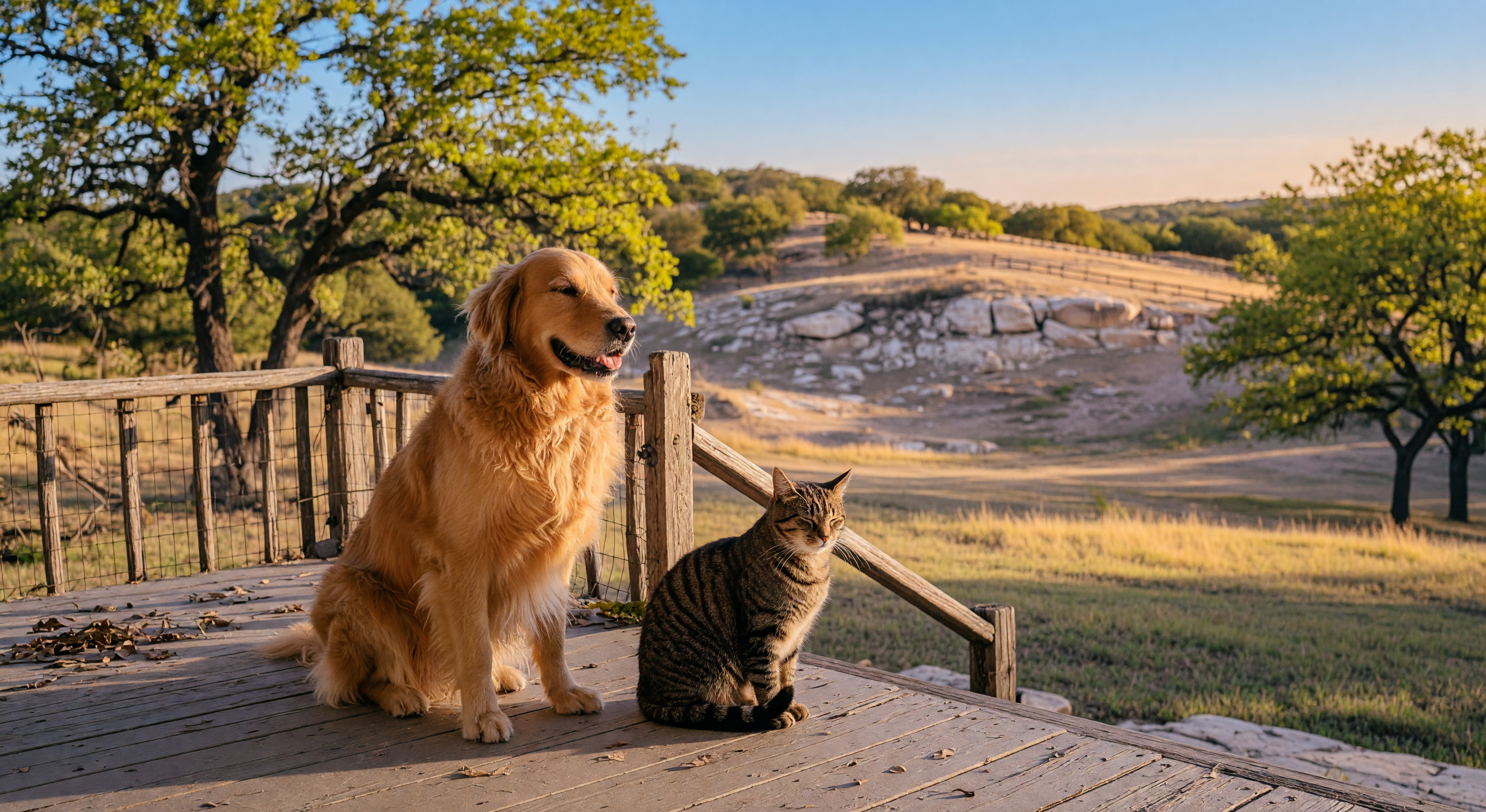

What Do I Need to Know About Texas Pet Laws?
If you are coming from a California city with strict pet ordinances, Texas will feel noticeably more relaxed. The state takes a hands-off approach to pet regulation, leaving most rules to counties and municipalities. Here is the practical summary.
Leash Laws
Texas has no statewide leash law. Instead, leash requirements are set by individual counties and cities. Kendall County and the City of Boerne have local leash ordinances that require dogs to be under restraint in public areas. However, most Hill Country properties with acreage give dogs room to roam freely on their own land — that is one of the reasons people move here.
- Boerne and Kendall County: Leash laws apply in public spaces. Dogs must be restrained on your property or under direct voice control on your own land, depending on local code.
- Fair Oaks Ranch: Similar leash requirements in public areas. Private acreage lots generally allow dogs off-leash on your own property.
- Rural unincorporated areas: Fewer restrictions, but be a good neighbor. If your dog wanders onto someone else's property, you are still liable.
Rabies Vaccinations
Texas requires rabies vaccinations for all dogs and cats. This is one of the few statewide pet health mandates. Make sure your pets' rabies vaccinations are current before the move — you will need proof of vaccination for vet visits and boarding during transit.
Pet Licensing
Unlike many California cities that require annual pet licensing and tag fees, Texas does not mandate pet licensing at the state level. Some cities (including San Antonio) require dog licensing, but Boerne and most Hill Country communities do not. Check with the specific municipality where you settle.
How Do I Transport My Pets Cross-State?
A California-to-Texas move is roughly 1,300 to 1,700 miles depending on your route. Whether you drive or fly, a little planning goes a long way toward keeping your pets calm and safe.
Driving with Dogs
For medium and large breeds, driving is generally less stressful than flying. Plan stops every two to three hours for water, bathroom breaks, and short walks. Bring familiar items — their bed, a favorite blanket, and regular food. A consistent routine on the road helps dogs adjust faster.
- Route planning: Identify pet-friendly hotels along your route in advance. Most major chains (La Quinta, Best Western, Motel 6) accept pets, but always confirm.
- Car safety: Use a crash-tested harness or a secured crate. Dogs should not ride unrestrained in the bed of a truck — it is dangerous and, in some areas, illegal.
- Food and water: Bring more than you think you will need. Tap water tastes different in every state, and some dogs are sensitive to sudden changes.
Driving with Cats
Cats should remain in a secure carrier during the entire drive. Line the carrier with a familiar blanket and consider calming aids such as Feliway spray (applied 30 minutes before placing the cat in the carrier) or vet-recommended options. Cats generally adjust to a new home faster than dogs — the key is keeping them contained and calm during transit.
- Feeding: Light meal eight to twelve hours before departure to reduce the chance of motion sickness.
- Litter: Place a small litter tray inside a larger crate or use a disposable litter box for the drive.
- ID: Ensure your cat has a collar with ID tags and is microchipped with up-to-date contact information.
Flying with Pets
If you fly, San Antonio International Airport (SAT) is pet-friendly with designated relief areas. For small dogs and cats, cabin travel is usually the least stressful option — airlines that allow in-cabin pets include Southwest, United, and American (fees and weight limits apply). For larger dogs, cargo transport is an option but comes with more risk and stress. Consult your vet before booking.
Other Pets (Reptiles, Birds, Small Mammals)
For reptiles, birds, hamsters, rabbits, and other small animals, check Texas Parks and Wildlife regulations for any restricted species. Most common household pets have no restrictions. Reptile owners should be aware that some native Texas snakes (including certain rattlesnake species) are protected — do not release any California reptile into the wild.
Vet Records and Documentation
Bring the following for every pet:
- Vaccination records (rabies is required; distemper, parvo, and bordetella are standard for dogs)
- Current medication prescriptions and supply
- Your current veterinarian's contact information
- Microchip registration details
- Health certificate if flying (required by most airlines within ten days of travel)
Plan to establish with a new veterinarian within the first two weeks of arrival. This gives your pet a local medical record and lets you address any adjustment issues early.
Finding a Veterinarian in the Hill Country
Veterinary care in the Hill Country is solid for routine needs, and specialty or emergency care is accessible through San Antonio. Here is what to expect.
Boerne and Kendall County
Boerne has several established veterinary practices that cover routine care, vaccinations, dental work, and minor procedures. The area's growing population means veterinary capacity has expanded in recent years. Expect short wait times compared to urban California clinics.
Emergency Veterinary Care
San Antonio has 24-hour emergency veterinary hospitals on the north side, roughly 30 to 40 minutes from Boerne. These facilities handle critical emergencies, overnight observation, and after-hours care. Know the route before you need it — save the address in your phone.
Specialty Care
For specialty veterinary services — oncology, orthopedic surgery, cardiology, advanced imaging — San Antonio veterinary specialists are available. Referrals from your local Boerne vet are the standard process. This is comparable to how specialty care works in most mid-size metro areas.
Mobile Veterinarians
Mobile vets serve the rural Hill Country and are especially useful for properties with multiple animals, livestock, or animals that do not travel well. If you are on acreage with horses, goats, or other large animals, a mobile equine or large-animal vet is worth establishing early.
Pet-Friendly Communities in the Hill Country
One of the quiet advantages of the Hill Country is how naturally pet-friendly the communities are. The space, the climate, and the culture all favor animal owners. But there are details to check before you commit.
What Makes Hill Country Properties Pet-Friendly
- Larger lots: Many properties in Fair Oaks Ranch, Cordillera Ranch, and surrounding areas sit on half-acre to multi-acre lots with fenced yards and open space.
- Rural acreage: Properties with five or more acres give dogs genuine freedom to run and explore on their own land.
- Outdoor lifestyle: The community culture here is oriented toward outdoor living — hiking, river access, and open space are part of daily life, not a weekend trip.
HOA Considerations
HOA communities vary significantly. Some have breed restrictions (pit bulls and similar breeds are commonly restricted), size limits, or caps on the number of pets. Always review the CC&Rs (Covenants, Conditions, and Restrictions) before making an offer. This is standard due diligence, but it is especially important when you have pets.
Community-Specific Notes
- Cordillera Ranch: Generally pet-friendly with large lots and open spaces. Review specific subdivision rules.
- Van Deerlin: Rural character, pet-friendly. Acreage properties are common.
- Fair Oaks Ranch communities: Most are accommodating to pet owners, but verify HOA rules for your specific section.
Renters
Pet-friendly rentals are available but less common in the Hill Country than in San Antonio proper. Inventory is tighter and deposits tend to be higher. Start your search early, and expect to pay a pet deposit of $200 to $500 per animal, depending on the landlord.
Outdoor Activities with Your Pets
This is where Hill Country living genuinely shines for pet owners. The trails, rivers, and open space give your animals a quality of life that most suburban California yards cannot match.
Trails and Parks
- Guadalupe River State Park: Dogs are welcome on leash. Miles of trails along the river through Hill Country terrain. One of the best dog-friendly destinations in the area.
- Boerne City Park: A comfortable, well-maintained park with paved trails and open green space. Good for daily walks.
- Cibolo Creek Trail: A paved trail running through Boerne, following Cibolo Creek. Popular with walkers and dog owners.
- Guadalupe-Blanco River trails: Multiple access points for walking, wading, and exploring along the river corridor.
Swimming
The Guadalupe and Blanco rivers are popular spots for dogs to swim. Supervised river access is generally safe and enjoyable — the water is clear, the currents are manageable in most sections, and dogs take to it naturally. Bring a towel and check for algae advisories during extreme heat.
Heat Safety
This is the one area where California transplants consistently underestimate the difference. Texas heat is serious.
- Summer temperatures regularly exceed 100°F. Walk dogs in the early morning (before 8 a.m.) or evening (after 7 p.m.).
- Pavement burns paw pads. Test pavement with the back of your hand for five seconds. If it is too hot for your hand, it is too hot for paws.
- Carry water. Bring a collapsible bowl and water on every outdoor outing from April through October.
- Watch for heat exhaustion: Excessive panting, drooling, bright red gums, and lethargy are warning signs. Move to shade, apply cool (not cold) water, and get to a vet immediately if symptoms do not improve.
Wildlife Awareness
Hill Country is beautiful, but it is also home to wildlife that suburban California dogs may not have encountered:
- Rattlesnakes: Present but not common in populated areas. They are more likely on rural properties, especially near rock piles and tall grass. Snake aversion training for dogs is available and worth considering.
- Coyotes: More common in rural and semi-rural areas. Keep small pets supervised, especially at dawn and dusk. Do not leave pet food outdoors.
- Fire ants: Ubiquitous in Texas. They build mounds in open ground and can sting pets (and people) aggressively when disturbed. Check your yard regularly and treat mounds promptly.
The Reality of Rural Pet Ownership
Hill Country properties are different from suburban California yards. Be prepared for a few adjustments:
- Well water mineral content: If your property uses well water, the mineral content may differ from what your pet is used to. Most animals adapt without issue, but if your pet is sensitive to water changes, consider a filtered water source for drinking.
- Ticks and fleas: More prevalent in rural Hill Country settings than in suburban California. Keep flea and tick prevention current year-round — not just in summer. Your vet will recommend products suited to the area.
- Wildlife encounters: Your dogs may encounter deer, rabbits, javelina, or snakes on your property. Supervised outdoor time is wise, especially at first, until you learn your property's patterns.
The upside is significant: more space, more nature, and more freedom for your animals than most California properties can offer. Most relocating pets adjust within a few weeks and thrive in the Hill Country environment. The adjustment period is short, and the lifestyle improvement is lasting.