
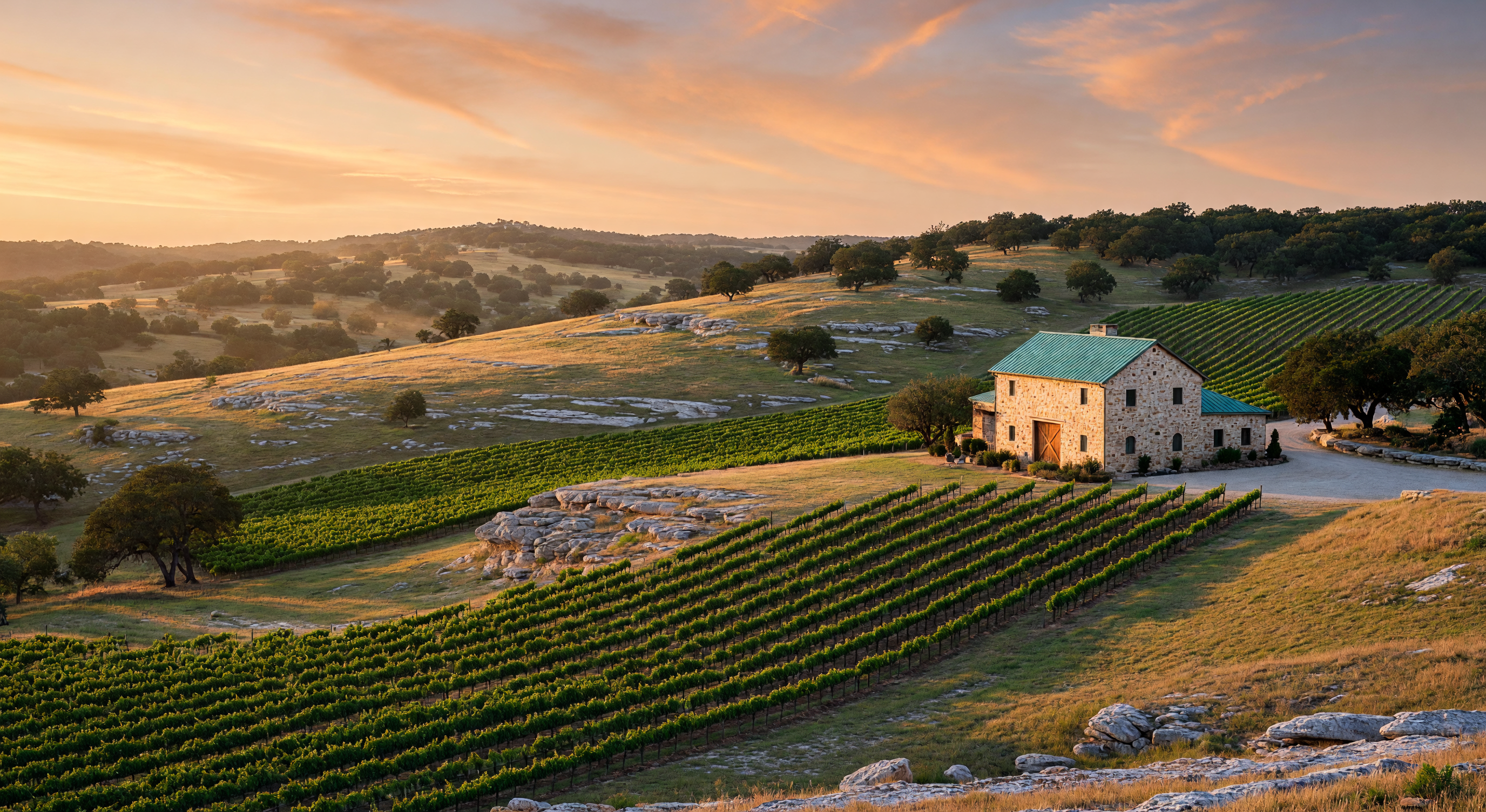
When people think about Texas wine country, they often picture a novelty — something to visit once and check off a list. That perception is outdated. The Texas Hill Country is now the second most-visited wine region in the United States after Napa Valley, with over 100 wineries operating across the region and an industry that has matured considerably in the past decade.
For families relocating from California, this matters for two reasons. First, wine country is a genuine part of Hill Country living. It is not a tourist gimmick. Residents spend weekends on the 290 corridor, visit tasting rooms on weeknights, and treat Fredericksburg the way Californians treat Sonoma — as a nearby escape that becomes part of your regular routine. Second, the quality of Texas wine has reached a point where it deserves serious attention on its own terms.
The Texas Hill Country AVA
The Texas Hill Country American Viticultural Area (AVA) is one of the largest designated wine regions in the United States, covering approximately 1.6 million acres across 22 counties. For context, that is roughly the size of the Napa, Sonoma, and Paso Robles AVAs combined.
The region's limestone-based soils, elevation changes of 700 to 2,000 feet, and hot, semi-arid climate with cold winter fronts create growing conditions that are genuinely distinct from California wine regions. This is not Napa with a different zip code. The terroir produces wines with their own character — and that is the point.
The main growing areas cluster around the Highway 290 corridor between Johnson City and Fredericksburg, extending south toward Hye and Stonewall. This is the heart of Hill Country wine, and it is where most visitors spend their time.
"Texas wine is its own thing. The state produces wines from grapes that thrive in its climate and soils — Tempranillo, Viognier, Roussanne, and the distinctly Texan Blanc du Bois. Appreciate them for what they are, not as a substitute for Napa Cabernet or Burgundian Pinot Noir."
— The reality of Texas wine, stated plainly
The Main Winery Towns and Corridors
Fredericksburg
Fredericksburg is the undisputed hub of Hill Country wine. The town's Main Street alone has more than 40 tasting rooms within walking distance, ranging from large-production labels to small, family-run operations. Beyond downtown, the surrounding countryside holds dozens of additional wineries with vineyard views and more expansive tasting experiences. Fredericksburg has a strong food scene to complement the wine, with German-influenced restaurants, bakeries, and seasonal festivals that draw visitors year-round.
Johnson City
Johnson City sits at the western edge of the main wine corridor. It is smaller and quieter than Fredericksburg, with a handful of well-regarded tasting rooms and a more relaxed pace. Lyndon B. Johnson's ranch and the Texas State Railroad give the town additional character. Several wineries on the outskirts of Johnson City offer expansive Hill Country views without the weekend crowds.
Comfort
Comfort is a small town between Boerne and Fredericksburg that has developed a modest but growing wine presence. Its location makes it a convenient first stop on a winery day trip from Boerne or Fair Oaks Ranch — roughly 20 to 30 minutes from home. The town itself has a preserved historic downtown with antique shops and a few well-regarded restaurants.
Stonewall and Hye
These smaller communities along the 290 corridor are home to some of the most respected wineries in the state. The drive between them is scenic and relatively uncrowded, even on weekends. This stretch of 290 is where you find wineries with vineyard tours, outdoor seating among the vines, and a more immersive wine-country experience.
The 290 Corridor
Highway 290 between Johnson City and Fredericksburg is the main artery of Texas wine country. The corridor is roughly 30 miles long and lined with wineries, tasting rooms, and related businesses. Driving the full stretch on a Saturday afternoon is a quintessential Hill Country experience — and one that residents genuinely do regularly, not just visitors.
Notable Wineries Worth Visiting
The list below is not exhaustive — with over 100 wineries, it cannot be. These are established operations with consistent quality, solid tasting room experiences, and reputations built over years rather than marketing budgets.
Becker Vineyards
One of the most recognized names in Texas wine. Becker produces a range of Tempranillo-based reds and aromatic whites. The lavender fields and stone tasting room are a draw, but the wine is the reason people return. Consistent quality across vintages.
Grape Creek Vineyards
A well-established winery on the 290 corridor with a Tuscan-inspired tasting room. Grape Creek focuses on Bordeaux and Rhône varietals, with particular strength in their red blends. The on-site Trattoria Lisina offers Italian-inspired food pairings.
William Chris Vineyards
William Chris is a producer-first winery with a reputation for serious, vineyard-driven wines. The focus is on Texas-grown grapes and minimal intervention winemaking. Their tasting experience is more educational than social — you will learn something.
Pedernales Cellars
A family-owned operation known for its Tempranillo and GSM (Grenache, Syrah, Mourvèdre) blends. Pedernales sits on a hilltop with panoramic views. The winery has won multiple awards at state and national competitions.
Southold Farm + Cellar
A newer entrant that has quickly earned attention for its thoughtful approach to winemaking and its intimate, farmstead-style tasting room. Southold focuses on small-lot wines from Texas grapes. The experience is personal and unhurried.
Kuhlman Cellars
Kuhlman offers a structured tasting experience with food pairings designed by an in-house culinary team. The winery focuses on Rhône and Italian varietals. This is a good choice for visitors who want a more curated, restaurant-style wine experience.
Pontotoc Vineyard
A small, family-run winery with a focus on heritage Texas grapes and traditional winemaking methods. Pontotoc is less polished than the larger operations, which is part of its appeal. The tasting room is casual and the conversation is real.
4.0 Cellars
A collaborative winery that brings together multiple Texas winemakers under one roof. The result is a diverse tasting experience in a single visit. 4.0 Cellars is a good starting point for newcomers who want to sample a range of styles.
Singing Water Vineyards
Singing Water sits on the banks of Bruins Creek in Comfort — roughly 25 minutes from Boerne. The tasting room is inside a restored 1880s barn called the Freedom Room, and the outdoor space includes a pergola-covered patio, lawn areas, and a pavilion. The setting is scenic without being overbuilt. Wines range from Cabernet Sauvignon and Merlot to Viognier and Pinot Grigio, with a Texas Reserve red blend that is worth trying. Open Thursday through Sunday, 12 to 6. Reservations are recommended but not always required.
Augusta Vin
Augusta Vin is an estate winery south of Fredericksburg on Highway 16, set on 60 acres of vineyard. The tasting room is a two-story timber-framed structure with a mezzanine and balcony overlooking the vines — the most architecturally striking space on this list. The atmosphere is upscale and adults-only. They produce estate wines from French and Spanish varietals including Cabernet Sauvignon, Tempranillo, Malbec, Petit Sirah, and a Rosé of Counoise. Charcuterie and cheese boards are available. This is a good stop if you want a polished, quiet tasting experience without the weekend corridor crowds.
What Texas Wine Actually Tastes Like
Texas has developed its own winemaking identity, and it does not attempt to replicate California or France. The standout red grape is Texas Tempranillo — adapted from the Spanish original to thrive in Hill Country heat and limestone soils. The best examples offer dark fruit, earth, and a structure that holds up well with aging.
On the white side, Viognier and Roussanne are the primary grapes, producing aromatic, full-bodied whites that work well in the Texas climate. Mourvèdre has gained traction as a red varietal, producing wines with structure and spice.
Then there is Blanc du Bois — a grape that exists almost nowhere else. Developed in Florida and planted extensively in Texas, Blanc du Bois produces crisp, floral whites with good acidity. If you have never tried it, Hill Country is the place to start.
The overall trajectory of Texas wine is upward. Ten years ago, much of the state's production was dismissed as a curiosity. That is no longer the case. Texas wines regularly win medals at national competitions, and the best producers are making wines that stand alongside bottles from established regions. The improvement is not hype. It reflects genuine investment in viticulture, winemaking technique, and grape selection suited to the Texas terroir.
"Texas Tempranillo is the state's signature red — a grape adapted to Hill Country heat and limestone soils that produces dark-fruited, structured wines with genuine aging potential. If you try one Texas wine, make it this one."
Practical Tips for Visiting
Visiting Hill Country wineries is straightforward, but a few practical details make the experience better.
When to Go
Tasting room hours vary by season. Most are open Thursday through Sunday, with reduced hours or closures on weekdays during the slower winter months (January through February). Peak visitation happens in spring (March through May) and fall (September through November), when temperatures are comfortable and the scenery is at its best. Summer visits are possible but expect heat above 95 degrees and fewer outdoor seating options. Weekday visits are noticeably less crowded — if your schedule allows a Wednesday or Thursday tasting, you will have more direct interaction with staff and more space to enjoy the experience.
Food and Dining
Many wineries offer food pairings, and several have full on-site restaurants. Grape Creek's Trattoria Lisina, Kuhlman Cellars' restaurant, and the various dining options in Fredericksburg's downtown make it easy to build a full day around wine and food. For a more casual approach, some wineries allow outside food or have food trucks on-site during weekends.
Transportation
Designate a driver or use one of the local wine tour services. Several companies operate from Fredericksburg and the 290 corridor, offering half-day and full-day guided tastings. This is the safest and most practical option for a full day of winery visits.
Tasting Fees
Most tasting rooms charge $15 to $30 per person for a standard tasting flight, which typically includes four to six wines. Many apply the tasting fee to wine purchases. The experience is casual — no reservations required at most locations, though popular spots on weekends benefit from a reservation.
How Far Is Wine Country from Home?
One of the practical advantages of living in the Hill Country is proximity to wine country. From Boerne or Fair Oaks Ranch, the main winery destinations are well within a day-trip distance.
| Destination | Drive Time |
|---|---|
| Comfort | 20–30 minutes |
| Johnson City | 35–45 minutes |
| Fredericksburg | 45–60 minutes |
| 290 Corridor Wineries | 40–60 minutes |
| Stonewall / Hye | 45–55 minutes |
A Saturday drive to Fredericksburg for lunch and a couple of tastings is a 90-minute round trip from Boerne. That level of proximity is part of what makes Hill Country living different from a weekend tourist visit — wine country becomes part of your regular routine, not a special occasion.
Wine Country as Part of the Hill Country Lifestyle
Wine country is not a side attraction to life in the Hill Country. It is woven into the social and cultural fabric of the region. Residents host friends at tasting rooms, attend harvest events, join wine clubs, and spend ordinary weekends doing what tourists travel thousands of miles to experience.
The Texas wine industry's growth over the past decade has been driven less by tourism marketing and more by a genuine improvement in quality. Wineries that opened as experiments a decade ago are now producing respected, award-winning wines. The region has earned its reputation through consistent output rather than promotional hype.
If you are evaluating a move to the Hill Country, wine country is one of those quality-of-life factors that is difficult to quantify but easy to experience. A weekend visit to the 290 corridor will tell you more about what daily life feels like here than any amount of online research.
For a broader picture of Hill Country living, review the city comparison guide to understand which communities put you closest to the wine corridor. For a complete cost-of-living analysis including housing, taxes, and daily expenses, see the cost of living breakdown.

Written by
Bill Ross
Hill Country Homesteads Group, brokered by KW Boerne
Bill Ross is a Texas real estate agent with nearly four decades in high-tech sales and a network of 1,100+ California real estate agents for coordinated cross-state transactions. Featured in national coverage discussing his family's relocation from Silicon Valley to the Texas Hill Country.
Related Guides
Sources
- Texas Hill Country AVA coverage (approximately 1.6 million acres across 22 counties) — Alcohol and Tobacco Tax and Trade Bureau (TTB), Wine AVA Listings. ttb.gov
- Second most-visited wine region in the United States after Napa Valley — Texas Department of Agriculture, Texas Wine Industry Data; Texas Hill Country Wineries Association. texaswinetrail.com
- 100+ wineries operating across the Hill Country region — Texas Hill Country Wineries Association, Winery Directory. texaswinetrail.com
- Over 40 tasting rooms on Fredericksburg Main Street — Visit Fredericksburg Texas. visitfredericksburg.org
- Elevation changes of 700 to 2,000 feet in the Hill Country — U.S. Geological Survey, National Map; Texas Natural Diversity Database.
- Winery websites for Becker Vineyards, Grape Creek Vineyards, William Chris Vineyards, Pedernales Cellars, Kuhlman Cellars, Singing Water Vineyards — Respective winery websites. beckervineyards.com; grapecreekvineyards.com; williamchrisvineyards.com
Last reviewed: June 2026. Sources verified for accuracy.