

If you are coming from California, you are accustomed to a disclosure process that is layered, prescriptive, and in many ways protective by design. California requires a Transfer Disclosure Statement, a Natural Hazard Disclosure prepared by a third-party company, and in many cases additional addenda covering everything from lead-based paint to smoking history. The system assumes the buyer will rely on these documents and builds in multiple layers of verification.
Texas works differently. The Texas Real Estate Commission (TREC) Seller's Disclosure Notice is a single document — important, legally significant, but not exhaustive. It tells you what the seller knows about the property's condition. It does not tell you what the seller does not know. And for a California buyer accustomed to the depth of California disclosures, that gap can be a serious problem if you do not understand the limits.
The practical takeaway is simple: read the disclosure carefully, then verify everything material with your own inspections and research. For complex or high-stakes transactions — estate sales, probate transfers, out-of-state purchases — a qualified Texas real estate attorney should review your disclosure and contract before you commit.
What TREC Requires: The Legal Framework
Texas Property Code Section 5.008 requires sellers of most previously occupied residential properties to provide a written disclosure notice to the buyer before the buyer is obligated to purchase [1]. The disclosure must be provided on the form promulgated by the Texas Real Estate Commission — currently TREC Form 55-1 (effective May 28, 2026, formerly Form OP-H), titled "Seller's Disclosure Notice" [2].
Texas Property Code Section 5.008 explicitly applies to residential real property comprising not more than one dwelling unit — meaning single-family homes. It does NOT apply to duplexes, triplexes, or multi-family properties [1]. It is a foundational consumer protection in Texas real estate transactions — but it has limits that are important to understand.
Here is what the statute requires and what the form covers:
- Who must provide it: The seller of a previously occupied, single-family residential property [1]. There is no requirement that the seller hire a professional inspector — the disclosure is based on the seller's own knowledge.
- When it must be provided: Before the buyer is obligated to purchase. In practice, this means the disclosure should be delivered before or concurrent with the execution of the purchase contract. If the disclosure is delivered after the buyer has signed the contract, the buyer has the right to terminate the contract for any reason within seven days of receiving the late disclosure [1].
- What it must cover: The TREC form addresses material facts and physical condition items, including structural components, mechanical systems, environmental hazards, and property history [2].
- Format: The TREC form uses a combination of questions, checkboxes, and free-text fields. Sellers indicate their knowledge — or lack thereof — about each category [2].
"The disclosure is a snapshot of what the seller knows. It is not a guarantee of condition. It is not an inspection report. And it is not a substitute for your own due diligence."
What Your Agent Must Disclose
The disclosure framework in Texas is not limited to the seller. Under Texas law, real estate agents — both listing agents and buyer's agents — have independent duties to disclose material facts about a property. A listing agent must disclose known material defects, and a buyer's agent has a duty to disclose any material facts the agent knows about the property that may affect the buyer's decision.
This is a critical distinction. The seller's disclosure covers the seller's knowledge. The agent's disclosure obligation covers the agent's knowledge — which may include facts the seller did not know, did not disclose, or did not consider material. If your agent is aware of a known foundation problem, a past flood event, or an ongoing neighbor dispute that affects the property's use, the agent has a duty to disclose that information, regardless of what the seller's form says.
For California buyers, this is worth understanding. In California, agents have similar duties under the agency disclosure framework. In Texas, the duty is grounded in the Texas Real Estate License Act and the rules of the Texas Real Estate Commission, which require agents to disclose known material facts to all parties. If you are working with a buyer's agent in Texas, that agent is obligated to share any material information they know about the property — even if the seller did not disclose it. This is an additional layer of protection that operates alongside, not instead of, the seller's disclosure.
If you are purchasing in a complex situation — an estate sale, a probate transfer, a property with known defects, or an out-of-state purchase where you cannot physically inspect the property before closing — it is prudent to consult a licensed Texas real estate attorney who can review the disclosure, the agent's obligations, and the contract terms before you proceed. An attorney can identify disclosure gaps, advise on the agent's duty to report, and help you understand what the seller and agent are — and are not — required to disclose under Texas law.
The TAR Seller's Disclosure Notice: What Most Texas Agents Actually Use
While the TREC Seller's Disclosure Notice (Form 55-1, formerly OP-H) is the minimum legal requirement under Texas Property Code Section 5.008, most Texas real estate agents do not actually use that form. Instead, they use the Texas REALTORS® (TAR) Seller's Disclosure Notice — Form TXR 1406 — which is published by the Texas Association of Realtors and is a more comprehensive version of the statutory disclosure [7].
The TAR form satisfies the same legal obligation under Section 5.008, but it asks additional questions beyond what the TREC form requires. These extra items cover areas such as:
- Smoke detectors and fire safety equipment: Whether the property has working smoke detectors, carbon monoxide detectors, and fire extinguishers — items the TREC form does not address in detail.
- Equipment warranties: Whether warranties exist on major systems — HVAC, water heater, appliances — and whether those warranties are transferable to the buyer.
- Boundary and fence details: Questions about fence ownership, boundary disputes, and encroachments that go beyond the TREC form's scope.
- Additional structural and environmental questions: More granular inquiries about the property's condition, including items the TREC form treats as open-ended "Other" fields.
The practical implication for California buyers is this: when you receive a seller's disclosure in Texas, it is likely to be the TAR form, not the TREC form. The TAR form is more thorough — and more protective for the buyer — because it captures additional details that the minimum statutory form does not require. If your agent provides you with a disclosure that has more detailed questions than you expected, that is likely the TAR form. Read it carefully. The additional questions represent additional opportunities for the seller to disclose information that matters.
It is worth noting that some agents in Texas still use the TREC form, particularly for properties that fall outside the TAR's standard scope. If you receive the TREC form instead of the TAR form, do not assume it is insufficient — but do understand that the TAR form asks more questions. The difference in depth between the two forms can be significant, and it is the TAR form that most experienced Texas agents rely on for their own risk management and for their clients' protection.
What Texas Disclosures Actually Tell You
The TREC Seller's Disclosure Notice covers a meaningful range of property condition information. When a seller completes the form honestly and thoroughly, it gives you a useful starting point for understanding the home. Here is what it addresses:
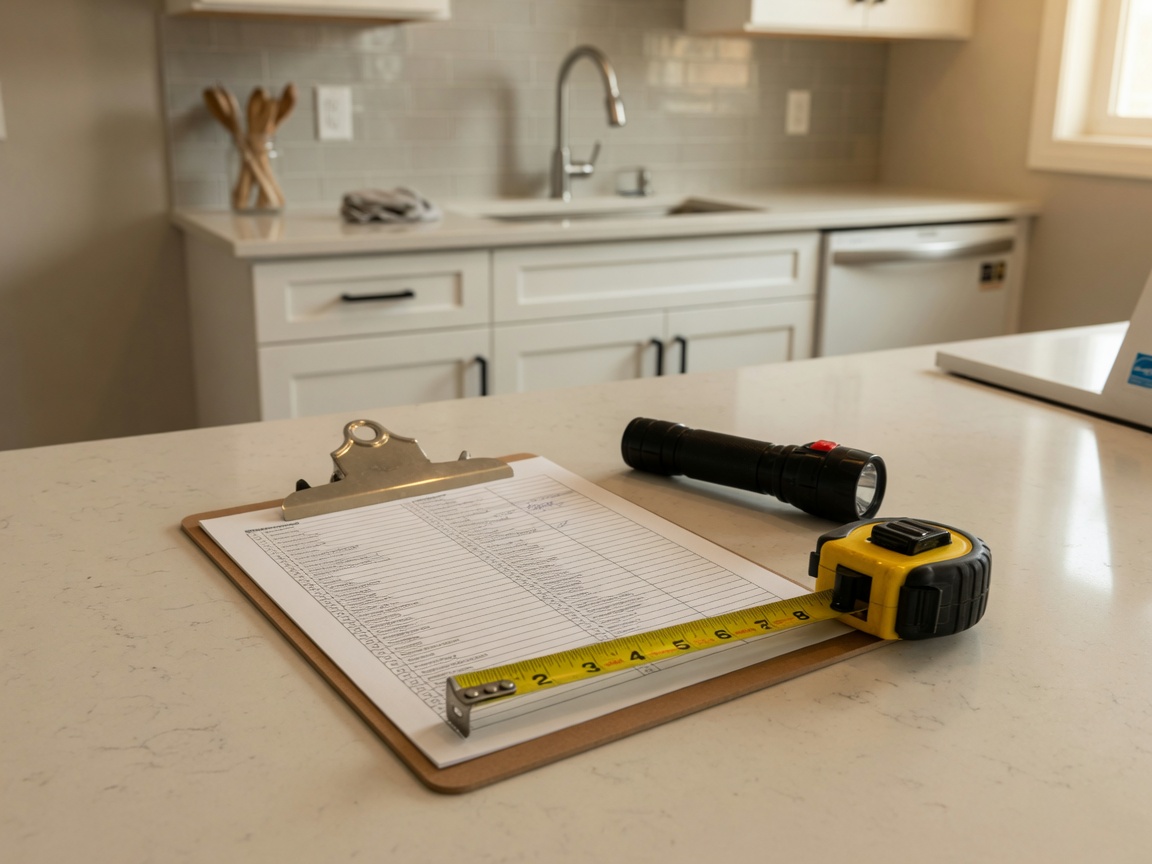
An inspection checklist and tools — the starting point for verifying what a seller's disclosure tells you.
Structural Components
The form asks about the foundation, walls, roof, floors, and other structural elements. Sellers must indicate whether they are aware of any defects, damage, or needed repairs [2]. If a seller has observed foundation cracks, wall separation, or roof leaks, these should appear on the disclosure.
Mechanical Systems
The disclosure covers plumbing, electrical, heating and air conditioning (HVAC), and water heating systems. Sellers indicate the age, condition, and any known issues with these systems [2]. This is particularly relevant in the Hill Country, where many homes use private wells and septic systems — items that have their own disclosure considerations.
Environmental Hazards
Federal law requires disclosure of known lead-based paint hazards in homes built before 1978 [4]. The TREC form also addresses asbestos, radon, and other environmental conditions [2]. In the Hill Country, proximity to the Edwards Aquifer recharge and contributing zones can also be a relevant environmental factor, though the TREC form does not specifically address groundwater contamination.
Water Damage, Mold, and Termite Damage
The form asks whether the property has experienced water damage, whether mold has been present, and whether there is evidence of termite or wood-destroying insect damage [2]. In the Texas climate — where humidity, summer storms, and older construction create conditions favorable to all three — these are questions worth reading carefully.
Property History
Sellers are asked about insurance claims, flooding, past repairs, and any known defects [2]. If a home has flooded, if an insurance claim was filed, or if a major repair was performed, the seller should disclose it. The form also asks about HOA restrictions and special assessments.
In recent years, Texas has significantly expanded the flood-related questions on the disclosure form. The enhanced questions now ask whether the property is located in a 100-year floodplain (1% annual chance of flooding) or a 500-year floodplain (0.2% annual chance), and whether the property has ever been flooded, regardless of whether it sits in a designated flood zone. The form also addresses flood pools — engineered retention areas behind dams designed to temporarily hold floodwater — and proximity to reservoirs that could be impacted during extreme rain events. These additions reflect Texas's experience with catastrophic flooding events and provide buyers with more specific information about flood risk than the previous version of the form required.
Foundation Issues and Roof Condition
Foundation problems are among the most expensive issues in Texas real estate. The disclosure asks about known foundation defects, repairs, and ongoing movement [2]. Roof condition, age, and any known leaks are also addressed. In the Hill Country, where homes are frequently built on limestone with expansive clay soils, foundation performance is a critical data point.
Sewer Lines and Septic Systems
For properties with septic systems — common throughout the Hill Country — the disclosure should address the type of system and any known issues. The form also asks about sewer line condition for properties connected to municipal systems [2]. Given that septic system repairs can cost $15,000 to $30,000 or more, this is not a section to skim.
Known Defects and Conditions
Beyond specific categories, the TREC form includes open-ended sections where sellers can describe conditions not otherwise covered [2]. This is where a thorough seller may provide additional context — or where a less thorough seller may leave critical blanks.
What Texas Disclosures Do Not Tell You
This is the section that matters most for California buyers. The TREC disclosure has structural limitations that create gaps a buyer from California may not anticipate.
"To the Best of the Seller's Knowledge"
Every item on the TREC form is answered to the seller's knowledge. This phrase is not a guarantee — it is a qualifier. If a seller genuinely did not know about a foundation problem, a roof leak, or a septic system that is failing, the disclosure may not contain that information even though the problem exists [1]. The seller is required to disclose known material facts, but they are not required to investigate the property before completing the form.
"Yes," "No," and "Unknown" — But "No" Does Not Mean "No Problem"
The standard TREC Seller's Disclosure Notice (Form 55-1, formerly OP-H) uses three checkbox options for most items: "Yes" (the seller is aware of the condition), "No" (the seller is not aware), and "Unknown" (the seller does not have sufficient information) [2]. There is no "No representation" option on the standard form. However, a "No" response is still limited — it means the seller is not aware of the condition, not that the condition does not exist. A "No" answer on the foundation question does not mean the foundation is sound. It means the seller has not observed a problem. An "Unknown" answer means the seller has not investigated or cannot speak to that item. California buyers often interpret a clean disclosure as a clean bill of health. It is not.
No Professional Inspection Required
Texas law does not require the seller to have the property inspected before completing the disclosure. The disclosure is the seller's personal knowledge, not a professional assessment [1]. A seller may have lived in the home for twenty years without ever having the foundation evaluated, the septic system pumped, or the well water tested. Their knowledge may be genuine — and genuinely incomplete.
It Does Not Cover What the Seller Did Not Know About
The disclosure is limited to what the seller actually knew or should have known. If a slow leak has been developing behind a wall for three years and the seller never saw signs of it, the seller is not required to disclose it — because the seller did not know about it [1]. This is not evasion. It is the legal standard. But it means that problems with no visible symptoms may not appear on the disclosure.
Events After the Disclosure Was Written
The disclosure reflects the seller's knowledge at the time it was completed. If a pipe bursts, a roof develops a leak, or a foundation shifts after the disclosure is signed, the original document may no longer be accurate [1]. In a typical 30- to 45-day closing timeline, conditions can change. The disclosure is a point-in-time snapshot, not a living document.
Exemptions to the Disclosure Requirement
Not all sellers are required to provide the TREC disclosure. Texas Property Code Section 5.008 exempts several categories of transactions [1]:
- New construction — homes that have never been occupied
- Foreclosure sales and trustee's deeds
- Court-ordered sales
- Transfers between co-owners (spouses, business partners)
- Transfers to a lienholder as a result of a foreclosure proceeding
- Transfers under a power of attorney
If you are buying a foreclosure, a bank-owned property, or a brand-new construction home, you may not receive a seller's disclosure at all. This does not mean you should skip inspection — it means the disclosure was never going to be your primary source of information. In these exempt transactions, and particularly in estate sales or probate transfers where the seller may have limited knowledge of the property's history, consulting a real estate attorney is especially advisable. The absence of a disclosure means there is no baseline document to verify against — your due diligence has to carry the full weight.
Late Delivery: The Buyer's 7-Day Termination Right
This is one of the most significant — and most overlooked — provisions in the statute. Texas Property Code Section 5.008 requires that the disclosure be delivered before the buyer is obligated to purchase. If the seller fails to provide the disclosure before the contract is executed and instead delivers it after the buyer has signed, the buyer gains a specific statutory right: the buyer may terminate the contract for any reason within seven (7) days after receiving the late disclosure [1].
This is not limited to discovering defects or misstatements. The buyer can terminate simply because the disclosure was delivered late — no other justification is required. This is a meaningful penalty built into the statute to incentivize timely delivery. If you are a buyer and you receive a seller's disclosure after you have already signed the contract, be aware that this seven-day termination window is available to you regardless of what the disclosure says or does not say.
For California buyers, this provision is worth understanding in context. In California, disclosure timing is tightly regulated with specific statutory deadlines. Texas places a similar emphasis on timing, but the remedy — an unrestricted termination right — is a blunt instrument that reflects how seriously the statute treats late delivery. Your agent should confirm that the disclosure was delivered before or concurrent with contract execution. If it was not, that timing issue alone may give you an exit from the transaction.
Flood Risk: Enhanced Questions, but Still Seller Knowledge
Texas has expanded its flood disclosure questions in recent years to require sellers to indicate whether the property is located within a 100-year floodplain ( FEMA Special Flood Hazard Area with a 1% annual chance of flooding) or a 500-year floodplain (a moderate-risk zone with a 0.2% annual chance). The form also now asks whether the property has ever flooded, and whether it is located in or near a flood pool or reservoir area [2].
These are meaningful improvements over the prior version of the form. But the fundamental limitation remains: every flood question on the disclosure is answered to the seller's knowledge. A seller who has never checked FEMA flood maps, who moved into the home after a flood event, or who was unaware that their property sits in a flood pool may answer "No" — not because the risk does not exist, but because the seller did not know about it. The 100-year floodplain designation is particularly misleading to buyers from other states: a 100-year floodplain does not mean the area floods once every hundred years. It means there is a 1 in 100 chance of flooding in any given year. In the Hill Country, where flash floods are driven by terrain, rainfall intensity, and impervious cover rather than predictable river patterns, properties outside designated floodplains can flood with devastating speed.
Flood pools add another layer of complexity. Flood pools are areas downstream of dams that are intentionally designed to temporarily hold water during extreme rainfall events to protect downstream communities. If a property sits in a flood pool, the risk is not theoretical — it is engineered into the regional flood control system. Reservoir proximity matters as well. During Hurricane Harvey in 2017 and the 2015 and 2016 Memorial Day floods, controlled and uncontrolled reservoir releases inundated areas that many homeowners did not expect to flood. The disclosure form can flag these conditions if the seller is aware of them, but it cannot substitute for independent verification through FEMA maps, the local floodplain administrator, or a floodplain determination performed by a licensed surveyor.
What California Buyers Expect (And What Texas Does Not Provide)
This is where the adjustment gap is widest. California buyers are accustomed to:
- Transfer Disclosure Statement (TDS): A detailed, question-by-question disclosure covering the property's physical condition, often prepared with the assistance of the listing agent [3]. The TDS is more granular than the TREC form in many areas.
- Natural Hazard Disclosure (NHD): A third-party report identifying whether the property sits in a natural hazard zone — earthquake fault zones, flood zones, wildfire hazard areas, dam inundation zones, and more [5]. Texas has no equivalent to the NHD.
- Additional disclosures: California also requires specific disclosures for lead-based paint, methamphetamine contamination, asbestos, mold, and more — many of which are handled by dedicated third-party reports or addenda [3][5].
In Texas, no third-party NHD equivalent exists. The seller's disclosure is the primary — and in most transactions, the only — disclosure document the buyer receives. This places a greater burden on the buyer to verify independently. However, as explained in the section on the TAR form, most Texas agents use a more comprehensive version of the disclosure that asks additional questions beyond the statutory minimum. Additionally, the standard Texas contract's "As-Is" clause and the state's limited stigma disclosure requirements — covered in dedicated sections below — represent further differences California buyers must understand. For California buyers accustomed to the depth of their state's disclosure ecosystem, the gap between what is provided and what you may need to know is real — and closing that gap with independent verification and, when warranted, legal counsel is essential.
The Disclosure Is Not a Warranty or Guarantee
The Texas seller's disclosure is not a warranty of condition. It does not guarantee that the property is free from defects. It does not create liability for conditions that were unknown to the seller at the time of disclosure [1]. It is a legally required statement of the seller's knowledge — nothing more, nothing less. If you discover a material defect after closing that was not disclosed and that a reasonable seller or agent should have known about, you may have legal remedies — but pursuing them requires the guidance of a qualified real estate attorney who can evaluate whether the seller or agent breached their disclosure obligations under Texas law.
The "As-Is" Clause in Texas Contracts: What It Means and What It Does Not
If you are coming from California, this is one of the most important cultural and contractual differences you will encounter in a Texas real estate transaction. The standard TREC 1-4 Family Residential Contract — the form used in virtually every single-family home sale in Texas — includes an "As-Is" provision in Paragraph 7D [8]. This clause states that the buyer is accepting the property "as is," meaning in its present condition, with any and all defects, and without warranty except for the warranties of title and the warranties contained elsewhere in the contract.
In plain terms, the As-Is clause means that the seller has no default obligation to fix anything. The property is being sold in its current state. If the roof leaks, the foundation cracks, or the HVAC system fails the week after closing, the seller is not contractually required to repair those issues — unless a specific amendment or repair agreement was negotiated separately.
"As-Is" in Texas does not mean you cannot negotiate repairs. It means the seller is not obligated to make them. If you want repairs, you must ask for them — and the seller can say no."
California buyers often bring a different set of expectations to this part of the transaction. In California, the standard RPA (Residential Purchase Agreement) includes contingencies that give buyers broad leverage to request repairs or credits. Many California buyers expect that once a property inspection reveals problems, the seller will be expected to address them. In Texas, the As-Is clause sets a different baseline. The seller's obligation is to disclose known defects, not to fix them. If you want the seller to repair something, that request must be made as part of a separate written amendment to the contract — and the seller is under no legal obligation to agree to it.
There is an important distinction to understand: the As-Is clause does not prevent you from negotiating. It does not strip you of your right to inspect the property during the option period. And it does not override the seller's statutory duty to disclose known material defects under Texas Property Code Section 5.008. The As-Is clause simply shifts the default expectation — in Texas, the buyer bears the risk of accepting the property's condition unless a separate agreement says otherwise.
This is also where the option period becomes even more critical. The option period is your contractual window to conduct inspections and evaluate the property's condition. If your inspection reveals issues you want the seller to address, you can submit a repair request during or after the option period — and the seller can accept, reject, or counter. If negotiations fail, the option period gives you the right to terminate the contract and receive your earnest money back. The As-Is clause defines the starting point of that negotiation, not its outcome.
For California buyers, the practical adjustment is this: do not assume the seller will address problems simply because they are disclosed or discovered. The seller is not required to. But the seller is required to disclose what they know — and the option period gives you the space to act on that information. If you need repairs, request them in writing. If the seller declines, you have the option to walk away.
Stigma Disclosure: Deaths, Ghosts, and What Texas Does Not Require
If you are coming from California, this section covers one of the most surprising differences between California and Texas real estate law — and one that affects a surprisingly large number of buyers. In California, the disclosure requirements surrounding deaths on a property are specific and enforceable. In Texas, they are almost entirely absent.
California Rules: Deaths Must Be Disclosed
In California, the law requires sellers to disclose if a death has occurred on the property within the past three years — provided the death was the result of a crime, or occurred in the location of the property. California Civil Code Section 1029.2 and the California Code of Civil Procedure require this disclosure as a matter of consumer protection [9]. If a death occurred by natural causes, suicide, or accident, the seller must still disclose it if the death occurred at the property. There is a narrow exception: deaths resulting from HIV-related conditions or certain accidental causes, but the general rule is clear. California treats deaths on a property as material information the buyer has a right to know.
Texas Rules: Sellers Are Protected by Law
Texas takes a fundamentally different approach. Texas Property Code Section 5.008(c) explicitly provides that sellers and their agents have no duty to disclose information about whether a death occurred on the property — provided the death was by natural causes, suicide, or an accident unrelated to the condition of the property [1]. In other words, if someone died of a heart attack in the living room, or took their own life in the home, the seller is under no legal obligation to tell you.
The statute is explicit: sellers are protected from liability for failing to disclose deaths by natural causes, suicide, or accidents unrelated to the property's condition. The only scenario in which disclosure may be required is if the death was a murder, and even then, the statute's protection of the seller can make the legal landscape complex.
For California buyers — many of whom expect to be told about deaths in a home — this is a significant cultural and legal shift. The expectation in California is that you will be told. In Texas, the law does not require it. This does not mean that every property you are considering has a silent history of overstaying the seller's knowledge threshold. It means you cannot rely on the seller's disclosure to answer the question, "Did anyone die in this home?" If that question matters to you, you will need to research the property's history independently — through public records, news archives, or conversations with neighbors.
In Texas, a seller is not required to disclose a death by natural causes, suicide, or an accident unrelated to the property's condition. Only deaths resulting from murder carry a potential disclosure obligation.
This is one of the most significant adjustments California relocators will face in Texas real estate transactions. It is not a flaw in the system — it is a deliberate policy choice. Texas law prioritizes the seller's privacy over the buyer's right to information in this category. The practical impact for you as a buyer is that you must do your own research on any property's history if the mortality history is important to you.
It is worth noting that this provision has been tested legally. Texas courts have generally upheld the seller's protection from liability for non-disclosure of natural-cause deaths, provided the death was not caused by or related to the property's physical condition. This is consistent with the broader Texas approach to disclosures: the law requires disclosure of material facts related to the property's condition, not its history or reputation.
Why Verification Matters: "Read the Disclosure. Then Verify Everything Material."
The TREC disclosure is a starting point, not a conclusion. Here is what independent verification looks like — and why it is non-negotiable for a California buyer purchasing in the Texas Hill Country.
Independent Inspections Are Essential
A professional home inspection is the single most important verification step. During the option period — which is your contractual window for due diligence in Texas — you should be scheduling:
- General home inspection: A licensed inspector evaluates the property's structural integrity, mechanical systems, plumbing, electrical, roof, and overall condition. Budget $400 to $700 for a thorough inspection [6].
- Foundation inspection: In the Hill Country, where homes are built on limestone with expansive soils, foundation movement is common. A separate foundation evaluation may be warranted, particularly for older homes or those showing visible signs of settling.
- Roof inspection: The TREC form asks about known roof issues, but a roofer's assessment of remaining useful life, storm damage, and flashing condition goes well beyond what the seller can tell you.
- Well water testing: If the property uses a private well, test for flow rate, bacteria, pH, hardness, and contaminants. Well water quality in the Hill Country varies significantly from property to property.
- Septic system inspection: A licensed septic inspector evaluates the type, age, condition, and functionality of the system. Replacement costs for a failed system range from $15,000 to $30,000 or more.
- Pest and termite inspection: Wood-destroying insect inspections are particularly important in the Texas climate, where termites and other pests can cause significant structural damage over time.
How to Verify Disclosure Claims
The disclosure tells you what the seller believes. Your job is to verify the material claims independently. Here is how:
- Ask follow-up questions in writing. If the disclosure mentions a past repair, ask for documentation — receipts, contractor names, warranty information. Verbal statements are harder to rely on than written records.
- Check public records. Insurance claims, building permits, and code violations are often matters of public record. A permit search with the local building department can confirm whether work was permitted and inspected.
- Review the seller's answers against inspection findings. If the disclosure says "no known foundation issues" but the inspector identifies active foundation movement, you have a discrepancy that warrants further investigation — and potentially a termination during the option period.
- Research flood history and floodplain status. FEMA flood maps, local drainage records, and neighbor conversations can reveal flooding history that may not appear on the disclosure. The enhanced Texas disclosure now asks about 100-year and 500-year floodplains, flood pools, and reservoir proximity — but the answers still reflect only the seller's knowledge. Independently verify the property's floodplain status through FEMA's Flood Map Service Center, the local floodplain administrator, or a licensed surveyor's floodplain determination.
The Cost of Not Verifying
I have seen this go wrong more than once. A buyer relies on the disclosure, skips or rushes the inspection, and discovers — after closing — that the foundation has $40,000 in deferred repair needs, the well flow rate is below two gallons per minute, or the septic system is failing. The seller checked "no known issues" because they genuinely did not know. The buyer, coming from California where disclosures are more comprehensive, assumed the document was thorough enough. It was not.
The cost of a thorough inspection — $1,000 to $2,000 when you include specialty inspections for well, septic, and pest — is trivial compared to the cost of discovering a major problem after closing. In a Texas transaction, your option period is the window to get this right. Use it.
Thorough inspection during the option period is the most important step California buyers can take in a Texas transaction.
California vs. Texas: Disclosure Requirements Compared
California and Texas approach property disclosures from fundamentally different philosophies. California layers multiple documents and third-party reports to create a comprehensive disclosure package. Texas relies primarily on the seller's own knowledge, expressed through a single form. Here is how they compare:
| Category | California | Texas |
|---|---|---|
| Primary disclosure form | Transfer Disclosure Statement (TDS) — detailed, agent-assisted [3] | TREC Seller's Disclosure Notice (Form 55-1, formerly OP-H) — seller's own knowledge [2] |
| Natural hazard disclosure | Required third-party NHD report covering faults, floods, wildfire zones [5] | No equivalent. Seller discloses flood history from personal knowledge only; enhanced questions ask about 100-year/500-year floodplains, flood pools, and reservoirs [1] |
| Who prepares it | Seller with agent assistance; NHD by licensed third-party company [3][5] | Seller completes form independently — no professional preparation required [2] |
| Mandatory inspection | Not required, but disclosure triggers are thorough | Not required — no professional inspection mandated by statute [1] |
| Environmental hazards | NHD covers seismic, fire, flood, dam zones; separate disclosures for asbestos, lead, mold [5] | Federal lead paint disclosure (pre-1978); asbestos and radon addressed in TREC form if known [2][4] |
| Answer options | Limited — seller must answer most TDS questions directly | Three options per item: Yes (Aware), No (Not Aware), Unknown — "No" means lack of awareness, not absence [2] |
| Standard of knowledge | Actual knowledge plus reasonable inquiry by agent | Seller's actual knowledge only — no duty to investigate [1] |
| Buyer protection philosophy | Multi-layered: seller disclosure + third-party reports + statutory protections | Single document + buyer's right to independent inspection during option period |
| Form alternatives | TDS is a single standardized form; no alternative version | TAR TXR 1406 (more comprehensive) used by most agents; TREC Form 55-1 (formerly OP-H) is the statutory minimum [2] |
| Contract "As-Is" clause | Standard RPA includes contingencies; buyers can negotiate repairs as a matter of course | TREC 1-4 Family Contract Paragraph 7D: buyer accepts property "As-Is"; seller has no default obligation to repair |
| Death / stigma disclosure | Deaths within 3 years must be disclosed (Cal. Civ. Code § 1029.2) | No duty to disclose deaths by natural causes, suicide, or accident unrelated to property condition (Tex. Prop. Code § 5.008(c)) |
The key takeaway: California buyers are accustomed to a disclosure ecosystem. Texas gives you one document and a window of time (the option period) to investigate on your own. Both systems aim to inform the buyer, but they place the burden differently. In California, the system pushes information toward the buyer. In Texas, the buyer must go get it.
Practical Steps for California Buyers
If you are a California buyer preparing to purchase a home in the Texas Hill Country, here is a practical framework for working with the seller's disclosure and the option period together:
1. Read the Disclosure Carefully — Then Read It Again
Read the TREC form the moment you receive it. Read it a second time after your inspection. Pay attention to "No" and "Unknown" responses. A "No" answer means the seller is not aware of the condition — not that the condition does not exist. An "Unknown" answer means the seller has not investigated or cannot speak to that item. Flag every item where the seller answered "No" or "Unknown" and ask your agent to follow up in writing.
2. Hire a Qualified Inspector
Do not skip or shortcut the inspection because the disclosure looks clean. A clean disclosure and a clean inspection are two different things. Schedule your general inspection within the first 48 hours of going under contract. Budget additional time and money for specialty inspections — well, septic, foundation, pest — depending on the property.
3. Ask Follow-Up Questions
If the disclosure mentions a past repair — a roof replacement, a foundation repair, a plumbing reline — ask for documentation. Request receipts, contractor names, permit records, and warranty information. A seller who has maintained records is a seller who has maintained the property. A seller who cannot produce records may not have had the work done — or may not have had it done correctly.
4. Verify Material Facts Independently
Do not rely solely on the disclosure for material decisions. Verify flood history through FEMA maps and local records. Confirm school district boundaries through the school district directly. Check for open permits through the local building department. Research the property's insurance claim history through the CLUE (Comprehensive Loss Underwriting Exchange) report, which your insurance agent or lender can obtain. For out-of-state buyers who cannot physically verify conditions in person before closing, or for purchases involving estate or probate sales where the seller's knowledge may be limited, engaging a Texas real estate attorney to review the disclosure and supporting documentation is a prudent investment.
5. Do Not Rely Solely on the Disclosure
This point bears repeating. The disclosure is one data point. Your inspection, your research, your questions, and your agent's analysis together form a complete picture. The disclosure alone is not enough — not in California, and certainly not in Texas, where the disclosure system is narrower by design.
6. Know What to Look for Specifically in Texas
Beyond standard inspection items, California buyers should pay special attention to:
- Foundation performance: Texas expansive clay soils and limestone create foundation conditions that California buyers on bedrock or alluvial soils may not be accustomed to.
- Well and septic: Many Hill Country properties use private wells and on-site sewage facilities. These are not disclosed in the same depth as they would be in California — verify flow rates, water quality, and system condition independently.
- HVAC capacity: Texas summers are long and hot. An aging HVAC system that barely kept up with mild weather may not survive a Hill Country summer. Ask about age, maintenance history, and refrigerant type.
- Flood risk and floodplain status: Texas enhanced its flood disclosure questions to include 100-year and 500-year floodplains, flood pools, and reservoirs. But the answers are still to the seller's knowledge. Check FEMA flood maps and request a floodplain determination from the county or a licensed surveyor. Hill Country properties near reservoirs, creeks, or steep terrain can flood even if they are outside a designated flood zone. Flood insurance is not automatically included in standard homeowner's policies.
- Insurance availability and cost: Some Hill Country properties, particularly those in flood zones or with cedar fire risk, may be harder or more expensive to insure. Verify insurability and cost before you commit.
- HOA restrictions: If the property is in an HOA, review the CC&Rs, deed restrictions, and any pending assessments. Texas HOAs can impose restrictions that affect property use in ways California buyers may not expect.
Buyer Action Checklist
Use this quick-reference checklist to protect yourself during the disclosure and inspection process. These are the concrete steps every buyer — especially an out-of-state buyer unfamiliar with Texas law — should take before closing.
- 1
Read the disclosure thoroughly — twice.
Read it once when you receive it, and again after your inspection. Note every "No" and "Unknown" response — those are the items most likely to contain surprises.
- 2
Ask follow-up questions in writing.
Every material question about the disclosure should go to the seller's agent in writing. Verbal assurances are difficult to enforce — written responses create a record.
- 3
Schedule a professional home inspection immediately.
Do it within 48 hours of going under contract. Add specialty inspections (foundation, well, septic, pest, roof) based on the property type. Budget $1,000 to $2,000 for the full inspection suite.
- 4
Request repairs or credits in writing.
If the inspection reveals problems, submit a written repair request or credit demand. The seller can accept, reject, or counter — but you will not receive anything you do not ask for.
- 5
Verify information independently.
Confirm flood status through FEMA maps, check permits through the building department, research insurance claim history via the CLUE report, and verify school district boundaries directly.
- 6
Consult a real estate attorney for complex situations.
If you are an out-of-state buyer, purchasing an estate or probate property, dealing with unusual conditions, or facing title issues, a qualified Texas real estate attorney can review the disclosure, contract, and title documents to protect your interests. This is not optional for complex transactions — it is essential.
- 7
Use the option period — do not let it expire without acting.
The option period is your contractual exit. If your inspection or verification uncovers material problems, terminate before it expires. Once it passes, your earnest money is at risk.
- 8
Confirm the disclosure was delivered before you signed.
If it was delivered late, you have a seven-day termination window under Texas Property Code Section 5.008. Make sure your agent confirms the timing before closing.
Read the Disclosure. Then Verify Everything Material.
The Texas Seller's Disclosure Notice is a legally required, genuinely useful document. It gives you the seller's honest account of what they know about the property. But it is not a warranty. It is not an inspection. And it is not a substitute for the kind of thorough, independent due diligence that protects you as a buyer.
If you are a California buyer moving to Texas, the most important adjustment you can make is this: do not assume the disclosure tells you everything. It tells you what the seller knows. Your job is to find out what they did not know — or could not know — and decide whether the property meets your standards based on the full picture.
For straightforward transactions with a conventional home purchase, a competent buyer's agent and a thorough inspection are usually sufficient to protect your interests. But for anything more complex — an out-of-state purchase where you are buying sight-unseen, an estate or probate sale, a property with known defects, title clouds, or unusual infrastructure like shared wells or unpermitted additions — a qualified Texas real estate attorney should be part of your team. The guidance in this article is educational, not legal advice. A real estate attorney can review your specific disclosure, contract, and title documents, identify risks unique to your transaction, and advise you on remedies available under Texas law. The cost of a legal consultation is modest relative to the cost of a transaction problem that goes unresolved.
Read the disclosure. Then verify everything material. That is how you protect yourself in a Texas transaction.
If you are preparing to buy in the Hill Country and want guidance on what to inspect, what to ask, and how to use the option period effectively, reach out. The cost of a thirty-minute conversation is a lot less than the cost of a $40,000 foundation repair you did not anticipate. For more on common errors, see the five mistakes California buyers make in Texas. If you are evaluating a property with a private well or septic system, those guides cover Hill Country-specific due diligence in detail. For a broader overview of the Texas contract process, see our guide to Texas option periods for California buyers. And for the full cost picture, see the cost of living breakdown.

Written by
Bill Ross
Hill Country Homesteads Group, brokered by KW Boerne
Bill Ross is a Texas real estate agent with nearly four decades in high-tech sales and a network of 1,000+ California real estate agents for coordinated cross-state transactions. Featured in national coverage discussing his family's relocation from Silicon Valley to the Texas Hill Country.
Related Guides
Frequently Asked Questions
Is the Seller's Disclosure Notice required in Texas?
Yes, for most previously occupied, single-family residential properties. Texas Property Code Section 5.008 requires sellers to provide the TREC Seller's Disclosure Notice (Form 55-1, formerly OP-H) to the buyer before the buyer is obligated to complete the purchase [1]. The law applies to residential real property comprising not more than one dwelling unit — meaning single-family homes. It does not apply to duplexes, triplexes, or other multi-family properties. Condominium unit sales are governed by separate disclosure requirements under Texas Property Code Section 82.157, not Section 5.008.
Can a seller refuse to provide a disclosure?
If the property falls within the scope of Section 5.008, the seller is legally required to provide the disclosure. However, certain transactions are exempt — including new construction, foreclosures, court-ordered sales, and transfers between co-owners [1]. If you are buying a property that is exempt from the disclosure requirement, you should be especially thorough with your independent inspection, because you will not have even the limited information the disclosure provides.
What happens if the seller does not disclose something known?
A seller who knowingly fails to disclose a known material defect may be liable for fraud or negligent misrepresentation under Texas law. The buyer may have remedies including rescission of the contract, damages, or both [1]. However, proving what the seller "knew" can be difficult, which is why independent verification and inspection are so important — they create a record that protects you regardless of the seller's disclosure.
How does the Texas disclosure compare to California?
California's disclosure system is more layered. California requires a Transfer Disclosure Statement (TDS), a Natural Hazard Disclosure (NHD) prepared by a third-party company, and additional addenda for lead paint, asbestos, and other hazards [3][5]. Texas relies primarily on the single TREC Seller's Disclosure Notice. California's system pushes information toward the buyer through third-party reports; Texas requires the buyer to verify independently through inspection and research. See the detailed comparison table in this article.
What should I do if I find a discrepancy in the disclosure?
If your inspection reveals a material issue that the seller did not disclose — or that contradicts what the seller stated on the disclosure — you have several options. During the option period, you can terminate the contract for any reason and receive your earnest money back. Alternatively, you can request that the seller repair the issue, provide a credit at closing, or reduce the purchase price. Your agent can help you navigate which approach makes the most sense for your situation. For significant discrepancies — structural defects, undisclosed flooding, or known conditions the seller or agent should have disclosed — consulting a real estate attorney is advisable. An attorney can evaluate whether the seller or agent breached their disclosure obligations and advise you on available remedies under Texas law.
Is a home inspection required in Texas?
No. Texas does not require a home inspection by statute. However, a home inspection during the option period is strongly recommended — and in practice, virtually every competent buyer's agent will insist on one. The option period provides the contractual window to conduct inspections and make a decision. Skipping the inspection is a risk that no informed buyer should take, particularly in the Hill Country where well, septic, and foundation conditions can vary dramatically from one property to the next.
What are the exemptions to the disclosure requirement?
Texas Property Code Section 5.008 exempts several categories of transactions [1]: new construction homes that have never been occupied, foreclosure sales and trustee's deeds, court-ordered sales, transfers between co-owners (including spouses), transfers to a lienholder resulting from foreclosure, and transfers made under a power of attorney. If you are purchasing a bank-owned property or a newly built home, you may not receive a seller's disclosure.
How long does the seller have to provide the disclosure?
The statute requires the disclosure to be provided before the buyer is obligated to purchase [1]. In practice, the seller's agent typically provides the disclosure when the property is listed or upon request. If you are making an offer, you should receive the disclosure before or at the time of contract execution. If the disclosure is not provided before you sign the contract, your agent should ensure it is delivered promptly. The option period gives you time to review the disclosure and verify its contents through inspection.
What happens if the disclosure is delivered after I sign the contract?
This is a significant buyer protection. If the seller fails to provide the disclosure before the contract is executed and delivers it after the buyer has already signed, the buyer has the statutory right to terminate the contract for any reason within seven (7) days of receiving the late disclosure [1]. This termination right does not require the buyer to identify a defect or misstatement — it applies simply because the disclosure was delivered late. The seven-day clock starts when the buyer receives the notice, not when the contract was signed. If you receive a seller's disclosure after you have already signed the contract, discuss this option with your agent immediately.
Is the TAR Seller's Disclosure Notice different from the TREC form?
Yes. While both forms satisfy the legal requirement under Texas Property Code Section 5.008, the Texas REALTORS (TAR) Seller's Disclosure Notice (Form TXR 1406) is more comprehensive than the TREC form (Form 55-1, formerly OP-H). The TAR form asks additional questions about smoke detectors, equipment warranties, boundary and fence details, and other items that the TREC form does not address in detail. Most Texas agents use the TAR form, and California buyers should read it carefully — the additional questions represent additional opportunities for the seller to disclose information that matters. See the section on the TAR form in this article for details.
What does the 'As-Is' clause in the Texas contract mean?
The standard TREC 1-4 Family Residential Contract includes an "As-Is" provision in Paragraph 7D. This means the buyer is accepting the property in its present condition, with any and all defects, and the seller has no default obligation to fix anything. However, "As-Is" does not prevent you from negotiating repairs — it simply means the seller is not obligated to agree to them. If you want the seller to address issues found during inspection, you must request repairs in writing as a separate amendment to the contract. The seller can accept, reject, or counter. The option period is your contractual window to negotiate repairs or terminate the contract if negotiations fail. See the section on the As-Is clause in this article for a full explanation.
Does a Texas seller have to disclose if someone died in the home?
It depends on how the death occurred. Texas Property Code Section 5.008(c) explicitly protects sellers from liability for failing to disclose deaths by natural causes, suicide, or accidents unrelated to the property's condition. Only deaths resulting from murder carry a potential disclosure obligation. This is a significant difference from California, where deaths on a property within the past three years must generally be disclosed. If the mortality history of a property is important to you, you will need to research it independently through public records, news archives, or conversations with neighbors — the seller's disclosure will not answer that question. See the section on stigma disclosure in this article for more detail.
Sources
- Texas Property Code Section 5.008 — Seller's Disclosure of Property Condition. Texas Legislature. statutes.capitol.texas.gov
- TREC Seller's Disclosure Notice (Form 55-1, formerly OP-H; effective May 28, 2026). Texas Real Estate Commission. trec.texas.gov
- California Civil Code Section 1102 — Transfer Disclosure Statement (TDS). California Legislature. leginfo.legislature.ca.gov
- Residential Lead-Based Paint Hazard Disclosure Rule. U.S. Environmental Protection Agency. epa.gov
- California Natural Hazard Disclosure Act — Business and Professions Code Section 11030 et seq. California Legislature. leginfo.legislature.ca.gov
- Home Inspection Standards and Cost Guide. International Association of Certified Home Inspectors (InterNACHI). nachi.org
- Texas REALTORS Seller's Disclosure Notice (TXR 1406). Texas Association of Realtors. texasrealestate.com
- TREC One to Four Family Residential Contract (Form 20-17), Paragraph 7D — As-Is Provision. Texas Real Estate Commission. trec.texas.gov
- California Civil Code Section 1029.2 — Disclosure of Deaths on Property. California Legislature. leginfo.legislature.ca.gov
Last reviewed: June 2026. Legal requirements and disclosure practices may change. Consult your agent, real estate attorney, and inspector for advice specific to your transaction.