
When comparing Texas home insurance vs California, the differences matter. Most relocators focus on the mortgage payment, property taxes and the cost of the move itself. Insurance often gets a passing glance, if that.
But here is the reality: Texas household insurance is not a single policy. It is a stack of separate coverages, each with its own terms, exclusions, deductibles and risk profile. Wind and hail may carry a percentage-based deductible that surprises you. Flood insurance is not included in a standard homeowners policy even if you are nowhere near a river. A pool, a trampoline, a German Shepherd or a few head of cattle on your acreage can change your coverage needs and your premiums. And if you are coming from California, the comparison is not as straightforward as "Texas is cheaper."
This article explains the major layers of the Texas insurance stack. It covers homeowners coverage and replacement-cost estimates, percentage-based wind and hail deductibles, roof-payment schedules and cosmetic-damage exclusions, water backup and service-line coverage, flood insurance outside mandatory flood zones, private flood policies versus the federal program, scheduled coverage for jewelry, firearms, art and collectibles, auto premiums and liability limits, uninsured and underinsured motorists, umbrella liability coverage, pool, trampoline, dog, acreage and livestock exposures, home-based business limitations, vacant-home and renovation coverage, the relationship between roof condition, prior claims and insurability, and why insurance should be quoted before the option period expires.
If you are a homeowner leaving a high-cost or insurance-constrained state, this article is written for you.
What This Article Covers
In this article, you will learn:
- Why Texas household insurance is a stack of separate policies, not one policy
- How homeowners replacement-cost estimates work and why they matter
- What percentage-based wind and hail deductibles really mean for your out-of-pocket costs
- How roof-payment schedules and cosmetic-damage exclusions affect claims
- When flood insurance makes sense even outside mandatory flood zones
- How private flood policies compare to the federal NFIP program
- What scheduled coverage is and when to consider it for jewelry, firearms, art and collectibles
- How auto insurance in Texas differs from California
- Why uninsured and underinsured motorist coverage is critical in Texas
- How umbrella liability policies add excess limits and where exclusions can remain
- Which property features (pool, trampoline, dog, acreage, livestock) change your coverage
- How home-based business limitations can leave you exposed
- When vacant-home, renovation or builder's-risk coverage may be needed
- How roof condition, prior claims and insurability interact
- Why you should quote insurance before the option period expires
Whether you are buying your first Texas home or relocating from another state, understanding the full insurance stack before you close can save you from expensive surprises.
Why Texas Household Insurance Is a Stack
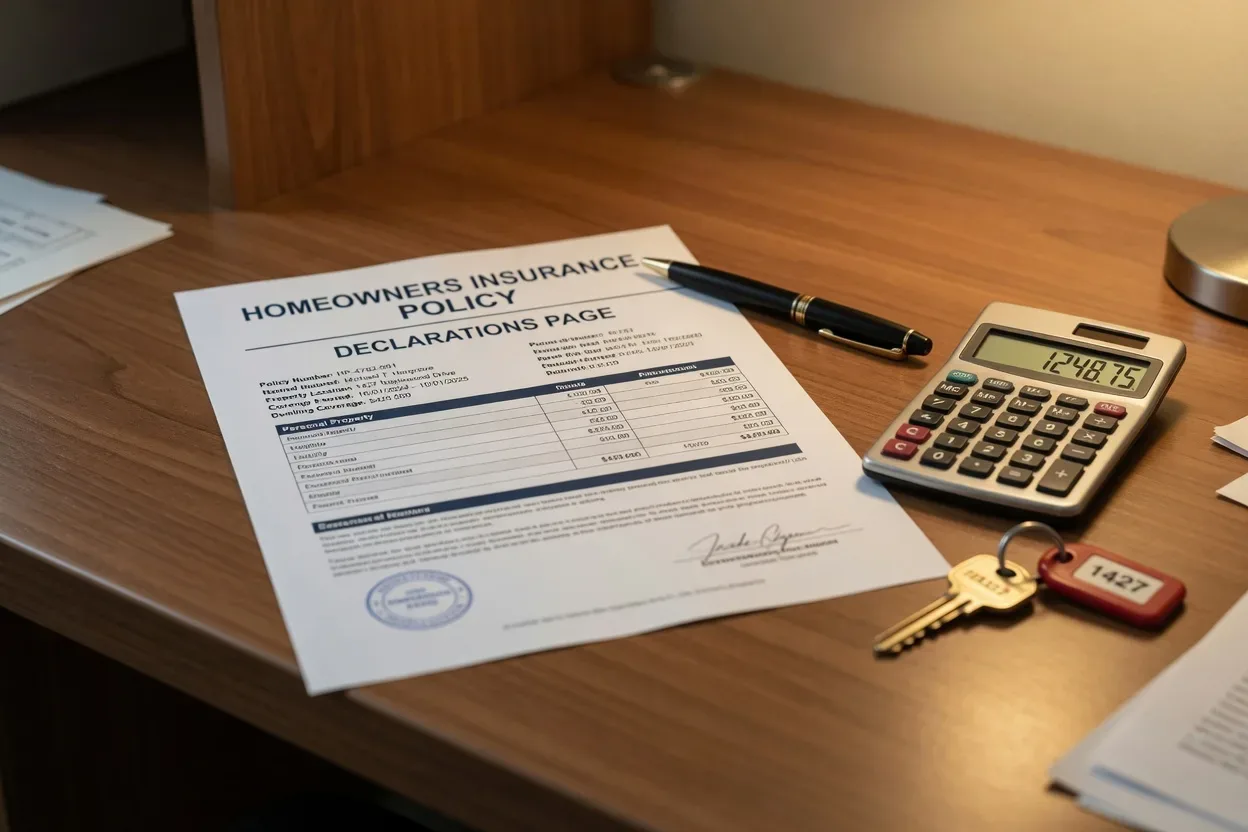
When most people think about homeowners insurance, they picture a single policy that covers everything associated with the home. A Texas homeowners policy normally combines dwelling, personal-property, loss-of-use and liability coverages in one contract, but complete household protection may also require endorsements and separate policies. Texas insurers use several policy forms, including insurer-specific forms. Labels such as HO-3 and HO-5 describe common national forms, but the label alone does not establish what is covered. The declarations page, policy form and endorsements control.
Common gaps, limitations and separate deductibles to investigate include:
- Flood caused by rising or accumulating surface water
- Wind and hail exclusions on some coastal policies, plus separate wind, hail or named-storm deductibles
- Earthquake, land movement, settling, subsidence and ordinary foundation movement
- Sewer or drain backup, service-line damage, slow leaks, seepage, mold and some foundation or slab damage
- Actual-cash-value settlement or payment schedules for older roofs
- Special limits or exclusions affecting jewelry, firearms, art, collectibles and business property
- Liability restrictions involving pools, trampolines, dogs, livestock and other property features
- Business activity, short-term rentals and other uses not contemplated by a personal homeowners policy
- Losses occurring while a property is vacant or unoccupied for the period specified by the policy
Some of these gaps can be addressed with an endorsement. Others require a separate policy. The insurance 'stack' is therefore a combination of policies, endorsements, deductibles, limits and exclusions, not merely a collection of standalone policies.
Layer 1: Homeowners Coverage and Replacement-Cost Estimates
A standard Texas homeowners policy typically covers:
- Dwelling coverage: Pays to repair or rebuild the insured house after a covered loss, subject to the policy's limit, deductible and other terms. The dwelling limit should be based on estimated reconstruction cost rather than the home's market value or purchase price.
- Other structures: Detached garages, sheds, fences and similar structures on your property
- Personal property: Furniture, clothing, electronics and other belongings
- Loss of use: Additional living expenses if your home becomes uninhabitable after a covered loss
- Personal liability: Legal defense and damages if someone is injured on your property or you cause damage to someone else's property
- Medical payments: Medical expenses for guests injured on your property, regardless of fault
The most important number in your policy is the dwelling coverage limit. This should reflect the cost to rebuild your home at current local construction costs, not what you paid for it, not its assessed value and not its market value. [1]
Replacement-cost estimates are calculated using a combination of the home's square footage, construction type, quality of finishes, local labor rates and material costs. In the Texas Hill Country, replacement costs can vary significantly based on the type of foundation (slab vs. pier and beam), roofing material, interior finishes and whether the home has custom features.
A common mistake is assuming that a lower purchase price means lower replacement cost. A 2,000-square-foot home in Boerne may cost the same to rebuild as a 2,000-square-foot home in San Antonio, even though the purchase prices differ. Replacement cost is about construction, not real estate market value. [1]
Ask the agent for the replacement-cost calculation and review the inputs rather than accepting only the final number. Confirm the home's square footage, exterior construction, roof type, number of kitchens and bathrooms, finish quality, detached structures and custom features. Also ask whether the policy includes an inflation guard, extended replacement-cost coverage or additional coverage for increased construction costs after a widespread disaster.
Do not assume that 'replacement cost' applies identically to every part of the policy. A policy may provide replacement-cost coverage for the dwelling while settling the roof or personal-property losses at actual cash value. Personal-property replacement-cost coverage is especially important because an actual-cash-value settlement subtracts depreciation from furniture, electronics, appliances and other belongings.
Also review ordinance-or-law coverage. Rebuilding an older home may require electrical, plumbing, structural, energy-efficiency or other code upgrades that are not fully covered by the basic dwelling limit. Replacement-cost coverage commonly pays an initial amount after subtracting depreciation and the deductible, with recoverable depreciation paid after documented repairs are completed within the policy's deadline.
Layer 2: Percentage-Based Wind and Hail Deductibles
Many Texas homeowners policies use a percentage deductible for wind, hail, named-storm or hurricane losses. The percentage is normally applied to the dwelling coverage limit shown on the declarations page, not to the amount of damage. [2]
For example, a 2% deductible on a $500,000 dwelling limit is $10,000. If a covered hail loss causes $18,000 in damage, the insurer would generally subtract the $10,000 deductible from the covered loss, subject to all other policy terms. A 5% deductible on the same dwelling limit is $25,000; a loss below that amount might produce no claim payment.
A homeowners deductible is not handled like a health-insurance deductible that must necessarily be paid to the insurer first. It is generally the portion subtracted from the covered property loss. Ask the agent to convert every percentage deductible into dollars and explain whether it applies per occurrence, per storm or on another basis.
Key questions to ask:
- What is my wind and hail deductible as a percentage of dwelling coverage?
- What is the dollar amount that percentage represents?
- Is the deductible per occurrence or per calendar year?
- Are there separate deductibles for named storms or hurricanes?
TWIA coverage is available only for eligible property in Texas's designated catastrophe area: the 14 first-tier coastal counties and portions of Harris County along Galveston Bay. An applicant must have been denied wind-and-hail coverage by at least one private-market insurer, and the property must satisfy applicable construction, condition and other eligibility requirements. TWIA covers wind and hail; it is not a full homeowners policy. The owner generally still needs separate coverage for fire, theft, liability and other perils. Most Hill Country properties are outside TWIA's designated area, but TWIA becomes relevant for relocators also considering coastal Texas property. [5]
Roof age and condition can affect eligibility, premiums and whether the roof is insured at replacement cost, actual cash value or under a payment schedule. Do not assume that roof age automatically changes the deductible; underwriting practices vary by insurer.
Layer 3: Roof-Payment Schedules and Cosmetic-Damage Exclusions
Some Texas policies use roof-payment schedules or cosmetic-damage exclusions that can materially affect how much an insurer pays after a roof claim. [3]
A roof-payment schedule or actual-cash-value provision can reduce the amount paid as a roof ages. Actual cash value is generally the current cost to repair or replace the roof minus depreciation, not the roof's original installation price. For example, if replacing a roof today would cost $20,000 and the insurer applies $12,000 in depreciation, the roof's actual cash value would be $8,000. A deductible would then be subtracted from that amount. Whether any depreciation is recoverable after replacement depends on the policy.
A roof-payment schedule may instead specify the percentage of replacement cost payable at different roof ages. Obtain the actual schedule and ask the agent to calculate a sample claim using the roof's present age, the dwelling limit and the wind-and-hail deductible.
A cosmetic-damage exclusion can eliminate coverage for dents, marring or other appearance-only damage when the roof continues to perform its intended function. The definitions of 'cosmetic' and 'functional' damage, and the materials to which the exclusion applies, depend on the endorsement. Do not assume the exclusion will appear only on the declarations page; read every roof-related endorsement.
These provisions are particularly important for older roofs, although there is no universal statewide roof-age cutoff. The result depends on the roof's age, material, condition, insurer and policy form.
If you are buying an older home, ask:
- Does the policy use a roof-payment schedule? If so, what is the depreciation schedule?
- Does the policy exclude cosmetic roof damage?
- Is there a separate wind and hail deductible for roof claims?
- What documentation does the insurer require to prove functional (not just cosmetic) damage?
Texas has promulgated cosmetic-damage endorsements identified as HO-145 and TDP-022. Those particular forms are tied to qualifying impact-resistant roof coverings and a premium credit and require execution by the insured. Insurers may also use approved insurer-specific policy forms and endorsements. Do not assume that every cosmetic-damage exclusion uses HO-145 or TDP-022, or that the absence of a remembered signature proves that no exclusion applies. Obtain and review the complete policy and all endorsements. [4]
Layer 4: Water, Sewer Backup, Service Lines, Foundations and Mold
Water coverage is more complicated than simply asking whether the policy covers 'water damage.' Many policies cover sudden and accidental discharge of water from plumbing or an appliance while excluding flooding, repeated seepage, long-term leakage, wear and tear, mold and some damage involving the foundation or slab.
Water-backup coverage is an endorsement that can cover damage when water backs up through a sewer or drain or overflows from certain sump systems. Coverage limits, deductibles and treatment of septic-system backups vary. Do not assume that a flood policy and water-backup endorsement cover the same event.
Service-line coverage can help pay for covered damage to homeowner-owned underground piping or wiring. The covered portion of the line, covered causes of loss, excavation costs and exclusions for wear, corrosion, tree roots, earth movement or pre-existing damage vary substantially. The utility may own part of the line between the street and the home, so determine where the homeowner's responsibility begins.
Texas insurers may also offer endorsements for foundation or slab damage, mold remediation and increased limits for water losses. Ask:
- Does the policy cover sudden and accidental plumbing discharge?
- How does it treat repeated seepage or a leak that was hidden from view?
- Is sewer or drain backup included, excluded or available by endorsement?
- Does service-line coverage include excavation and restoration of landscaping or hardscape?
- Is foundation or slab damage covered when caused by a covered plumbing leak?
- What mold-remediation limit applies?
- Are there separate water-damage deductibles or sublimits?
Layer 5: Flood Insurance Outside Mandatory Flood Zones
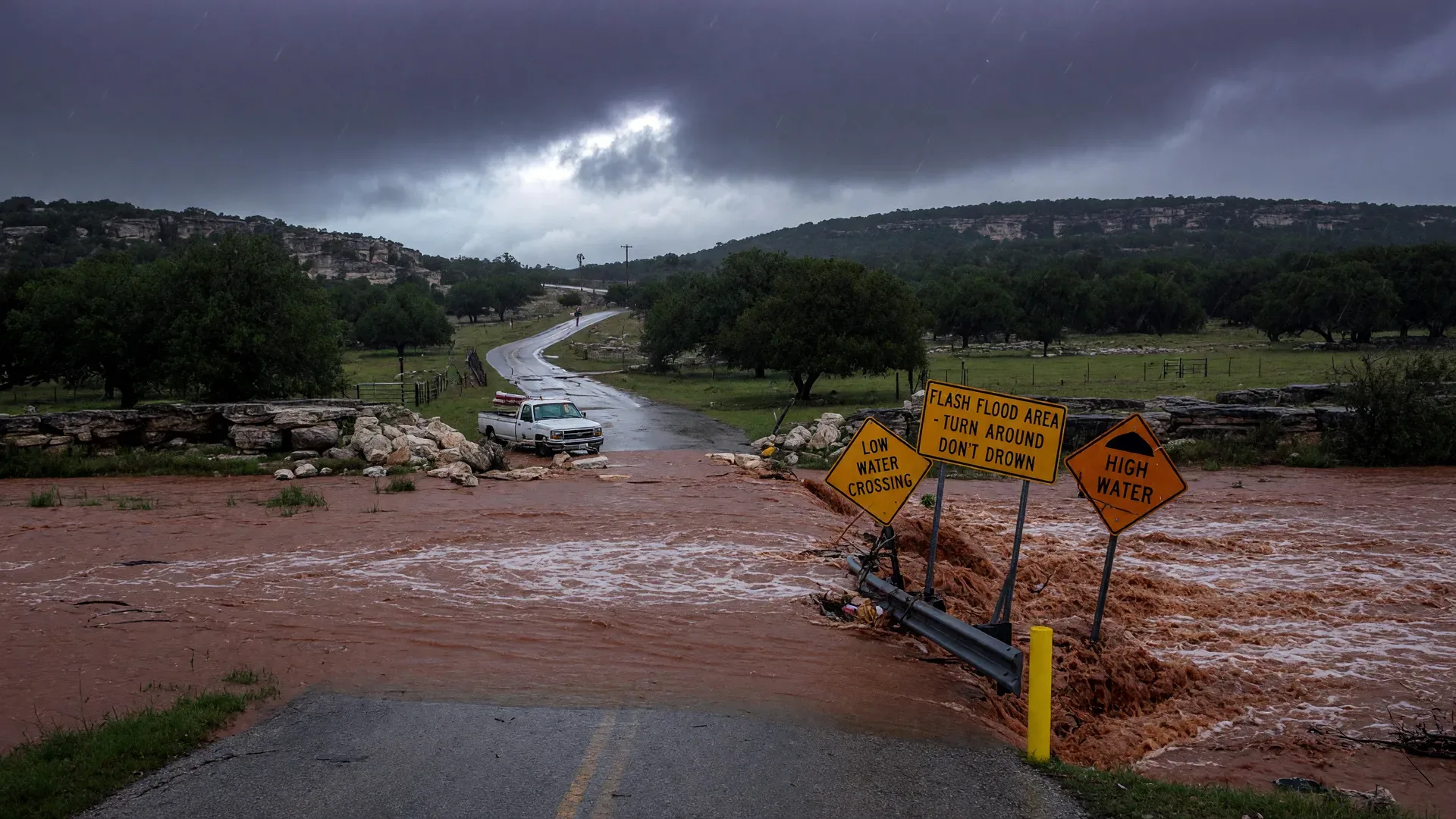
Here is one of the most important and least understood facts about Texas flood insurance: you do not have to be in a mandatory flood zone to flood.
Federal flood-insurance purchase requirements generally apply when a building in a Special Flood Hazard Area secures a loan made, increased, extended or renewed by a lender subject to the federal rules. A lender may impose a flood-insurance requirement outside a Special Flood Hazard Area as a condition of protecting its collateral. A cash buyer has no lender requirement but still bears the flood risk.
FEMA's current FloodSmart data state that 29% of NFIP claims from 2014 through 2024 came from outside areas currently classified as high risk. [6] A flood-zone designation therefore describes mapped risk and affects lender requirements; it does not establish that an unmapped property cannot flood.
In the Texas Hill Country, flash flooding is a significant natural hazard. The U.S. Geological Survey describes part of the region as 'Flash Flood Alley' and notes that Hill Country rivers can rapidly become dangerous torrents when storms produce heavy rainfall in their watersheds. Creeks, draws, low-water crossings and upstream drainage can direct water onto properties outside mapped high-risk flood zones. Flood maps should therefore be considered alongside site elevation, drainage patterns, nearby waterways, prior flooding and upstream development. [22]
The National Flood Insurance Program (NFIP) offers coverage through FEMA. The maximum NFIP residential coverage is $250,000 for the building and $100,000 for contents. For many Texas homes, this is not enough. [7]
Key NFIP considerations:
- Building and contents coverage are purchased separately and have separate deductibles.
- The maximum residential limits are generally $250,000 for the building and $100,000 for contents.
- NFIP contents losses are generally settled at actual cash value, not full replacement cost.
- NFIP coverage does not pay temporary housing or additional living expenses while the home is being repaired.
- Coverage for basements, outdoor property, fences, pools, decks, patios, landscaping and septic systems is limited or excluded.
- A sewer or drain backup can be covered when it is directly caused by a qualifying flood. A backup caused only by a clogged or failed pipe is not an NFIP flood loss.
- A new NFIP policy generally has a 30-day waiting period. There is no waiting period when coverage is purchased while making, increasing, extending or renewing a mortgage.
- Risk Rating 2.0 considers property-specific factors such as distance to water, flood type, building characteristics and replacement cost. The flood zone is no longer the sole pricing factor.
- NFIP coverage is available to eligible property owners and renters in communities participating in the program.
Layer 6: Private Flood Policies Versus the Federal Program
Private flood insurance is available in Texas as an alternative to the NFIP. Private policies may offer higher limits, broader coverage, shorter waiting periods or more flexible terms than an NFIP policy, but their provisions vary by insurer. Compare limits, exclusions, deductibles, loss-settlement terms, waiting periods and renewal provisions before selecting a policy.
However, private flood policies are not the same as NFIP policies:
- Coverage terms, limits and exclusions vary by insurer
- A regulated lender must accept a private flood policy that meets the federal statutory and regulatory definition of "private flood insurance" and satisfies the required coverage amount. A lender may choose whether to accept some nonconforming private policies. Ask the lender to approve the specific policy before relying on it for closing. [8]
- Private flood insurance is not backed by the federal government
- Policy renewal is not guaranteed; a private insurer may non-renew or increase premiums at renewal
If you are considering a private flood policy, ask:
- Is the policy accepted by your lender?
- What are the coverage limits for the building and contents?
- Is there a waiting period?
- What is the claims process and financial strength of the insurer?
- How does the premium compare to an equivalent NFIP policy?
- Does the policy include additional living expenses, replacement-cost contents, basement coverage or other benefits not provided by the NFIP, and what exclusions narrow those benefits?
Layer 7: Scheduled Coverage for Jewelry, Firearms, Art and Collectibles
A homeowners policy can impose special limits on jewelry, watches, firearms, precious metals, silverware, art, collectibles and property used for business. The limit may apply only to particular causes of loss such as theft, or it may involve valuation and coverage restrictions rather than one universal dollar cap. The exact limits must be taken from the policy; do not present $1,000, $2,500 or $5,000 as standard statewide amounts. [20]
Scheduling a valuable item through an endorsement or personal-articles policy can provide a separately stated limit and broader covered causes of loss. Depending on the form, it may include accidental damage or mysterious disappearance and may have no deductible. Agreed-value, replacement-cost and market-value provisions are not interchangeable, so confirm how a claim will be valued.
Ask:
- Which categories have special limits, and for which causes of loss?
- Does the item need a recent appraisal, receipt, serial number or photograph?
- Is the settlement based on agreed value, replacement cost or another valuation method?
- Does a deductible apply?
- Is accidental breakage, loss or mysterious disappearance covered?
- Must appraisals be updated periodically?
- For firearms, are there separate requirements involving storage, collection size or business use?
A current home inventory, stored somewhere other than only inside the home, will also make a future claim easier to document.
Layer 8: Auto Premiums and Liability Limits
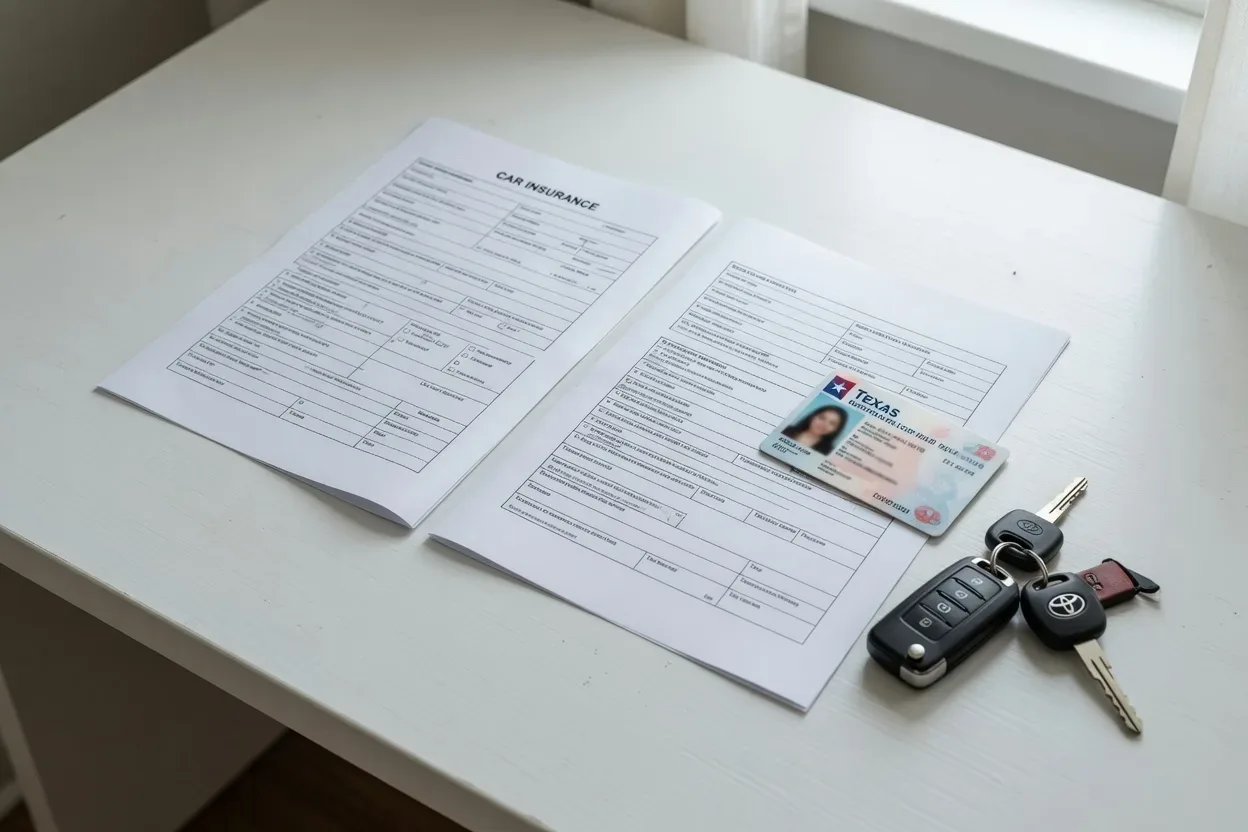
Texas auto insurance requirements are relatively modest compared to some states:
- $30,000 per person for bodily injury
- $60,000 per accident for bodily injury
- $25,000 per accident for property damage [9]
These are the minimum limits required by law. They are often insufficient to cover a serious accident. A single hospital stay can exceed $30,000, and a multi-vehicle accident can easily surpass $60,000 in total bodily injury costs.
Texas auto insurance premiums vary significantly based on:
- Your driving record and claims history
- The type of vehicle you drive
- Your credit-based insurance score (Texas allows insurers to use credit-based insurance scores in underwriting and rating, subject to consumer-protection rules. Credit information cannot be the only factor used to decide whether to offer coverage or what rate to charge, and insurers that use it must provide required disclosures and a process for disputing inaccurate or prohibited information) [10]
- Your age, gender and marital status
- The city and zip code where you garage the vehicle
- The coverage limits and deductibles you select
Do not assume that moving to Texas will reduce your auto premium. The latest comparable NAIC data show higher statewide average auto expenditures and combined premiums in Texas than in California, although an individual quote can move in either direction. Two structural differences may affect the comparison. California auto rates are determined under a statutory and regulatory framework of mandatory and approved rating factors that does not include credit history. Some Texas insurers use credit-based insurance scores; Texas permits that use subject to consumer protections, and credit information cannot be the sole factor used to decide whether to offer coverage or what rate to charge. California's minimum liability limits increased to 30/60/15 on January 1, 2025, narrowing the legal-minimum difference from Texas's 30/60/25. Neither state's minimum should automatically be treated as sufficient for a homeowner with substantial assets or income to protect. [10][25][26]
For relocators, the most important decision is not the premium amount; it is the liability limit. The state minimum of $30,000/$60,000 is rarely adequate for a homeowner with assets to protect. Select liability limits based on the value of the assets and income you need to protect, the severity of losses you could cause and any underlying-limit requirements imposed by an umbrella carrier. State-minimum limits are not a reliable asset-protection strategy. Ask the agent to quote several higher-limit options rather than presenting one limit as universally appropriate.
Other Texas Auto Coverages to Review
Liability coverage pays others for losses you cause; it does not repair your own vehicle or automatically pay all injuries within your car. A complete auto review should also address:
- Collision coverage for damage to your vehicle from a collision
- Comprehensive coverage for theft, hail, fire, flood, animal strikes and other covered noncollision losses
- Personal injury protection (PIP), which Texas auto insurers must provide unless the named insured rejects it in writing
- Medical-payments coverage
- Rental-reimbursement coverage
- Towing and roadside coverage
- Gap coverage when a financed or leased vehicle could be worth less than the loan or lease balance
- Ride-share, delivery or other business-use exclusions
PIP and medical-payments coverage are not identical. PIP can cover medical expenses, lost income and certain nonmedical expenses, subject to its limit. Review these coverages alongside health insurance, disability protection and UM/UIM coverage rather than rejecting them solely to reduce the premium.
Layer 9: Uninsured and Underinsured Motorists
Texas does not require drivers to carry uninsured motorist (UM) or underinsured motorist (UIM) coverage, but insurers must offer it. [11] You can reject it in writing, but doing so is a significant risk.
The Insurance Research Council estimated that 15.4% of drivers nationally were uninsured and 18% were underinsured in 2023. [12] Do not infer a Texas percentage from the national study unless the Texas-specific figure is available from the same methodology. In March 2025, the Texas Department of Insurance reported that more than 2.4 million state-registered vehicles — 12% of the state's registered vehicles — were not matched to an insurance policy. [24] That is a vehicle-matching statistic, not a direct estimate of the percentage of drivers, so the two numbers should not be treated as interchangeable.
Texas UM/UIM coverage can include bodily-injury and property-damage protection and can apply to hit-and-run losses. According to TDI, it can pay covered medical expenses, car repairs, rental expenses, pain and suffering and diminished value. Texas UM/UIM property-damage coverage has a $250 deductible. Policy limits and terms still control.
UIM coverage kicks in when the at-fault driver's liability limits are insufficient to cover your damages. If you are seriously injured by a driver with only the state minimum $30,000 in bodily injury coverage, UIM coverage pays the difference between the at-fault driver's limits and your actual damages, up to your UIM limit. [11]
Ask the agent to quote UM/UIM limits that match the bodily-injury liability limits and explain any lower options before you sign a rejection or limit-selection form. Also ask whether a proposed umbrella policy provides excess UM/UIM coverage; many umbrellas do not automatically do so.
Layer 10: Umbrella Liability Coverage
A personal umbrella adds liability limits above specified homeowners, auto and other underlying policies after the required underlying limits are reached. It does not increase the amount available to rebuild your house, replace your belongings or pay your own flood or roof loss. [13]
Umbrella policies normally require minimum underlying liability limits. Those requirements vary by carrier and may influence the limits selected on the home and auto policies. An umbrella can also contain exclusions or restrictions involving business activity, rental properties, short-term rentals, dogs, livestock, watercraft, recreational vehicles and youthful drivers.
Before buying an umbrella, ask:
- Which homes, vehicles, drivers, rental properties, watercraft and recreational vehicles must be listed?
- What underlying liability limits are required?
- Does the policy cover rental properties or short-term rental activity?
- Are any animals, pools, trampolines, firearms or acreage activities excluded?
- Does it provide excess uninsured or underinsured motorist coverage?
- Does it cover defense costs inside or outside the limit?
- Is worldwide personal liability included?
- Are defamation, libel, slander or invasion-of-privacy claims covered?
- What business, professional and intentional-act exclusions apply?
Price depends on household drivers, vehicles, properties, claims, recreational exposures and the amount of umbrella coverage. Do not cite a universal premium range.
Special Considerations: Pool, Trampoline, Dog, Acreage and Livestock
Certain property features and lifestyle choices can significantly affect your insurance coverage and premiums:
Pools: A swimming pool can create both property and liability coverage issues. TDI states that many homeowners policies provide minimal or no pool-liability coverage and that property coverage depends on whether the policy treats the pool as part of the dwelling, another structure or personal property. Many insurers and local ordinances also require a fence and locking gate, while diving boards or slides may cause an insurer to restrict liability coverage. Disclose the pool and all related features and confirm the applicable property limit, liability limit, safety requirements and exclusions. [23]
Trampolines: Insurers treat trampolines differently. Some exclude trampoline injuries, some decline the risk and others impose fencing, netting or other safety requirements. Disclose the trampoline before binding coverage and verify both the homeowners and umbrella policy; do not rely on an unsupported claim that trampolines are among the most common homeowners claims.
Dogs: Homeowners liability and medical-payments coverage may respond to a dog-related injury, but coverage is not universal. Some insurers restrict or exclude particular breeds, dogs with bite or aggression histories, or all animal liability. Others underwrite the individual dog rather than using a breed list. Disclose every dog and review both the homeowners and umbrella forms. Do not say dog-bite liability is a standard covered feature without acknowledging exclusions.
Acreage: The dwelling limit does not insure the land itself. Review the limits and valuation provisions for detached garages, barns, workshops, guesthouses, fences, gates, wells, pumps, septic components, driveways and other improvements. 'Other structures' coverage is often calculated as a percentage of the dwelling limit, but structures used for farming, rental or business activity may be limited or excluded. Distance from a responding fire department or hydrant, access for emergency vehicles, brush exposure and the availability of water for firefighting can also affect underwriting.
Livestock and horses: A homeowners policy generally does not insure the value of animals as ordinary personal property. It may also exclude or limit liability arising from farming, boarding, breeding, training, commercial riding or other business activity. A farm or ranch package can address property and liability exposures, while animal-mortality coverage is a separate issue that must be specifically evaluated. Recreational ownership of one or two animals does not guarantee homeowners coverage; disclose the animals and their use.
Home-Based Business Limitations
A homeowners policy may provide limited coverage for some business property, but the amount and covered causes of loss depend on the policy. Business-related liability, inventory, customer property, employee injuries and lost business income may be limited or excluded. If you operate a business from home, do not assume that a universal $2,500 limit or any business-liability coverage applies; review the actual policy and business-use exclusions. [21]
Common gaps include:
- Business equipment and inventory that exceed the policy's applicable business-property limit or fall outside its covered causes of loss
- Liability for clients or customers who visit your home
- Liability for products or services you provide
- Loss of business income if your home is damaged
- Professional liability (errors and omissions)
If you operate a business from home, disclose its exact activities, revenue, equipment, inventory, employees, customer visits, deliveries and vehicle use. A home-business endorsement may be sufficient for a small, low-risk operation. A businessowners policy commonly combines commercial property, general liability and business-income coverage, but it does not automatically include professional errors-and-omissions liability, cyber liability, workers' compensation or commercial auto coverage. Those exposures may require separate policies or endorsements.
Short-Term Rentals and Temporary Occupancy
A personal homeowners policy may exclude or restrict property damage and liability arising from short-term rental or home-sharing activity. Coverage supplied by a booking platform is not a substitute for reviewing the homeowners policy, and it may contain separate limits and exclusions. If you expect to rent the home, a guesthouse or part of the acreage, even occasionally, disclose that use before binding coverage. Also confirm whether the umbrella policy recognizes the rental exposure.
Vacant-Home and Renovation Coverage
Vacant and unoccupied are not necessarily interchangeable policy terms. Coverage can change when a home lacks occupants, lacks normal furnishings or remains vacant for the number of consecutive days specified by the policy. TDI warns that most companies stop or restrict certain property coverage after a house has been vacant for 60 days, but the exact definition, period and affected losses depend on the policy. Commonly affected losses include vandalism, theft, glass breakage and some water damage. [1]
A home under active renovation is not automatically covered by an ordinary homeowners policy. The scope of construction, occupancy, contractor arrangements and value of materials can trigger the need for a renovation endorsement, dwelling policy, vacant-home policy or builder's-risk coverage.
If you are planning to renovate before moving in, ask your agent about:
- Vacant-home insurance or dwelling fire coverage during the renovation period
- Builder's risk coverage for structural renovations
- Whether the policy covers damage from vandalism, theft or water damage during vacancy
- Whether the policy covers liability for injuries on the vacant property
Roof Condition, Prior Claims and Insurability
In Texas, the condition of your roof is one of the most significant factors affecting your ability to obtain homeowners insurance and the premium you pay. [3]
Roof underwriting differs by company. Depending on age, material and condition, an insurer may decline the risk, require an inspection, exclude wind or hail, settle roof losses at actual cash value, apply a payment schedule or require repairs before or shortly after binding. Avoid presenting 15 or 20 years as a statewide cutoff. A newer roof may improve eligibility, but a premium discount should not be promised merely because the roof is new; qualifying impact-resistant materials are a separate consideration.
Prior claims history also matters. A home with multiple prior claims, particularly water or wind-and-hail claims, may be harder to insure or may carry higher premiums. Insurers may consider claims associated with the property as well as the applicant's own claims history. A property CLUE report generally shows claims filed for the house during the preceding seven years, including claims that predate the current ownership. [14]
If you are buying a home:
- Obtain documentation showing the roof installation date, material, permits, invoices and transferable warranties.
- Have the roof inspected when its condition or age is uncertain. An ordinary inspector's visual observations may not substitute for a roofer, engineer or other qualified specialist when damage is suspected.
- Ask the seller for a current CLUE report. TDI states that a CLUE report generally shows property claims from the previous seven years.
- Compare the CLUE report, seller's disclosure, repair invoices and inspection findings. A paid claim does not prove that all damage was repaired.
- Obtain a quote using the correct roof age and material and ask whether the quote is contingent on an insurer inspection after binding.
- Review the roof settlement endorsement and calculate the deductible in dollars.
When Standard Coverage Is Unavailable
An applicant may qualify for the Texas FAIR Plan after being declined residential property insurance by at least two insurers licensed and actively writing residential property insurance in Texas, provided the applicant has not received a valid offer of comparable residential coverage from a Texas-licensed insurer. An offer from a surplus-lines insurer does not by itself disqualify the applicant. The FAIR Plan provides limited property coverage and is not a substitute for comparing voluntary-market policies when those policies are available. [15]
TWIA is different: it supplies wind-and-hail coverage to eligible properties in the designated coastal catastrophe area and has separate location, declination, construction-certification and, in some cases, flood-insurance requirements. [5]
Why Insurance Should Be Quoted Before the Option Period Expires
Insurance should be investigated during the option period, if the contract includes a valid termination option. The option is a negotiated contract term; it does not exist automatically in every transaction. Under the current TREC One to Four Family Residential Contract (Resale), a buyer who timely delivers the agreed option fee receives the unrestricted right to terminate by giving notice within the stated period. Notice must be given by 5:00 p.m. local time where the property is located on the final day. The option fee is not refunded, while earnest money is refunded after a timely termination under that provision. [16]
Other contractual or financing rights might apply after the option period, but a buyer should not assume that an unexpectedly high premium, deductible or exclusion will create a later termination right. Builder, condominium and farm-and-ranch transactions may use different contracts.
During the option period:
- Obtain quotes from more than one carrier or independent agency.
- Give each agent the same information, including construction details, roof age and material, prior claims, occupancy, dogs, pool, trampoline, acreage, outbuildings, livestock, business use and planned renovations.
- Request the full estimated annual premium, taxes and fees, not merely a monthly teaser amount.
- Convert every percentage deductible into dollars.
- Confirm roof settlement terms, cosmetic-damage exclusions and water limitations.
- Ask whether the quote is subject to an exterior, interior or roof inspection after binding.
- Ask whether the carrier can bind coverage for the scheduled closing date and whether any repairs are conditions of binding or continued coverage.
- Determine whether separate flood, coastal wind or other coverage is required.
- Ask the seller for a CLUE report and supporting repair records.
- Give the premium to the lender because homeowners and flood premiums can change the escrow payment, debt-to-income calculation and cash needed at closing.
A quote is not a binder. Before closing, obtain written confirmation of the carrier, effective date, coverages, limits, deductibles, endorsements, mortgagee information and premium.
The California-to-Texas Insurance Comparison
Do not assume that Texas insurance is cheaper. California has severe availability and pricing problems in many wildfire-exposed areas, but Texas has exceptionally high homeowners losses from hail, wind, tornadoes, hurricanes, freezes and other severe weather. Statewide averages also conceal enormous differences among ZIP codes, construction types, roof ages and individual households.
The latest directly comparable NAIC homeowners data currently available are for 2022. Across the owner-occupied property forms included in that report, the average annual premium was $2,339 in Texas and $1,500 in California. Among the owner-occupied policies in the report's $500,000-to-$599,999 dwelling-coverage range, the reported average annual premiums were $3,065 in Texas and $1,490 in California. These figures do not predict an individual quote, and a California home in a wildfire-distressed area, particularly one requiring FAIR Plan and supplemental coverage, can cost far more than the statewide average. But the data directly contradict a blanket statement that Texas homeowners premiums are lower on average. [17]
The NAIC's 2023 auto report also showed higher Texas averages. Average expenditure per insured vehicle was $1,428.94 in Texas and $1,225.02 in California. The combined average premium for a vehicle carrying liability, collision and comprehensive coverage was $1,726.91 in Texas and $1,417.94 in California. The report identifies California's 2023 figures as preliminary. [18]
The more useful comparison is structural:
| Issue | California | Texas |
|---|---|---|
| Homeowners availability | Can be severely constrained in wildfire-distressed areas; a California FAIR Plan policy provides limited coverage, so separate difference-in-conditions coverage should also be considered. [20] | Availability varies by address. Roof age and condition, prior claims, coastal wind exposure, wildfire or brush exposure, rural fire protection, property condition and other underwriting factors can make coverage difficult or expensive to obtain. |
| Major property hazard | Wildfire and earthquake vary sharply by location | Wind, hail, tornado, freeze, hurricane, wildfire and flood vary sharply by location |
| Wind and hail | Policy treatment varies | Often covered with a separate percentage deductible; coastal properties may require separate wind coverage |
| Flood | Normally separate from homeowners | Normally separate from homeowners |
| Earthquake | Separate coverage is important to evaluate in many locations | Usually a lower concern in the Hill Country, but earth movement remains excluded and the risk is not literally zero |
| Auto minimums | 30/60/15 beginning January 1, 2025 [25] | 30/60/25 [9] |
| Credit-based auto rating | Credit history is not included among California's permitted private-passenger auto-rating factors [26] | Some insurers may use insurance credit scores, subject to Texas consumer-protection rules [10] |
| Residual property market | California FAIR Plan | Texas FAIR Plan for eligible applicants declined by at least two Texas-licensed insurers actively writing residential property coverage and without a valid offer of comparable coverage from a Texas-licensed insurer; surplus-lines offers are excluded from that disqualification. TWIA is a separate coastal wind-and-hail mechanism. [5][15] |
The correct planning method is to obtain address-specific Texas quotes before the option period expires and compare them with the California policies actually being replaced. Compare annual premiums, deductibles in dollars, coverage limits, roof valuation, exclusions, flood and earthquake decisions, auto limits and umbrella requirements.
The Bottom Line
Texas household insurance is not a single policy. It is a stack of separate coverages, each with its own terms, exclusions, deductibles and risk profile. Understanding the major layers, homeowners, flood, wind and hail, auto, umbrella and the special considerations involving pools, dogs, livestock, acreage and home businesses, can help identify costly gaps before a loss occurs.
Here is what we covered:
- Most homeowners policies exclude flood and earth movement and may exclude or limit sewer backup, service-line damage and particular categories of valuable personal property unless appropriate coverage or endorsements are added
- Wind and hail deductibles are often percentage-based, not flat dollar amounts
- Roof-payment schedules and cosmetic-damage exclusions can significantly reduce your roof claim payout
- Flood insurance should be considered even outside mandatory flood zones
- Private flood policies may offer broader coverage than the NFIP
- Scheduled personal property coverage can provide item-specific limits and, depending on the form, broader covered causes of loss for high-value items that may be restricted by standard policy limits
- Texas auto minimums are low; higher liability limits can reduce the portion of a covered loss that must be paid personally when damages exceed lower limits
- Uninsured and underinsured motorist coverage is critical in Texas
- An umbrella policy can add substantial liability limits, but its required underlying limits, covered exposures and exclusions vary
- Pools, trampolines, dogs, acreage and livestock all affect your coverage needs
- Home-based business limitations can leave significant gaps
- Vacant-home, renovation or builder's-risk coverage may be needed during a transition, depending on occupancy, project scope and the existing policy
- Roof condition and prior claims history can affect eligibility, premium, inspections and available coverage terms
- Quote insurance during the option period, not after closing
If you are relocating to the Texas Hill Country, we also recommend reviewing our guides on flood zones, property insurance, HOA vs. no HOA and property tax reality checks.
Frequently Asked Questions
Do I need flood insurance if my property is not in a mandatory flood zone?
Federal law generally does not require flood insurance merely because a property is outside a Special Flood Hazard Area, but a lender may still require it. FEMA reports that 29% of NFIP claims from 2014 through 2024 came from outside areas currently classified as high risk. [6] In the Texas Hill Country, mapped zones should be considered alongside creeks, draws, low-water crossings, drainage patterns, elevation, upstream development and prior flooding. Obtain an address-specific quote and evaluate the uninsured loss you could absorb rather than relying only on the map designation.
What is the difference between an NFIP policy and a private flood policy?
NFIP residential coverage generally provides up to $250,000 for the building and $100,000 for contents. Building and contents coverage are selected separately and have separate deductibles. NFIP contents are generally insured at actual cash value, and the policy does not pay additional living expenses. A new NFIP policy usually has a 30-day waiting period, subject to defined exceptions such as coverage purchased while making, increasing, extending or renewing a mortgage. [7]
Private policies may offer higher limits, replacement-cost contents, additional living expenses or broader terms, but coverage and financial strength vary. Regulated lenders must accept a private policy that meets the federal definition and required amount; acceptance of some nonconforming policies is discretionary. Obtain the lender's approval of the specific policy before closing. [8]
How does a percentage-based wind and hail deductible work?
A percentage-based deductible is commonly calculated as a percentage of the dwelling limit shown on the declarations page, although the policy controls the calculation. For example, 2% of a $500,000 dwelling limit is a $10,000 deductible. The insurer generally subtracts that deductible from the amount of the covered property loss; it is not necessarily $10,000 that must first be paid directly to the insurer. If the covered loss does not exceed the deductible, the claim may produce no payment. [2]
Will my California auto insurance transfer to Texas?
No. Tell your insurer or agent that you are moving and obtain a Texas policy with Texas coverages and limits. Your current insurer may be able to issue the new policy through a Texas-authorized affiliate, but the California policy itself does not simply transfer. Prior driving and claim history may be obtained and considered during underwriting; that history does not 'transfer' as insurance coverage. Some Texas insurers may also use credit-based insurance scores subject to Texas consumer protections, while California's permitted private-passenger auto-rating factors do not include credit history. [10][19][26]
Do I need an umbrella policy?
An umbrella is worth evaluating when a liability judgment could exceed the limits of your home or auto policies. An umbrella policy sits above underlying home and auto liability limits and may require specified underlying limits. [13] The decision should consider assets, future income, household drivers, pools, animals, rental properties, watercraft, recreational vehicles and other exposures. An umbrella does not insure your house or belongings against property damage, and it may exclude business activity, short-term rentals, particular animals and other risks. Confirm its required underlying limits and whether it includes excess UM/UIM coverage before buying it.
What happens if my roof is older than 15 years?
There is no single Texas rule that applies when a roof reaches 15 years. Depending on the carrier, material and condition, an older roof may affect eligibility, premium, inspection requirements, wind-and-hail coverage or whether a claim is settled at replacement cost, actual cash value or under a roof-payment schedule. [3] Obtain the roof's installation records, have its condition evaluated and ask the agent to identify the exact roof endorsement in the proposed policy.
Why should I quote insurance during the option period?
If your contract includes a valid termination option, the option period gives you a negotiated window to evaluate insurance while retaining an unrestricted termination right. Under the current TREC resale contract, timely notice must be delivered by 5:00 p.m. local time where the property is located on the final day. A timely termination refunds earnest money but not the option fee. [16] Because other termination rights are narrower and contract-specific, obtain insurance quotes, review roof and flood issues and confirm bindability before the option expires.
Does my homeowners policy cover my home-based business?
A homeowners policy usually provides only limited business-property coverage and may exclude business liability, customer injuries, inventory, data, business income and professional services. [21] A home-business endorsement may be sufficient for a small, low-risk operation. A businessowners policy can combine commercial property, general liability and business-income coverage, but professional errors-and-omissions, cyber, workers' compensation and commercial auto coverage may still require separate protection.
Related Articles
California Buyers Underestimate Texas Property Taxes
Why California buyers are shocked by Texas property tax rates and what homestead exemptions save.
The Tax Bill Beneath the Tax Bill
MUDs, PIDs and special districts that add to your total housing cost in Texas.
Property Tax Shock or Relief: Line-by-Line Comparison
A line-by-line breakdown of California vs. Texas property tax bills.
Five Mistakes California Sellers Make Buying in Texas
Predictable mistakes California buyers make when relocating to Texas.
Seller's Disclosure in Texas: What It Does Not Tell You
What the TREC Seller's Disclosure Notice actually covers under Texas Property Code.

Written by
Bill Ross
Hill Country Homesteads Group, brokered by KW Boerne
Bill Ross is a Texas real estate agent with nearly four decades in high-tech sales and a network of 1,000+ California real estate agents for coordinated cross-state transactions. Featured in national coverage discussing his family's relocation from Silicon Valley to the Texas Hill Country.
Sources
- [1] Texas Department of Insurance, “Home insurance guide.” tdi.texas.gov/pubs/consumer/cb025.html
- [2] Texas Department of Insurance, “What to know about deductibles.” tdi.texas.gov/tips/deductibles.html
- [3] Texas Department of Insurance, “Insurance and your roof: What to know when buying a policy or filing a claim.” tdi.texas.gov/tips/replacing-your-roof.html
- [4] Texas Department of Insurance, Commissioner’s Bulletin B-0030-98, cosmetic-damage endorsements. tdi.texas.gov/bulletins/1998/b-0030-8.html
- [5] Texas Department of Insurance, “Texas Windstorm Insurance Association Overview.” tdi.texas.gov/pubs/pc/twia-overview.pdf
- [6] FEMA/NFIP, “What Is My Flood Risk?” floodsmart.gov/flood-zones-and-maps/what-is-my-flood-risk
- [7] FEMA/NFIP, “What You Need to Know About Buying Flood Insurance.” floodsmart.gov/get-insured/buy-a-policy
- [8] Office of the Comptroller of the Currency, “Loans in Areas Having Special Flood Hazards — Private Flood Insurance.” occ.treas.gov/news-issuances/bulletins/2019/bulletin-2019-8.html
- [9] Texas Department of Insurance, “Auto insurance guide.” tdi.texas.gov/pubs/consumer/cb020.html
- [10] Texas Department of Insurance, “Credit scoring and insurance.” tdi.texas.gov/credit/index.html
- [11] Texas Department of Insurance, “What is uninsured motorist coverage, and do I really need it?” tdi.texas.gov/tips/uninsured-motorist-coverage.html
- [12] Insurance Research Council, “Uninsured and Underinsured Motorists: 2017-2023.” insurance-research.org/node/130
- [13] Insurance Information Institute, “Should I purchase an umbrella liability policy?” iii.org/article/should-i-purchase-umbrella-liability-policy-0
- [14] Texas Department of Insurance, “How to get a CLUE about your claims history.” tdi.texas.gov/tips/check-your-propertys-insurance-claim-history.html
- [15] Texas Department of Insurance, “Texas FAIR Plan Association Overview.” tdi.texas.gov/pubs/pc/fair-overview.pdf
- [16] Texas Real Estate Commission, “One to Four Family Residential Contract (Resale), TREC No. 20-19.” trec.texas.gov/sites/default/files/pdf-forms/20-19_3.pdf
- [17] National Association of Insurance Commissioners, “Dwelling Fire and Homeowners Insurance Report: Data for 2022.” content.naic.org/sites/default/files/publication-hmr-zu-homeowners-report.pdf
- [18] National Association of Insurance Commissioners, “2022/2023 Auto Insurance Database Report.” content.naic.org/sites/default/files/publication-aut-pb-auto-insurance-database.pdf
- [19] Texas Department of Insurance, “Moving to Texas? What to know about insurance.” tdi.texas.gov/tips/moving-to-texas.html
- [20] California Department of Insurance, “Residential Insurance: Homeowners and Renters.” insurance.ca.gov/01-consumers/105-type/95-guides/03-res/res-ins-guide.cfm
- [21] Texas Department of Insurance, “What insurance do I need to run a business from home?” tdi.texas.gov/tips/what-insurance-do-i-need-to-run-a-business-from-home.html
- [22] U.S. Geological Survey, “New Water On-the-Go App Helps Keep Texans Safe with Current Stream Conditions.” usgs.gov/news/state-news-release/new-water-go-app-helps-keep-texans-safe-current-stream-conditions
- [23] Texas Department of Insurance, “Does homeowners insurance cover swimming pools?” tdi.texas.gov/tips/swimming-pools.html
- [24] Texas Department of Insurance, “Protect against other drivers with uninsured motorist coverage.” tdi.texas.gov/blog/protect-against-other-drivers-with-uninsured-motorist-coverage.html
- [25] California Legislative Information, Senate Bill 1107, “Vehicles: insurance.” leginfo.legislature.ca.gov/faces/billNavClient.xhtml?bill_id=202120220SB1107
- [26] Cornell Legal Information Institute, “California Code of Regulations, Title 10, Section 2632.5 — Rating Factors.” law.cornell.edu/regulations/california/10-CCR-2632.5
Last reviewed: July 2026. Insurance rates, availability, and coverage terms vary by insurer, location, and individual circumstances. Consult a licensed Texas insurance agent and qualified attorney for guidance specific to your situation.