

Last updated: July 2026 — reflects current California FTB rules, Revenue and Taxation Code provisions, and published guidance.
If you are a remote worker who has moved from California to Texas, you have probably heard a version of this: "No state income tax. Your salary goes further. You are done with the California Franchise Tax Board forever."
Texas has no individual state income tax. Whether a salary actually goes further depends on housing, property taxes, insurance, and other costs. And the claim that moving ends every California tax obligation is not always true. A successful remote work relocation Texas plan requires understanding these rules before you move.
Moving to Texas does not automatically establish that you ceased being a California resident. California determines residency by examining the totality of your circumstances, including where your principal home and family are located, where you spend your time, where you vote and drive, and where your closest personal and economic connections remain. Keeping one California connection, such as a bank account, professional license, or vacation property, does not by itself make you a resident. The issue is the combined weight of all your connections and whether your move reflects a genuine change in domicile [1].
This article is written for the remote worker who has already made the move to Texas, or is planning to, and needs to understand the real boundaries of California's tax authority. It is not a scare piece. It is a practical guide to the rules, the risks, and the documentation that protects you.
The Myth of Zero California Tax
The most dangerous assumption a remote worker can make is that changing a mailing address automatically ends every California tax obligation. California taxes residents on income from all sources and nonresidents on income from California sources. Determining residency and determining the source of particular income are related but separate questions [1][2].
Under California law, a person is a resident if present in California for other than a temporary or transitory purpose, or if domiciled in California while outside the state for a temporary or transitory purpose. Maintaining a California home, spending time in the state, and retaining family, financial, professional, or social connections are relevant factors, but no single one automatically establishes residency. The FTB compares the strength of the taxpayer's California connections with connections elsewhere and considers all the circumstances [1].
The good news is that a genuine move to Texas can establish nonresident status even when you retain limited California connections or occasionally return to the state. There is no general 45-day residency threshold for someone who has permanently changed domicile. Unless the narrow 546-day employment-contract safe harbor applies, residency is determined from all the facts and circumstances [1][13].
The Documentation Burden Falls on the Taxpayer
California presumes residency when a person spends more than nine months of a taxable year in California. California does not, however, impose a general presumption of residency merely because someone was previously a California resident.
A California domicile continues until the taxpayer both abandons it and establishes a new domicile elsewhere. If the FTB questions a move, the taxpayer should be prepared to substantiate when the move occurred and why Texas became the person's permanent home. No single document controls. The FTB evaluates the amount of time spent in each state; the locations of the principal residence, spouse and children; driver's licenses and vehicle registrations; voter registration; professional, financial, medical, and social connections; real property; and the permanence of work arrangements [1].

California Source Income: What Counts and What Doesn't
California taxes nonresidents only on income from California sources [4]. The critical question for remote workers is: is my salary from a California employer considered California source income?
The answer depends on where you physically perform the work. Under California Revenue and Taxation Code Section 17951, wages are sourced to the location where the services are actually performed, not where the employer is headquartered [4][2]. If you are a nonresident employee living in Boerne and perform all your current services from your Texas home office, your ordinary wages are generally not California-source income merely because your employer is headquartered in California. Equity compensation, deferred compensation, a California-resident spouse, or other California-source income can require a separate analysis.
This physical-work-location rule applies to compensation received as an employee. It should not be generalized to independent contractors, consultants, sole proprietors, LLC owners, partners, or S corporation shareholders. California may apply business-apportionment and market-based sourcing rules to those taxpayers, potentially creating California-source business income even when the owner performs the work from Texas [10].
The year of the move requires separate treatment. A person who moves from California to Texas during the year is generally a part-year resident: California taxes worldwide income received during the California-resident portion of the year and California-source income received during the nonresident portion [1][2].
But here is where it gets complicated. If you perform services in California during the tax year, the compensation reasonably attributable to those services is California-source income. A salaried employee commonly uses a California-workday-to-total-workday ratio, although another reasonable allocation method may apply to commissions, bonuses, equity compensation, or other forms of compensation. Whether a return must be filed depends on California's filing requirements and income thresholds [1][2][4][5]. This applies whether you are in California for a team offsite, a quarterly planning session, a client meeting, or a week at the company headquarters.
What Counts as California Source Income?
| Income Type | California Source? | Notes |
|---|---|---|
| Wages from CA employer, worked in TX only | No | Sourced to where services performed [2][4] |
| Wages for days physically worked in CA | Yes | Commonly allocated using California workdays divided by total workdays, although another reasonable method may apply [2][4] |
| CA rental property income | Yes | Sourced to property location regardless of residency [4] |
| CA business/investment pass-through income | Depends | CA-source business income may be allocated or apportioned to CA, usually based on where the services benefiting the entity are performed. |
| Gain from sale of California real property | Yes | California real property remains California source. Special rules may also preserve California source for deferred gain, installment payments, or certain like-kind exchanges [14]. |
| Interest, dividends, capital gains on securities | Generally no | Non-resident income is typically not taxed, unless the asset has a California business situs (used in a CA trade/business). |
Sources: FTB Publication 1031; FTB guidance for part-year residents and nonresidents; California EDD multistate-employment guidance; and FTB Publication 1100 [1][2][4][14]

The 45-Day Rule Is Not a General Residency Test
California does not have a general rule making someone a resident after 45 days in the state. Nor does spending fewer than 45 days automatically establish nonresidency.
The 45-day number belongs to a narrow safe harbor for a person who remains domiciled in California but leaves under an employment-related contract for an uninterrupted period of at least 546 consecutive days. If the requirements are satisfied, the person is treated as a nonresident during the qualifying absence. Return visits totaling no more than 45 days during a taxable year covered by the contract are disregarded [1][13].
The safe harbor does not apply if:
- The taxpayer has more than $200,000 of income from stocks, bonds, notes, or other intangible personal property in a taxable year in which the employment-related contract is in effect. For married individuals, the $200,000 test is applied separately to each spouse.
- The principal purpose of the absence is avoiding California personal income tax.
A spouse or registered domestic partner may also qualify while accompanying the employee outside California for an uninterrupted period of at least 546 consecutive days. The statutory requirements must be evaluated separately for the accompanying spouse or partner [1][13].
Most people who sell or leave their California home and permanently relocate to Texas do not need this safe harbor. Their residency is determined under the ordinary domicile and facts-and-circumstances rules. A genuine Texas domiciliary can spend more than 45 days in California without automatically becoming a resident. Conversely, someone who spends fewer than 45 days in California can remain a California resident if the purported move is temporary and California remains the person's domicile [1].
Presence Days and California Workdays Are Different
Track both of the following:
- Every calendar date on which you are physically present in California, because physical presence is relevant to the overall residency analysis.
- Every day on which you actually perform services in California, because workdays are used to allocate employee compensation.
A personal vacation day in California may be relevant to residency but does not automatically create California-source wages. A day spent working from a hotel, family home, or California office can create California-source compensation.

The FTB's Audit Authority: Preparing for a Possible Review

The FTB may examine a return's residency determination, income sourcing, compensation allocation, or filing position. The FTB does not publish a definitive list of residency-audit selection thresholds. If a return is selected, inconsistent addresses, records, travel histories, or compensation reporting can require further explanation [6].
Facts That Can Weaken a Nonresident Position
The FTB does not publish a definitive list of residency-audit selection thresholds. The following facts do not automatically trigger an audit or establish residency, but they can create inconsistencies that require explanation if the FTB examines a return [1][6][7]:
- Keeping a California residence available for personal use, particularly when the taxpayer has not established a comparable permanent home in Texas.
- Leaving a spouse, dependent children, or the primary family home in California.
- Retaining California driver's licenses, vehicle registrations, or voter registration after claiming a permanent Texas move.
- Continuing to use California addresses on payroll, tax, banking, brokerage, insurance, or government records.
- Maintaining substantially stronger medical, professional, social, or business connections in California than in Texas.
- Reporting a major stock-option exercise, restricted-stock vesting event, business sale, or other compensation event close to the claimed move date.
- Filing federal, California, and other records that identify inconsistent residences or move dates.
The Statute of Limitations
The FTB generally has until the later of four years after a return is filed or four years after the return's original due date to issue an assessment. If a return omits more than 25% of gross income, the assessment period generally extends to six years. If no return is filed for a year in which one was required, or if a false or fraudulent return is filed with intent to evade tax, the FTB may assess tax at any time. Federal tax adjustments and other statutory exceptions can also alter the normal period [6][7].
This last point is critical. If you move to Texas, stop filing California returns entirely, and the FTB later determines you were still a California resident, they can assess back taxes for every year going back indefinitely. You cannot outrun the statute by not filing.
Why the California Employer's Location Does Not Control Ordinary Wages
Some states use a "convenience of the employer" rule that can source remote wages to the employer's state even when the employee works elsewhere. California does not generally use that rule for ordinary W-2 compensation paid to a nonresident.
California ordinarily sources employee wages to the place where the employee actually performs the services. A California headquarters, payroll department, manager, or customer base does not by itself convert Texas workdays into California workdays [1][2][4].
For ordinary W-2 compensation paid to a nonresident employee, California's rule is that wages are sourced to the place where the services are actually performed. The FTB does not have general discretion to reclassify Texas workdays as California workdays merely because the employer, management team, or customers are in California [1][2].
The important exceptions involve different kinds of income, not a hidden convenience rule. Stock options, restricted stock, restricted stock units, bonuses, and other deferred compensation may be allocated partly to California based on where the employee worked during the applicable grant-to-vest, grant-to-exercise, or service period. Business income earned by a contractor, consultant, sole proprietor, partner, LLC member, or S corporation shareholder may also be governed by market-based sourcing and apportionment rules rather than the employee wage rule [3][10].
Scenario Comparison: What Each Situation Means for Your Tax Obligation
Every remote worker's situation is different. Here is how common scenarios map to California tax treatment.
| Scenario | Ordinary W-2 Wage Treatment | Residency/Filing Considerations |
|---|---|---|
| Full-year Texas resident; all work performed in Texas; no California visits | Ordinary wages are generally not California source merely because the employer is headquartered in California. | No California return is ordinarily required unless the taxpayer has other California-source income, California withholding to recover, deferred or equity compensation, or another filing requirement. |
| Texas resident; 20-30 personal-visit days in California; no work performed there | Personal-visit days alone do not create California-source wages. | The visits remain part of the overall residency facts, but no 45-day bright line applies. |
| Texas resident; 20-30 California workdays | Compensation reasonably attributable to services actually performed in California is California source. | Form 540NR may be required, depending on California-source income and the filing thresholds. |
| Texas domiciliary; 45 or more days in California | Only compensation for services actually performed in California is California-source wage income. | Forty-five days does not automatically establish residency. Apply the totality-of-circumstances test. |
| California domiciliary working outside California under a qualifying 546-day employment contract | The statutory safe harbor may treat the employee as a nonresident during the qualifying absence. | The 45-day return-visit limitation, the separately applied $200,000 intangible-income restriction, the 546-day requirement for an accompanying spouse or RDP, and the tax-avoidance limitation apply. |
| Moves from California to Texas during the year | California taxes worldwide income during the resident period and California-source income during the nonresident period. | File Form 540NR as a part-year resident if the filing requirements are met. |
| Texas-based contractor or business owner serving California customers | The physical-location rule for employee wages may not apply. | Market-based sourcing, apportionment, entity filings, and nonresident withholding may apply. |
| Texas resident receiving stock options, RSUs, restricted stock, or deferred compensation tied to California service | A portion may remain California source even after the move. | Review FTB Publication 1004 and the compensation's service period. |
Note: These are general guidelines. Individual circumstances vary. The FTB uses a totality-of-facts analysis, not a checklist [1][6].
Real-World Scenarios
The Bay Area Engineer Who Moved to Boerne but Flies Back for Quarterly Meetings
Maria left San Jose and bought a home in Boerne. Her employer is based in San Francisco. She works from her home office in Boerne 95% of the time but flies back to San Francisco for four quarterly planning meetings, each lasting 2-3 days. Total: about 10-12 days in California per year.
Result: Maria's California-source wage income is based on the days she actually performs services in California, not automatically on every travel or personal day. If she has 10 California workdays and 240 total workdays during the year, a reasonable workday allocation could treat 10/240 of the applicable compensation as California source. Travel days on which she performs no services are not automatically California workdays. She may need to file Form 540NR if she meets California's filing requirements. Her visits do not place her under a general 45-day residency threshold; her residency continues to depend on the overall evidence of her Texas domicile [1][2][5].
The Fully Remote Developer Who Never Visits California
James works for a well-known tech company headquartered in Mountain View. He has been fully remote since before the pandemic. He moves to Fair Oaks Ranch, updates his address with HR, and never returns to California for work. He also closes his California bank accounts, gets a Texas driver's license, and registers to vote in Texas.
Result: Assuming James is a full-year Texas resident, performs all current services in Texas, and has no other California-source income, his ordinary wages are generally not taxable by California. The employer's California headquarters do not change that result. Before concluding that no California return is required, however, he should review California withholding, stock options, RSUs, restricted stock, deferred bonuses, rental property, and pass-through interests. Compensation tied to services he performed in California before moving may remain partly California source [2][3].
The Hybrid Worker Who Splits Time Between Texas and California
Priya's employer requires two weeks per month in the San Diego office. She buys a condo in San Antonio and keeps a rented room in San Diego. She spends about 15 days per month in California — roughly 180 days per year.
Result: Priya clearly has California-source wages for the services she performs in California. Her approximately 180 days of California presence, recurring California office assignment, and California living arrangement also create a substantial California-residency issue. California does not use a simple 45-day or 183-day test to decide the question. Whether she is a resident for all or part of the year requires a full analysis of her domicile, the purpose and duration of her California stays, her Texas and California homes, and her other connections. She should not be told categorically to file a full-year resident return without that analysis [1].
Get Written Employer Approval Before Moving
"Remote" does not necessarily mean "work from any state." An employee's presence in Texas can require the employer to evaluate Texas business registration, franchise-tax nexus, unemployment-tax reporting, payroll administration, employment-law compliance, benefits, and insurance coverage.
A California employer may therefore prohibit a Texas move even when the employee's personal California wage-tax result is favorable. Before buying a Texas home or changing domicile, obtain written confirmation that the employer authorizes Texas as the employee's permanent work location.
Texas employers that become liable for unemployment tax generally must register with the Texas Workforce Commission within 10 days. An out-of-state entity transacting business in Texas may also need to register with the Texas Secretary of State. Whether one remote employee creates each obligation is fact-specific and should be evaluated by the employer's tax and legal advisers [11][12].
Employees and Independent Contractors Do Not Use the Same Sourcing Rule
The statement that compensation is sourced to where the work is physically performed is generally correct for W-2 employee wages. It may be wrong for a consultant, sole proprietor, partnership, LLC, or S corporation conducting business inside and outside California.
California uses market-based sourcing for many business-service receipts. In simplified terms, service revenue may enter the California sales factor when the customer receives the benefit of the service in California — even when the business owner performs the work from a Texas home office. That does not necessarily make all revenue taxable by California, but it can create California-source business income, a return requirement, or entity-level obligations [10].
Anyone receiving a Form 1099, Schedule K-1, or income through an owned entity should not rely on the W-2 examples in this article without separate advice.
A California-Resident Spouse Can Change the Result
Married remote workers should not analyze their wages in isolation. California and Texas are community-property states. If one spouse moves to Texas while the other spouse remains a California resident, California's community-property and filing rules may cause part of the Texas spouse's earnings to enter the California tax calculation even when the Texas spouse performs no services in California.
FTB Publication 1031 includes an example in which an employee qualified as a nonresident under the employment-contract safe harbor while the employee's spouse remained in California. Because the wages were community income, part of the absent spouse's wages was attributable to the California-resident spouse. The treatment can differ depending on filing status, whether the spouses lived apart all year, and whether the income is community or separate property. Couples who change residency at different times should obtain specific multistate tax advice [1].
Practical Steps for Remote Workers
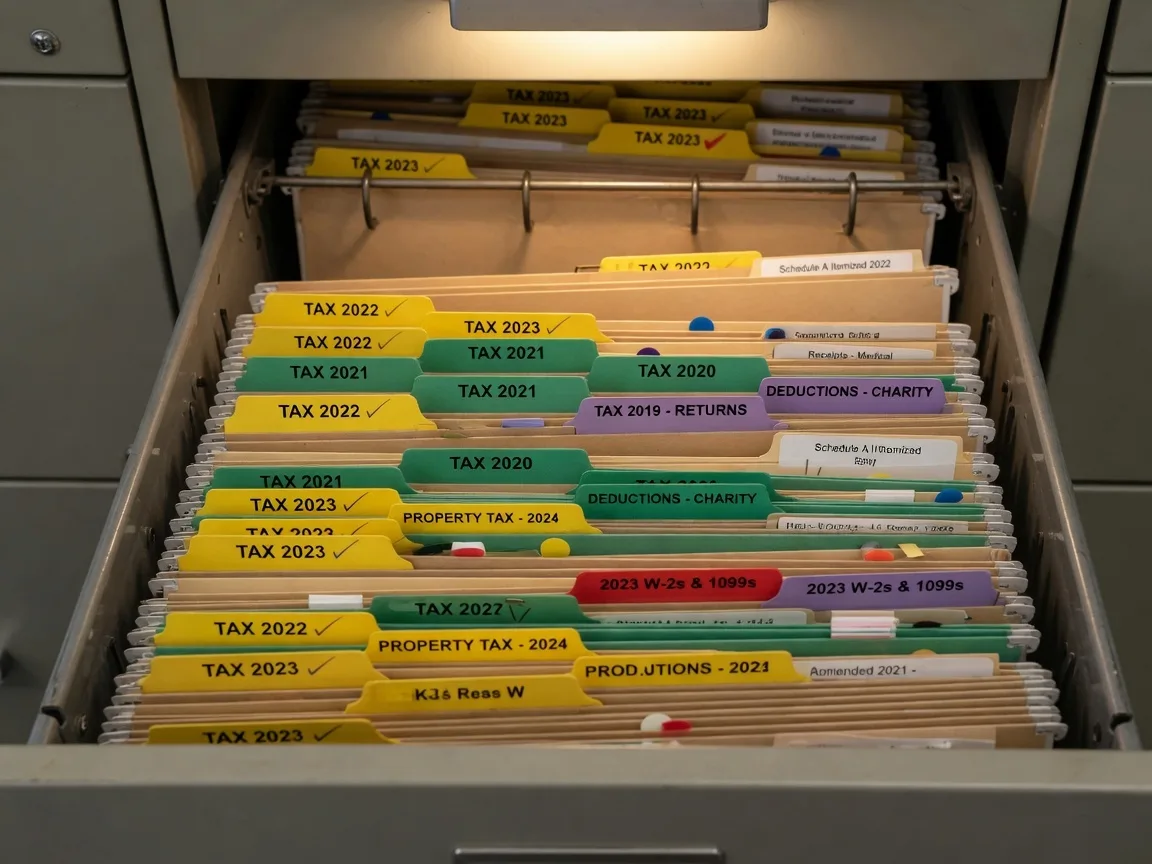
The difference between a clean break and a messy audit often comes down to documentation. Here are the practical steps every remote worker should take when leaving California for Texas.

Establish Clear Documentation of Your Texas Domicile
Do not wait to transition records; Texas requires vehicle registration within 30 days and a driver's license within 90 days. Change addresses, register to vote, and, if buying a home, file for the Texas Residence Homestead Exemption immediately to establish a clear paper trail for the FTB.
2. Track California Presence Days and California Workdays Separately
Maintain a contemporaneous calendar showing each date you were physically present in California, the purpose of the visit, whether you performed services, and where you stayed. Preserve supporting records such as airline itineraries, hotel receipts, toll or parking records, expense reports, and employer calendars when appropriate. Presence days are relevant to residency; workdays are relevant to wage sourcing. Do not assume that the two counts are identical [1].
Determine Whether You Have a Form 540NR Filing Requirement
Having California-source income does not invariably mean a return must be filed, and owing zero tax does not invariably mean no return is required. California's nonresident filing test considers California-source income together with gross-income and adjusted-gross-income thresholds based on filing status, age, and dependents. A return may also be necessary to recover California tax withheld in error.
Use the Form 540NR instructions for the applicable year rather than relying on a blanket rule. If you have no California-source income, no California withholding, no equity or deferred compensation connected with prior California services, and no other California filing requirement, a full-year Texas resident ordinarily does not file Form 540NR [2][5].
Work With a CPA Who Understands Multi-State Tax
California's nonresident and part-year resident rules are among the most complex in the country. A CPA who specializes in multi-state taxation can help you structure your residency change, prepare your 540NR correctly, and represent you in an audit. The cost of professional advice is much lower than the cost of an adverse FTB determination.
Review Equity and Deferred Compensation Before the Move
RSUs and options granted in California but vesting after moving to Texas are not automatically tax-free. California taxes equity based on the days worked in CA from grant to vest. Work with a tax professional to determine your California-source income before exercising options.
The Trailing Tax Trap: A Case Study
For example, if you are granted 4,000 RSUs while in San Francisco, move to Texas, and those RSUs vest after a total 24-month service period, California still taxes a portion of the value. If 12 months were in California and 12 in Texas, 50% of the vested value is treated as California-source income.
Correct Your Payroll Work Location and Withholding
Notify HR and payroll of your Texas residence and actual Texas work location. Ask the employer to determine California wage withholding under the California EDD multistate-employment rules. A nonresident employee who performs all services outside California generally has no California wages subject to California personal-income-tax withholding. If the employee works in both states, the employer generally withholds on the portion attributable to California work [4].
Do not use FTB Form 590 for W-2 wages. There is no general Form 590 employee exemption procedure. The employer should correct the employee's work location and payroll-tax setup using its payroll process and the applicable EDD guidance [4][9].

Employer Withholding: Correct the Work Location, Not Just the Mailing Address
A California employer may continue California withholding because its payroll system still identifies the employee as working in California. Changing the mailing address alone may not correct the assigned work state.
A nonresident employee's ordinary wages are subject to California withholding to the extent the employee performs services in California. If all services are performed in Texas, the employer should review and correct the employee's payroll work location. If services are performed in both states, California generally uses the ratio of California workdays to total workdays to determine the California portion, unless another reasonable allocation method applies [4].
Employees should provide HR or payroll with:
- The effective date of the Texas move;
- The Texas home and work address;
- Written confirmation that Texas is the employee's regular work location;
- A record of any California workdays; and
- Any documentation required by the employer's payroll provider.
FTB Form 590 should not be used for wages. The form's official instructions specifically state that wage withholding is administered by the California Employment Development Department [9].
If California income tax was withheld from non-California wages, the employee generally must file Form 540NR to claim the withholding credit and request a refund. Do not promise a four-to-six-month refund period. Processing time varies by filing method, identity-verification issues, documentation requests, and the facts of the claim.

The Cost of Getting It Wrong
California's late-payment penalty (R&TC §19132) starts at 5% of unpaid tax, plus 0.5% per month, capped at 25%. The late-filing penalty (R&TC §19131) is 5% of unpaid tax per month, also capped at 25%. For cases deemed willful evasion, a civil fraud penalty of 75% of the underpayment may be added (R&TC §19163).
The cost depends on the amount of income involved, the tax year, filing status, deductions, penalties, interest, and professional fees. For a high-income employee with several disputed years, the combined exposure can be substantial. Use an actual California return projection rather than multiplying salary by a headline marginal rate.
Because Texas has no individual state income tax, California tax on California-source income ordinarily represents an additional California liability rather than the same wages being taxed by both Texas and California. Double taxation can arise when another taxing state is involved or when residency and sourcing rules overlap, although an other-state tax credit may sometimes provide relief. Professional costs associated with a disputed residency or sourcing issue can also be substantial.
The real cost, however, is often the stress and uncertainty of an unresolved residency issue. A California FTB residency audit is an intensive process that requires you to reconstruct years of travel history, financial records, and personal documentation. The best strategy is prevention: establish your Texas residency cleanly, document everything, and file the right returns on time.
Cross-Reference: How This Connects to Other Relocation Content
This article is part of a broader collection of guides for Californians relocating to Texas. The California income tax nexus issue intersects with several other topics covered on this site:
- The First 90 Days After Leaving California: Establishing Texas Residency — A step-by-step guide to the concrete actions that establish your Texas domicile and support your nonresident tax position.
- Community Property vs. Separate Property: How Your California Trust Changes — How Texas community property rules interact with California trusts and estate plans after you move.
- California Home Equity to Texas Wealth — The real math behind selling in California and buying in Texas, including capital gains tax considerations.
- The Capital Gains Trap Californians Don't See Coming — How California taxes taxable home-sale gain as ordinary income, how the federal and California home-sale exclusions apply, and why the sale and residency dates can matter [15].
- The Remote Tech Worker Relocation — Internet infrastructure, home office design, salary implications, and cost savings for Bay Area and LA tech professionals moving to the Hill Country.
Frequently Asked Questions
These are the questions I hear most often from remote workers who have moved or are planning to move from California to Texas. Every situation is different, but the patterns are consistent.
Do I owe California income tax if I live in Texas and work remotely for a California company?
Assuming you are a full-year nonresident, your ordinary W-2 wages generally are not California source to the extent you perform the services in Texas. A California employer headquarters do not change that result. California workdays, equity or deferred compensation connected with California services, a California-resident spouse, California withholding, or other California-source income can produce a different result [1][2][3][4]. California does not impose residency merely because a Texas domiciliary reaches 45 days in the state. The 45-day limitation applies only to the separate 546-day employment-contract safe harbor. Outside that safe harbor, residency is based on domicile and the totality of the person's circumstances [1][13].
Is 45 days in California a general residency limit?
No. The 45-day limit applies only to return visits made by a California domiciliary relying on the 546-consecutive-day employment-contract safe harbor. It is not a general rule for people who permanently move to Texas. A Texas domiciliary can exceed 45 California days without automatically becoming a resident, while someone who remains domiciled in California may still be a resident despite spending fewer than 45 days there. Track both physical-presence days and actual California workdays, because they serve different purposes [1][13].
Can the FTB audit me years after I leave California? How far back can they go?
The FTB generally has until the later of four years after a return is filed or four years after its original due date to issue an assessment. The period generally becomes six years when more than 25% of gross income was omitted. If no required return was filed, or a fraudulent return was filed with intent to evade tax, an assessment may be issued at any time. Having some California-source income does not automatically require Form 540NR; the filing thresholds and other requirements in the applicable year's instructions must be applied [5][6][7].
What triggers a California FTB residency audit for a remote worker in Texas?
Common triggers include: earning over $200,000 in annual income and moving to a inconsistent addresses or move dates, retaining a California residence for personal use, leaving a spouse or dependent children in California, maintaining substantially stronger California connections, reporting significant equity-compensation or business events near the move date, and using California driver's-license, voter-registration, payroll, banking, or insurance records after claiming a permanent Texas move. No one fact automatically establishes residency; the FTB evaluates the complete factual record [1][6].
My California employer is still withholding California income tax even though I live in Texas. What should I do?
Ask HR and payroll to update both your residence address and assigned work location. Provide the effective date of the move and identify any California workdays. California's EDD guidance — not Form 590 — governs withholding from employee wages. If tax was withheld in error, Form 540NR is generally used to claim the withholding credit and request a refund [4][9].
Plan Your Move With Your Eyes Open
California's residency and source-income rules are among the most misunderstood aspects of relocating from California to Texas. Many remote workers assume that a Texas address alone solves the problem. It does not — but with proper planning, the risk is manageable.
The key steps are straightforward: establish your Texas domicile with documented action across multiple categories of your life, track every day you spend in California, file the appropriate California nonresident return when required, and work with a professional who understands the rules. These steps substantially improve the documentation supporting your filing position, but they do not replace a professional analysis of residency, compensation, community property, and California-source income.
If you are planning a move and want to talk through how the practical side of relocation — finding the right home, coordinating a cross-state close, understanding the Hill Country real estate market — fits with your tax and residency planning, I am here for that conversation. No pressure, no sales pitch. Just a direct conversation about your specific situation.

Written by
Bill Ross
Hill Country Homesteads Group, brokered by KW Boerne
Bill Ross is a Texas real estate agent with nearly four decades in high-tech sales and a direct network of 1,100+ California real estate agents for coordinated cross-state transactions. Featured in national coverage discussing his family's relocation from Silicon Valley to the Texas Hill Country, he serves Boerne, Fair Oaks Ranch, San Antonio, and the surrounding Hill Country communities. Bill@HillCountryHomesteads.com | (210) 294-9190
Related Guides
The First 90 Days: Establishing Texas Residency
Step-by-step guide to establishing Texas domicile after leaving California — driver's license, voter registration, homestead exemption, and documentation.
Community Property vs. Separate Property
How moving to Texas redefines your California trust and estate plan — community property rules explained.
Sources
- FTB Publication 1031, Guidelines for Determining Resident Status — California Franchise Tax Board. ftb.ca.gov/forms/2024/2024-1031-publication.pdf
- Part-Year Residents and Nonresidents — California Franchise Tax Board. ftb.ca.gov/file/personal/residency-status/part-year-and-nonresident.html
- FTB Publication 1004, Equity-Based Compensation Guidelines — California Franchise Tax Board. ftb.ca.gov/forms/misc/1004.html
- DE 231D, Multistate Employment — California Employment Development Department. edd.ca.gov/siteassets/files/pdf_pub_ctr/de231d.pdf
- 2025 Form 540NR Instructions — California Franchise Tax Board. ftb.ca.gov/forms/2025/2025-540nr-booklet.html
- Your Tax Audit — California Franchise Tax Board. ftb.ca.gov/file/after-you-file/audit/index.html
- Manual of Audit Procedures, Chapter 4 — California Franchise Tax Board. ftb.ca.gov/tax-pros/procedures/manual-of-audit-procedures/chapter-4.pdf
- 2025 Personal Income Tax Booklet — Penalties and Interest — California Franchise Tax Board. ftb.ca.gov/forms/2025/2025-540-booklet.html
- Instructions for Form 590 — California Franchise Tax Board. ftb.ca.gov/forms/2025/2025-590-instructions.html
- FTB Legal Ruling 2022-01, Numerator Assignment of Gross Receipts from Sales of Services to Business Entities — California Franchise Tax Board. ftb.ca.gov/tax-pros/law/legal-rulings/2022-01.pdf
- Unemployment Tax Registration — Texas Workforce Commission. twc.texas.gov/services/register-tax
- Foreign or Out-of-State Entities FAQs — Texas Secretary of State. sos.state.tx.us/corp/foreignfaqs.shtml
- California Revenue and Taxation Code Section 17014 — California Legislature. leginfo.legislature.ca.gov/faces/codes_displaySection.xhtml?lawCode=RTC§ionNum=17014
- FTB Publication 1100, Taxation of Nonresidents and Individuals Who Change Residency — California Franchise Tax Board. ftb.ca.gov/forms/misc/1100.html
- Capital Gains and Losses — California Franchise Tax Board. ftb.ca.gov/file/personal/income-types/capital-gains-and-losses.html
- Moving to Texas: A Guide to Driver Licenses and IDs — Texas Department of Public Safety. dps.texas.gov/section/driver-license/moving-texas-guide-driver-licenses-and-ids
- New to Texas: Vehicle Registration Requirements — Texas Department of Motor Vehicles. txdmv.gov/motorists/new-to-texas
Last reviewed: July 2026. Tax laws are subject to change by legislation and judicial interpretation. Consult a qualified tax professional for advice specific to your circumstances.