

If you are a veteran, or on active duty and getting close to separation, and you are trying to decide where to plant roots, this article is for you. It lays out what Texas actually offers a service member who wants to buy a home or land here: which programs exist, what each one costs and requires, and which ones work together. The goal is a decision you can make with your eyes open.
Here is the short version up front. Texas offers veterans several home-buying programs that work together. The combination depends on the buyer. A VA-backed mortgage can provide no down payment and no PMI; eligible Texas veterans and military members may instead obtain their home financing through the Texas Veterans Land Board's Veterans Housing Assistance Program using a participating lender, including VA-backed financing; qualifying borrowers may also use TSAHC assistance for eligible closing costs; and Texas property-tax exemptions can substantially reduce—and for qualifying 100% disabled veterans eliminate—property tax on the residence homestead [1][7][12].
Here is what the article covers, in order. Section 1 walks through the VA loan: eligibility, the funding fee, and the certificate of eligibility. Section 2 covers the Texas Veterans Land Board and the TSAHC down payment help that build on the VA loan. Section 3 covers the property tax exemptions that matter most to veterans and the deadlines that go with them. Section 4 covers the no-state-income-tax picture and the tradeoff that comes with it. Sections 5 and 6 cover verified charities and the bases near the Hill Country, Section 7 clears up the myths, and the article ends with a checklist of what to do next.
If you are making this decision in the middle of a transition, you are not alone in finding it hard. Separation, a pending PCS, and the question of where to build a life all arrive at once, and a sales pitch is the last thing you need. What follows is the landscape itself, in plain English, with the numbers attached.
Picture a late spring Saturday on a bare limestone lot west of San Antonio. A senior NCO walks the property line with his wife, counting live oaks, a half-typed PCS email still sitting on his phone. After twenty years of moving every two or three years, the question they keep circling is a good one: where do we actually put down roots. The households in this article are composites drawn from patterns that repeat across real moves, never a single family, and they exist only to put a face on the numbers.
None of it works automatically. Every program here has an application, a deadline, and a tradeoff, and the biggest honest tradeoff is Texas property tax, which is not low even when the income tax is zero. This reference separates confirmed law and program fact from local rules of thumb, tells you what each program actually means for your budget, flags the things people get wrong, and ends with the specific questions to ask a lender and your county appraisal district [2][11][16].
Sources checked: program facts in this article were verified on September 21, 2026 against the numbered sources at the end. They are primary sources (VA, Texas General Land Office, TSAHC, Texas Comptroller, and state tax agencies) except where a source is marked secondary. Where a number is a rate, a limit, or a deadline, expect it to move.
VA home loans
Eligibility, the funding fee, the Certificate of Eligibility, and what the VA does not do.
Texas Veterans Land Board
Texas-resident eligibility, land loans, the VLB home-loan program, and the current status of home-improvement lending.
Property tax relief
Disabled veteran exemptions, the homestead exemption, and the April 30 filing deadline.
No state income tax
What it actually means for military pay, and the tradeoff that comes with it.
Verified charities
Real national programs for mortgages, repairs, and adapted homes, including two based in San Antonio.
Bases and the Hill Country
JBSA, Fort Hood, and why Boerne, San Antonio, and New Braunfels work for PCS families.
Which benefits can I use before I become a Texas resident?
- VA home loan: Texas residency is not required, but the VA occupancy rule applies to the home being purchased.
- VLB loans: VLB requires the applicant to be a bona fide and legal Texas resident on the date of application.
- TSAHC Homes for Texas Heroes: eligibility has its own Texas residency, service, income, purchase-price, credit, and lender requirements; verify the veteran or active-duty definition before relying on the program during an interstate move.
- Texas residence-homestead and disabled-veteran homestead exemptions: these are claimed after the ownership/occupancy and statutory qualification requirements are met and are filed with the county appraisal district.
1. VA Home Loans: the No-Down-Payment Baseline
The Department of Veterans Affairs guarantees a portion of a loan made by a private lender. That guaranty can give eligible borrowers financing terms that are difficult to duplicate with a low-down-payment conventional loan. For many qualified borrowers with full entitlement, the principal advantages include no required down payment when the purchase price does not exceed the VA-established reasonable value, no monthly private mortgage insurance (PMI), limits on certain charges, and no prepayment penalty. Those advantages do not mean a VA loan will always have a lower interest rate, monthly payment, APR, or total borrowing cost than every conventional alternative, so compare same-day Loan Estimates.
Rob carries a 30% VA disability rating, and that single document rewrites the closing math. Veterans receiving VA disability compensation at any rating are exempt from the funding fee entirely, so his fee is zero, not the 2.15% a first-time borrower pays at zero down [2]. No monthly PMI eliminates a charge that commonly applies to low-down-payment conventional financing. Whether Rob's total monthly payment is lower than a conventional alternative still depends on the rate, points, down payment, taxes, insurance, and other loan terms. A borrower with full VA entitlement can often finance the purchase without a required down payment when the VA reasonable value supports the contract price, but partial entitlement, an appraisal shortfall, or lender underwriting can still create a cash requirement.
Who qualifies depends on when and how you served. For veterans whose active-duty service began after August 2, 1990, one common pathway is 24 continuous months or the full period for which the member was called or ordered to active duty, provided that period was at least 90 days; shorter service can qualify under specified exceptions, including discharge for a service-connected disability. Current active-duty members generally meet the minimum after 90 continuous days. National Guard and Reserve members can qualify through qualifying active-duty service or, in many cases, through six creditable years combined with continued service, retirement, or a qualifying discharge. Character of discharge can affect eligibility. VA—not the lender or this article—makes the final Certificate of Eligibility determination, and former service members with discharges that create an eligibility issue should use VA's current discharge-review guidance rather than assuming they either do or do not qualify.
Certain surviving spouses may also qualify under VA's statutory rules, including some spouses of service members or veterans who died in service or from a service-connected cause.
There is no program income ceiling that disqualifies a borrower for earning too much. That is different from mortgage underwriting: the lender and VA rules still require the borrower to meet applicable income, debt, residual-income, credit, and occupancy requirements.
VA occupancy matters for a relocation purchase. A borrower using a VA-guaranteed purchase loan must certify an intent to personally occupy the property as a home. VA generally considers occupancy within 60 days after closing to be a reasonable time. A later date may be accepted when the borrower identifies a specific future event that will make occupancy possible on a definite date, although occupancy beyond 12 months generally is not considered reasonable. Buyers closing from another state or around a PCS should address timing with the lender before making an offer. VA rules also contain limited exceptions and alternative occupancy provisions, including circumstances in which a spouse or dependent child can satisfy the occupancy requirement and situations involving deployment or other service commitments. A buyer who will not personally occupy within the normal period should have the lender document the applicable VA rule before contract or closing.
VA Funding Fee, 2026, Regular Military, National Guard, and Reserve
| Loan use | Less than 5% down | 5% to 9.99% down | 10% or more down |
|---|---|---|---|
| First time using a VA loan | 2.15% | 1.50% | 1.25% |
| Subsequent use | 3.30% | 1.50% | 1.25% |
| Interest Rate Reduction Refinance (IRRRL) | 0.50% of the loan amount | ||
Source: VA funding fee rate charts, effective April 7, 2023 [2]. VA publishes one set of rates for Veterans, active-duty service members, and National Guard and Reserve members. On a VA purchase loan, only the VA funding fee may be financed into the loan amount; other allowable fees and charges are paid at closing from permitted sources. Buyer and seller can negotiate payment of ordinary loan closing costs, and VA does not impose a percentage cap on seller or builder credits used for those loan closing costs. Separately, VA limits 'seller concessions'—items of value outside ordinary loan closing costs, such as payment of the VA funding fee, certain debt payoff, or prepaid taxes and insurance—to no more than 4% of the home's reasonable value [2].
Who is exempt from the funding fee entirely
- Veterans receiving VA disability compensation for a service-connected disability, at any rating percentage, including a 10% rating [2].
- Eligible surviving spouses of veterans who died in service or from a service-connected condition, including spouses receiving Dependency and Indemnity Compensation (DIC) [2].
- Eligible active-duty service members who have received the Purple Heart and provide the required evidence by closing are exempt from the funding fee [2].
- Veterans eligible for VA disability compensation who receive retirement or active-duty pay instead, which covers many military retirees [2].
- Service members who received a proposed or memorandum rating before the loan closing date on a pre-discharge claim [2].
The fee is set from your status at closing. If VA later awards compensation with an effective date before your closing date, you may be eligible for a refund of the funding fee; call your VA regional loan center. A proposed or memorandum rating received after closing does not qualify for a refund. Get your rating letter to the lender before closing so the fee is waived up front [2].
Limits in 2026: none for full entitlement
One worry people carry over from the old rules is the county loan limit. Since 2020, a borrower with full entitlement, meaning someone who has never used a VA loan or has restored their entitlement, faces no county loan limit in Texas or anywhere else. The VA guarantees 25% of the loan with no dollar cap [6]. County limits, with a $832,750 baseline in 2026, apply only to borrowers with partial entitlement, usually because an earlier VA loan is still attached to an old property [6]. For the first-timer and the retiree alike, the ceiling that decides your purchase is the one your lender sets, not the one the county publishes.
The Certificate of Eligibility and the two roles you will meet
You get a Certificate of Eligibility (COE) three ways: online through VA.gov, through a VA-approved lender, which may be able to retrieve it electronically through VA's lender system, or by mail using VA Form 26-1880 and your service documents (a DD 214 for veterans and activated Guard and Reserve members; a signed Statement of Service for active duty; NGB Form 22 and NGB Form 23 for discharged Guard members who were never activated; VA Form 26-1817 for surviving spouses receiving DIC) [4]. Pull it before you look at a house. Many COE requests are straightforward, but some require VA review or additional documentation. VA's current goal is to contact COE applicants in an average of five business days, and individual cases can take longer. The COE confirms eligibility and available entitlement; it does not by itself determine the buyer's budget, which also depends on lender underwriting, debts, assets, interest rate, taxes, insurance, and the property's appraised value.
Two distinct professionals matter in the process, and confusing them is where mistakes happen. The lender is a private bank, credit union, or mortgage company that actually funds the loan, underwrites it under VA rules, pulls the COE, and requests the VA appraisal [1][4]. The VA fee appraiser is an independent, licensed appraiser, not a VA employee, not the lender's appraiser, and not your agent's, who establishes the home's reasonable value and checks the VA's Minimum Property Requirements for safety, soundness, and sanitation [5].
After the fee appraiser completes and uploads the appraisal, the appraisal is reviewed and a Notice of Value (NOV) is issued—typically by the lender's VA-authorized Staff Appraisal Reviewer under the Lender Appraisal Processing Program, or by VA in cases VA reviews directly. The NOV states the property's VA reasonable value and any property requirements that must be satisfied.
What the VA does not do
- The VA does not lend money. It guarantees loans made by private lenders, reimbursing the lender on a default. You borrow from the bank, not the government [5].
- The VA does not guarantee the price. The appraisal sets the reasonable value the VA will back; if the contract price is above the Notice of Value, the escape clause lets you back out or renegotiate [5].
- The VA does not guarantee the condition. Minimum Property Requirements are baseline safety, soundness, and sanitation checks, not a warranty or an inspection. Order your own independent inspection before closing [5].
VA loans can be assumable
VA loans can be assumable. A qualified buyer may be able to take over an existing VA-backed loan subject to servicer/VA approval and the applicable underwriting rules. The seller should pay close attention to entitlement: unless an eligible veteran assuming the loan substitutes their own entitlement, the original veteran's VA entitlement can remain tied to the loan after the sale. Anyone considering an assumption should get the entitlement consequences in writing from the servicer before committing to the transaction [39].
2. Texas Veterans Land Board: What Most Out-of-State Buyers Miss
Program status checked September 21, 2026. Rates, assistance structures, loan limits, funding availability, and application status can change. The Veterans Home Improvement Program (VHIP) is temporarily paused for new applications effective April 30, 2026.
The Texas Veterans Land Board (VLB), part of the Texas General Land Office, operates specialized loan programs for eligible Texas veterans and military members. Its programs are self-funded through bonds serviced by participant loan payments rather than public taxpayer funding.
For home purchases, do not think of VLB as a second mortgage layered on top of a separate VA first mortgage. The Veterans Housing Assistance Program (VHAP) is itself a first-lien home-loan program offered through participating VLB lenders. Eligible borrowers can obtain VA, FHA, or conventional financing through the program. Veterans with a VA service-connected disability rating of 30% or greater may qualify for a VLB interest-rate discount. Separately, an eligible veteran may have an active VLB land loan and an active VLB home loan at the same time [7][9].
VLB eligibility is separate from VA-loan eligibility. The applicant must be at least 18 and a bona fide and legal Texas resident on the date of application, and must also fit one of VLB's service categories. Current VLB categories include an active-duty military member; a member of the Texas National Guard; a reserve-component member with 20 qualifying years for retirement; a veteran who served at least 90 active-duty days unless discharged sooner for a service-connected disability and who meets VLB's discharge requirements; and certain surviving spouses. VLB publishes specific discharge rules, so a borrower with anything other than an honorable, general, or medical discharge should have VLB determine eligibility before relying on the program.
The three VLB programs at a glance
| Program | What it funds | Key terms, 2026 | Best fit |
|---|---|---|---|
| Veterans Land Loan | Land in Texas, minimum one net acre | Cap raised to $200,000 (dual-spouse up to $275,000), 5% down, fixed-rate 30-year terms [7][8] | Acreage buyers looking at Hill Country tracts, often ahead of a future build |
| Veterans Home Loan (VHAP) | Your primary Texas residence, new or existing, including townhomes and condos | Fixed rates on 15 to 30-year terms, low or no down payment, loan cap $832,750 as of early 2026, rate discount for 30%+ disability ratings [9]. For VHAP, the home must be the borrower's primary Texas residence. VLB currently requires the borrower to occupy it within 60 days after closing and keep it as the primary residence for at least three years. | Buying a primary home, including combinations with VA financing |
| Veterans Home Improvement Program (VHIP) | Repairs and improvements to an existing Texas home | NEW APPLICATIONS TEMPORARILY PAUSED. Effective April 30, 2026, VLB placed a temporary moratorium on accepting new VHIP applications while it evaluates the program's rules and future direction. | Existing borrowers should contact VLB; prospective applicants should check VLB directly for reopening or replacement-program information. |
Source: Texas General Land Office program pages and 2026 announcements [7][8][9][10]. Loan caps and rates are set by the VLB and change; the caps above are the current published numbers. GLO's land-loan rules set a one-net-acre minimum and do not state a maximum acreage. The published VLB loan cap limits the amount VLB will finance; it is not itself a maximum tract size or purchase price. A buyer considering land priced above the available VLB financing should confirm the required cash contribution and all appraisal/underwriting rules with VLB before contracting. The current land loan rate is 7.25% fixed, with a $325 appraisal and contract service fee; confirm both on the GLO page before you plan around them [7].
How the land loan fits the Hill Country buyer
The land loan is the one that surprises Californians, because very few states run a state-backed land credit line for veterans. It finances tracts within Texas of at least one net acre, with legal, usable access to a public road at least 60 feet wide (or the county's minimum, whichever is greater), at a 5% down payment and a fixed 30-year term [7]. Three rules trip up Hill Country buyers: you or your spouse cannot have owned the land in the previous three years, VLB gives no value to existing improvements on the tract, and the tract must be described by a sealed survey field note or a recorded plat [7]. In practical terms, that is the tool for the family who wants to buy a few acres near Boerne, Fair Oaks Ranch, or New Braunfels today and build later, without pulling equity out of their California home early [7][8]. That is exactly Rob's plan. He is not ready to build the same month he closes on the land, and with the VLB land loan the tract does not have to wait for him [7][8].
Two cautions. First, many Hill Country tracts—especially rural acreage—lack one or more site improvements such as a water source, wastewater system, electric service, driveway, or improved road access. Verify each tract individually rather than assuming utilities are present or absent. The honest budget still includes the well, the septic system, the driveway, and any utility work, which the separate guides linked at the end cover in detail. Second, the VLB loan requires Texas residency at application, so it is a program you use after you have committed to the move, not before [7][9]. Buying the land itself has no residency requirement, but this financing does.

VLB land loans finance Texas tracts of one net acre or more with a 5% down payment. Allow for the well, the septic, and the driveway in the same budget.
Down payment help that stacks: TSAHC's Homes for Texas Heroes program
Program status checked September 21, 2026. Rates, assistance structures, loan limits, funding availability, and application status can change. TSAHC publishes today's program interest rates on its home buyer programs page; compare same-day loan options with a participating TSAHC lender before you commit.
One more piece completes the financing stack for a family like Rob and Dana's, and it is the piece most people never get to. It is not a VA program and it is not a Texas land program. It is the Texas State Affordable Housing Corporation, or TSAHC, a nonprofit created by the Texas Legislature that uses state and federal funding to help Texans buy homes, and it runs a program built for exactly the households this article covers. Homes for Texas Heroes is aimed at public-service buyers, and for eligible veterans it can materially reduce the cash needed at closing, although the borrower should compare the accompanying mortgage rate and total borrowing cost against a no-DPA loan [29].
Who qualifies. Homes for Texas Heroes covers specified public-service and military categories, including professional educators, police officers and other qualifying public security officers, firefighters and EMS personnel, county jailers and qualifying correctional officers, veterans and active military, and qualifying nursing/allied-health faculty. The statutory/program definitions are specific, so employment title alone does not establish eligibility. TSAHC also covers active-duty members and veterans, with a residency test that matters to anyone relocating. An active-duty member qualifies when assigned to a base or facility in Texas and Texas is the member's designated home of record. A veteran must have served at least 90 days on active duty (or 20 years of active or reserve service, or qualifying Texas National Guard or Republic of Vietnam service) without a dishonorable discharge. Under TSAHC's definition of "Veteran," the applicant must also be a bona fide Texas resident at the time of application and either have been a Texas resident at enlistment or have lived in Texas for at least one year before applying [29]. A California veteran who has not yet lived in Texas for a year may not qualify, so confirm your status with a TSAHC participating lender before you build a plan around this program. One clarification that surprises retirees: the down payment assistance is open to repeat buyers, so a veteran who owned a home in California for decades is not ruled out by that history. The mortgage credit certificate is different, as explained below [29].
TSAHC also requires home-buyer education: at least one person on the mortgage loan must complete an approved home-buyer education course. TSAHC states that the completion certificate is valid for 12 months.
What the program offers is a 30-year fixed-rate first mortgage through a participating lender, paired with down payment assistance of up to 5% of the loan amount that can be used toward the down payment and closing costs. You choose the structure. The grant option is cash toward closing. TSAHC's grant does not have to be repaid as long as the first-lien mortgage is not refinanced or otherwise paid off during the first six months. Borrowers should still confirm the applicable version of the TSAHC guidelines and their closing documents before closing. TSAHC's current product lineup includes a grant, a three-year deferred forgivable second lien, and a Bond-program deferred repayable second lien. Not every structure is available to every borrower or loan type, and the Bond product has additional eligibility rules. Use the current TSAHC daily rate sheet and lender guidelines rather than assuming all three are interchangeable.
Current TSAHC down payment assistance structures, at a glance
| Structure | Payments now | Repayment rule |
|---|---|---|
| Grant | None. Cash toward the down payment and closing costs | TSAHC's grant does not have to be repaid as long as the first-lien mortgage is not refinanced or otherwise paid off during the first six months. Borrowers should still confirm the applicable version of the TSAHC guidelines and their closing documents before closing [29] |
| Deferred, forgivable second lien | None. 0% interest, no monthly payment | Forgiven after three years as your primary residence; due in full if you sell, refinance, or transfer title before then [29] |
| 30-year deferred repayable second lien (Bond DPA) | Payments are deferred under the Bond-program structure; confirm note terms with the participating lender | Not forgivable; repayable under the program terms, including upon sale, transfer, payoff, or refinance of the first-lien mortgage. Current Bond eligibility is more restrictive than ordinary Non-Bond DPA, so verify first-time-buyer/Qualified Veteran/Targeted Area and income requirements on the current TSAHC rate sheet. |
How TSAHC can reduce cash to close with VA financing
For a VA borrower who qualifies for zero-down financing, TSAHC assistance may be most useful for eligible closing costs, prepaid items, and other permitted cash-to-close expenses rather than for the purchase down payment itself. For a borrower who does have a required cash contribution—for example because of partial entitlement or the structure of the transaction—the permitted use of TSAHC assistance depends on the specific TSAHC product, VA rules, and lender underwriting.
The benefit is therefore best measured as reduced cash needed at closing, not automatically as lower total borrowing cost. TSAHC assistance can be valuable, but the associated first-mortgage rate and second-lien terms may differ from a VA loan without DPA. Compare same-day Loan Estimates before deciding which structure is economically better for the period you expect to keep the loan.
Two limits decide how much house the program supports, and both are county-based and updated over time. TSAHC sets income limits per county as a percentage of the local median income, with the Homes for Texas Heroes income limit set at 170% of the area median income in the chart in effect as of September 2026, and it sets purchase price limits per county and metropolitan area as well. The exact dollar amount for Kendall, Bexar, or Comal County is a row on TSAHC's official limits chart, the edition effective June 13, 2026 as of this writing, so read your county's row on tsahc.org before you commit to a price [29].
Ask the lender for same-day, side-by-side Loan Estimates showing the VA loan with no TSAHC assistance and the comparable VA/TSAHC option. Compare cash to close, note rate, APR, monthly principal-and-interest payment, lender credits or points, and the estimated cost over the period you realistically expect to keep the loan. Down-payment assistance can solve a cash-to-close problem without necessarily being the lowest-cost financing over time.
There is one more piece worth knowing: the mortgage credit certificate, or MCC. It is neither a grant nor a loan. It is a yearly federal income tax credit equal to 15% of the mortgage interest you pay, a dollar-for-dollar reduction in the federal tax you owe [29]. TSAHC generally applies a first-time-home-buyer requirement to an MCC, but the requirement is waived for purchases in designated Targeted Areas and for a 'Qualified Veteran' as TSAHC defines that term for the federal bond/MCC rules. That term is narrower than the broader 'Veteran' category used for Homes for Texas Heroes. TSAHC states that active-duty military do not qualify as a 'Qualified Veteran' for this particular first-time-buyer exception. A former service member who previously owned a principal residence should therefore confirm that he or she meets TSAHC's Qualified Veteran definition rather than assuming military status alone waives the rule. TSAHC defines a Qualified Veteran, for this purpose, as a veteran under 38 U.S.C. Section 101 who has not previously used the Qualified Veteran exception to the applicable first-time-home-buyer requirement. In practical terms it puts money back in your pocket every year you hold the loan and effectively lowers your monthly cost, and it can help you qualify because the expected credit counts in the underwriting math. TSAHC offers MCCs alongside its down payment assistance. The MCC has separate income and purchase-price requirements. Under TSAHC's September 15, 2026 notice for the 2026 MCC program, the general income ceiling is 100% of area median family income (AMFI) for a family of two or fewer and 115% of AMFI for a family of three or more, subject to the applicable county/program limits. Because these limits can be updated, use the current TSAHC limits in effect when the borrower applies. TSAHC currently requires the MCC to be combined with its Non-Bond Down Payment Assistance rather than obtained as a stand-alone MCC. Because MCC funding and program rules can change, verify availability with a participating TSAHC lender at the time of application [32]. For eligible Texas Heroes combining TSAHC DPA with an MCC, TSAHC currently waives the usual MCC fee. Confirm the current fee schedule with the participating lender because program fees can change [29]. Ask about it in the same conversation as the DPA, because the two are meant to be used together [29].
An MCC is a federal income-tax credit, not a cash payment, and the usable credit in a given year is limited by the borrower's federal income-tax liability. TSAHC also warns that federal recapture tax can apply in some circumstances if a home purchased with an MCC is sold within nine years. Borrowers should review the current recapture rules with TSAHC and a tax professional rather than treating the projected credit as guaranteed cash flow.
TSAHC is a nonprofit, but the program is not a gift with no paperwork. The structure, the limits, and the way the money can be used are set by TSAHC and administered through approved lenders, so the officials you actually deal with are the lender and TSAHC itself. Our full walkthrough of both TSAHC programs, Homes for Texas Heroes and Home Sweet Texas, including the application sequence and the lender questions to ask, is on the TSAHC grant guidance page [29]. For a family like Rob and Dana's, one possible structure is a VA-backed first mortgage paired with TSAHC assistance for eligible cash-to-close costs, followed by the applicable property-tax exemption filings after ownership and occupancy requirements are met. Whether that combination is available or preferable depends on TSAHC eligibility, current product pricing, lender underwriting, and the borrower's expected holding period.
3. Property Tax Relief: Where the Military Advantage Is Biggest
Now the part of the story that matters most, and the part that surprises people the wrong way if they hear only the good news. This is local Texas property tax, not income tax, and it is separate from the no-state-income-tax point in Section 4. County appraisal districts administer it. The standard exemption-application deadline is April 30, but Texas law provides different late-filing windows for different exemptions. For example, certain disabled-veteran exemptions allow a qualifying veteran to file as late as five years after the delinquency date, while other residence-homestead or surviving-spouse claims can have different windows. Do not assume that one five-year rule applies to every exemption. The relief discussed below includes the disabled-veteran exemption by rating, the total residence-homestead exemption for qualifying 100% disabled/TDIU veterans, and the general residence-homestead provisions available to homeowners who meet the ownership, principal-residence, and other statutory requirements [11][12].
Layer one: the disabled veteran exemption by rating
Tax Code 11.22 sets a fixed-dollar exemption off the appraised value. These are dollars removed from value, not dollars off the bill; a $12,000 exemption in a district with a combined 2% rate saves roughly $240 a year [11][13]. The 11.22 schedule below covers ratings from 10% to 99%; the full exemption for a 100% rating or TDIU is a separate law, Tax Code 11.131, shown as the fifth bar.
Tax Code 11.131, not 11.22: the entire appraised value of the residence homestead is exempt, so the property tax bill on that home is zero. The full exemption begins at a 100% rating or TDIU, not at 70%.
How to read this chart: the first four bars are the Tax Code 11.22 partial exemptions, fixed dollar amounts removed from appraised value. Bar lengths are illustrative and are not proportional to tax savings. The fifth bar is not an 11.22 tier: under Tax Code 11.131, a 100% rating or TDIU exempts the entire residence homestead. A veteran also qualifies for the full $12,000 under 11.22 at any rating of 10% or more if age 65 or older, totally blind in one or both eyes, or has lost use of one or more limbs [11]. The 11.22 exemption can be applied to any one property the veteran owns, not only the homestead, and a 100% rated veteran can receive both exemptions [11][12].
What a 100% rating does on a specific house. Jerry, a retired sergeant with a 100% service-connected rating, is the composite that every veteran with a serious rating wants to hear about. For a veteran who qualifies under Tax Code Section 11.131, the total appraised value of the qualifying residence homestead is exempt from ad valorem property taxation. The result is zero property tax on that qualifying residence homestead [11][12]. If his home appraises at $650,000, the exemption removes the full $650,000 of value, not a percentage of the bill [12]. The price of that result is paperwork filed on time: the application goes to the county appraisal district, generally due April 30 of the tax year [11][13].
Layer two: the 100% exemption can zero out the bill
Under Tax Code 11.131, a veteran with a 100% VA disability rating (including total disability based on individual unemployability) is entitled to an exemption of the total appraised value of their residence homestead. For a veteran who qualifies under Tax Code Section 11.131, the total appraised value of the qualifying residence homestead is exempt from ad valorem property taxation. The result is zero property tax on that qualifying residence homestead [12].
Do not confuse the ordinary local-option residence-homestead exemption with the disabled-veteran total exemption. Under Tax Code Section 11.13(n), a taxing unit may adopt a general local-option residence-homestead exemption of up to 20% of appraised value. Separately, Tax Code Section 11.131 provides a mandatory total exemption of the residence homestead for a qualifying veteran receiving 100% disability compensation due to a service-connected disability and rated 100% disabled or individually unemployable by VA. The Section 11.131 exemption does not depend on a city, county, school district, or special district choosing to adopt it [11][12].
- Surviving spouses. An unremarried surviving spouse of a 100% disabled veteran continues the 100% residence homestead exemption under Tax Code 11.131. A surviving spouse of a service member killed or fatally injured in the line of duty qualifies for a total exemption under Tax Code 11.133. The benefit can move to a new home, but the exemption on the new home equals the dollar amount the spouse received on the former home in its last exemption year, so the new home may not be fully exempt [11][12]. Surviving spouses of partially disabled veterans can continue the partial 11.22 exemption under the same general rules [11].
- Texas Tax Code Section 11.136 also provides a total residence-homestead exemption for certain unremarried surviving spouses of veterans who died because of a qualifying condition or disease; eligibility is statute-specific, so confirm the claim with the county appraisal district [14].
- File by April 30, and file early. The application goes to the county appraisal district and is due April 30 of the tax year. A 100% disabled veteran who qualifies after January 1 can receive the exemption from the date of qualification for the rest of that year, and late applications are accepted for up to five years after the delinquency date [12]. Ask the district for its forms and current windows [11][13].
Layer three: the general residence homestead exemption and age-65/disabled tax ceiling
A homeowner who owns an interest in the property, uses it as the principal residence, and otherwise meets the statutory requirements can apply for the Texas residence-homestead exemption. For 2026, the statewide school-district exemption removes $140,000 of appraised value from the school-tax calculation. Local-option exemptions may provide additional relief, and counties that collect farm-to-market or flood-control taxes have separate statutory provisions [14][15][46].
Veterans 65 or older with at least a 10% rating get the top 11.22 exemption amount, $12,000, and it applies to any one property they own [11]. That exemption belongs to the veteran, so there is nothing to transfer. Separately, a qualifying residence-homestead owner who is age 65 or older, or who meets the statutory disability definition, can receive the additional $60,000 school-district exemption on top of the $140,000 general school-district homestead exemption, together with the applicable school-tax ceiling [33][35]. The school-tax ceiling can transfer to another qualifying Texas residence homestead using the percentage of school tax paid under the former home's ceiling. The Comptroller's example is straightforward: if the old ceiling is $100 and the school tax without the ceiling would have been $400, the owner was paying 25% of the uncapped school tax. If ordinary school tax on the new home would be $1,000, the transferred ceiling is $250, or 25% of $1,000. The owner obtains the applicable ceiling certificate from the former appraisal district for use with the new appraisal district [33]. County, city, and junior-college ceilings transfer only as provided by statute and where the relevant local taxing unit has adopted the applicable ceiling [33][34]. Ask both appraisal districts what they need before you list your current home.
The plain-language version: property tax relief in Texas is real, it is administered county by county, and the price of getting it is paperwork filed on time. The county appraisal district, not the state, is your first phone call [11][14]. Rob files promptly after he qualifies because early filing reduces the risk of missed deadlines, delayed account corrections, or avoidable follow-up with the appraisal district. The effective date of the exemption is governed by the applicable statute and qualification date, not merely by the date the application is submitted [11][12].
Read the plain homestead filing walkthrough in our Texas homestead exemption guide, and the honest rate comparison for Kendall, Bexar, and Comal Counties in Property Tax Shock or Relief.
4. No State Income Tax, and What That Actually Means
If you are about to retire from the service, here is what that means in dollars. Texas has no personal state income tax, a prohibition written into the Texas Constitution, so it taxes none of your military pay: active-duty base pay, military retirement pay, pensions, VA disability compensation, or Social Security [16]. That is genuinely different from most of the country, and the comparison table below shows where Texas sits [16][17].
Two honest clarifications. First, federal tax rules still apply. Regular active-duty basic pay and ordinary military retired pay are generally taxable federally, but important exceptions exist—for example, qualifying combat-zone pay and certain disability-related military retirement or compensation can be excluded. VA disability compensation is generally excluded from federal taxable income, and qualifying Basic Allowance for Housing (BAH) and Basic Allowance for Subsistence (BAS) are excluded as well. Anyone with combat-zone pay, disability retirement, Combat-Related Special Compensation, or another special-pay category should use the current IRS Armed Forces' Tax Guide rather than treating all military pay alike [43]. Second, no state income tax does not mean no taxes. Texas has no state property tax. Property taxes are levied and collected by local taxing units such as school districts, counties, cities, and special districts. State revenue instead relies heavily on sources including the state sales tax and business-related taxes, while local governments also use property taxes and, where authorized, local sales taxes and other revenue [16][38].
How states treat military retirement pay, 2026
| State group | State tax on military retired pay | What it means |
|---|---|---|
| Texas | $0 | No state income tax exists to apply to any military pay [16] |
| Eight other states with no state income tax on wages (Alaska, Florida, Nevada, New Hampshire, South Dakota, Tennessee, Washington, Wyoming) | $0 | No state income tax applies to military pay. New Hampshire repealed its interest and dividends tax effective January 1, 2025 [17][30] |
| Most of the rest of the country | $0 | These states collect income tax but exempt military retirement pay [17] |
| About a dozen states, including Colorado, Georgia, Maryland, New Mexico, Utah, Vermont, and Virginia | Partial | They tax military retired pay with age, income, or other conditions and exceptions [17] |
| California | Partial | California taxes military retired pay as ordinary income above an exclusion of up to $20,000 a year for tax years 2025 through 2029, available only at or below $125,000 of federal AGI for individuals or $250,000 for joint filers and surviving spouses [18] |
| Washington, D.C. | Full | D.C. taxes military retired pay as ordinary income; confirm current treatment with the D.C. Office of Tax and Revenue [17] |
How to read this chart: the column that matters for a retired military family is the middle one. For most of the country the number is already zero, because most states exempt military pensions. Texas's distinctive combination is zero income tax plus the property tax exemptions in Section 3, which is what pushes the recommendation this article makes [16][17].
For a retired military household moving from California to Texas, the state-tax change depends on the date California residency actually ends. California generally taxes a part-year resident on income received while a California resident and on California-source income received while a nonresident. Military retirement pay received after the taxpayer becomes a California nonresident generally is not taxed by California as California-source pension income, but retirement pay received during the California-resident portion of the move year can still be included in California taxable income. California's temporary military-retirement exclusion for tax years 2025 through 2029 can also affect the amount taxed while the recipient is a California resident [18][44].
Once the taxpayer is a Texas resident and no longer subject to California tax on the military pension, Texas imposes no personal state income tax on that retirement income. The move year itself should not be described as an automatic full-year zero; residency dates, domicile, and any continuing California-source income matter [16].
The full retirement move is walked through in California retirees moving to Texas, and the zero-income-tax monthly math is in the income tax arbitrage budget.
5. Verified Charities for Mortgages, Repairs, and Adapted Homes
Beyond the federal and state programs, a small number of national nonprofits grant mortgage-free homes, adapted homes, and repair funds to veterans and their families. Some families hear "mortgage-free home" and assume it is a rumor; it is a real but selective program, and the verified organizations are below. Every organization below was verified as an active organization against its own site in September 2026, and two of them, Military Warriors Support Foundation and Operation Homefront, are headquartered in San Antonio [19][20][21][22][23][24][25][26].
The single most important thing to know about all of them: program terms, service areas, income rules, and waiting lists change, and availability varies by state and by year. Always check the organization's current program page before you count on anything [23][26].
| Organization | What it provides | Texas connection |
|---|---|---|
| Homes For Our Troops | Builds and donates specially adapted, mortgage-free custom homes for severely injured post-9/11 veterans, plus barrier-free modifications [19] | National program; applies to Texas veterans meeting the injury criteria |
| Building Homes for Heroes | Builds or modifies and gifts mortgage-free homes to injured veterans, Gold Star families, and first responders [20] | National program |
| Tunnel to Towers Foundation | Mortgage-free "smart homes" for catastrophically injured veterans, plus mortgage payoff for fallen service members and first responders, and veteran housing conversions [21] | National program |
| Purple Heart Homes | Home modifications and barrier-free, aging-in-place repairs for service-connected disabled and aging veterans, with local chapters [22] | National chapter network |
| Military Warriors Support Foundation | Mortgage-free homes through Homes4WoundedHeroes and Homes4GoldStars, plus financial mentoring and outdoor wellness programs [23] | Headquartered in San Antonio |
| Operation Homefront | Critical financial assistance grants for mortgage or rent, utilities, food, and car and home repairs, plus transitional housing and mortgage-free homes [24] | Headquartered in San Antonio |
| Rebuilding Together | Free critical home repairs for eligible low-income homeowners, including veterans and surviving spouses, through local affiliates [25] | Texas affiliates include Houston, North Texas, and Rebuilding Together Austin San Antonio, which lists Bexar County among the counties it serves; check the affiliate locator for your county |
| USA Cares | Emergency financial assistance for post-9/11 veterans and families facing service-related hardship, with a required financial education course [26] | State Assistance program in Texas, funded in part by the Texas Veterans Commission |
Source: each organization's own website, checked September 21, 2026 [19][20][21][22][23][24][25][26]. None of the groups above guarantees a timeline or a home to every applicant. Verification ends where their applications begin: eligibility, documentation, and waiting-list terms are theirs to set, and they change.
A qualifying residence homestead donated by a charitable organization can carry a separate disabled-veteran property-tax benefit under Texas Tax Code Section 11.132. Depending on the veteran's disability rating and the statutory requirements, the exemption can equal a percentage of the home's appraised value. This is distinct from the total Section 11.131 residence-homestead exemption available to qualifying 100% disabled/TDIU veterans [12][45].
How to contact these programs the right way
Start with each organization's own official application page and verify its current eligibility, documentation, and fee policies directly. Be cautious of an unaffiliated person or company demanding payment in exchange for promising access to a mortgage-free home, grant, or preferred position in a nonprofit program. If you are working with a Texas Veterans Commission state service officer, they can point you to the state and federal programs before you go the nonprofit route.
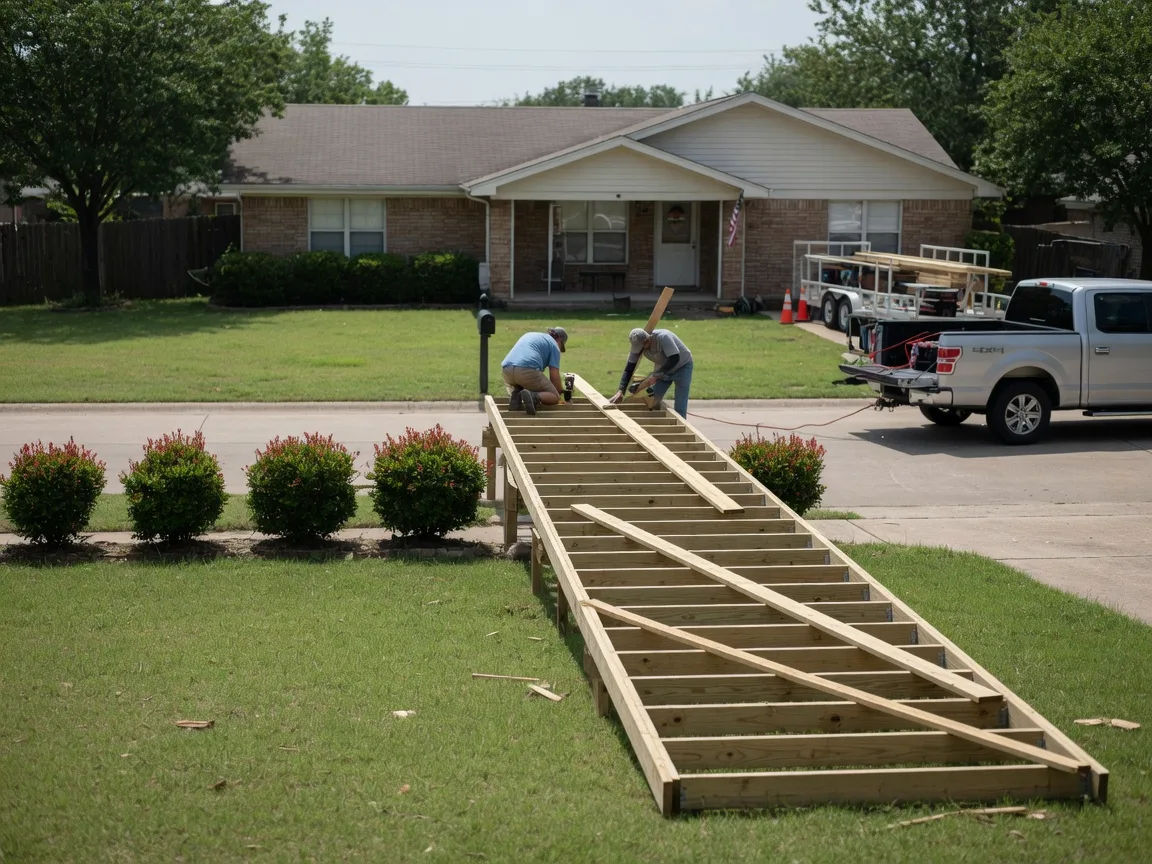
Adapted-home and repair grants like those from Purple Heart Homes, Rebuilding Together, and Tunnel to Towers turn a house into a home a wounded veteran can actually use.
6. Where You Will Actually Live: Bases and the Hill Country
The practical geography works in Texas's favor for both assignment moves and retirement. Joint Base San Antonio (JBSA) is one of the largest military concentrations in the country, and it sits on the doorstep of the Hill Country: Fort Sam Houston, home of Brooke Army Medical Center and the Army Medical Center of Excellence, anchors the eastern side of the base complex; Lackland Air Force Base, the gateway to Air Force basic training, is southwest of the city; Randolph Air Force Base, headquarters of Air Education and Training Command, is northeast; and Camp Bullis sits northwest of San Antonio, close to the corridor many military families choose [27].
The Ortegas, a composite of the first-term families who PCS to JBSA, started their search close to the city and ended it on an acre lot off the I-10 corridor, trading a shorter commute for room to breathe. That trade, in both directions, is what the rest of this section maps. Farther north in Central Texas, Fort Hood—known as Fort Cavazos from 2023 until the Army restored the Fort Hood name on July 28, 2025—is home to the 1st Cavalry Division and III Armored Corps. It is substantially farther from the Boerne/Fair Oaks Ranch area than the JBSA installations and generally is not a practical daily commute from that part of the Hill Country [28][31].
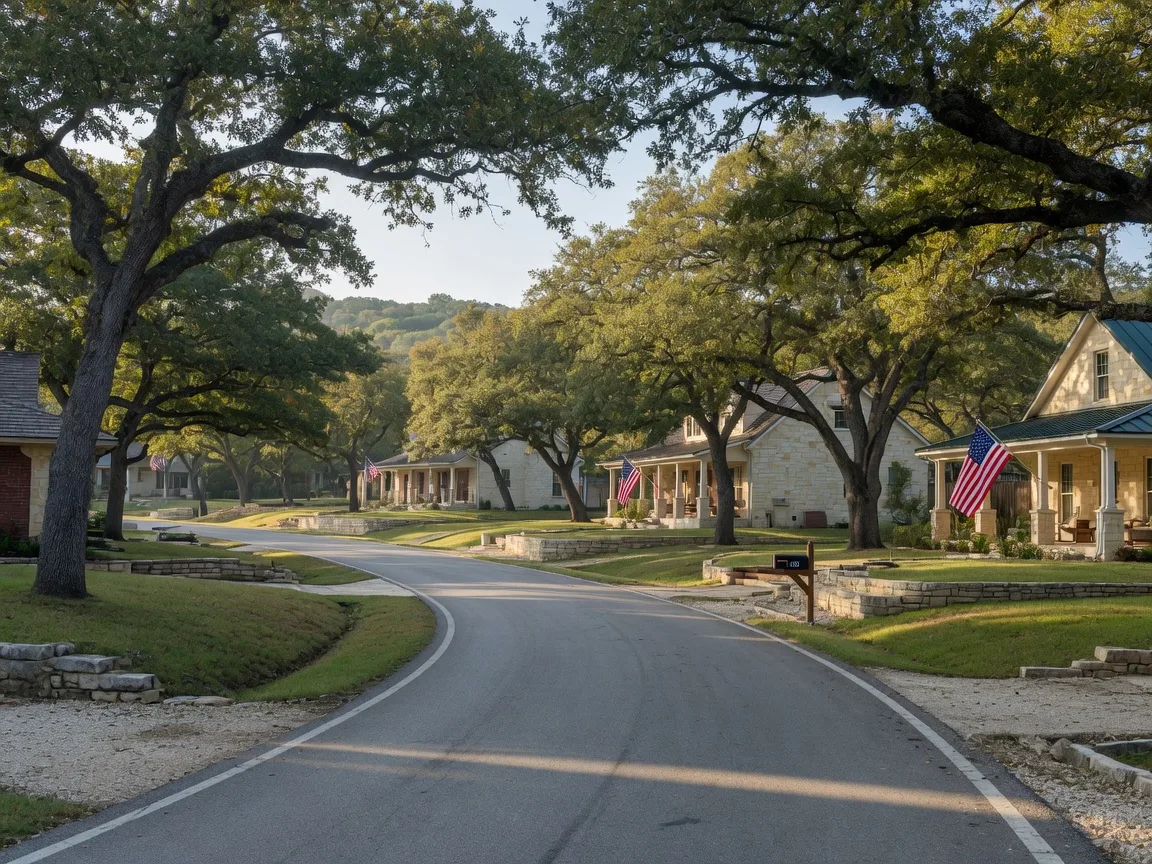
Boerne, Fair Oaks Ranch, and the I-10 corridor keep the Hill Country lifestyle with a real, if not short, commute to JBSA.
How the Hill Country serves the JBSA community
Some JBSA households consider Boerne, Fair Oaks Ranch, and other communities along the I-10 corridor when they are willing to trade a longer commute for larger lots or a Hill Country setting. School-district boundaries and campus assignments vary by address, and commute times to Fort Sam Houston, Lackland, Randolph, Camp Bullis, and other JBSA locations can change materially by duty location and time of day. Verify the specific address, assigned schools, and drive time for the hours you would actually travel.
The neighborhood math is in the JBSA relocation guide, the real drive times are in the Boerne to San Antonio commute guide, and the schools are detailed in the Boerne ISD guide. If you are in the middle of an assignment decision right now, start with the JBSA guide and work outward [27].
The other half of the military advantage is the broader benefits list, from the Hazlewood Act tuition exemption to the statewide veterans network, and the earlier overview article covers that ground: Military and veterans relocating to Texas.
7. Things People Get Wrong
Six myths cost military buyers real money because they either skip the program or plan around a wrong assumption. Read them once, and you will not be the veteran who skips a program or budgets on a wrong number.
| Myth | What is actually true |
|---|---|
| "VA loans are only for first-time buyers." | Wrong. The entitlement can be used and restored repeatedly, and subsequent-use borrowers use it regularly. Non-exempt subsequent-use borrowers can face a higher funding-fee rate at zero down, while borrowers who qualify for a statutory funding-fee exemption continue to owe no funding fee [1][2]. |
| "You must use a VA lender, and the VA is lending you the money." | Wrong on both counts. The VA guarantees a loan; a private, VA-approved lender funds it. You choose among the many VA-approved banks, credit unions, and mortgage companies, and you never borrow from the VA itself [1][5]. |
| "The funding fee is mandatory for everyone." | Wrong. Disability-compensated veterans at any rating and eligible surviving spouses are exempt. Eligible active-duty service members who have received the Purple Heart and provide the required evidence by closing are exempt. The fee shrinks with a down payment [2]. |
| "Disability compensation is taxable." | Wrong. VA disability compensation is not taxable federally and not taxable in Texas, which has no state income tax to apply anyway [16][17]. |
| "Texas property taxes are low." | Wrong, and this article says so plainly. Texas has no personal state income tax, but local property taxes can be substantial. The combined rate for a specific Hill Country property depends on its school district, county, city status, and any special districts, so verify the exact taxing units and current rates for the address rather than relying on a regional average [14][16]. |
| "You must be a Texas resident before you can buy." | Wrong. Purchasing real estate carries no residency requirement, and the VA loan works for out-of-state buyers. Residency rules apply to the benefit programs: VLB financing needs Texas residency, and the homestead exemptions need you to occupy the home, which you file after you move in [7][11]. |
Next Actions, in Order
- 1
Pull your Certificate of Eligibility now, even before you look at a house.
Request it early. Some COEs are available electronically with little delay, while others require VA review or supporting documents. Having the COE resolved before an offer reduces the risk of discovering an entitlement or documentation issue after contract.
- 2
Ask a lender the two eligibility questions before you pick a house.
Ask: "Am I exempt from the VA funding fee with my rating letter?" and "How does my entitlement interact with the county limit if I have partial entitlement?" Get both in writing [2][6].
- 3
Call the county appraisal district where you plan to buy, not a website.
For Kendall, Bexar, Comal, or any other Texas county, ask the appraisal district which residence-homestead and disabled-veteran exemption forms apply to you, what documentation is required, what late-filing provisions are available if a deadline was missed, and whether any local-option homestead, over-65/disabled-person exemption, or tax ceiling applies to your property. For a 100% disabled-veteran claim, specifically ask about Tax Code Section 11.131 [11][12][13].
- 4
Confirm current VLB terms before you build a financing plan.
Rates, caps, and acreage rules are board-set and change. Check the Texas General Land Office program pages as of the month you apply [7][8][9][10].
- 5
Plan the property tax calendar into your closing, not after it.
File the residence homestead exemption and the disabled veteran exemption in the first year you are eligible, and keep the rating letter and DD 214 in the closing file. April 30 is the standard filing deadline, so file as early as practical. If you miss it, do not assume the exemption is lost: Texas law provides late-filing windows for certain residence-homestead and disabled-veteran exemptions, and the applicable period depends on the exemption claimed [11][14].
- 6
Talk to a Texas agent who does out-of-state buyer coordination.
Bill Ross, founder of Hill Country Homesteads Group, coordinates California-to-Texas purchases through a direct network of more than 1,100 California real-estate agents. A no-pressure conversation about your timeline is available at movetotexas.net/contact, by email at Bill@HillCountryHomesteads.com, or by phone at (210) 294-9190 during business hours, 8 AM to 6 PM Central, Monday through Friday. The brokerage is at 116 Herff Rd, Suite 203, Boerne, TX 78006, brokered by Keller Williams Boerne.
For the supporting math, see Property Tax Shock or Relief, the $600K to $1.2M budget comparison, and the first-time buyer assistance guide for the TSAHC programs that also serve military families. Land buyers should read the septic systems guide and the well water guide, because a financed tract without water and septic is a financing plan with a hole in it. For the move itself, the out-of-state buying playbook and the settling-in checklist cover the driver's license, vehicle, and homestead sequence.
For related reading on the brokerage's own sites: the Hill Country Homesteads insights hub and the What California Money Buys in Boerne comparison, and the Texas probate guide for military families whose move involves an estate.
Frequently Asked Questions
The ten questions that come up every time a military family starts this research for real, answered straight.
Am I eligible for a VA loan if I served in the National Guard or Reserve?
Often yes. Guard and Reserve members can qualify through qualifying active-duty service or six creditable years in the Selected Reserve, and VA makes the final Certificate of Eligibility decision. Since April 7, 2023, they pay the same funding fee rates as regular military. Section 1 has the full service rules and how to pull your COE.
Do I pay the VA funding fee if I have a disability rating?
No, provided you receive VA disability compensation. Veterans compensated at any rating are exempt from the funding fee, as are eligible surviving spouses. Eligible active-duty service members who have received the Purple Heart and provide the required evidence by closing are exempt. Section 1 has the full exemption list and the refund rules [2].
Does a VA loan require a down payment?
Many VA purchase borrowers with full entitlement can buy without a required down payment when the purchase price and VA reasonable value support the loan. A borrower with partial entitlement, an appraisal shortfall, or another transaction-specific requirement may need cash or a down payment. VA loans do not require monthly PMI. Section 1 has the 2026 funding fee table [2].
Can I use a Veterans Land Board loan and a VA loan together?
Yes, but not as two layered mortgages. The VLB Veterans Housing Assistance Program is itself a first-lien home-loan program offered through participating lenders, and eligible borrowers can obtain VA-backed, FHA, or conventional financing through it. Section 2 explains how the pieces fit and what to ask a participating VLB lender.
How and when do I file for the disabled veterans property tax exemption?
File with the county appraisal district where the home is located, using its disabled veteran exemption form plus your VA rating decision letter. The general deadline is April 30 of the tax year, and late-window filing is available in several cases. Section 3 has the procedure, deadlines, and documentation [11][12].
Do I have to be a Texas resident before I can buy a home or land in Texas?
No. Buying real estate carries no residency requirement, and the VA loan works for out-of-state buyers. Residency rules apply to the benefit programs: VLB loans require Texas residency at application, and the homestead exemptions require you to occupy the home, so you file those after you move in. The residency box near the top of this article and Section 2 cover the details [7][11].
What does a 100% disabled veteran actually pay in property taxes in Texas?
Nothing on the residence homestead. Under Tax Code 11.131, a 100% VA rating or TDIU exempts the entire appraised value of the residence homestead, so the property tax bill on that home is zero [12]. Section 3 shows the exemption applied to a specific house.
Is my VA disability compensation taxable?
No, at either level. VA disability compensation is not taxable income federally, and Texas has no state income tax to apply to it either. Section 4 has the state-by-state comparison for military retirement pay [16][17].
At 10% to 99% ratings, is the Texas exemption a discount on my tax bill or a discount on the home's value?
It is a dollar amount removed from the appraised (taxable) value, not directly off the bill. The Tax Code 11.22 schedule runs from $5,000 to $12,000 by rating, and a 100% rating or TDIU moves to the full 11.131 exemption. Section 3 has the schedule and the saving math [11][13].
How should I evaluate the commute from Boerne or Fair Oaks Ranch to JBSA?
Drive time from Boerne or Fair Oaks Ranch to Fort Sam Houston varies materially by starting address, duty location, route, and traffic. Check the trip at the actual weekday report and release times rather than planning around a single regional estimate. Neighborhood and drive-time detail is in Section 6 and our separate JBSA relocation guide.
The Bottom Line
The short version: VA financing can eliminate a required down payment for many qualified borrowers and does not require monthly PMI, the Texas Veterans Land Board adds Texas-resident land and home-loan programs (VHIP is temporarily paused for new applications as of April 30, 2026), the disabled veteran exemption rises by rating to a full exemption that takes a 100% rated veteran's residence homestead bill to zero, and Texas has no state income tax. Each program's requirements, deadlines, and current status are in the sections above, with the sources at the end of this article.
What to do next, in plain terms. Confirm your VA rating and pull your Certificate of Eligibility before you look at a house, talk to a Texas lender who works with both VA and TSAHC loans, and ask the appraisal district in the county where you plan to buy about the April 30 exemption application and which exemption forms and filing rules apply to your property. If you want help navigating the move itself, Bill Ross at Hill Country Homesteads Group, brokered by Keller Williams Boerne, works with out-of-state buyers regularly. Reach him through the contact page at movetotexas.net/contact, by email at Bill@HillCountryHomesteads.com, or by phone at (210) 294-9190, 8 AM to 6 PM Central, Monday through Friday. A no-pressure conversation about your timeline is the only thing on offer.
Sources
Numbered sources, as cited in the body above. Primary authorities come first wherever one exists.
- VA home loans: eligibility and the basic program: U.S. Department of Veterans Affairs. www.va.gov/housing-assistance/home-loans/
- VA funding fee and loan closing costs, including exemptions: U.S. Department of Veterans Affairs. www.va.gov/housing-assistance/home-loans/funding-fee-and-closing-costs/
- VA home loan eligibility, including minimum service requirements: U.S. Department of Veterans Affairs. www.va.gov/housing-assistance/home-loans/eligibility/
- How to request a Certificate of Eligibility (COE): U.S. Department of Veterans Affairs. www.va.gov/housing-assistance/home-loans/how-to-request-coe/
- VA Home Loan Guaranty Buyer's Guide, including statement that the VA does not directly lend money: VA Loan Guaranty Service. www.benefits.va.gov/homeloans/documents/docs/VA_Buyers_Guide.pdf
- VA loan limits: no county limit for full-entitlement borrowers: U.S. Department of Veterans Affairs. www.va.gov/housing-assistance/home-loans/loan-limits/
- Veterans Land Loans: minimum one net acre, 5% down, fixed 30-year terms: Texas General Land Office, Veterans Land Board. www.glo.texas.gov/land-loans
- VLB land loan caps raised, 2026: Texas General Land Office press release. www.glo.texas.gov/about-glo/press-releases/land-commissioner-buckingham-announces-combined-100000-increase-vlbs-land
- VLB home loan and home improvement loan program overview: Texas General Land Office, Veterans Land Board. www.glo.texas.gov/veterans/loans-veterans
- Veterans Home Improvement Program: Current VHIP status, including the temporary moratorium on new applications effective April 30, 2026: Texas General Land Office, Veterans Land Board. www.glo.texas.gov/home-improvement-loans
- Disabled Veteran and Surviving Spouse Exemptions FAQ (Tax Code 11.22): Texas Comptroller of Public Accounts. comptroller.texas.gov/taxes/property-tax/exemptions/disabledvet-faq.php
- 100% Disabled Veteran and Surviving Spouse FAQ (Tax Code 11.131): Texas Comptroller of Public Accounts. comptroller.texas.gov/taxes/property-tax/exemptions/disabledvet-100-faq.php
- Property tax exemptions available by disability rating: Texas Veterans Commission. tvc.texas.gov/news/property-tax-exemptions-available-veterans-disability-rating/
- Property tax exemptions overview, including the residence homestead, disabled veteran, and surviving spouse (Tax Code 11.136) exemptions: Texas Comptroller of Public Accounts. comptroller.texas.gov/taxes/property-tax/exemptions/
- SJR 2 (89th Legislature): increase in the residence homestead exemption to $140,000: Texas Legislature Online. capitol.texas.gov/tlodocs/89R/billtext/pdf/SJ00002F.pdf
- Texas has no state income tax: Texas Comptroller of Public Accounts. comptroller.texas.gov/faq/
- 2026 state taxes on military retirement pay (secondary source; confirm each state with its revenue department): The Military Wallet. themilitarywallet.com/military-retirement-pay-tax-exempt/
- Military retirement pay exclusion, tax years 2025 through 2029: California Franchise Tax Board. www.ftb.ca.gov/file/personal/filing-situations/military.html
- Homes For Our Troops: adapted, mortgage-free homes for severely injured post-9/11 veterans: Homes For Our Troops. www.hfotusa.org/
- Building Homes for Heroes: mortgage-free homes for injured veterans, Gold Star families, and first responders: Building Homes for Heroes. buildinghomesforheroes.org/
- Tunnel to Towers Foundation: smart homes and mortgage relief for veterans and first responders: Tunnel to Towers Foundation. t2t.org/
- Purple Heart Homes: modifications and repairs for service-connected disabled and aging veterans: Purple Heart Homes. www.purplehearthomesusa.org/
- Military Warriors Support Foundation: mortgage-free homes and mentoring, headquartered in San Antonio: Military Warriors Support Foundation. militarywarriors.org/
- Operation Homefront: critical financial assistance and mortgage-free homes, headquartered in San Antonio: Operation Homefront. operationhomefront.org/
- Rebuilding Together: free critical home repairs for veterans and their surviving spouses: Rebuilding Together. rebuildingtogether.org/
- USA Cares: emergency financial assistance for post-9/11 veterans, with Texas programs: USA Cares. usacares.org/
- Joint Base San Antonio: installations and missions: Joint Base San Antonio. www.jbsa.mil/
- Fort Hood (named Fort Cavazos from 2023 to July 2025): units and installation overview: U.S. Army, home.army.mil. home.army.mil/hood/
- Homes for Texas Heroes: program overview, eligible professions, down payment assistance options, and mortgage credit certificate: Texas State Affordable Housing Corporation (TSAHC). www.tsahc.org/homebuyers-renters/homes-for-texas-heroes-program/1000
- Repeal of NH Interest and Dividends Tax Now in Effect: New Hampshire Department of Revenue Administration. www.revenue.nh.gov/news-and-media/repeal-nh-interest-and-dividends-tax-now-effect
- Fort Cavazos officially reverts to Fort Hood (July 28, 2025): Stars and Stripes. www.stripes.com/branches/army/2025-07-28/fort-hood-name-ceremony-18586837.html
- 2026 MCC income limits: TSAHC Notice of the Implementation of a 2026 Qualified Mortgage Credit Certificate Program, September 15, 2026 — 100% of AMFI for households of two or fewer and 115% for households of three or more: Texas State Affordable Housing Corporation (TSAHC). www.tsahc.org/news
- Texas Property Tax Basics: how the age-65/disabled school tax ceiling transfers to a new residence homestead at the percentage of school tax paid on the previous home: Texas Comptroller of Public Accounts. comptroller.texas.gov/taxes/property-tax/basics.php
- Transferring your over-65 or disabled tax ceiling to a new home (secondary, local): Bexar Central Appraisal District. help.bcad.org/hc/en-us/articles/51206879521811-Transferring-Your-Over-65-or-Disabled-Person-Tax-Ceiling-Freeze-to-a-New-Home
- Age 65 or older or disabled homeowners: additional $60,000 school-district exemption: Texas Comptroller of Public Accounts. comptroller.texas.gov/taxes/property-tax/exemptions/
- VA Lender's Handbook, occupancy requirements for purchase loans: U.S. Department of Veterans Affairs. benefits.va.gov/warms/pam26_7.asp
- TSAHC Home Buyer and Renter Education Resources: approved home-buyer education courses; at least one person on the mortgage must complete an approved course, and certificates are valid for 12 months: Texas State Affordable Housing Corporation (TSAHC). www.tsahc.org/homebuyers-renters/home-buyer-education
- Property Tax System Basics: how local property taxes are levied and collected: Texas Comptroller of Public Accounts. comptroller.texas.gov/taxes/property-tax/basics.php
- VA purchase loan guidance, including assuming a VA-backed home loan: U.S. Department of Veterans Affairs. www.va.gov/housing-assistance/home-loans/loan-types/purchase-loan/
- Homes for Texas Heroes income limits increased to 170% of AMFI: TSAHC, July 10, 2026: Texas State Affordable Housing Corporation (TSAHC). www.tsahc.org/blog/what-higher-income-limits-mean-for-texas-home-buyers/
- TSAHC Loans and Down Payment Assistance: current product lineup, including the grant, the deferred forgivable second lien, and the Bond-program deferred repayable second lien, with program eligibility rules: Texas State Affordable Housing Corporation (TSAHC). www.tsahc.org/homebuyers-renters/loans-and-down-payment-assistance/
- TSAHC Home Buyer Programs: current program interest rates (Today's Interest Rates) for Homes for Texas Heroes and Home Sweet Texas, including the Bond down payment assistance eligibility footnote: Texas State Affordable Housing Corporation (TSAHC). www.tsahc.org/homebuyer-programs
- IRS Publication 3, Armed Forces' Tax Guide, current edition: Internal Revenue Service. www.irs.gov/publications/p3
- California Franchise Tax Board, Part-Year Resident and Nonresident guidance: California Franchise Tax Board. www.ftb.ca.gov/file/personal/residency-status/part-year-and-nonresident.html
- Property tax exemptions, including the Tax Code Section 11.132 donated residence homestead exemption for disabled veterans: Texas Comptroller of Public Accounts. comptroller.texas.gov/taxes/property-tax/exemptions/
- Property Tax Today, Vol. 35, January 2026: voters approved the $140,000 general residence homestead exemption, effective for the 2026 tax year, together with the additional $60,000 exemption for owners 65 or older or disabled: Texas Comptroller of Public Accounts. comptroller.texas.gov/taxes/property-tax/newsletter/vol35-jan26.php
Last verified: September 21, 2026. Fees, loan limits, interest rates, exemption amounts, and application windows all change, and county appraisal districts administer exemption applications and local records under Texas law, while statutory qualification rules, deadlines, and late-filing windows depend on the particular exemption, so confirm anything time-sensitive with the VA, the Texas Veterans Land Board, and your county appraisal district before you rely on it. This is general educational information about programs and taxes, not legal, tax, or financial advice for your specific situation.