
Why This Article Exists
If you are buying a house in Texas while living in California, this guide is built for you. Most relocation guides tell you when to pack the boxes. This one assumes you have already decided to move — and now need to figure out how to buy a house 1,500 miles away without making a six-figure mistake. You cannot walk through the front door. You cannot hear the traffic from the backyard. You cannot feel how the afternoon sun hits the living room.
Remote home buying Texas requires a different approach. That does not mean you are flying blind. It means you need a different system — one built around remote evaluation, disciplined document review, and an option period used like a scalpel instead of a rubber stamp.
Whether you are doing long distance house hunting Texas or planning ahead with a visit, this playbook walks through every step of buying a Texas Hill Country home from your California kitchen table, from the first listing search to the moment you get your keys.
Confirm That Your California Income and Equity Work in Texas
Before narrowing homes, confirm that the financing works after the move — not merely while you still live and work in California.
- Tell the lender whether the Texas property will be a primary residence, second home, or investment property. Occupancy affects underwriting, pricing, and required documentation.
- If you will keep a California job and work remotely, obtain any employer documentation the lender requests confirming that the arrangement and income will continue after relocation.
- If you are transferring, changing jobs, retiring, or accepting lower compensation, disclose that early. A preapproval based on income that will not continue is not dependable.
- If the Texas purchase depends on selling and closing your California home, discuss the TREC Addendum for Sale of Other Property by Buyer and its deadlines. A sale contingency is negotiated and may make an offer less competitive.
- If sale proceeds will fund the down payment or closing, coordinate the California closing, wire-verification protocol, lender documentation, and Texas funding date. Do not assume proceeds will be immediately available.
- Do not misstate intended occupancy or continued employment to strengthen an application. Confirm the plan with the lender before making an offer.
How to Narrow Listings Remotely
You will never be able to look at every house in person. The first skill is learning to eliminate listings before your agent ever turns on the camera.
The Filters That Matter
Most buyers over-filter on the obvious things — bedrooms, bathrooms, price range, school district. Those are table stakes. The filters that save you time on a long-distance search are the ones that are hard to see in photos:
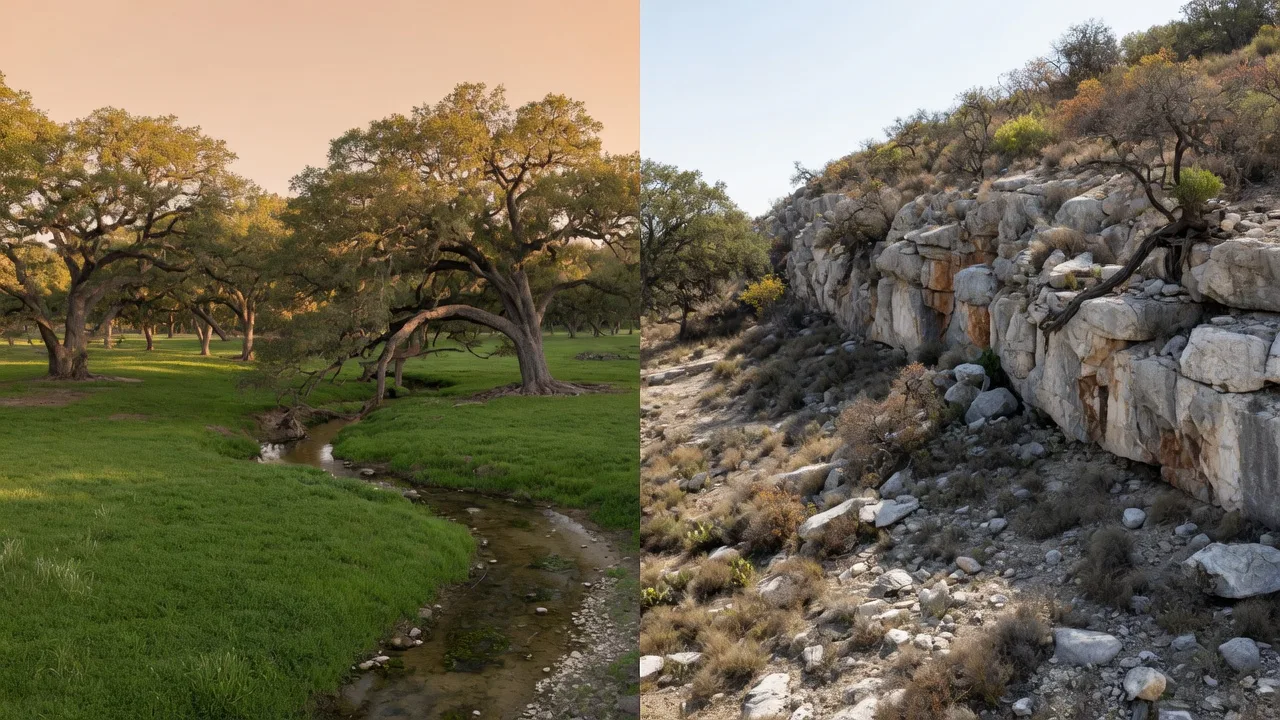
- Topography: Hill Country lots range from flat creek-bottom parcels to steep limestone hillsides. A sloped lot changes everything — driveway cost, drainage, foundation engineering, yard usability, and even your view. Ask your agent to photograph the lot grade from every angle.
- Road exposure: A house on a quiet cul-de-sac and a house on a state highway through the same neighborhood feel like different planets. Ask for a noise-level assessment during different times of day.
- Proximity to development: In fast-growing counties like Comal, Kendall, and western Bexar, a pastoral view today can become a construction zone in eighteen months. Your agent should check the planning sources applicable to the property, which may include city or ETJ development records, subdivision plats, county road plans, utility-district information, nearby permit applications, and TxDOT's Project Tracker. Not every unincorporated county property has conventional zoning or a county master thoroughfare plan.
- Utility infrastructure: Is the property on municipal water or a private well? Septic or sewer? Propane or natural gas? These differences affect monthly costs, maintenance, and what inspections you will need.
- Oak wilt awareness: Oak wilt is a serious fungal disease affecting oaks throughout Central Texas. Use Texas A&M Forest Service and local municipal maps as screening tools for documented activity, but do not treat the absence of a mapped infection center as proof that a property is unaffected. If mature oaks materially affect the property's value, inspect the trees and surrounding mortality patterns and consult an oak-wilt-qualified arborist when concerns exist.
The Agent's Role in Remote Filtering
A good relocation agent does not just forward you MLS links. They should be:
- Pre-screening every listing against your stated criteria before you see it
- Driving the street at different times of day and reporting what they see and hear
- Documenting objective visible conditions and checking applicable municipal zoning, ETJ or plat controls, deed restrictions, easements, and known road or development plans. Avoid subjective neighborhood characterizations.
- Reviewing the seller's disclosure before you invest time in a video tour
- Running preliminary property-tax and insurance estimates
If your agent is not doing this work before you get on a video call, you are doing too much of the job yourself.
What a Useful Video Tour Should Actually Show
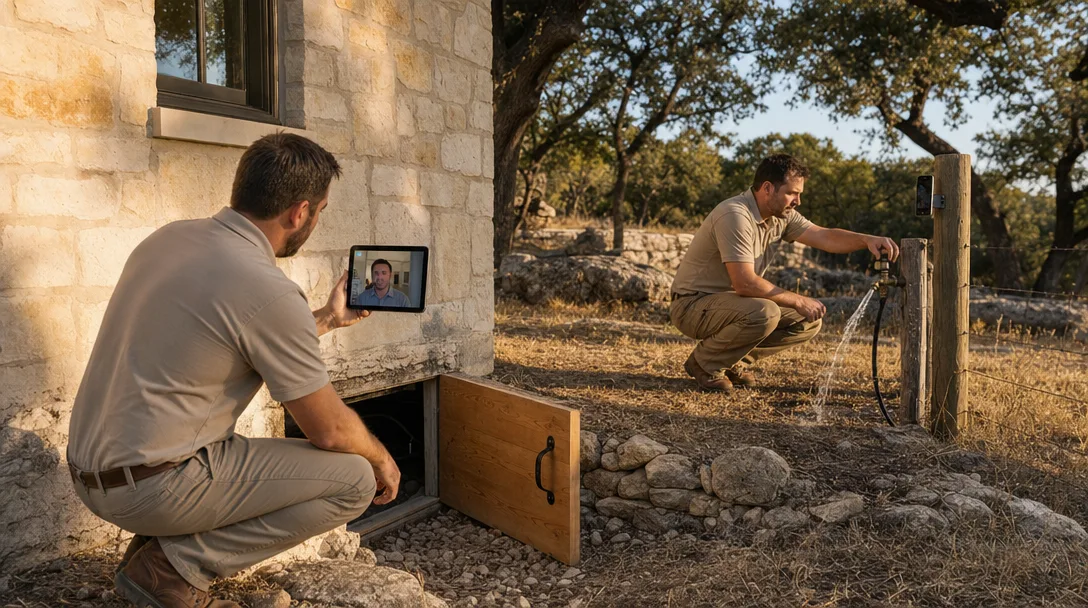
Virtual home tours San Antonio are part of my remote buying service for California relocators. Most listing videos are marketing. A relocation video tour should be the opposite — an honest, thorough walkthrough that shows you what you would see if you were standing in the house.
The Kitchen and Living Areas — Yes, But Also...
Every agent films the kitchen. What most agents skip:
- The view out every window. What do you actually see? A neighbor's roof? A power line? A gorgeous valley? This matters more than the granite.
- Natural light at different times. A 10 a.m. video call does not tell you what the house looks like at 4 p.m. Ask your agent to shoot a short clip in the late afternoon.
- Floor condition and transitions. Walk slowly. Show every room transition, threshold, and floor surface. Uneven transitions, cracks, separation, or changes in floor elevation may justify closer review, but video alone cannot diagnose foundation movement.
- Ceiling condition. Pan up. Stains, sagging, or tape popping at drywall joints can signal roof or plumbing issues.
The Exterior — Where the Real Story Lives
The backyard, the side yards, and the street are where most relocation buyers get surprised. A thorough exterior tour should cover:
- The entire backyard boundary. Walk the fence line. Show what is behind the house, what is next door, and what is beyond the property line.
- Topography and drainage. Show where water flows when it rains. Hill Country properties on slopes can have serious erosion issues that photos never reveal.
- Road noise. Stand at the back of the property for sixty seconds with the microphone open. Let the buyer hear the ambient sound.
- Neighboring properties. Show the house on each side and across the street. Condition, parking, animals, stored equipment — all of it matters.
- The roof from the ground. Zoom in on the roof condition, gutters, and any visible wear. Visible wear can be documented from the ground, but roof age and insurability cannot be determined reliably from appearance alone. Request permits, invoices, warranty information, claims history, and a qualified roof evaluation.
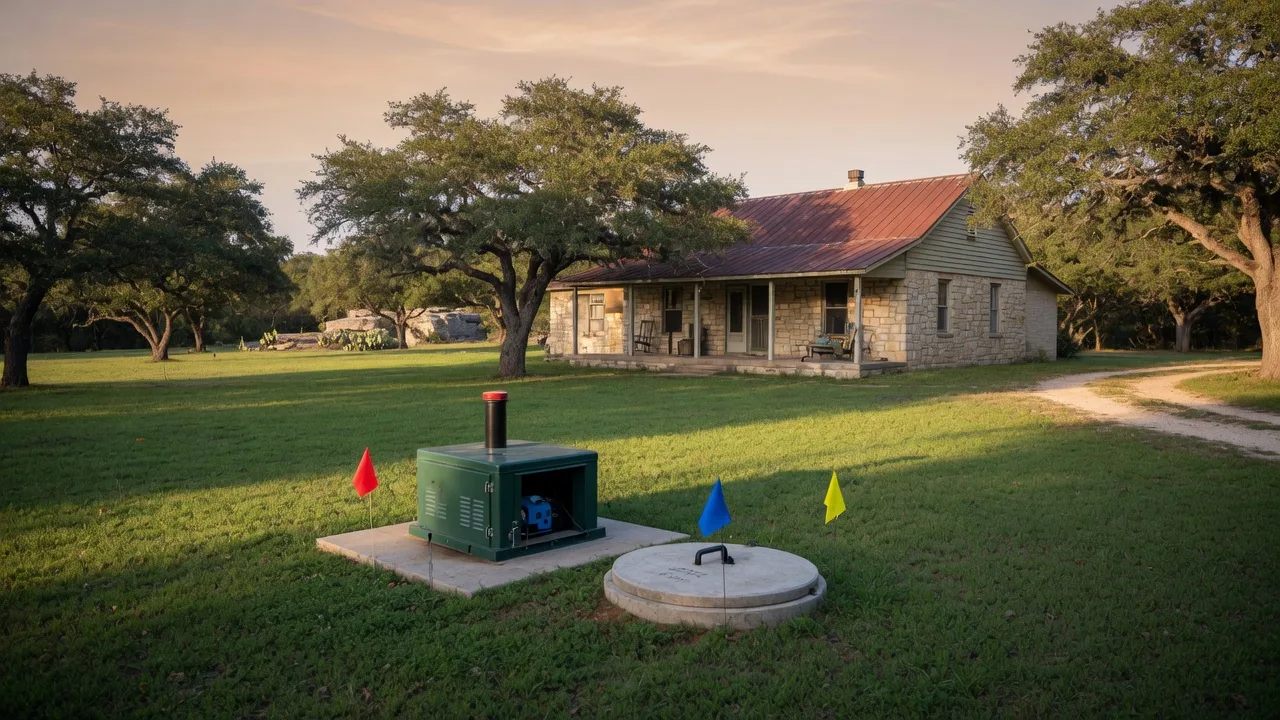
- The septic system location (if applicable). Where is the tank? Where is the drain field? Is it in the backyard where you want to put a pool?
- The wellhead (if applicable). How far is it from the septic? What is the visible condition of the well casing?

The Mechanics
Ask your agent to include:
- The water heater age and capacity
- The HVAC unit labels (brand, age, tonnage)
- The electrical panel (breaker type, amperage, any Federal Pacific or Zinsco panels)
- The attic access point and a brief look inside if safely accessible
- Any visible plumbing — especially under sinks and around the water heater
This is the information your inspector will verify, but seeing it first helps you decide whether the house is worth the trip — or the inspection cost.
A remote tour is a screening tool, not an inspection. The agent should not climb onto a roof, enter an unsafe attic, open energized equipment, diagnose foundation movement, or represent that a system is code-compliant. Reserve invasive or technical evaluation for properly qualified inspectors and specialists.
Documents to Review Before the Offer and Immediately After Contract
Some documents may be available before an offer, while others normally are produced only after the contract becomes effective. Ask what is available before offering, then calendar every contractual delivery, review, objection, and termination deadline after execution.
| Document | What It Tells You | Where to Get It |
|---|---|---|
| Seller's Disclosure Notice | Known defects, repairs, and material facts about the property | Your agent requests it from the listing agent |
| POA/HOA governing documents and resale certificate (if applicable) | Restrictions, assessments, violations, transfer fees, insurance information, capital expenditures, and disclosed litigation, subject to the applicable documents and certificate | Seller, association, management company, county records, and the contractual POA addendum |
| Title Commitment | Proposed title-policy exceptions, easements, restrictions, liens, and requirements that must be satisfied before the policy is issued | Title company after it receives the effective contract |
| Property Tax Records | Appraised and taxable values, recorded exemptions, taxing jurisdictions, and historical tax information; prior-owner exemptions and capped values may not transfer | County appraisal district for values and exemptions; county tax assessor-collector or applicable taxing unit for current bills, payments, and delinquencies |
| Survey | Boundaries, visible improvements, easements shown, encroachments, and other surveyed matters; flood information may be shown but should not replace a separate flood determination | Existing survey from seller, or order a new one |
| Flood-hazard maps and lender flood determination | FEMA maps identify the property's mapped flood-hazard designation. For a financed purchase, the lender or its flood-determination provider makes the formal loan-related determination. Neither source eliminates the need to investigate local drainage, low-water crossings, prior flooding, access interruptions, and Hill Country flash-flood behavior. | FEMA Flood Map Service Center for current maps; the lender or its flood-determination provider for the formal loan determination; and the applicable local floodplain administrator for local records |
| Septic Records (if applicable) | Permit, inspection history, tank location, drain field design | Local OSSF permitting authority or TCEQ regional office, seller, maintenance provider, and qualified septic professional |
| Well Log (if applicable) | Historical construction information such as reported depth, casing, and drilling details; it does not establish current yield, pump condition, potability, or water quality | TWDB Groundwater Data Viewer, Submitted Drillers Reports database, TCEQ legacy records, and seller |
| Seller's Disclosure About Groundwater and Surface Water Rights | Identifies known wells, ponds, water-storage features, surface-water permits, and any known severance, sale, or lease of groundwater rights | Seller or listing agent; delivery is governed by Paragraph 7I of the applicable TREC contract and uses the separate TREC Form 61-0 |
| Special taxing-district and public-improvement-district notices | Applicable district tax rate, debt, standby fees, or PID assessment obligations, depending on the district and statutory notice | Seller's statutory notice, title company, tax records, district records, and applicable TREC notice or addendum |
Current-Form Alert: Effective July 1, 2026, TREC revised the One to Four Family Residential Contract (Resale), Form 20-19, by adding Paragraph 7I, which governs delivery of the separate Seller's Disclosure about Groundwater and Surface Water Rights, TREC Form 61-0. Depending on the selection made in Paragraph 7I, the seller may be required to deliver Form 61-0 after the contract becomes effective. If Paragraph 7I(2) applies and the seller does not deliver the disclosure within the stated period, the buyer may terminate before closing and receive a refund of the earnest money. If the seller delivers the disclosure, the buyer may terminate for any reason within seven days after receiving it or before closing, whichever occurs first. Paragraph 7I(3) provides an exception only when all of its listed conditions are true. The completed contract and its deadlines control.
Additional Due Diligence for Acreage and Unincorporated Property: For acreage, wells, septic systems, or property outside city limits, also investigate:
- Legal and physical access, including recorded easements and private-road maintenance agreements
- Whether the road is publicly or privately maintained and whether the lender will accept the arrangement
- Groundwater-conservation-district rules, well-spacing or production limits, shared-well agreements, and current well performance
- Septic permit, approved system capacity, maintenance contract, alarm history, and whether planned additions, pools, or guest houses would affect the system
- Surface-water and groundwater rights, including any severance, reservation, sale, or lease
- Mineral reservations, pipeline or utility easements, and surface-use implications
- Agricultural or wildlife-management appraisal and the potential rollback-tax consequence of changing use
- FEMA flood information, local drainage, low-water crossings, creek behavior, and prior access interruptions
- Applicable deed restrictions, subdivision plats, municipal or ETJ controls, and the limited land-use regulation that may apply outside city limits
- Fire response, emergency-service distance, insurance eligibility, cell reception, and address-specific internet service
- Whether propane tanks, solar equipment, water softeners, security systems, or other fixtures are owned, financed, or leased
A rural Hill Country property can appear simple while carrying access, water, road, tax, and financing issues that do not arise in a conventional subdivision.
Understand the Full Tax and Assessment Burden: MUDs and certain other statutory districts may levy ad valorem taxes or standby fees. A PID generally imposes a special assessment rather than simply adding another property-tax rate. Review the seller's statutory notices, appraisal-district jurisdictions, tax certificate, title commitment, PID assessment information, and district records. Do not rely on a single tax-rate figure or describe every charge as a "fee." Ask for the property's actual annual obligations and any remaining assessment balance.
Do Not Use the Seller's Tax Bill as Your Forecast: The seller's current tax bill may substantially understate the buyer's future cost. The seller may have a homestead cap, over-65 limitation, disability exemption, veteran exemption, or other treatment that does not transfer to the buyer. A sale does not ordinarily trigger an immediate midyear reappraisal; Texas property generally is appraised at market value as of January 1. However, the seller's homestead appraisal cap, over-65 tax limitation, disability treatment, and other owner-specific benefits generally do not transfer to the buyer. As a result, the property's appraised and taxable values for a subsequent tax year may rise substantially toward the appraisal district's determination of market value.
Build the estimate using a realistic market-value assumption, all applicable taxing-unit rates, only the exemptions the buyer is reasonably expected to receive, and any PID assessment or other special obligation. Do not calculate future taxes by increasing the seller's current bill by a small percentage.
What to Look for in the Seller's Disclosure
The Texas Seller's Disclosure Notice is a standardized form. The notice is based on the seller's actual knowledge, is not a warranty, and does not replace independent inspections. Texas law also exempts certain transfers and sellers from providing the statutory notice. If no disclosure is required — such as in some fiduciary, foreclosure, or co-owner transfers — do not interpret its absence as evidence that the property has no defects. Pay special attention to:
- Foundation history: Any mention of repairs, cracks, or settling
- Roof age and condition: Coverage varies by insurer, roof material, age, and condition. Some policies provide replacement-cost coverage, while others settle roof losses at actual cash value, use a roof-payment schedule, impose a separate wind/hail deductible, exclude cosmetic damage, or decline a roof in poor condition. Obtain property-specific written quotes and verify the roof-loss-settlement provision rather than relying on a universal 15- or 20-year cutoff.
- Water intrusion: Any history of flooding, leaking, or water damage
- Known defects: The seller must disclose material defects they are aware of, though the standard is "to the seller's actual knowledge"
- Septic and well disclosures: Request available permits, maintenance agreements, service reports, laboratory results, and inspection records, but do not imply that the seller is legally required to possess a complete maintenance history
Remote Offer Execution
Making an offer from California is not fundamentally different from making one in person, but the correct Texas contract form depends on the property. Most resales of one- to four-family residential properties use the current TREC One to Four Family Residential Contract (Resale), Form 20-19, effective July 1, 2026. Condominiums, builder-sold new homes, farm-and-ranch properties, and unimproved land use different TREC forms. Remote buyers should confirm that their agent is using the form and addenda appropriate for the specific property and transaction.
The Offer Package
Your agent should prepare an offer package that includes:
- The correct, fully completed current TREC contract for the property type, with all applicable addenda attached and signed or initialed by the buyer wherever required. The seller's signatures are added only if the seller accepts the offer or executes an applicable counteroffer or amendment.
- A current lender preapproval letter that is consistent with the proposed price, loan type, down payment, and intended occupancy
- Appropriately redacted proof of funds for the down payment, closing costs, appraisal-gap commitment, or cash purchase, as applicable
- Any required property-specific notices or addenda, such as those addressing third-party financing, a property owners association, a public improvement district, the sale of the buyer's current home, or appraisal-related termination rights
- A concise, objective summary of the offer's principal financial terms, deadlines, and closing requirements
The contract states the agreed earnest-money and option-fee amounts, but those funds normally are delivered to the named escrow agent after the contract becomes effective — not submitted to the seller as part of the initial offer package.
How Earnest Money Works
Earnest money is not a down payment. It is a good-faith deposit held in escrow by the title company. If you close, it is credited toward your purchase price. If the buyer properly terminates under the option provision, the buyer is entitled to a refund of the earnest money, while the option fee remains nonrefundable. The option fee is a separate payment and should not be described as an amount deducted from the earnest money. Depending on the circumstances, the escrow agent may require a release or follow the demand procedures stated in Paragraph 18 of the contract. If you default after the option period, the seller may be entitled to the earnest money as liquidated damages under the contract.
Key Insight: Do not wait for the contractual deadline. Immediately after execution, confirm the Effective Date, the named escrow agent, accepted payment methods, and receipt instructions. Some escrow agents offer secure electronic-payment systems, while wires, checks, and other payment methods have different processing times. Obtain written confirmation that the earnest money and option fee were received and applied correctly.
The Deadlines a Remote Buyer Must Calendar
Texas contracts contain several independent clocks. The option period is only one of them.
- Effective Date: Confirm the date written into the contract after final execution. This is day zero for many deadlines.
- Earnest money and option fee: Deliver both to the named escrow agent within three calendar days after the Effective Date, subject to the contract's weekend and Legal Holiday extension.
- Option-period termination: Written notice must be delivered by 5:00 PM local time where the property is located on the final option day. For a Texas property in Central Time, that normally is 3:00 PM Pacific Time.
- Inspections and insurance: Complete the general inspection, specialist evaluations, and property-specific insurance review early enough to make decisions before the option deadline.
- Financing approval: Track the Buyer Approval deadline in the Third Party Financing Addendum separately from the option period.
- Appraisal and Property Approval: Review the Third Party Financing Addendum and any Appraisal Addendum for the actual termination rights and deadlines.
- Title, survey, and association documents: These may arrive after the option period. Calendar the separate objection and termination deadlines created by the contract and applicable addenda.
- Closing and funding: Signing is not the same as funding or possession. Confirm when funds, keys, and possession will be released.
Ask the agent to provide a written deadline sheet immediately after execution and update it whenever an amendment changes a date.
Using the Option Period Intelligently
The Texas option period is one of the most powerful buyer protections in the country. Unlike inspection contingencies in other states, the Texas option period gives you an unrestricted right to terminate for any reason — or no reason at all — within the negotiated window.
What the Option Period Is
- Duration: The length is negotiated; TREC does not prescribe a standard number of days. Seven to ten calendar days may be used in some transactions, but the negotiated period can be shorter or longer.
- Cost: The option fee is negotiated; Texas law and the TREC contract do not prescribe a standard amount. The fee is delivered to the named escrow agent, may be released by the escrow agent to the seller, is not refunded if the buyer terminates under the option period, and is credited to the sales price if the transaction closes. Amounts vary by property price, market conditions, competition, and the length of the option period, so avoid treating $100 to $500 as a universal range.
- Right to terminate: If the contract states an option-fee amount and the buyer delivers that fee within the contractual deadline, the buyer has an unrestricted right to terminate during the negotiated option period. The buyer does not need to cite a failed inspection, financing problem, or other specific reason. If no option-fee amount is stated or the buyer fails to deliver the fee on time, Paragraph 5D of the current TREC resale contract states that the buyer does not have this unrestricted termination right.
- Deadline: Under Paragraph 5B, written notice of termination must be given by 5:00 PM local time where the property is located on the final option day. For a Texas property in Central Time, that normally means a 3:00 PM Pacific Time cutoff for a California buyer. Do not wait until the final minutes to transmit the notice.
Why This Matters for Remote Buyers
The option period is your safety net. It is the window during which you:
- Schedule and attend inspections (in person or remotely)
- Review inspection reports with your agent
- Request repairs or credits from the seller
- Make a final go/no-go decision
For a remote buyer, the option period is especially important because you may not see the house in person until after the offer is accepted. The option period is your chance to verify everything — in person if possible, or through a trusted representative if not.
A Smart Remote-Buyer Strategy
- Negotiate a longer option period if you cannot visit before closing. Ten days gives you more time to schedule inspections, review reports, and make decisions.
- Schedule your visit during the option period. If at all possible, fly to Texas during the option window. A two-day visit during the option period is worth more than a hundred video calls.
- If you absolutely cannot visit, designate a trusted person — your agent, a family member, or a professional representative — to attend inspections on your behalf and report back in real time.
Attending Inspections Remotely
The home inspection is the single most important step in the buying process. For a remote buyer, it requires extra planning.
Hiring the Right Inspector
Not all inspectors are equal. For Hill Country properties, you want someone who understands:
- Limestone and caliche foundations: Hill Country homes often sit on shallow rock. The inspector should know what to look for in post-tension slab foundations and pier-and-beam systems built on limestone.
- Well and septic systems: Private water wells and private sewage-disposal systems are optional systems under the TREC Standards of Practice. A Texas-licensed inspector is not required to inspect them unless the inspector agrees to include them in the inspection. When an inspector agrees to inspect these systems, TREC's minimum standards apply, but the scope remains limited and does not include such matters as determining the reliability of a water source or the size, adequacy, or efficiency of a septic system. Confirm the scope in writing before hiring the inspector, and use a qualified well or pump professional, accredited laboratory, or OSSF/septic professional when a more complete evaluation is needed.
- Wildfire risk: Properties with native cedar, live oak, and dry grass carry elevated wildfire exposure. A general inspector may document visible vegetation conditions, but wildfire exposure and defensible-space recommendations may require an insurer, fire-safety professional, or other qualified risk specialist.
- Roof condition: Texas hail damage is common. A TREC inspection can identify observable roof deficiencies, but the inspector is not required to identify latent hail damage or determine the roof covering's remaining life expectancy. When roof age, storm damage, insurability, or visible deterioration is a concern, obtain a separate evaluation from a qualified roofer or roof consultant whose credentials and report are acceptable to the buyer and insurance company.
Ask your agent to recommend inspectors who have specific Hill Country experience, not just a general Texas license.
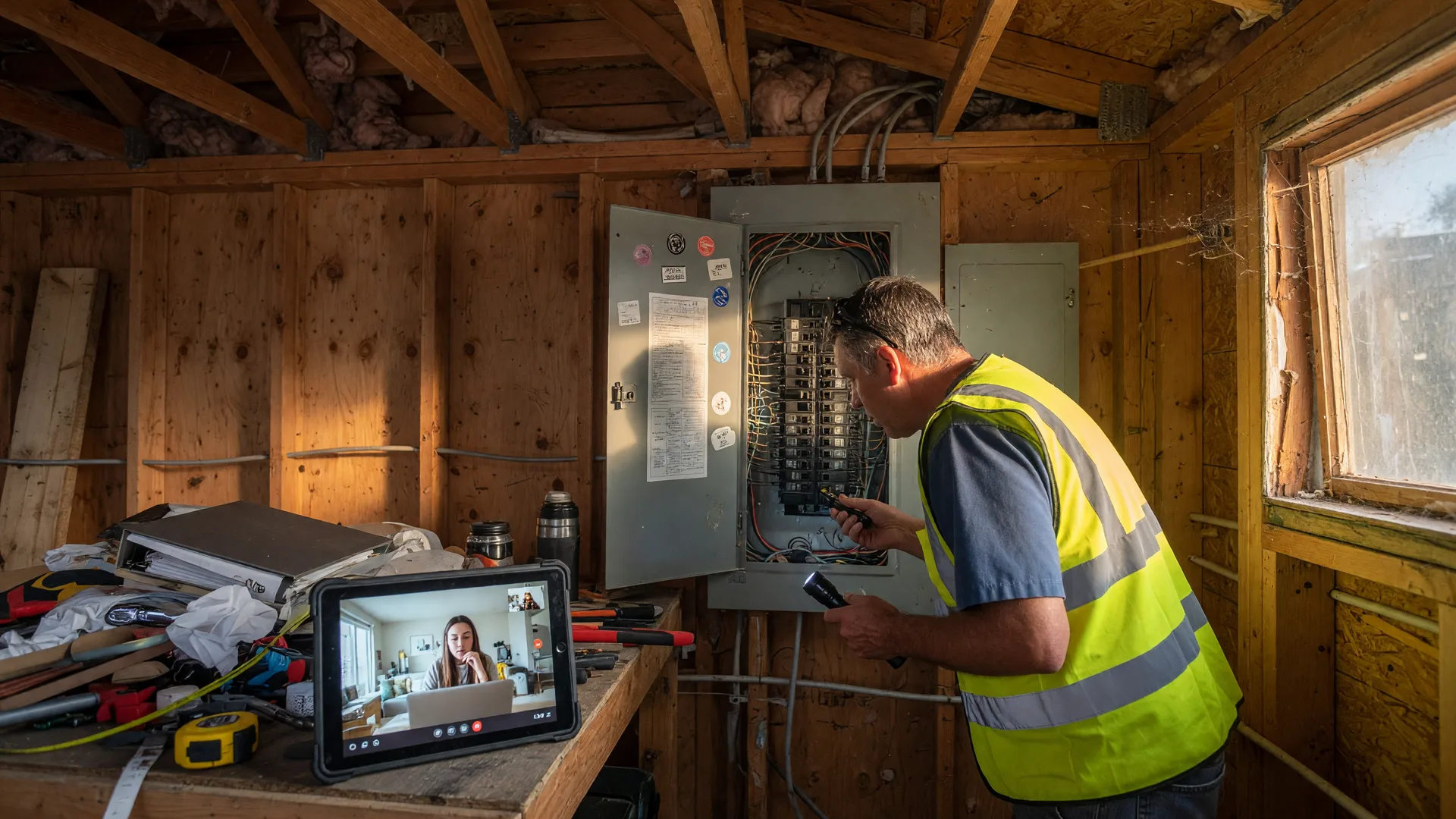
Remote Inspection Participation
Some inspectors offer live video participation or a scheduled report-review call. Confirm the service before hiring; do not assume it is universally available. Here is how to make the most of it:
- Be on the call. Do not just watch the recording later. Live participation lets you ask questions in real time.
- Ask the inspector to narrate. A good inspector will explain what they are finding as they go. If they skip something, ask them to look at it.
- Request photos of every finding. Even if you are on a live call, written reports with photos are your permanent record.
- Focus on the big-ticket items: Foundation, roof, HVAC, plumbing, electrical, and any water intrusion. These are the items that can cost tens of thousands to repair.
- Ask about the Hill Country specifics: Well water quality, septic condition, limestone drainage, and wildfire defensible space.
Specialist Inspections
For Hill Country properties, your agent should recommend additional specialists beyond the general home inspector:
| Specialist | When You Need One | What They Check |
|---|---|---|
| Structural engineer | When the general inspection or visible conditions suggest possible adverse foundation or structural performance; when significant cracking, movement, retaining-wall concerns, unusual construction, or slope-related structural concerns exist | Structural performance, framing, foundations, retaining structures, and load paths. Use a geotechnical engineer when soil, rock, bearing capacity, or subsurface conditions require analysis. |
| Qualified well or pump professional and accredited laboratory | Any property dependent on a private or shared well, particularly when production, equipment condition, water quality, well construction, or shared-use rights are uncertain | Accessible well and pump equipment, pressure and flow, available production or yield testing, construction information, and separately collected laboratory samples for water quality |
| Qualified OSSF/septic professional | Any property served by a private septic system, especially an aerobic system, a system with missing permit or maintenance records, or a system showing alarms, odors, surfacing effluent, or functional concerns | Accessible components, functional operation, drain or distribution field observations, maintenance and alarm history, and comparison with available permit and approved-design records |
| Qualified roofer or roof consultant | When the roof is older, shows visible wear or storm damage, could not be fully accessed by the general inspector, or requires a separate insurer or lender evaluation | Roof coverings, flashing, penetrations, drainage components, visible storm damage, repair history, and other conditions within the specialist's stated scope |
| Qualified pool or spa inspector | Any property with a pool or spa, particularly when equipment, leaks, electrical bonding, barriers, decking, or prior repairs are concerns | Accessible equipment, controls, pumps, heaters, visible leaks, electrical and bonding conditions, barriers, decking, and other observable safety-related defects |
| Texas-licensed wood-destroying-insect inspector | When the buyer wants a formal WDI report, visible evidence or conducive conditions exist, or the lender requires the report | Visible evidence of termites and other regulated wood-destroying insects and conducive conditions within the defined scope of the inspection |
Obtaining Insurance Quotes Before Closing
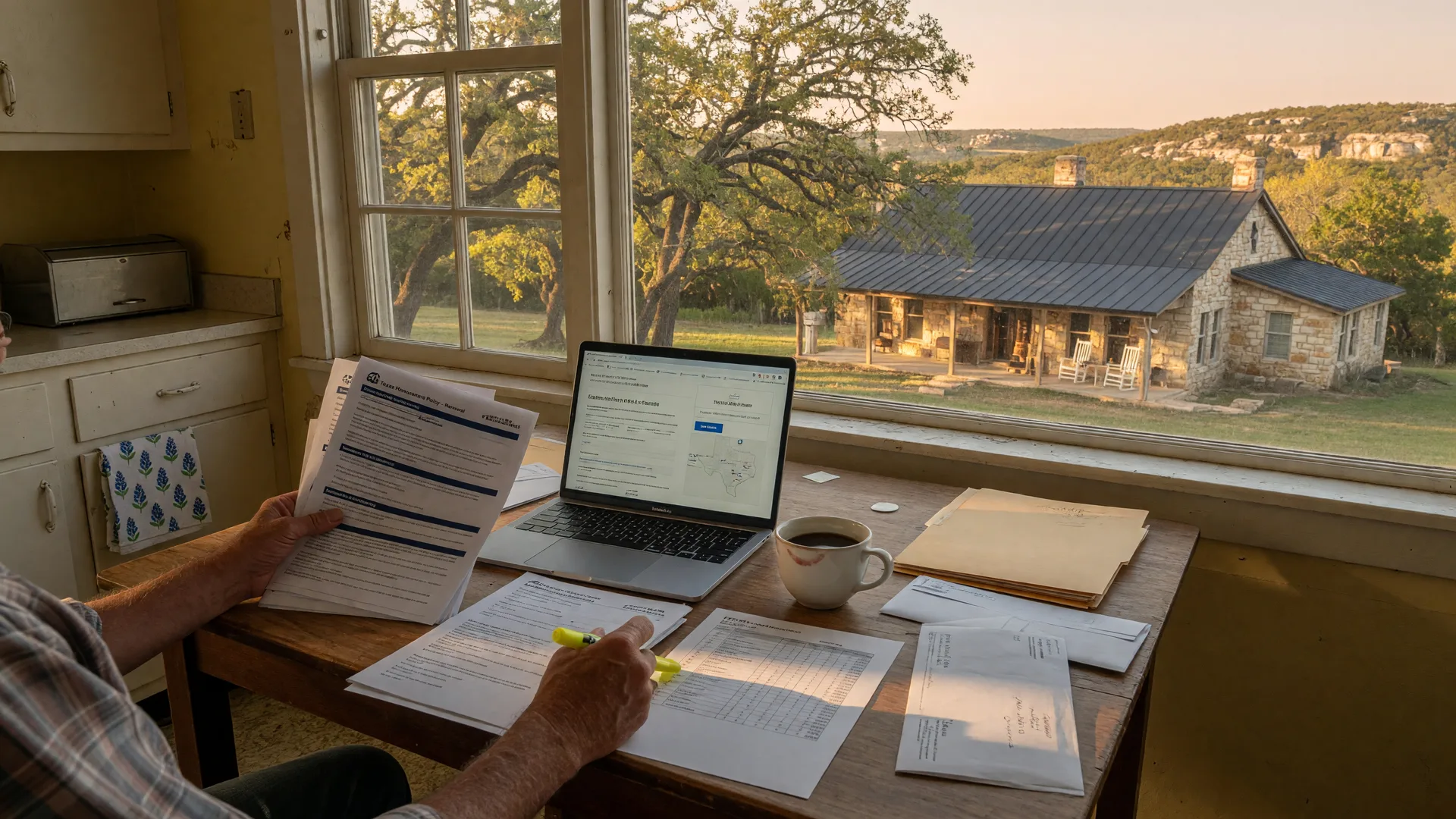
In Texas — and especially in the Hill Country — insurance is not a formality. It is a deal factor. Homeowners-insurance cost and availability can be a material transaction issue in Texas, particularly when hail, wind, wildfire exposure, roof condition, distance from fire protection, claims history, or flood risk affects underwriting.
Why You Need Quotes Early
If the purchase is financed, the lender generally will require satisfactory evidence of homeowners insurance before closing. Texas law itself does not require homeowners insurance, and a cash buyer has no lender imposing this requirement. But the cost and availability of coverage can vary dramatically depending on the property's location, age, construction, and risk profile. A Hill Country home with an older roof, dense vegetation close to the structure, substantial hail or wildfire exposure, or limited nearby fire protection may face materially different premiums or underwriting treatment than a newer home in a planned subdivision. Property-specific quotes are necessary because insurers' underwriting rules differ.
Start getting quotes as soon as you go under contract — ideally during the option period. This gives you time to compare carriers, adjust coverage, investigate underwriting requirements, and decide whether to proceed while a valid contractual termination right remains available. An unacceptable premium by itself does not create a termination right after the applicable contractual deadlines have expired.
What to Ask About
- Wind and hail deductible: Texas policies often carry a separate wind/hail deductible, sometimes as a percentage of the dwelling coverage. A 2% deductible calculated against a $400,000 dwelling-coverage limit equals $8,000. The percentage normally applies to the applicable coverage limit stated in the policy, not automatically to the purchase price or market value of the home. Confirm the calculation in the written quote and policy.
- Wildfire exposure: Properties in areas with native vegetation and limited fire infrastructure may face surcharges or limited availability.
- Flood insurance: Standard homeowners policies do not cover flood damage. Federally regulated or insured lenders generally require flood insurance when the building securing the loan is in a FEMA Special Flood Hazard Area. A lender may impose additional requirements, and buyers outside those areas may still choose coverage because FEMA zones do not eliminate flash-flood risk.
- Well and septic coverage: Routine wear, mechanical breakdown, maintenance, and gradual failure generally should not be assumed to be covered. Ask the insurance professional how the policy treats sudden covered damage, service lines, equipment breakdown, water backup, wells, and septic components.
Remote Appraisal and Lender Coordination
For a financed purchase, the lender determines whether an appraisal or another permitted valuation method is required and orders it through a process intended to preserve appraisal independence. The appraisal is not a home inspection and does not fulfill the buyer's due-diligence obligations. It is a lender's tool to confirm that the property supports the loan.
How the Appraisal Works
- The lender determines the required valuation method and orders it through a process designed to preserve appraisal independence. Depending on the loan and property, the lender may require a traditional appraisal, hybrid or desktop appraisal, or may receive an appraisal waiver.
- When a physical appraisal is required, a licensed or certified appraiser — or a qualified person working under permissible supervision — may visit, photograph, measure, and analyze the property. Not every transaction involves the same scope of physical inspection.
- The appraiser delivers a written report to the lender.
- If the appraised value matches or exceeds the purchase price, you proceed. If the appraisal is below the contract price, the buyer may ask the lender about a reconsideration of value, attempt to renegotiate the price, bring additional cash if the lender permits, or exercise a contractual termination right if one exists and its deadline has not expired. A low appraisal does not automatically give the buyer a right to terminate, and the option period often will have expired before the appraisal is completed. The Third Party Financing Addendum, the Addendum Concerning Right to Terminate Due to Lender's Appraisal, and any FHA or VA provisions must be reviewed for the transaction's actual rights and deadlines.
What Remote Buyers Should Know
- You do not attend the appraisal. The appraiser works independently.
- The appraisal is not your inspection. The appraiser is not looking for defects — they are confirming value and basic habitability.
- Appraisal gaps are common in the Hill Country. Unique properties, large lots, and custom construction can make comparable sales difficult to find. Be prepared for the possibility that the appraisal comes in below the contract price.
- Your agent can help. Relevant factual information — such as permits, documented improvements, surveys, or potentially comparable sales — may be provided through the lender's or appraiser's permitted communication channel. Neither the buyer nor the agent should pressure the appraiser or attempt to dictate value.
Remote Closing
You do not need to be physically present in Texas to close on a home. Texas law provides several mechanisms for remote closing.
Remote Online Notarization (RON)
Texas permits remote online notarization, which allows you to sign and notarize closing documents via a live audio-video session with a Texas-licensed notary public. The notary must be physically located in Texas, but you can be anywhere [3].
- How it works: When the lender, title company, document type, and recording requirements permit it, eligible documents can be signed and notarized through an approved audio-video platform. The Texas online notary must be physically located in Texas. The signer generally completes credential analysis and identity-proofing requirements and must have acceptable identification and a reliable internet connection.
- Acceptance: Texas law authorizes remote online notarization, but that does not guarantee that every lender, title underwriter, investor, county-recording workflow, or closing document will support a fully electronic closing. Some transactions use a hybrid closing in which certain documents are signed electronically and others require wet signatures.
- Planning requirement: Confirm remote-closing eligibility with the lender and title company early in the transaction — preferably before the option period expires. Do not wait until the week of closing.
Power of Attorney (POA)
If remote online notarization is unavailable, a transaction-specific power of attorney may allow an approved attorney-in-fact to execute certain documents for the buyer. This option requires advance coordination.
- The lender, title company, and title underwriter must approve the form, powers granted, attorney-in-fact, execution method, and timing before closing.
- Mortgage-investor rules may prohibit or restrict people with a financial interest in the transaction — including a participating real estate agent — from serving as attorney-in-fact. Do not describe the buyer's agent as a routine or presumptively acceptable choice.
- The title company or buyer's attorney should provide or approve the required language. Do not rely on a generic internet form.
- A POA executed in California may require specific acknowledgment, original-document, recording, or lender requirements. Confirm all requirements before it is signed.
- Because approval can take time, establish a backup closing method well before closing day.
Mail-Away Closing
Some title companies still offer mail-away closings, where documents are sent to you by courier for wet-ink signature and notarization. This is the slowest option and is generally a backup when RON and POA are not feasible.

Remote Closing Options Comparison
| Method | Speed | How It Works | Best For |
|---|---|---|---|
| Remote Online Notarization | Fastest — same day | Live video session with Texas notary | Most remote buyers |
| Power of Attorney | Moderate — requires advance setup | Trusted person signs on your behalf | Buyers who want a local representative |
| Mail-Away | Slowest — days of transit | Documents shipped for wet-ink signing | Backup when other methods are unavailable |
Wire-Fraud Safeguards
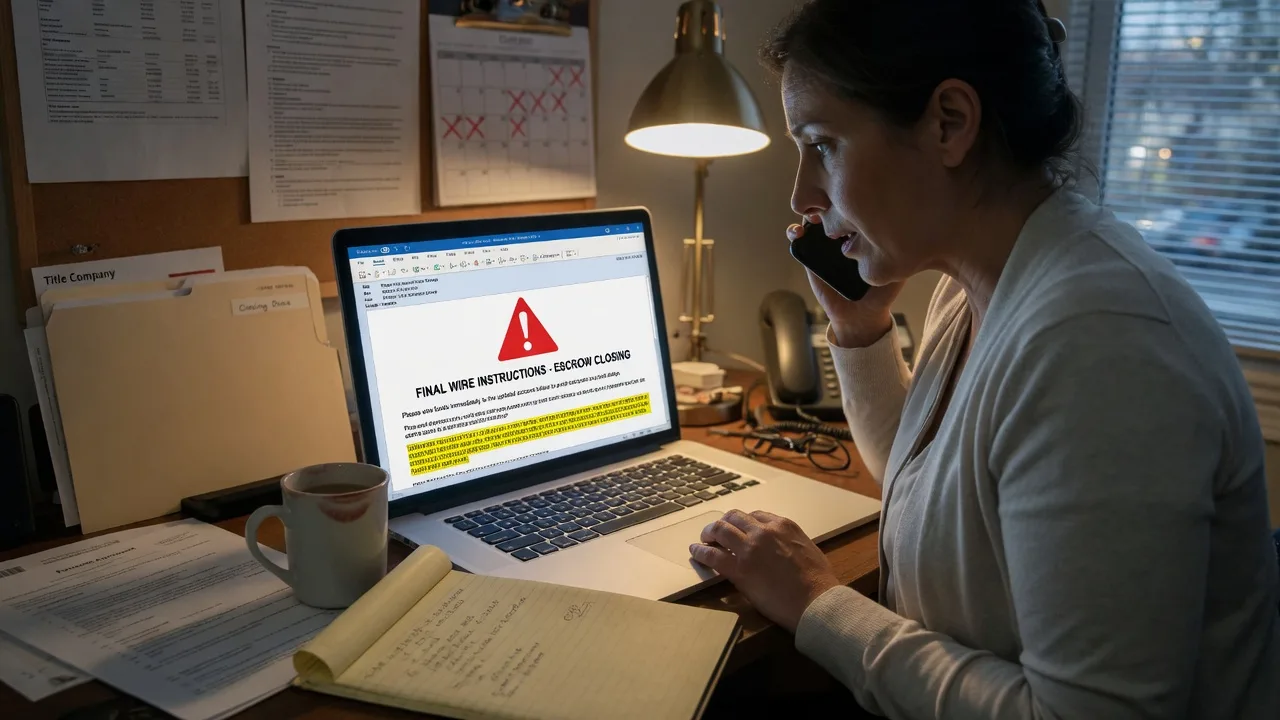
Business-email-compromise and real estate wire fraud are among the most financially damaging risks in a remote closing. Scammers impersonate title companies, lenders, or agents and send fraudulent wire instructions. If you wire closing funds to the wrong account, the money is almost impossible to recover [4].
How Wire Fraud Works
- A hacker compromises an email account in the transaction chain (agent, lender, or title company).
- They send an email that looks identical to a legitimate wire instruction — same formatting, same contact names, same logo.
- The email contains different wiring instructions directing your funds to a fraudulent account.
- You wire the money. It disappears.
How to Protect Yourself
- Never wire funds based solely on email instructions. Always call the title company at a known phone number (not one from the email) to verify the wiring instructions before sending money.
- Establish a verification protocol at the start of the transaction. Ask your title company how they will send wire instructions and what verification steps they use.
- Use CertifID or similar verification platforms if your title company offers them.
- Be suspicious of any last-minute changes to wiring instructions — especially if they come by email.
- Confirm the wire went to the correct account by calling the title company after you send it.
- If you suspect fraud, contact your bank immediately and file a complaint with the FBI's Internet Crime Complaint Center (IC3). If money has been sent to a fraudulent account, contact the sending financial institution immediately, request a recall, notify the legitimate title company and lender using independently verified contact information, and report the event promptly to the FBI's IC3. Rapid action may improve — but does not guarantee — the chance of recovery.
Final Walkthrough When the Buyer Is Absent
The final walkthrough is your last chance to verify the property's condition before you own it. For a remote buyer who cannot be present, this requires careful planning.
Options for Remote Buyers
- Attend virtually. Your agent can conduct a live video walkthrough on the day of closing or the day before. You watch in real time and ask questions.
- Send a trusted representative. A family member, friend, or your agent can walk through on your behalf and report any issues.
- Do not skip the final walkthrough. An inspection report documents the property at an earlier point and cannot establish its condition immediately before closing. If the buyer cannot attend, arrange a live video walkthrough or authorize a trusted representative to document the property with time-stamped photos and video. Any unresolved problem should be raised with the agent, title company, lender, and attorney as appropriate before funding.
What to Check
- All agreed-upon repairs have been completed. If you negotiated repairs during the option period, verify they are done and documented.
- No new damage. The property should be in substantially the same condition as when you went under contract.
- All fixtures and personal property are present. If the contract includes specific items (appliances, light fixtures, window treatments), confirm they are still in the house.
- Utilities are functional. If possible, have your representative turn on faucets, flush toilets, test lights, and run the HVAC.
- The property is in the condition required by the contract and any signed amendments. The current TREC resale form requires possession in the property's present or required condition, ordinary wear and tear excepted; it does not use a general "broom-swept" standard. If removal of trash, debris, or seller property is important, address it specifically and document any problem before funding.
Key Delivery and Possession
Under the current TREC resale contract, possession normally is delivered upon closing and funding unless the parties use a written temporary lease or other written possession arrangement. Deed recording is important to the public land records, but the contract does not make county recording the standard trigger for possession.
When You Get Your Keys
- After closing and funding: Keys, remotes, access codes, and possession should not be released merely because the buyer has signed. Release normally follows confirmation that the transaction has funded, unless the contract provides otherwise.
- Temporary lease: If the seller remains after closing or the buyer takes possession early, use the appropriate written lease and coordinate insurance coverage.
- Remote delivery: Arrange before closing for the agent or other authorized holder to secure the keys and transfer them after funding confirmation. Avoid mailing the only set of keys without a local backup plan.
- Smart devices: Confirm that the seller has supplied required access information and removed the seller's access from transferred smart-home devices.
What to Do on Day One
- Change all locks. Even if the seller returned all keys, rekeying is standard practice.
- Verify utilities are in your name. Arrange utility transfers before closing, but schedule service to become effective when the buyer is entitled to possession. Confirm the timing with the seller and utility providers so that inspections, the walkthrough, closing, and possession are not disrupted by a service gap.
- Locate the well and septic systems (if applicable). Know where they are, how to access them, and who maintains them.
- Check the water quality. If the property is on a well, have the water tested before you move in.
- Apply for the residence homestead exemption after you qualify: A buyer who acquires and begins using the property as a principal residence after January 1 may qualify for a prorated general residence homestead exemption for the remaining portion of that tax year if the previous owner did not receive the same exemption for that year. Eligibility is not created merely by closing; the buyer must own the property, occupy it as the principal residence, satisfy the statutory requirements, and apply through the county appraisal district.
If You Will Not Move In Immediately
Tell the insurance professional if the home will remain vacant or unoccupied after closing; policy definitions and restrictions vary. Arrange for a trusted local person or home-watch service to inspect the property, confirm utilities and HVAC settings, collect deliveries, and respond to leaks, storms, freezes, alarms, or power failures. Rekey or replace locks, reset smart-home credentials, remove the seller's digital access, verify cameras and leak sensors, and keep photographs of the property's condition at possession.
Planning your move from California to the Hill Country?
Coordinating an interstate move requires local precision on both ends of the state line. If you are starting to map out your timeline, reach out for a private, data-driven strategy session. We will align your California sale contingencies with a targeted Texas neighborhood search — no pressure, just engineering the logistics of your move.
Frequently Asked Questions
Do I need to fly to Texas to buy a house?
No. Texas law permits remote closing through Remote Online Notarization (RON), power of attorney, or mail-away closing. However, if at all possible, plan at least one visit during the option period to see the house in person and attend inspections. A two-day visit during the option period is the single most valuable thing a remote buyer can do.
What is the Texas option period and why does it matter for remote buyers?
The option period is a negotiated window during which the buyer may have an unrestricted right to terminate the contract for any reason. TREC does not prescribe a standard length or option-fee amount. Seven to ten days may be used in some transactions, but both the number of days and the fee are negotiable. The contract must state an option-fee amount, and the buyer must deliver that fee to the named escrow agent within the contractual deadline to preserve the unrestricted termination right. For a remote buyer, this is the critical period for inspections, insurance review, specialist evaluations, document review, and, if possible, an in-person visit.
How much earnest money do I need?
There is no TREC-mandated percentage or statutory standard for earnest money; the amount is negotiated. One to two percent may be seen in some transactions, but local practice, price point, and market conditions vary. Earnest money is held by the named escrow agent and ordinarily is credited at closing. If the buyer properly terminates during the option period, the earnest money is refundable while the option fee remains nonrefundable. Under the current TREC resale contract, both payments must be delivered within three calendar days after the Effective Date, with the contract's weekend and Legal Holiday extension applying to both.
Can I get a home inspection remotely?
Yes, if the inspector offers remote participation. Some inspectors provide live video participation, a recorded summary, or a scheduled report-review call, but the service is not universal and should be confirmed before hiring. The buyer should still receive and review the inspector's complete written report and photographs. For Hill Country properties, consider separate evaluations for wells, septic systems, foundations, roofing, pools, and other property-specific concerns when appropriate.
How do I protect myself from wire fraud?
Never wire closing funds based solely on email instructions. Always call the title company at a known phone number to verify the wiring instructions before sending money. Be suspicious of any last-minute changes. If you suspect fraud, contact your bank immediately and file a complaint with the FBI's IC3 [4].
What if the appraisal comes in low?
A low appraisal does not automatically let the buyer terminate during the option period, which frequently has already expired. Depending on the financing and contract documents, the buyer may request a reconsideration of value through the lender, renegotiate with the seller, contribute additional approved cash, or terminate under a still-valid appraisal or property-approval provision. The Third Party Financing Addendum, any Appraisal Addendum, FHA or VA provisions, and their exact notice deadlines control.
How do I get homeowners insurance in Texas before I close?
Obtain multiple written quotes from Texas-licensed insurance professionals and compare coverage, deductibles, roof settlement, exclusions, endorsements, and company financial and complaint information — not just premium. An independent agent can compare multiple participating carriers, while captive carriers may offer options the independent agent cannot access. If standard-market coverage is unavailable, a properly licensed surplus-lines agent may discuss surplus-lines coverage, which has fewer consumer protections and no guaranty-association protection if the insurer becomes insolvent. Your lender will require satisfactory evidence of insurance and confirmation that the premium will be paid before or through closing, according to the lender and title company's instructions.
What is a homestead exemption and how do I file it?
A residence homestead exemption removes part of a qualifying home's appraised value from taxation; it is not a tax deduction. A purchaser who qualifies after January 1 may receive the general exemption for the applicable portion of that year if the previous owner did not receive the same exemption for that tax year. Apply using the current Form 50-114 through the county appraisal district.
For a standard application, the address on the applicant's Texas driver's license or state identification generally must match the property address. The form and statute contain limited exceptions and affidavit procedures, so do not state that a matching card is an absolute requirement in every case. The general filing deadline is before May 1, and Texas law permits certain late residence-homestead applications. The appraisal district determines eligibility.
Related Reading
Master Your Relocation Checklist
- Full Blueprint: Step through the master timeline with our comprehensive California to Texas Relocation Checklist to map out every phase of your move.
- Planning Guide: Avoid last-minute logistical friction by following our systematic 6-Month Cross-State Master Checklist.
Financial and Property Tax Mastery
- Wealth Strategies: Learn how to maximize your purchasing power by diving into our financial guide on California Home Equity to Texas Wealth: The Real Math.
- Tax Protection: Learn how to claim the residence homestead and other available property-tax exemptions using our step-by-step instructions in the Texas Homestead Exemption Guide.
Local Buying Strategy and Custom Layouts
- Contract Deep-Dive: Protect your financial interests prior to signing by reading about Texas Option Periods for California Buyers.
- Build vs. Buy: Decide between a master-planned neighborhood or rural acreage with our evaluation of Custom Build vs. Resale in the Hill Country.
Hill Country Property Intelligence
- Insurance Guide: Understand what drives premiums in the region with our Property Insurance in the Hill Country.
- Ground Conditions: Learn what limestone and caliche mean for your property at Limestone and Caliche: What It Means for Your Property.
Sources
[1] Texas Department of Insurance — Home Insurance Guide. www.tdi.texas.gov/pubs/consumer/cb025.html
[2] Texas Department of Insurance — Insurance and Your Roof. www.tdi.texas.gov/tips/replacing-your-roof.html
[3] Texas Secretary of State — Online Notary Public Educational Information. www.sos.state.tx.us/statdoc/online-np-educational.shtml
[4] Federal Bureau of Investigation — Business Email Compromise. www.fbi.gov/how-we-can-help-you/scams-and-safety/common-frauds-and-scams/business-email-compromise
[5] Texas Real Estate Commission — One to Four Family Residential Contract (Resale), Form 20-19. www.trec.texas.gov/sites/default/files/pdf-forms/20-19_4.pdf
[6] Texas Real Estate Commission — Third Party Financing Addendum, Form 40-11. www.trec.texas.gov/sites/default/files/pdf-forms/40-11.pdf
[7] Texas Real Estate Commission — Addendum Concerning Right to Terminate Due to Lender's Appraisal, Form 49-1. www.trec.texas.gov/sites/default/files/pdf-forms/49-1.pdf
[8] Texas Real Estate Commission — Addendum for Sale of Other Property by Buyer. www.trec.texas.gov/forms/addendum-sale-other-property-buyer
[9] Texas Water Development Board — Locating a Water Well Report. www.twdb.texas.gov/groundwater/data/locwwrep.asp
[10] Texas Commission on Environmental Quality — Getting a Permit for an OSSF. www.tceq.texas.gov/permitting/ossf/ossfpermits.html
[11] Texas Department of Agriculture — Structural Pest Control Service. texasagriculture.gov/Regulatory-Programs/Pesticides/Structural-Pest-Control-Service
[12] Texas Comptroller — Property Tax Exemptions. comptroller.texas.gov/taxes/property-tax/exemptions/
[13] FEMA — Flood Risk for Real Estate, Lending, and Insurance. www.fema.gov/flood-maps/know-your-risk/realtor-lending-insurance
[14] Texas Real Estate Commission — Seller's Disclosure about Groundwater and Surface Water Rights, Form 61-0. Source: www.trec.texas.gov/forms/water-notice-sellers-disclosure-about-groundwater-and-surface-water-rights
Last source-checked: August 21, 2026