
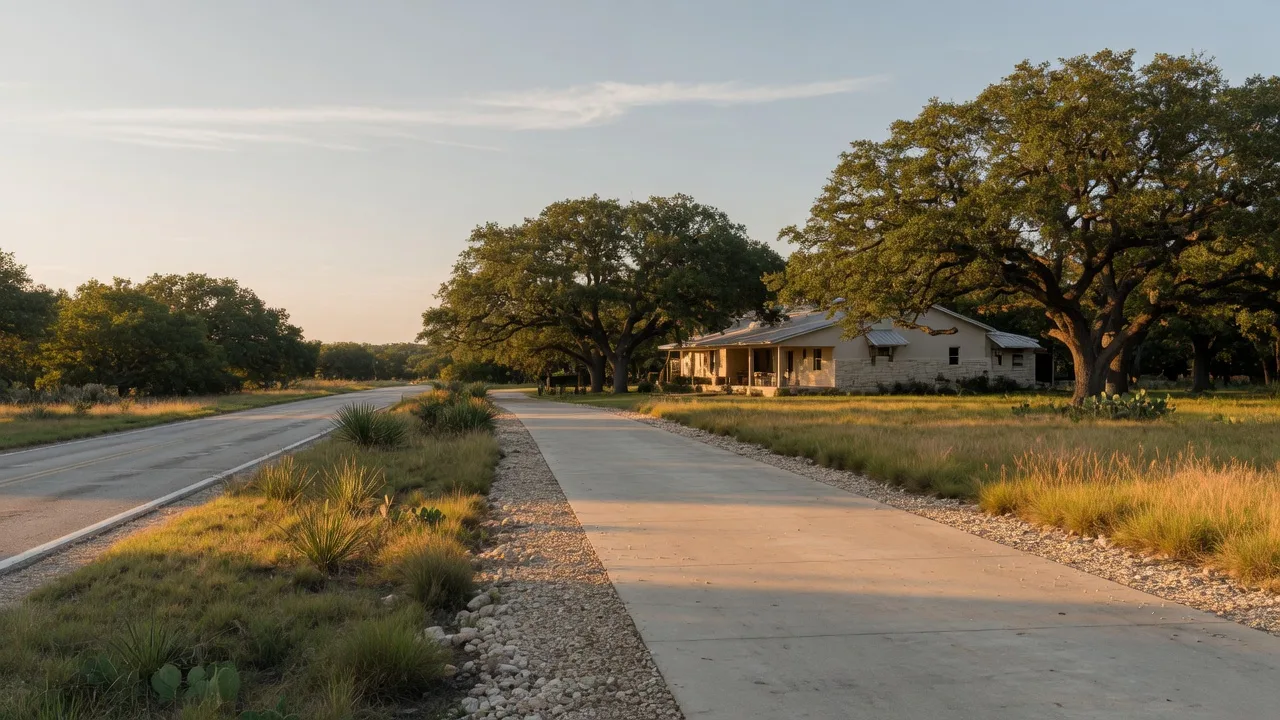
There is a moment, usually on the first or second day after the moving truck pulls away, when a California transplant steps out the front door, looks down a driveway that runs 60 or 70 feet to the street, and realizes the physical world they now live in is built on different assumptions. The lot is bigger. The sky is wider. The neighbor across the street is already walking over to introduce himself. I call this the driveway moment, and nearly every California buyer I have guided to the Hill Country describes some version of it.
This article is a field guide to that first week. Not the mortgage paperwork or the driver's license transfer, which are covered in our cross-state coordination guide, but the daily-life observations that catch transplants off guard: how much land you actually gained, why the grocery run feels different, why you have to shop for your own electricity, and what the neighbor's casserole really means. The surprises of week one are remarkably predictable, and knowing them in advance turns disorientation into a plan.
The tone here is the one I use with my own clients: direct, practical, and honest about the tradeoffs. The driveway moment is not something to resist. It is something to notice, understand, and eventually appreciate, because the same space and pace that feel strange on day two are usually the reasons people stay.
The Moment Itself
Published first-person accounts of the California-to-Texas move consistently describe the same two things registering first: the heat and the space [6][7]. The heat gets the headlines, but the space arrives with you. In a dense California suburb, the front door opens onto a porch, a short walkway, a garage door, and the sidewalk. In the Hill Country, the front door opens onto a driveway long enough to park a boat and two trucks, a yard that runs to the tree line, and a view of the neighbors' rooflines a football field away.
The driveway moment is the first time the move stops being a series of logistics and becomes a felt experience. It is also, in my experience, the moment a buyer's posture shifts. The people who laugh at the size of their own driveway in week one are the people who are building a shop in year two. The people who feel anxious about the distance from the street are usually the ones who need a conversation about what they actually want from a home, not a different lot.
What follows is what that first week actually looks like, organized by the four things Californians notice most: space, distance, services, and people.
The Space, in Numbers
The numbers tell the story before your eyes do. StorageCafe's 2024 analysis of the largest U.S. metros puts San Jose's median residential lot at about 6,000 square feet [1]. Angi's 2022 Lot Size Index measures a typical San Jose lot at 6,872 square feet, the fifth-smallest among large metros, with San Francisco at 6,098 square feet and the national average near 13,896 square feet [2]. Bay Area lots have been shrinking for decades: homes built in the 2000s in the region carried a median lot of roughly 3,600 square feet [3].
Texas metros run larger, with Austin's median lot at 8,629 square feet and San Antonio's at 7,475 square feet [1]. And the Hill Country pushes well past the metro medians. Published county and builder sources describe Boerne-area housing as single-family homes on large-acreage lots, with multi-acre homesites common in newer developments [4][5]. One-acre lots are routine in parts of Fair Oaks Ranch, and two-to-five-acre parcels are not unusual along the western corridor.
| Market | Typical Lot | What It Means |
|---|---|---|
| San Jose, CA | ~6,000 to 6,900 sq ft [1][2] | Fifth-smallest typical lot among large U.S. metros; the yard is a patio and a walkway for many buyers [2]. |
| San Francisco, CA | ~6,100 sq ft [2] | Similar density; new construction in the region has trended to much smaller lots [3]. |
| San Antonio, TX | ~7,475 sq ft median [1] | A step up from the Bay Area, but still a subdivision-scale lot. |
| Boerne / Hill Country | 0.25 to 1+ acres common; multi-acre homesites available [4][5] | A half-acre lot is 21,780 sq ft, roughly 3.5x a typical San Jose lot. One to five acres is a real option in newer developments. |
The practical consequence is not just more grass to mow. It is more room for the life you already have: a shop, a boat, a garden, a dog run, a pool, or simply a backyard where the neighbors are not close enough to hear your phone conversations. Californians who have spent years on a 4-foot patio often do not know what to do with the space at first. That is normal, and it is the good kind of problem.
Distance and Time Run Differently
The second thing Californians notice is that every errand takes longer to reach and is worth batching. In a dense California suburb, the grocery store is a five-minute drive. In the Hill Country, your nearest H-E-B might be 12 to 18 minutes away depending on where you live. The trade, which transplants report within the first week, is that the store itself is larger, less crowded, and genuinely better stocked than they expected [6]. H-E-B is a regional institution, and it is consistently one of the first pleasant surprises of the move.
The commute math changes too. Boerne to downtown San Antonio runs roughly 30 to 40 minutes on I-10, and the airport is about the same. The 45-minute drive, which feels like a major expedition to a Bay Area transplant, is simply normal here. Our guide to the culinary and geographic adjustment covers this in detail, but the short version is that Hill Country life is organized around a small set of corridors, and the good stuff lives at the ends of them.
What changes is the rhythm of errands. Californians run out for one thing. Hill Country residents batch the trip: the feed store, the H-E-B, the post office, and lunch happen on one loop. By the end of week one, most transplants have learned this instinctively, because the alternative is four separate 15-minute drives.
The Services You Have to Set Up Yourself
The most practical surprise of week one is electricity. California delivers bundled utility service automatically; Texas does not. In the deregulated Hill Country market, you choose a retail electricity provider and a plan, and relocation guides recommend setting the account up three to seven days before move-in so the lights work when the truck arrives [9]. Californians who assume the power will just be on have a cold, dark first night. It is a one-time task, but it is the task nobody warns you about. Our ERCOT and electricity guide walks through provider selection and plan math.
Internet is a similar story: you order it, you wait for the install, and in rural pockets the options are narrower than in the Bay Area. Water is the third variable. If your home is on a municipal line, service transfers are routine. If it is on a well, you inherit a system you should understand before you need it. Our groundwater and wells guide is the place to start, and the short version is: test the water, know the pump, and budget for treatment.
None of this is difficult. It is just different, and the difference is concentrated in the first week, when you are already tired from the move. Making a list before you close, rather than after you arrive, is the single highest-leverage thing you can do.
The People Factor
The third thing transplants notice, usually within 24 hours, is that the welcome is not optional. In a California suburb, the neighborly default is privacy: you wave, you nod, you keep moving. In the Hill Country, the neighbor across the street walks over with a casserole, a recommendation for a fence guy, and an opinion about your lawn. Published accounts of the move describe this warmth as one of the defining differences, sometimes disorienting and usually, within a few weeks, deeply appreciated [6][8].
The people factor extends to institutions. The H-E-B cashier asks how the move went. The barista at the downtown coffee shop learns your order by week two. The church, the school, and the youth sports league all run on volunteers who will find you. This is the social machinery of the Hill Country, and it is why our guide to making friends in Texas starts with the same advice I give clients: say yes to the first three invitations, even the ones that sound inconvenient.
Accepting the welcome is a skill, not a personality trait. The families who treat the early overtures as investments rather than intrusions are the ones who have a community by month six.
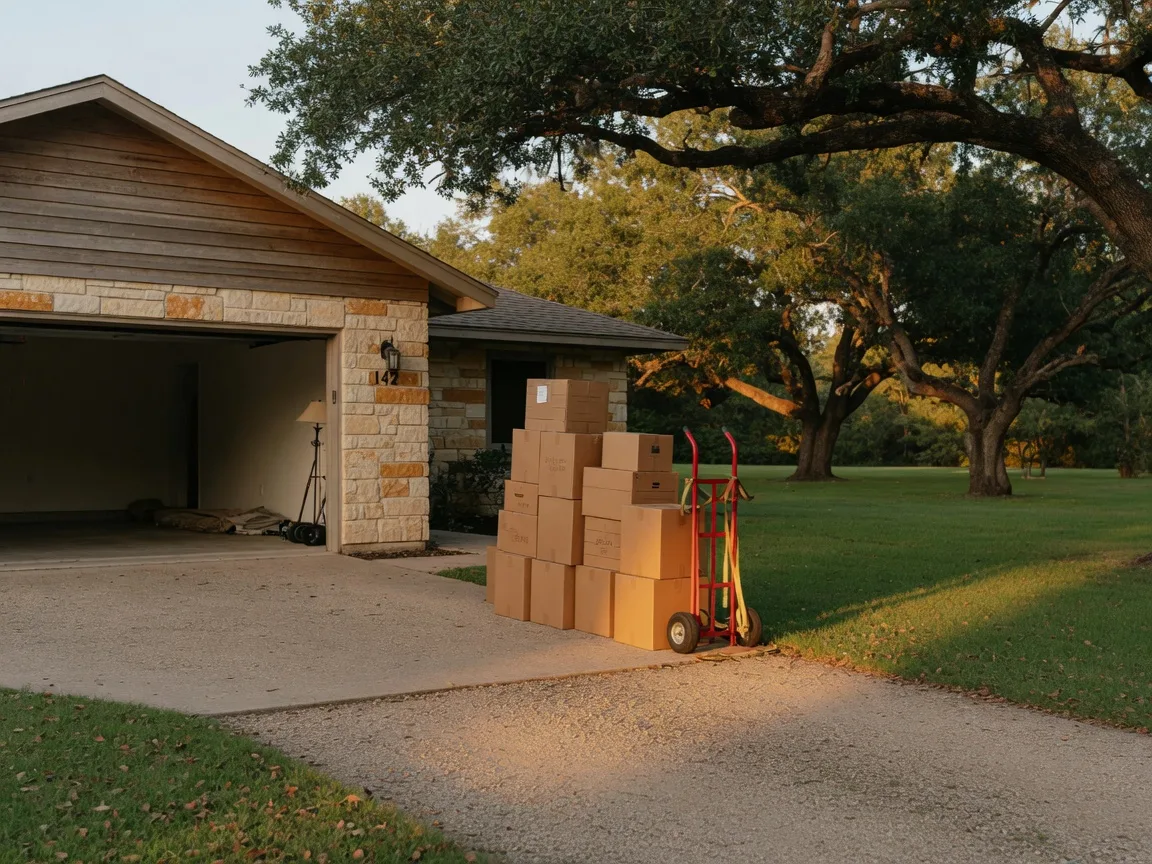
The Pace, and What It Takes to Adjust
Most California transplants report that the first three months feel the slowest. The grocery run is longer, the errands are fewer, and the calendar empties out compared to a Bay Area or LA schedule. By month six, routines are established: the Saturday H-E-B run, the Sunday drive, the weekday commute pattern. By the end of year one, the majority describe the slower pace as one of the primary reasons they moved [10].
The adjustment is less about learning a new place and more about unlearning the urgency that California suburban life requires. The first week is where that unlearning begins, and it is uncomfortable precisely because it exposes how much of your old schedule was driven by traffic, distance, and cost rather than by choice. The social calendar reset and the heat reality are the two companions to this article for anyone planning the first year.
The families who adapt fastest share four habits in week one. They explore immediately, driving the back roads and walking downtown Boerne instead of waiting for the community to come to them. They accept the welcome, eating the casserole and writing down the recommendations. They give the landscape a chance, visiting the rivers, the parks, and the wineries even when the heat is uncomfortable. And they resist the comparison reflex, spending week one discovering what is present in Texas rather than cataloging what is missing from California.
What the First Week Predicts About the First Year
The first week in the Hill Country is not just an adjustment period. It is the foundation for how you integrate into the community. The observations you make about space, distance, and people become the framework for how you build your new life, and the choices you make in those first seven days compound.
The driveway moment is the signal that the move has become real. It is also, for the families who settle here, the beginning of the part they end up loving. The space becomes a shop, a garden, or a place where the kids can actually play. The distance becomes a reason to batch errands and spend more of the day at home. The pace becomes the thing they tell their California friends about, usually with a little pride.
If you are evaluating this move, the honest version is worth more than the brochure version. The first week is disorienting, the first month is busy, and the first year is when the picture comes into focus. For the community side of that picture, see our Downtown Boerne guide and the Fair Oaks Ranch community guide. For the emotional side, what Californians miss most after moving is the honest companion piece.
Planning the Move? Start With the Honest Version.
Every relocation involves a first week that is more disorienting than anyone expects. Having a clear picture of what that week actually looks like, the adjustments, the surprises, and the things you will grow to appreciate, is worth more than any checklist.
If you are evaluating a move from California to the Hill Country, I am happy to walk you through what the transition looks like in practice, not the brochure version, but the version based on real experience with real families. Having guided dozens of California-to-Texas transitions, I can tell you exactly what the first week feels like and how to set yourself up for a smooth first year.
For the financial side of the move, see our home equity to Texas wealth breakdown. For the logistics, see the cross-state coordination guide. And for the first-year calendar, the month-by-month social calendar is a good place to start.

Written by
Bill Ross
Hill Country Homesteads Group, brokered by KW Boerne
Bill Ross is the founder of Hill Country Homesteads Group, a Texas real estate practice serving Boerne, Fair Oaks Ranch, San Antonio, and the surrounding Hill Country. Drawing on nearly four decades in high-tech sales and a network of over 1,000 California real estate agents, he coordinates cross-state relocations for coast-to-coast clients. He has been recognized in USA Today and The Washington Post for his relocation expertise.
Related Guides
What Californians Miss Most After Moving to Texas
An honest look at the emotional side of relocation, what you lose, what you gain, and what you thought you would miss but do not.
Downtown Boerne: Local Life on the Hill Country Mile
A practical guide to daily life in downtown Boerne, the shops, restaurants, trail, and community rhythm.
Fair Oaks Ranch Community Guide
Home prices, neighborhoods, schools, and daily life in Fair Oaks Ranch for California relocators.
Coordinating Your California Sale and Texas Purchase
How to time the sale, the purchase, and the closing so the move does not leave you homeless or double-paying.
Frequently Asked Questions
These are the first-week questions I hear most from California buyers who have just arrived in the Hill Country. The patterns are consistent, the surprises are predictable, and the adjustments are manageable.
What exactly is the "driveway moment"?
It is the first felt realization, usually on day one or two after the moving truck leaves, that the physical and social world you now live in runs on different assumptions. You step out the front door, look down a driveway that stretches 60 to 80 feet to the street, and notice the lot is bigger, the sky is wider, and the neighbor is already walking over to introduce himself. It is the moment the move stops being a list of logistics and becomes a lived experience.
How much bigger are Hill Country lots than California lots?
Published medians put San Jose's typical residential lot at roughly 6,000 square feet, with Angi's 2022 index measuring a typical San Jose lot at 6,872 square feet, the fifth-smallest among large U.S. metros [1][2]. In the Boerne area, county and builder sources describe single-family homes on large-acreage lots with multi-acre homesites common in newer developments [4][5]. A transplant moving from a 6,000-square-foot lot to a half-acre property (21,780 square feet) is gaining roughly three and a half times the land.
Do I really need to set up my own electricity provider?
Yes, in most of the Hill Country. Texas operates a deregulated retail electricity market, which means you choose your own retail provider and plan rather than receiving bundled service from one utility the way California does. Relocation guides advise setting up the account three to seven days before move-in so the power is on when the truck arrives [9]. It is one of the few first-week tasks Californians genuinely do not expect.
How long does the first-week disorientation last?
Most California transplants report that the first three months feel the slowest, that routines firm up by month six, and that by the end of year one the slower pace is one of the reasons they moved. The first week is about noticing, not fixing. The observations you make about space, distance, and people become the framework for how you build your new life.
What should I do in my first week to settle faster?
Four habits separate the families who adapt fastest: they explore immediately, they accept the welcome when neighbors reach out, they give the landscape a chance by driving the back roads and visiting the parks and rivers, and they resist the comparison reflex. Treat week one as discovery rather than inventory, and the adjustment compounds from there.
Sources
- Median residential lot sizes in major U.S. metros — StorageCafe, "The American Backyard in the Last 100 Years" (2024). www.storagecafe.com/blog/lot-size-home-size-in-top-20-biggest-us-cities/
- Typical lot sizes by metro, 2022 U.S. Lot Size Index — Angi (2022). www.angi.com/articles/lot-size-index.htm
- San Francisco lot size trends over time — Bay Area Metro blog (2022). blog.bayareametro.gov/posts/report-sf-lot-size-shrinking-over-time
- Boerne housing and large-acreage lots — Boerne Kendall County Economic Development Corp.. bkcedc.com/housing/
- Acreage homesites in Boerne — Perry Homes (2025). www.perryhomes.com/blog/best-acreage-homesites-in-boerne-texas
- First-person account of California-to-Texas culture shock — Silicon Canals (2024). siliconcanals.com/i-left-california-for-texas-heres-what-i-didnt-expect-about-the-culture-shock/
- Ten things that surprise new Texas residents — UniMovers. unimovers.com/blog/10-things-about-moving-to-texas-that-took-me-by-surprise/
- Lessons from moving from California to Texas — Odyssey Online. www.theodysseyonline.com/moving-from-california-to-texas
- Moving from California to Texas: practical setup guide — RelocateMe (2026). www.relocatemetx.com/texas/moving-from/california/
- Why Californians move to Texas: economy and housing — Los Angeles Times (2022). www.latimes.com/opinion/story/2022-05-15/californians-moving-texas-economy-jobs
Last reviewed: October 2026. Lot-size figures reflect published 2022-2026 sources and vary by neighborhood and source methodology. Individual property characteristics vary; verify specific lot dimensions and setbacks with the county or your agent.