
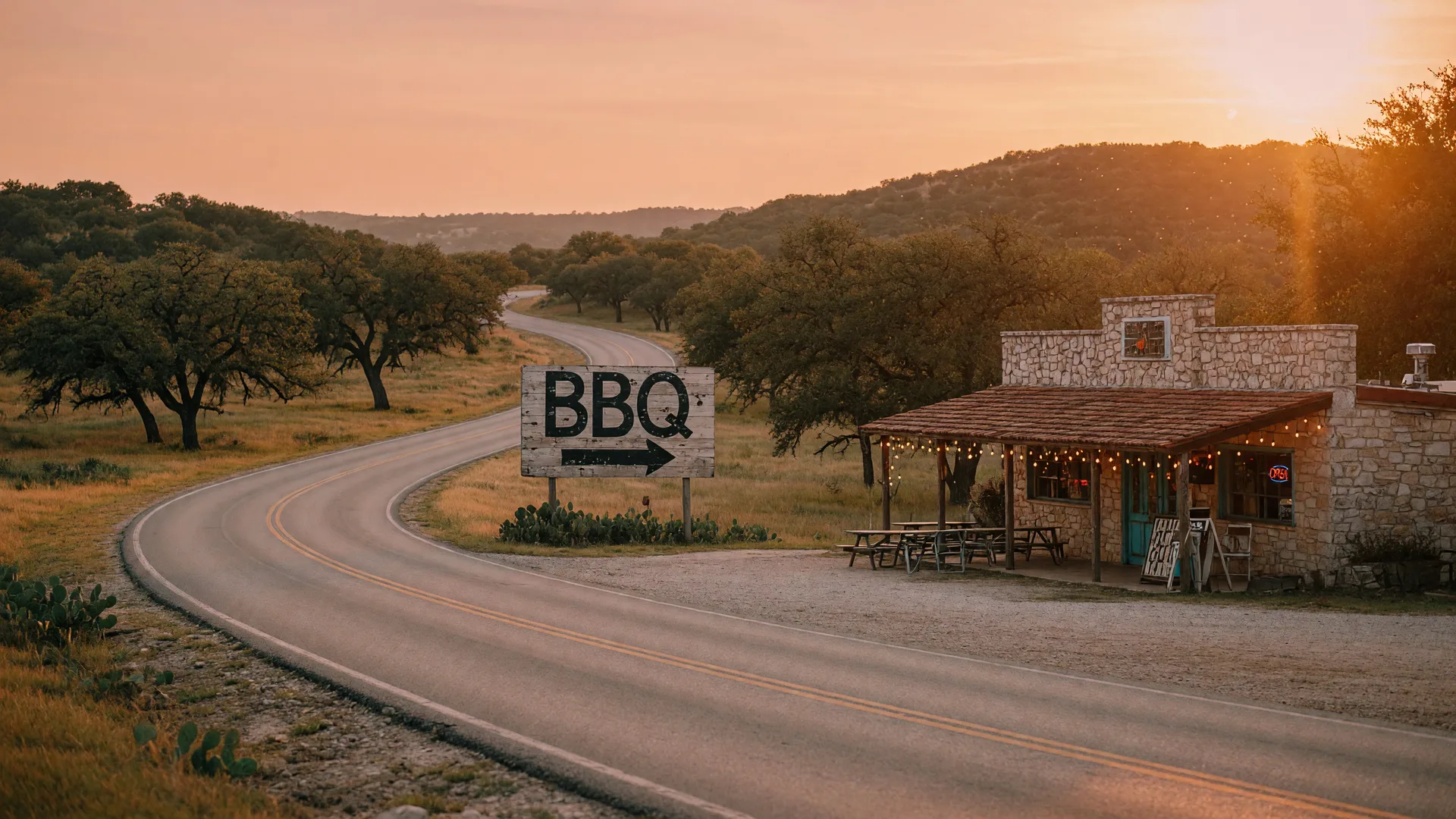
When California buyers first visit the Texas Hill Country, they usually ask about taxes, schools, and how bad the summer heat really is. Those are the rational questions. The questions that surface after the move are different: Where do I find good Mexican food? Why is brisket on every menu? And why does everything take 45 minutes to get to?
These are not trivial concerns. Food culture and daily geography shape how a place feels to live in. A relocation that looks perfect on paper can feel wrong if you cannot find a decent burrito or if every restaurant requires a round trip that eats half your evening. This article covers the real adjustments California transplants make around food and driving distances in the Hill Country, with an honest look at what changes, what does not, and how to adapt.
Tex-Mex vs. Cal-Mex: Two Different Culinary Traditions
The single most common food complaint I hear from California transplants is about Mexican food. It is worth understanding why, because the complaint is not that Texas Mexican food is bad. It is that the cuisine known as "Tex-Mex" is a fundamentally different tradition from the Mexican food that California is known for [1][2].
California's Mexican cuisine (sometimes called Cal-Mex) draws heavily on coastal and Baja traditions. It emphasizes fresh seafood, grilled fish, lean meats, fresh vegetables, avocado, and lighter, brighter flavors. The tortilla chips are thin. The salsa is fresh. The burrito is a Mission-style monument wrapped in foil. Queso fresco and crema replace shredded yellow cheese and sour cream. The guiding philosophy is freshness and simplicity, shaped by California's year-round access to high-quality produce and seafood [1].
Texas Tex-Mex is a hybrid frontier cuisine with roots in Tejano culture and Anglo-American tastes. It is built on beef — ground beef in particular — along with shredded yellow cheddar, refried pinto beans, and cumin-heavy spice blends. The enchilada is smothered in chile gravy and cheese. The taco is a crispy shell filled with seasoned ground beef, lettuce, and tomato. The nachos are a mountain of chips with melted cheese, beef, beans, and jalapenos. The guiding philosophy is heartiness, abundance, and the idea that more cheese is better. It is not wrong; it is different [2].
What this means for you: If you move to the Hill Country expecting California-style Mexican food, you will be disappointed. If you approach Tex-Mex as its own cuisine — as distinct from Cal-Mex as Southern barbecue is from Korean barbecue — you may discover that it has its own appeal. The California transplants who adapt best to Hill Country food culture are the ones who do not compare the two but explore Tex-Mex on its own terms.
Cal-Mex vs. Tex-Mex: Key Differences
| Attribute | California (Cal-Mex) | Texas (Tex-Mex) |
|---|---|---|
| Primary Protein | Fish, seafood, lean beef, chicken | Ground beef, shredded beef, pork |
| Cheese | Cotija, queso fresco, crema (fresh, sparing) | Shredded yellow cheddar, processed blends (abundant) |
| Spice Profile | Green chiles, citrus, herbs, fresh salsa | Cumin, chili powder, dried red chiles |
| Beans | Black beans, whole pinto beans | Refried pinto beans |
| Burrito | Mission-style, foil-wrapped, large | Less common; wet burrito with enchilada sauce |
| Tamale | Pork, chicken, or vegetable; masa softer | Pork or beef; masa firmer, often served with chili |
| Vegetables | Abundant fresh produce, avocado, cilantro | Minimal; lettuce and tomato as garnish |
| Overall Style | Fresh, light, coastal, ingredient-driven | Hearty, cheesy, beefy, frontier-style |
Sources: Chowhound [1], Mattitos [2]. Characterizations are generalizations and individual restaurants may vary.
Where to Eat: The Hill Country Dining Scene for California Transplants
The Hill Country dining scene is smaller and less diverse than the Bay Area or Los Angeles, but it is growing fast and has genuine strengths in the cuisines Texas does best [11]. Here is a practical guide to what is worth the drive and what to expect.
Tex-Mex in Boerne and San Antonio
Las Guitarras Cocina Mexicana (911 S Main St, Boerne, 4.6 stars) is the top-rated Mexican restaurant in Boerne. It serves well-executed Tex-Mex with a warm, family-friendly atmosphere. Mary's Tacos (518 E Blanco Rd, Boerne, 4.6 stars) is a beloved local taco joint with big flavors and small-town charm — worth a visit for breakfast tacos alone [8].
For the full San Antonio experience, Mi Tierra Cafe y Panaderia (218 Produce Row, 4.2 stars, 7,200+ reviews) is a 24-hour institution at Market Square that has been serving enchiladas, tamales, and pan dulce since 1941. It is touristy in the best sense — a genuine piece of San Antonio culture that every transplant should experience at least once. Rosario's ComidaMex & Bar (722 S St Mary's St, 4.3 stars) is a local favorite for creative Tex-Mex and excellent margaritas [3][8].
Texas BBQ in Boerne and San Antonio
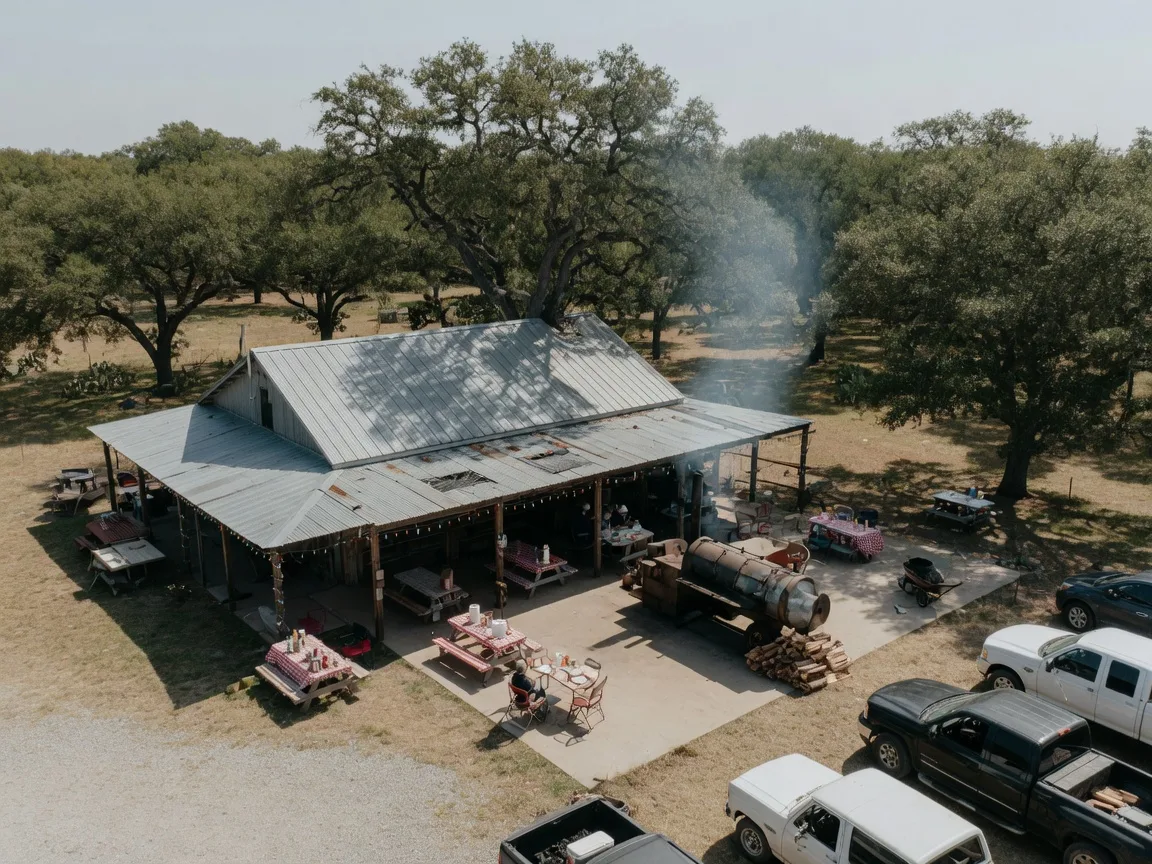
Klein Smokehaus (342 N Main St, Boerne, 4.4 stars) is a Boerne staple with outstanding smoked meats and house-made sausage — a 10-minute drive from most parts of town. Smokey Mo's BBQ (1685 River Rd, Boerne, 4.1 stars) is a laid-back spot near the Guadalupe River that does a solid brisket and pulled pork [4].
For serious BBQ, drive into San Antonio. South Barbecue (2100 N Main Ave, 4.8 stars) is widely considered the best brisket in the city — Central Texas style with a perfect smoke ring, minimal rub, and a long line at lunch. Pinkerton's Barbecue (107 W Houston St, 4.5 stars) is an award-winning downtown spot with phenomenal brisket and ribs. Both are about a 35-minute drive from Boerne [7].
Beyond Tex-Mex and BBQ
The Hill Country dining scene is expanding beyond its traditional strengths. New American, Italian, Asian fusion, and farm-to-table restaurants are opening in Boerne and along the San Antonio corridor. Cypress Grille (170 S Main St, Boerne, 4.4 stars) serves elevated American cuisine with a Hill Country twist. San Antonio's Pearl District offers a growing food scene with James Beard-nominated restaurants, a weekend farmers market, and specialty food shops [11].
That said, the diversity of cuisines available in the Bay Area or Los Angeles is not replicated here. If you crave authentic Korean BBQ, high-quality dim sum, or the kind of omakase sushi you can find in LA, you will either need to drive to Austin (about an hour north) or visit San Antonio's relatively small but growing international dining scene. Most transplants learn to cook more at home, stock their pantry with ingredients from H-E-B (which has an excellent international foods section), and plan occasional trips back to California that double as restaurant tours [10].
The 45-Minute Drive: Why It Feels Different in Texas
Californians have a complex relationship with drive times. A 45-minute commute in the Bay Area or Los Angeles is normal — even expected — but it is also stressful: bumper-to-bumper freeway traffic, aggressive lane changes, constant braking. That same 45 minutes in Hill Country terms means 35 miles of open two-lane highway through rolling hills, with maybe a dozen cars in sight and a soundtrack of live oaks and limestone bluffs passing by the window [9].
The experience of driving here is qualitatively different. It is not that distances are shorter. It is that the drive itself is not a cost in the same way. A 45-minute drive to a dinner reservation in San Antonio is seen as a reasonable outing, not a burden. The trade-off is that a quick errand — picking up a specific ingredient, running to a hardware store — may also take 20 minutes each way, which is longer than the 5-minute trip most California suburbanites are used to.
Here is what the geography actually looks like for a California transplant living in Boerne or Fair Oaks Ranch:
- To a top-rated BBQ or Tex-Mex restaurant in San Antonio: 30 to 40 minutes.
- To San Antonio International Airport (SAT): 30 to 45 minutes, depending on traffic.
- To the South Texas Medical Center: 30 to 40 minutes.
- To H-E-B grocery store (Boerne): 8 to 15 minutes from most homes.
- To downtown Boerne's main street: 5 to 15 minutes.
- To the Guadalupe River or Hill Country State Natural Area: 15 to 25 minutes.
- To Austin: 60 to 75 minutes via I-35 or US 281.
- To a winery on the 290 corridor (Fredericksburg area): 45 to 60 minutes.
The adjustment is real, but most California transplants make it within three months. The key is to shift from a "convenience-first" mentality — where proximity to services drives every decision — to a "plan-ahead" mentality, where you batch errands, choose a single destination for an evening out, and accept that not everything is five minutes away. The trade-off is a home with space, quiet, and a view that would cost several million dollars in California.
Typical Drive Times from Central Boerne
| Destination | Distance | Typical Drive Time |
|---|---|---|
| H-E-B (Boerne) | 2–6 mi | 8–15 min |
| Klein Smokehaus (downtown Boerne BBQ) | 3 mi | 8–12 min |
| Las Guitarras (downtown Boerne Tex-Mex) | 3 mi | 8–12 min |
| San Antonio International Airport | 29 mi | 30–45 min |
| South BBQ (San Antonio) | 30 mi | 35–45 min |
| Mi Tierra (San Antonio Market Square) | 32 mi | 35–50 min |
| Austin (downtown) | 52 mi | 60–75 min |
| Fredericksburg (wine country) | 44 mi | 45–60 min |
| Guadalupe River State Park | 12 mi | 15–20 min |
Source: TravelMath [9]. Drive times are approximate and vary by time of day and specific origin/destination within Boerne.
The Culinary Geography: How Far Will You Travel for What You Crave?
For California transplants accustomed to having every cuisine within a 15-minute drive, the Hill Country requires a shift in thinking about food access. Here is a practical breakdown of what is available nearby and what requires a longer trip:
Available within 15 minutes (Boerne or Fair Oaks Ranch)
- Tex-Mex: Las Guitarras, Mary's Tacos, and several taquerias.
- BBQ: Klein Smokehaus, Smokey Mo's BBQ, Fritze's BBQ.
- American / New American: Cypress Grille, The Dienger Trading Co., Bear Moon Bakery & Cafe.
- Pizza: Local pizzerias and chains (Pizza Hut, Domino's, local options).
- Groceries: H-E-B (full-service with excellent prepared foods, bakery, and international aisle), Walmart, local butchers and farmers market (Saturday mornings).
Available within 30 to 45 minutes (San Antonio)
- High-end Tex-Mex: Rosario's, Boudro's (Riverwalk), Iron Cactus.
- Award-winning BBQ: South Barbecue (4.8 stars), Pinkerton's, Smoke Shack, Augie's Barbed Wire Smokehouse.
- International cuisine: Vietnamese (Pho), Chinese, Japanese (sushi), Korean, Indian, Italian, Middle Eastern — all available in San Antonio, though density and quality vary compared to California metros.
- Fine dining: The Pearl district (Bleu Bistrot, Nao, Cured, La Gloria), downtown Riverwalk restaurants.
- Ethnic groceries: Spec's (wine and spirits, international foods), Central Market (high-end grocery), Asian markets, Latin American markets.
Available within 60 to 75 minutes (Austin)
- High-density international dining: Korean BBQ, ramen, dim sum, Ethiopian, Nigerian, and nearly every major Asian cuisine — Austin's dining scene is significantly more diverse than San Antonio's.
- Specialty groceries: H-Mart (Korean), MT Supermarket (Asian), Central Market, Whole Foods flagship.
- Food truck culture: Austin's food truck scene is among the best in the country.
The practical takeaway: if you are a foodie who needs weekly access to diverse international cuisines, the Hill Country will require more planning and longer drives than you are used to. If you are someone who eats well at home, enjoys a good Tex-Mex or BBQ outing once a week, and occasionally drives into the city for a special dinner, the adjustment is manageable. Most transplants fall into the second category and find that the trade-off — space, quiet, lower cost of living — is worth the extra time in the car [8][11].
The Social Rhythm: How Dining and Driving Shape Your Life
The combination of food culture and geography creates a distinct social rhythm in the Hill Country. Here is how it compares to what most California transplants are used to:
- California norm: Grab dinner at a restaurant 10 minutes away on a Tuesday night. Meet friends for a quick drink after work. Order takeout from any of 50 cuisines on a whim.
- Hill Country norm: Plan a dinner out once or twice a week. Choose a destination restaurant and make an evening of it — drive out, eat, enjoy the setting, drive home. Batch social events: if you are driving 35 minutes to San Antonio, you might meet friends for an early dinner, stop for dessert, and pick up groceries at Central Market on the way home [8].
The Hill Country rhythm rewards intentionality. Impromptu dining is less common because the distances make it less practical. Planned outings become more meaningful because they require deliberate choice. Many California transplants find that they eat out less often but enjoy it more — the restaurant becomes a destination, not a convenience.
There is also a strong culture of home entertaining in the Hill Country. With larger homes, bigger kitchens, and outdoor living spaces that work much of the year, many transplants discover they prefer hosting dinner parties, BBQ cookouts, and casual gatherings at home over going out. The backyard patio with a view of the Hill Country becomes the default social venue for much of the spring and fall, and with good preparation, even the summer months work for evening gatherings.
Practical Strategies for Adjusting
After helping dozens of California families through this transition, here are the strategies that consistently lead to a smoother culinary and geographic adjustment:
Give Tex-Mex a Fair Chance
Do not judge it against California Mexican food. It is a different cuisine. Try it three times at three different restaurants before you decide. Most transplants who resist initially end up with a favorite Tex-Mex spot by month six [8].
Learn to Cook Texas BBQ at Home
A backyard smoker is practically a required appliance in the Hill Country. Many California transplants discover a passion for smoking brisket, ribs, and sausage. The learning curve is real, but the payoff is a skill that impresses friends and makes you feel like a Texan. Local butcher shops in Boerne sell prime-grade brisket and post oak splits.
Plan Your San Antonio Runs
Treat a trip to San Antonio as a planned excursion, not an errand. Batch your dining, shopping, and errands into one weekly or biweekly trip. A Saturday afternoon in the city can include lunch at Rosario's, a visit to Central Market, a stop at the Pearl farmers market, and dinner at a new restaurant — all in one 4- to 5-hour outing.
Stock Your Pantry with California Ingredients
H-E-B carries a surprisingly good selection of California-style ingredients — good tortillas, fresh produce, high-quality seafood (though it arrives frozen), and a respectable international foods aisle. If there is a specific ingredient you cannot live without, buy it in bulk during your next California trip and pack it in checked luggage. Many transplants bring back cases of their favorite wine, bags of specialty coffee, and pantry staples from their old neighborhood market.
Embrace the Local Food Events
The Hill Country has a strong calendar of food-related events: the Boerne Berges Fest (May), the Kendall County Fair (August), the Fredericksburg Food & Wine Fest (October), and the San Antonio Restaurant Weeks (August). These events are a great way to explore local food culture and meet neighbors who share your interest in good food [11].
Learning to Love Where You Eat
The culinary and geographic adjustments of moving from California to the Texas Hill Country are real, and they are worth taking seriously. Your eating habits and your relationship with distance affect your daily happiness more than any other lifestyle factor after the basics of housing and income.
The good news is that the Hill Country offers genuine culinary pleasures that California does not. Texas BBQ, done well, is a world-class cuisine. Tex-Mex, approached on its own terms, is a satisfying and deeply comforting food tradition. The Hill Country wine scene, anchored by the 290 corridor, is developing into a legitimate wine region. And the practice of driving 45 minutes to a great dinner, on an open road through beautiful countryside, becomes part of the rhythm that makes this place feel like home.
It is not the same as living in the Bay Area or Los Angeles. It is not supposed to be. If you want the same thing, you would stay in California. The value proposition of the Hill Country is different: more space, lower cost, slower pace, and a different set of culinary and cultural experiences that reward exploration and intention. Most transplants find that within a year, they have a favorite BBQ joint, a go-to Tex-Mex order, and a new relationship with distance that feels natural rather than forced.
If you are considering the move and have specific questions about the dining scene or daily geography of a particular Hill Country community, I am happy to share what I have learned from working with dozens of California transplants. A 20-minute conversation about what you value in daily life — food, commute, community — is worth more than any amount of online research.

Written by
Bill Ross
Hill Country Homesteads Group, brokered by KW Boerne
Bill Ross is a Texas real estate agent with nearly four decades in high-tech sales and a network of 1,100+ California real estate agents for coordinated cross-state transactions. Featured in national coverage discussing his family's relocation from Silicon Valley to the Texas Hill Country.
Related Guides
The Texas Driveway Moment: What Californians Notice the First Week
What stands out immediately when you move from California to the Hill Country — the sights, sounds, and rhythms of the first week.
The Social Calendar Reset: California to Texas Seasonal Rhythms
How the social calendar shifts when you move from year-round California outdoor living to the Texas Hill Country's four-season rhythm.
HOA Culture Shock: Texas vs. California
How Texas homeowners associations compare to California's — enforcement powers, fees, and what to expect.
Hill Country Dining Guide for California Relocators
A comprehensive guide to the Hill Country food scene from a California transplant's perspective.
Frequently Asked Questions
Is Texas BBQ actually better than California BBQ, or is that just hype?
"Better" is a matter of taste, but the styles are genuinely different. Central Texas BBQ focuses on low-and-slow smoked beef brisket with a minimalist salt-and-pepper rub, cooked over post oak for 12 to 18 hours. California BBQ leans toward tri-tip grilled directly over red oak (Santa Maria style) and lighter, faster-cooked meats. If you love deep, smoky, fatty beef, Texas brisket is unmatched. If you prefer a cleaner, charred beef flavor, you may miss California tri-tip. The good news is that both traditions are excellent, and exploring the difference is one of the genuine pleasures of living in the Hill Country [5][6].
Can I find good California-style Mexican food in or near the Hill Country?
Genuine California-style Mexican food (Cal-Mex) is rare in Texas. You will find excellent Tex-Mex, which is its own proud tradition — heavy on beef, shredded yellow cheese, cumin, and red chile sauces. If you crave a Mission-style burrito or a California-style fish taco with cabbage slaw, your best bet is to make it at home or visit a dedicated California transplant run spot (there are a few in San Antonio, like The Fruteria). Most transplants learn to appreciate Tex-Mex on its own terms — it is not a substitute for what you left behind, but a different cuisine worth exploring [1][2].
How different is the driving culture? Is everything really 45 minutes away?
The "45-minute drive" is a stereotype with some truth to it. In the Hill Country, grocery stores, hardware stores, and basic services are usually 10 to 15 minutes from most homes. A sit-down dinner at a top-rated restaurant or a visit to a specialty store may be 20 to 30 minutes. A night out in San Antonio or a trip to the airport is 30 to 45 minutes. The difference from California is not that everything is farther — it is that distances that feel significant in California (30+ minutes) are considered normal here. Most California transplants adjust within a few months and come to appreciate the trade-off of space and quiet for longer drive times [9].
What do California transplants miss most about food in California?
The foods people mention most often are fresh-off-the-boat seafood (Dungeness crab, live lobster, sushi-grade fish), authentic regional Mexican (especially Oaxacan, Baja-style, and Mission-style burritos), Korean BBQ and fusion, high-quality dim sum, and the year-round farmers markets with produce picked that morning. Texas has strong culinary traditions of its own — Gulf seafood, Tex-Mex, BBQ, Czech and German heritage foods — but the diversity and density of California's food scene, especially in the Bay Area and Los Angeles, is hard to replicate. Hill Country transplants adapt by learning to cook more at home and by planning regular trips back to California partly around restaurant visits [10].
Should I try to bring my California eating and driving habits with me, or start fresh?
The happiest transplants are the ones who embrace the local culture from the start. Give Tex-Mex at least three or four tries before you decide you do not like it. Drive the back roads instead of the highways. Learn to plan your grocery trips around a weekly rhythm rather than daily runs. The adjustment period is real — usually three to six months — but treating it as an adventure rather than a downgrade makes the transition substantially easier. Nobody expects you to abandon your California palate overnight, but a willingness to explore makes the Hill Country feel like home much faster [8].
Sources
- What Separates Cal-Mex From Tex-Mex Cuisine — Chowhound (2025). www.chowhound.com/1733282/cal-mex-vs-tex-mex/
- Cal-Mex vs Tex-Mex: The Differences Explained — Mattitos (2025). mattitos.com/blog/why-the-difference-between-tex-mex-and-cal-mex-food-matters/
- Mi Tierra Cafe y Panaderia — San Antonio Institution — Mi Tierra Cafe. mitierracafe.com/
- Klein Smokehaus — Boerne BBQ — Klein Smokehaus. kleinsmokehaus.com/
- Central Texas BBQ Styles — Crossbuck BBQ (2025). www.crossbuckbbq.com/texas-bbq-styles.html
- Santa Maria-Style Barbecue History and Technique — Wikipedia; Chef's Resource (2025). www.chefsresource.com/what-is-santa-maria-style-bbq/
- South Barbecue — San Antonio — South Barbecue. southbarbecue.com/
- California Transplants Share Their Favorite Tex-Mex Spots — Texas Hill Country Relocation Forum (2025–2026). www.reddit.com/r/sanantonio/comments/1d8lxt2/california_transplants_where_do_you_eat/
- Driving Distances in the Texas Hill Country — Texas Department of Transportation; TravelMath (2026). www.travelmath.com/drive-distance/from/Boerne,+TX/to/San+Antonio,+TX
- What Californians Miss Most About Food After Moving to Texas — Thrillist, Eater Austin (2022–2025). www.thrillist.com/eat/austin/what-californians-miss-about-food-in-texas
- Texas Hill Country Restaurant Scene Growing Fast — San Antonio Express-News (2025–2026). www.expressnews.com/food/article/hill-country-restaurant-growth-17829439.php
- GVTC Fiber and Internet Speeds in Boerne — GVTC. www.gvtc.com/
Last reviewed: July 2026. Restaurant ratings and hours are subject to change. Menu offerings and availability vary by season. Verify hours and reservations directly with each establishment before visiting. Drive times are approximate and depend on origin, destination, traffic, and road conditions.