
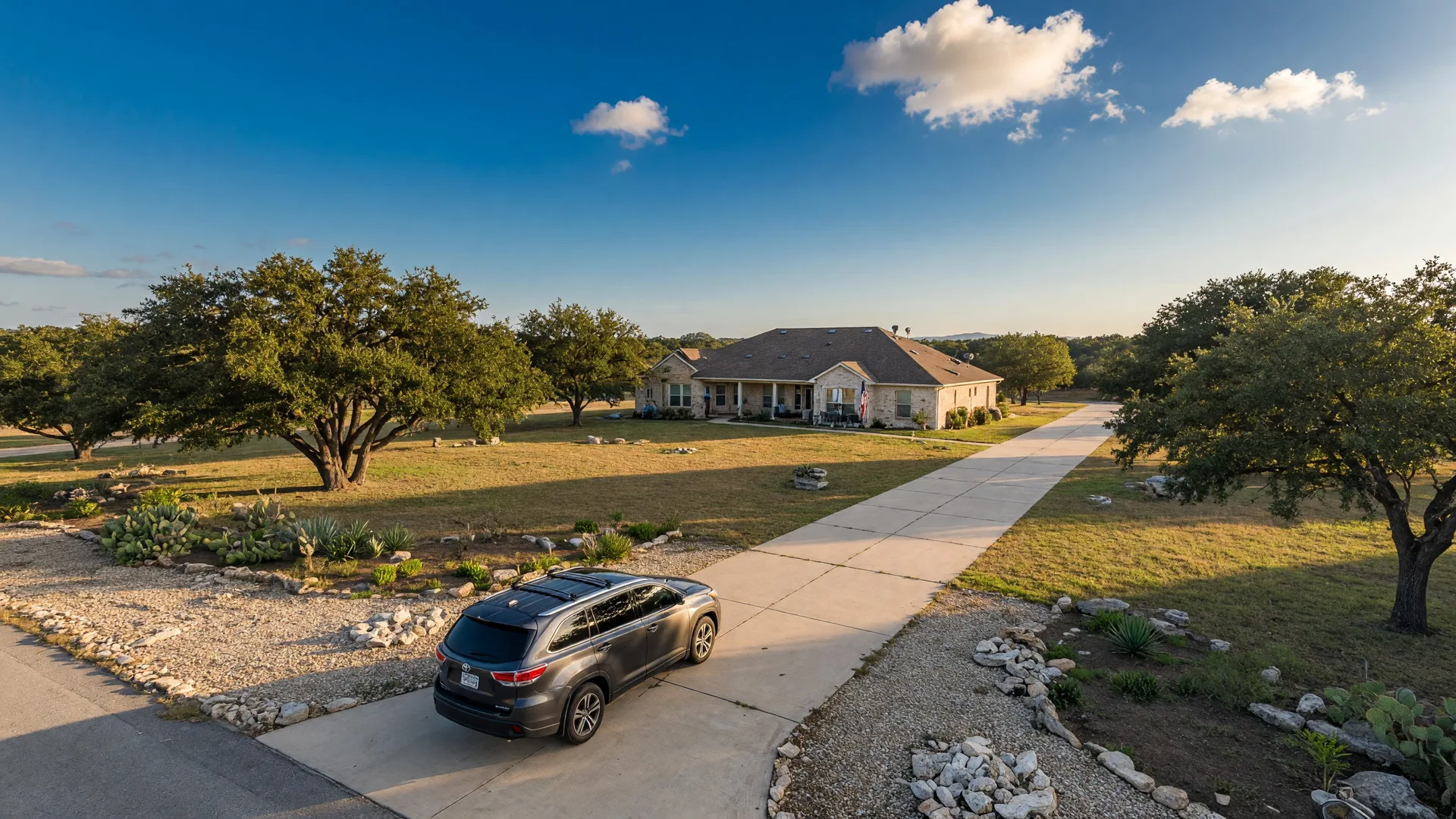
There is a moment — usually on the first or second day after the moving truck pulls away — when a California transplant steps out the front door, looks down a driveway that stretches 60 or 70 feet to the street, and realizes that the physical world they now inhabit is fundamentally different from the one they left. The lot is bigger. The sky is wider. The neighbor across the street is already walking over to introduce himself.
I call this the driveway moment. It is the first time the move stops being a series of logistics — boxes, closing documents, utility transfers — and becomes a felt experience. Every California buyer I have worked with who relocated to the Hill Country describes some version of it. The details differ, but the core realization is the same: this place operates on a different set of assumptions about space, time, and community.
This article is about what to expect in that first week. Not the mortgage paperwork or the driver's license transfer — those are covered in our cross-state coordination guide. This is about the daily-life observations that catch California transplants off guard, the ones nobody mentions in the relocation brochure, and the ones that ultimately shape whether you feel at home by month six.
The Space Is Not a Metaphor
The numbers tell the story before your eyes do. The median residential lot in San Jose is approximately 4,400 square feet — roughly 0.1 acres [1]. In Los Angeles, the median is about 5,300 square feet. In many Bay Area neighborhoods, homes share walls, driveways are single-car, and the backyard is a patio with a fence close enough to touch from the kitchen window [2].
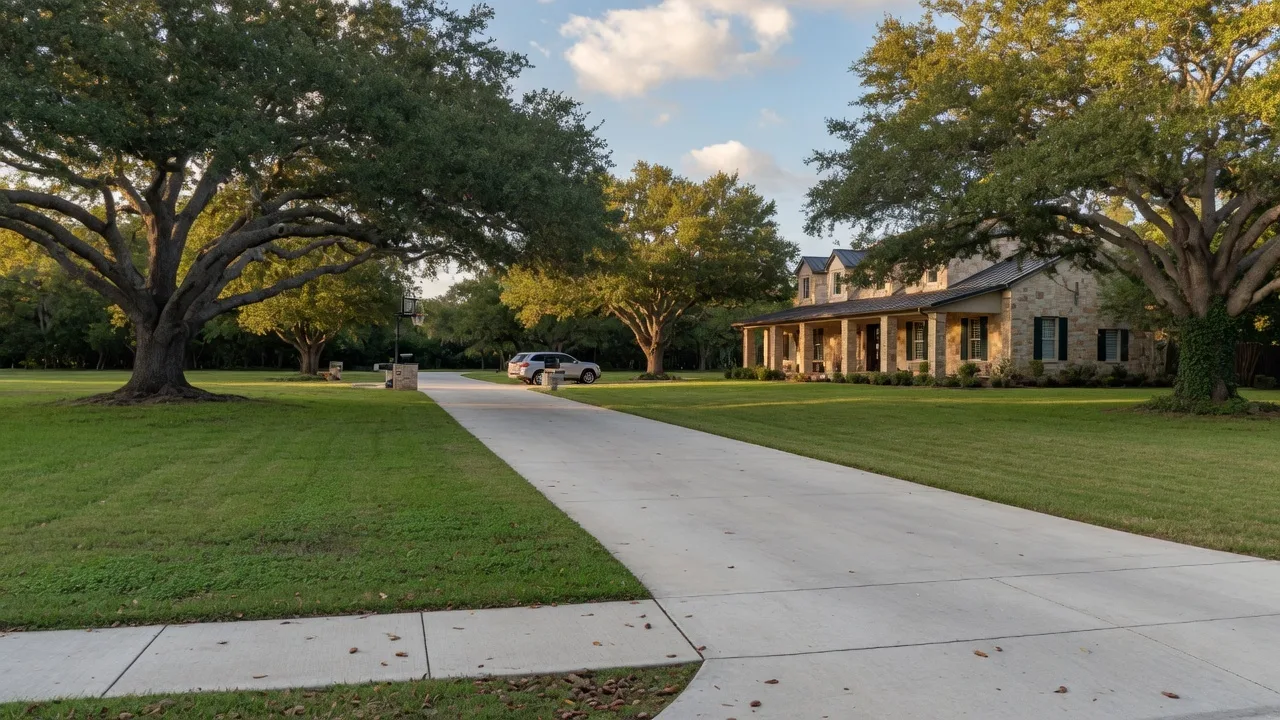
In Boerne, typical residential lots in established subdivisions range from 0.15 to 0.3 acres. In newer developments and along the western corridor toward Comfort, half-acre to one-acre lots are common. In Fair Oaks Ranch, many properties exceed one acre, and two-to-five-acre parcels are not unusual [3].
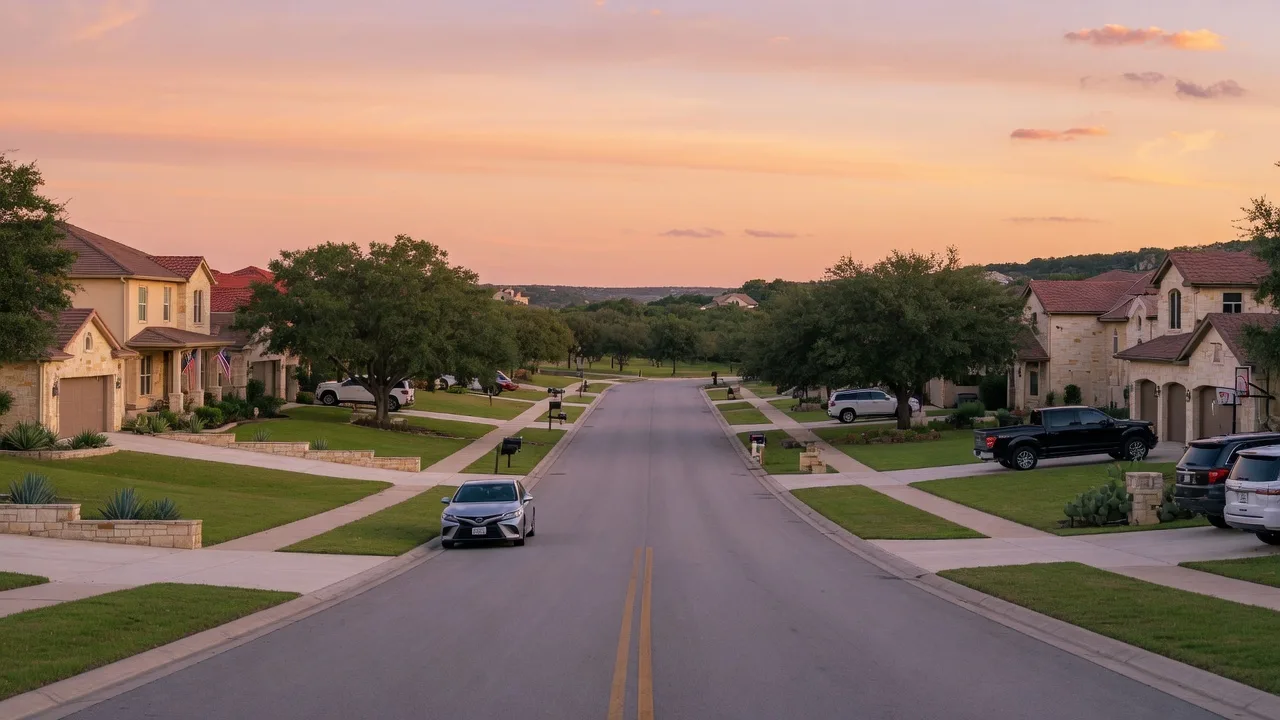
What this means in practice is that your driveway is longer, your front yard is wider, your neighbors are set further back, and the distance between your front door and the street — the literal and figurative buffer between you and the world — is two to three times what you had in California. The setback alone changes how the property feels. You are not looking into your neighbor's living room. They are not looking into yours.
The driveway moment is when you walk to the mailbox and realize it takes longer than you expected. It is when you pull into your property and the car is still 40 feet from the garage. It is the first time you sit on the front porch and cannot see the detail of what your neighbor is doing in their yard. For people who spent decades in California's residential density, this amount of space is genuinely unfamiliar — and it takes a few days to stop feeling like you are somehow too far from everything.
Lot Size Comparison: California vs. Texas Hill Country
| Location | Median Lot Size | Typical Setback from Street |
|---|---|---|
| San Jose, CA | ~4,400 sq ft (0.1 ac) | 15–20 ft |
| Los Angeles, CA | ~5,300 sq ft (0.12 ac) | 15–25 ft |
| Boerne, TX (subdivision) | 6,500–13,000 sq ft (0.15–0.3 ac) | 25–40 ft |
| Boerne, TX (newer / rural) | 20,000–40,000+ sq ft (0.5–1+ ac) | 40–80+ ft |
| Fair Oaks Ranch, TX | 20,000–80,000+ sq ft (0.5–2+ ac) | 50–100+ ft |
Sources: Mercury News / Bay Area News Group (2024); LRG Realty; New Geography (2024). Actual lot sizes vary by subdivision and zoning district.
The Drive to Everything Is Different
In the Bay Area, commercial density means that a grocery store, a coffee shop, a dry cleaner, and a pharmacy are often within a two-mile radius. You can chain errands in a loop that takes 15 minutes. In Los Angeles, the sprawl is real, but the density of options within any given radius is high — there are three Whole Foods within 20 minutes of most LA neighborhoods, plus Trader Joe's, Bristol Farms, Gelson's, and dozens of independent grocers.
In the Hill Country, the commercial landscape is organized differently. Development tends to cluster along highway corridors — particularly along Route 87 in Boerne, along FM 474 and Ralph Fair Road in Fair Oaks Ranch, and along I-10 between Boerne and San Antonio. Instead of a grid of neighborhood commercial nodes, you get stretches of road with commercial clusters at intervals [6].
The practical effect: your nearest grocery store — almost certainly an H-E-B — is likely 10 to 18 minutes away by car, depending on where in the Hill Country you live. In Boerne proper, the H-E-B on River Road is centrally located, but residents in the western or northern reaches of the 78006 zip code may drive 15 to 20 minutes. In Fair Oaks Ranch, the nearest H-E-B is in Boerne, roughly 12 to 15 minutes away [3].
This is not an inconvenience so much as a recalibration. California transplants who timed their errands in five-minute increments need to shift to a 20-minute mental model. The trade-off is that the stores are larger, the parking lots are less congested, and the experience of shopping — particularly at H-E-B — is qualitatively different from what most California grocers offer [7].
What helps: Batch your errands. Most Hill Country residents make one or two dedicated shopping runs per week rather than daily pop-ins. It is a habit that forms quickly and saves more time than you would expect.
The H-E-B Realization
Nearly every California transplant I have worked with mentions H-E-B within the first week. Some are skeptical — it is a regional chain they have never heard of, and their California grocery loyalty runs deep. By week two, most are genuinely impressed [7].
H-E-B is a privately held Texas company founded in 1905. It operates over 400 stores across Texas and northern Mexico. It is not a discount chain; it is a full-service grocer with a strong emphasis on prepared foods, Texas-sourced products, and store brands that regularly outperform national brands in blind taste tests. The Boerne H-E-B — like most Hill Country locations — features a full deli, a bakery, a meat market, and a produce section that is, by most accounts, competitive with or better than what California transplants are accustomed to from Whole Foods or Sprouts [7].
What surprises California buyers most:
- Prepared foods quality: H-E-B's ready-to-eat meals, rotisserie chickens, and deli items are consistently cited as better than expected. Many California transplants describe the H-E-B Meal Simple line as comparable to meal-delivery services.
- Tortillas: H-E-B's fresh tortilla section is a revelation for people accustomed to the thin, mass-produced options at California chain stores. Flour and corn tortillas made in-store daily are standard at most Hill Country locations.
- Texas-branded products: H-E-B's private-label line — including its Central Market line for specialty items — covers everything from salsa to coffee to frozen meals. The quality is high enough that many Texas households do not miss the California specialty chains.
- Community presence: H-E-B is deeply embedded in Texas community life. After hurricanes, wildfires, and severe weather events, H-E-B is often the first retailer to mobilize disaster relief. It is not just a grocery store; it is a cultural institution [7].
What you will not find: The ethnic specialty grocery landscape of California — 99 Ranch Market, H Mart, Mitsuwa, Ranch 99, the Filipino and Indian grocery stores of the South Bay — does not exist in the Hill Country. San Antonio has a more diverse grocery selection, including several Asian and Latin American specialty markets, but they are concentrated on the east and south sides of the city, 30 to 45 minutes from Boerne.
The Neighbor Who Walks Over
This is the culture shock that is hardest to prepare for, because it is not about infrastructure or logistics — it is about social norms.
In most California suburban neighborhoods, the social default is polite distance. You wave at your neighbors. You may chat briefly if you are both outside at the same time. But the unspoken norm is that you do not approach a stranger's home uninvited, you do not bring food to a new neighbor without being asked, and you certainly do not walk across someone's front yard to introduce yourself on their first day in the house [8].
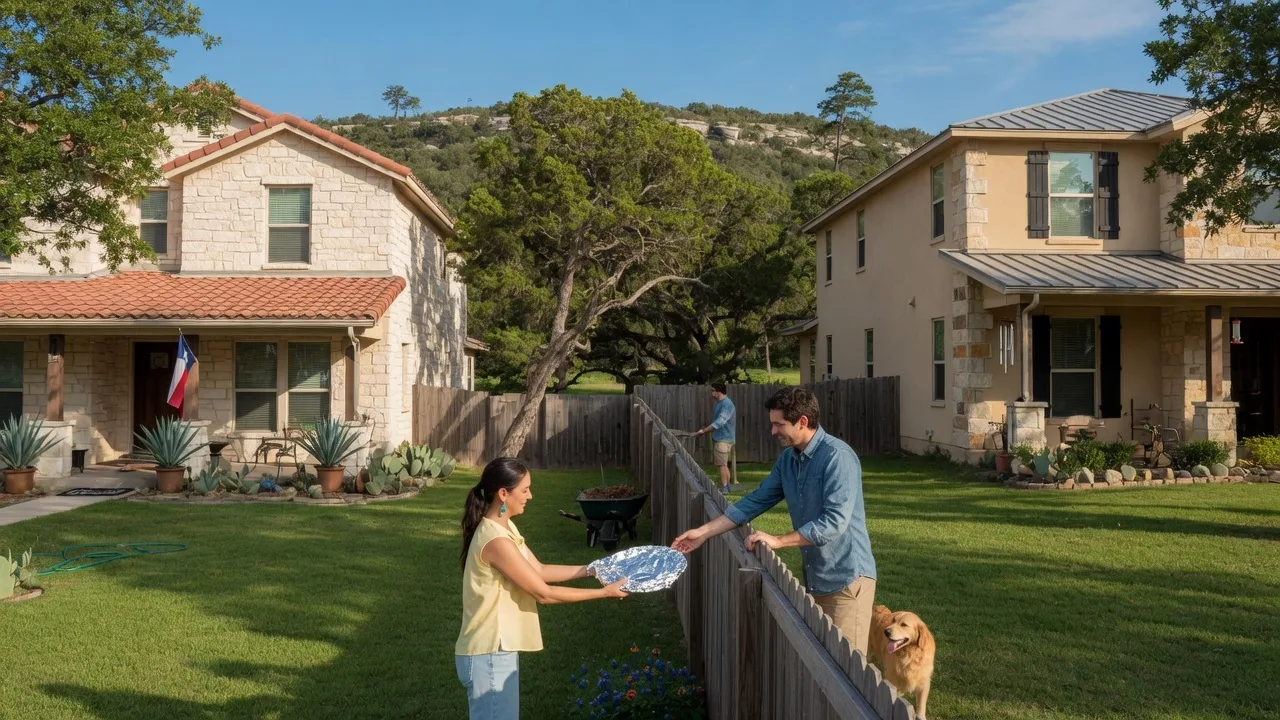
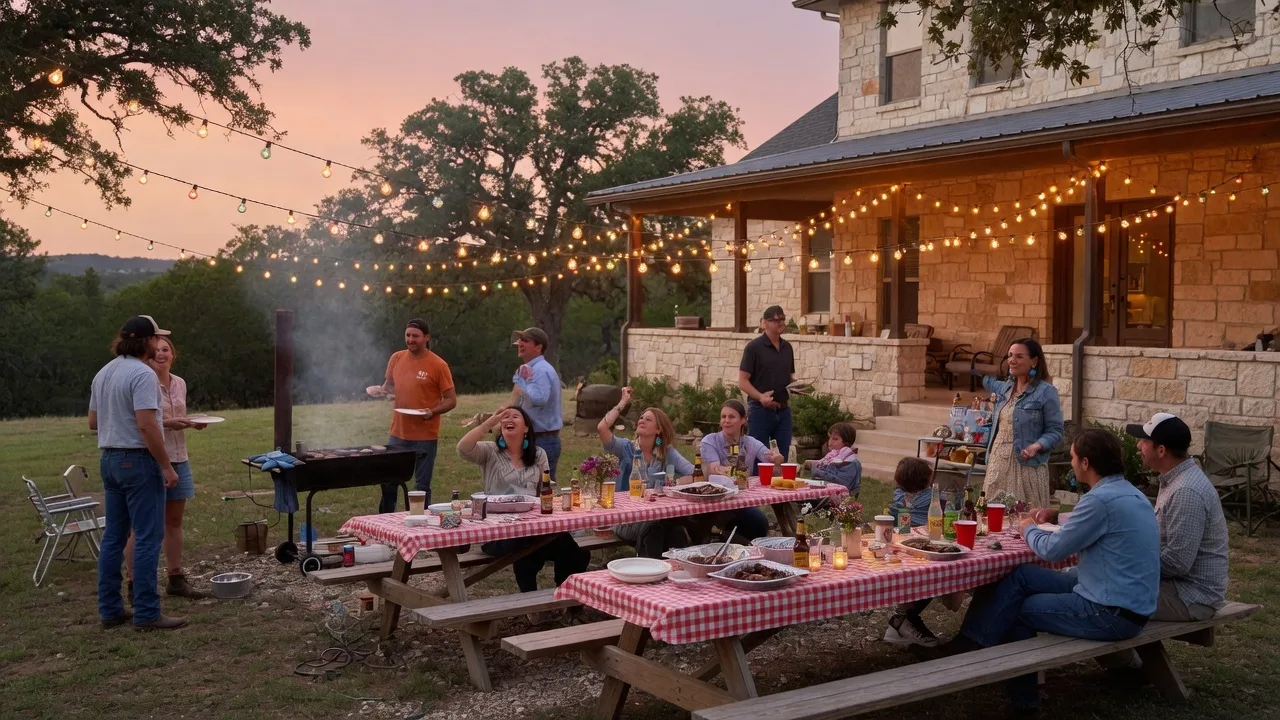
In the Hill Country, the default is closer to the opposite. Multiple California transplants report that within 24 hours of moving in, a neighbor appeared at the door with a casserole, a six-pack, or simply a handshake and a plate of cookies. In one case I am aware of, a neighbor brought a handwritten list of recommended contractors, doctors, and restaurants — a practical welcome packet that no one had asked for but everyone appreciated [6][8].
This is not performative hospitality. It is a genuine social norm in Hill Country communities where people know each other by name, where the volunteer fire department depends on community participation, and where the social fabric is built on proximity and reciprocity rather than professional networks. The neighbor who walks over is not being nosy; they are establishing the relationship that may later mean they check on your property during a storm, bring your mail when you are out of town, or recommend you for a community board [8].
The adjustment: Californians who interpret this warmth as intrusive tend to pull back, which reads as cold in Texas social terms. The more productive response is to accept the welcome, reciprocate when you can, and understand that Hill Country social capital is built through these small, early interactions. The families who integrate fastest into their communities are the ones who say yes to the casserole.
The Sky, the Light, and the Landscape
California's visual identity is defined by its geography — the marine layer rolling over the coast, the golden hills of summer, the snow-capped Sierra in winter, the fog in the morning that burns off by noon. These are visual cues that Californians internalize without realizing it. They become part of what "home" looks like.
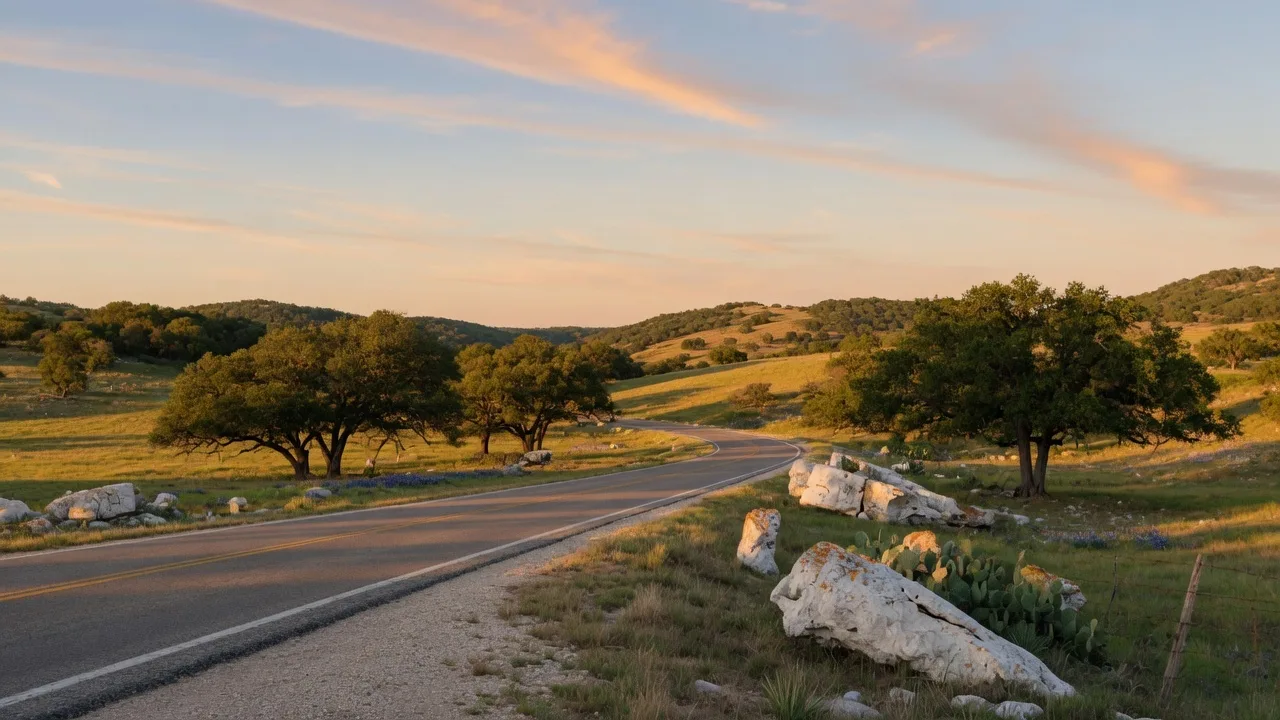
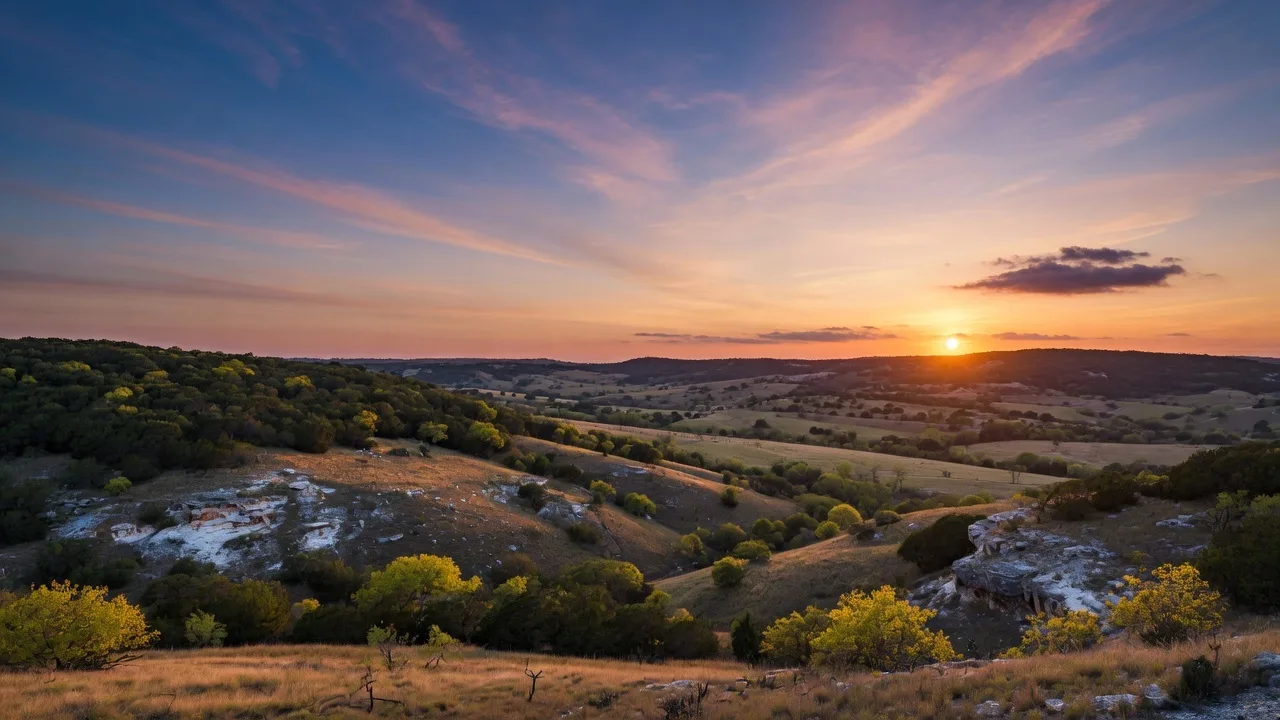
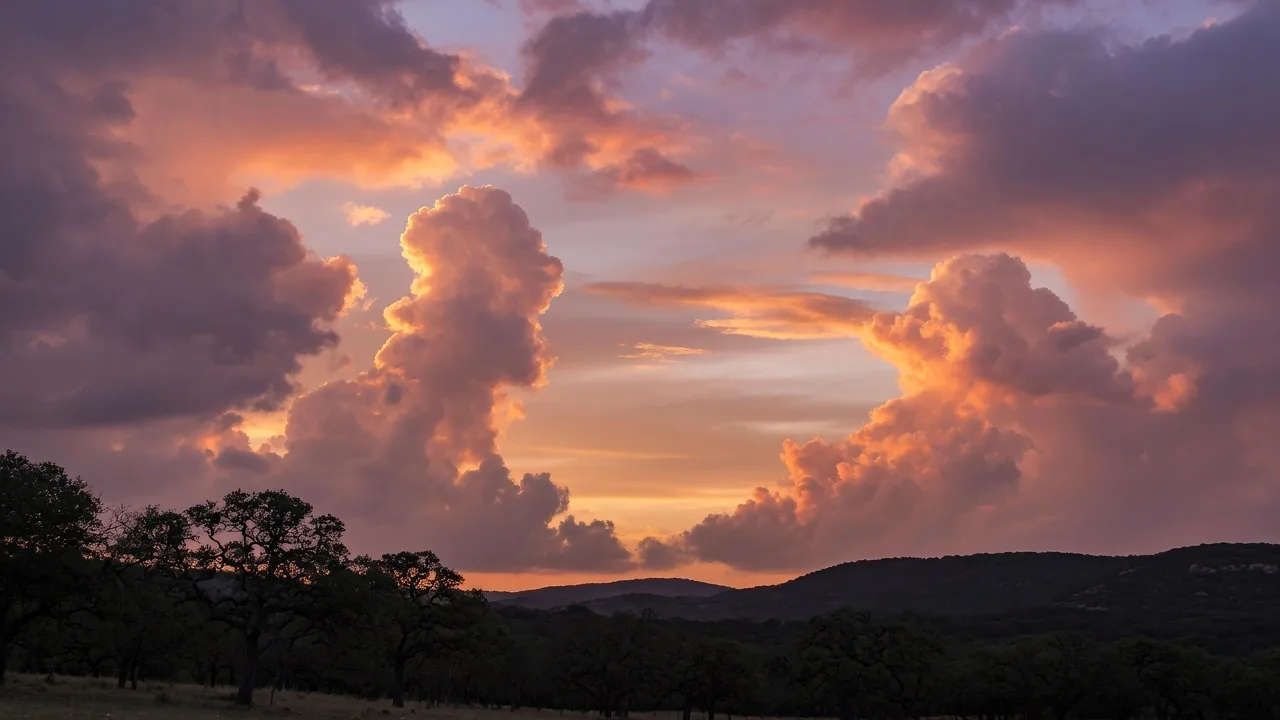
The Hill Country has its own visual language, and it is different in ways that take time to appreciate. The sky is physically larger — fewer buildings, fewer trees at the horizon line, and a lower elevation profile mean that you see more sky from any given point. The light is warmer and more golden, particularly in the late afternoon, because the air carries more dust and less marine moisture. The sunsets are vivid and wide. At night, outside of San Antonio's light dome, the stars are genuinely visible in a way that they are not in most California metro areas [4][9].
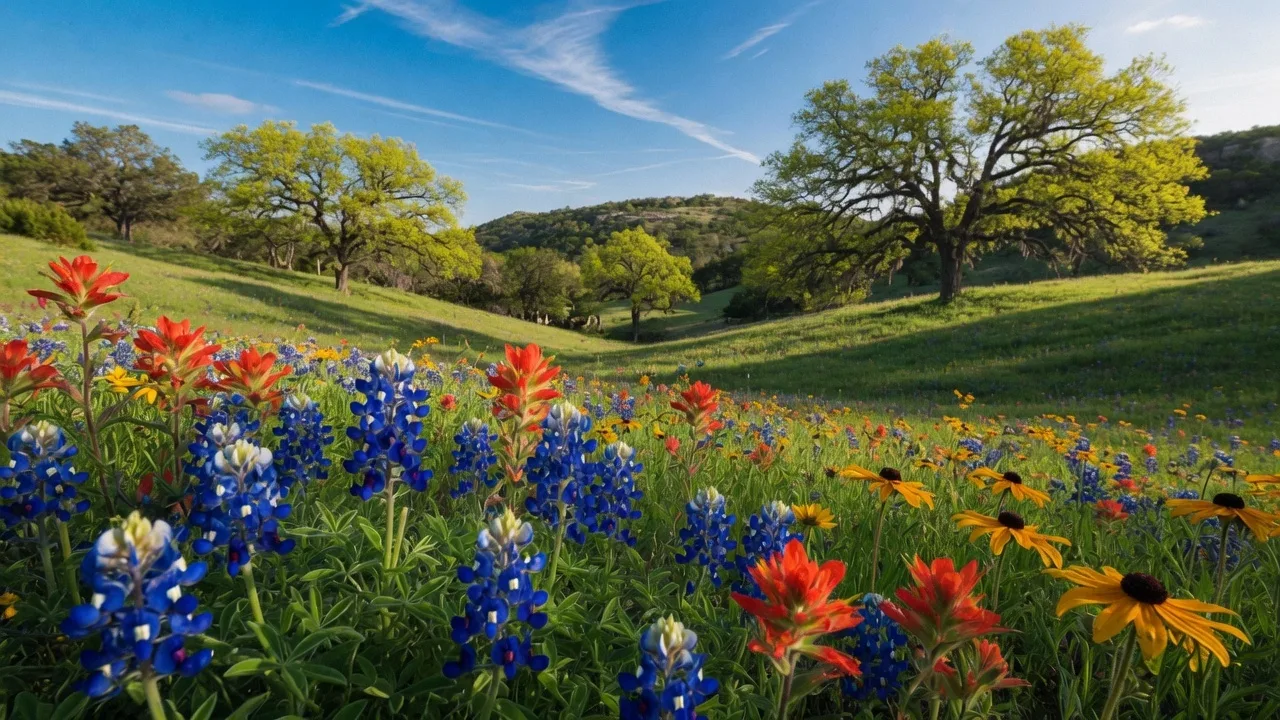
The landscape itself is limestone and live oak. Hill Country terrain is defined by rolling hills cut through with seasonal creeks, topped with post oak and live oak canopies, and underlain with exposed limestone in many areas. The vegetation is greener than many Californians expect — particularly in spring, when wildflowers (including bluebonnets, Indian paintbrush, and black-eyed Susans) cover open meadows. In summer, the green fades to a dusty olive. In winter, the live oaks stay green while the deciduous trees drop their leaves [4].
The first-week impression: Many California transplants describe the Hill Country landscape as "prettier than they expected" but "less dramatic than California." This is an honest assessment. The Hill Country does not have the Pacific Ocean, the redwood forests, or the Sierra Nevada. What it has is a quieter, more intimate landscape — one that reveals itself slowly rather than all at once. The families who engage with it — hiking at Enchanted Rock, tubing the Guadalupe, exploring the wineries along the 290 corridor — tend to develop a genuine attachment to the landscape within their first year.
The Weather Is Not What You Think It Is
Most California transplants arrive with a mental model of Texas weather that goes like this: it is hot in the summer and mild the rest of the year. This is roughly true but substantially incomplete.
Here is what the first week will actually feel like, depending on when you arrive:
Summer (June–September): This is the adjustment period. Average daily highs in Boerne range from 93°F in June to 96°F in August, with overnight lows in the low to mid-70s [4]. San Antonio runs 2–3°F warmer. The humidity is moderate — not the oppressive Gulf Coast humidity of Houston, but noticeably more humid than coastal California. The dry heat vs. humid heat debate is real, but it is more nuanced than the cliché suggests. The Hill Country sits at a higher elevation (1,200–1,500 feet) than San Antonio, which provides a slight temperature advantage and slightly lower humidity. Most California transplants adapt to the summer heat within two to three months by adjusting their outdoor schedule — morning and evening activities, midday indoors — rather than by staying inside all day [4][9].
Fall and Spring (October–November, March–May): These are the seasons that convert skeptics. Average highs in October are around 78°F, with lows in the mid-50s. Spring temperatures are similar, with the added benefit of wildflower season and green landscapes. For California transplants accustomed to the Bay Area's foggy summers, the Hill Country's pleasant fall and spring months are often better than what they left behind [4][10].
Winter (December–February): Average highs are in the low to mid-60s, with overnight lows in the mid-30s to low 40s. Snow is rare in the Hill Country — once every few years, and it rarely sticks for more than a day. The real winter risk is ice storms, which can coat roads and power lines for one to three days per year. California transplants from earthquake country tend to find the ice storm risk manageable, but it requires preparation (stocking food, having a backup heat source) that is new to them [4][9].
Average Monthly High Temperature: Hill Country vs. Coastal California
| Month | Boerne, TX | San Francisco, CA | Difference |
|---|---|---|---|
| January | 62°F | 57°F | +5°F |
| March | 71°F | 62°F | +9°F |
| June | 93°F | 68°F | +25°F |
| August | 96°F | 69°F | +27°F |
| October | 79°F | 68°F | +11°F |
| December | 63°F | 57°F | +6°F |
Source: Weather-US.com climate data for Boerne, TX and San Francisco, CA.
The Pace Adjusts You
California life — particularly in the Bay Area and Los Angeles — runs on urgency. The commute starts early. The calendar fills fast. Meals are quick. Conversations are efficient. There is a baseline level of ambient busyness that most Californians do not notice until it is gone.
In the Hill Country, the pace is slower, and it is slower in ways that are structural, not just cultural. Stores open later. Service providers are less available. The person behind the counter at the hardware store will talk to you for ten minutes before asking what you came in for. The restaurant does not rush the check. The contractor shows up on Tuesday instead of Monday, and it is understood that this is how things work [6][8].
For California transplants, this pace is initially interpreted as inefficiency. By month three, most begin to see it differently. The slower pace is a feature of a community where people are not competing for the same resources, where the cost of living allows people to work less or retire earlier, and where the social expectation is that human interaction is not an obstacle to productivity — it is part of the point.
The first-week experience: You will notice that the drive-through at Whataburger takes longer than you expect. The post office line moves at a conversational pace. The bank teller asks about your move. None of this is wasted time. It is the texture of daily life in a community where people know each other, and it is one of the things that California transplants report valuing most — after they have adjusted to it.
The Sounds — and the Quiet
One of the most consistent first-week observations from California transplants is the ambient noise level — or rather, the absence of it. In the Bay Area and Los Angeles, the background hum of traffic, construction, and human activity is constant. Even in residential neighborhoods, the soundscape includes highway noise, aircraft, delivery trucks, and the general density of a million people within a few miles.
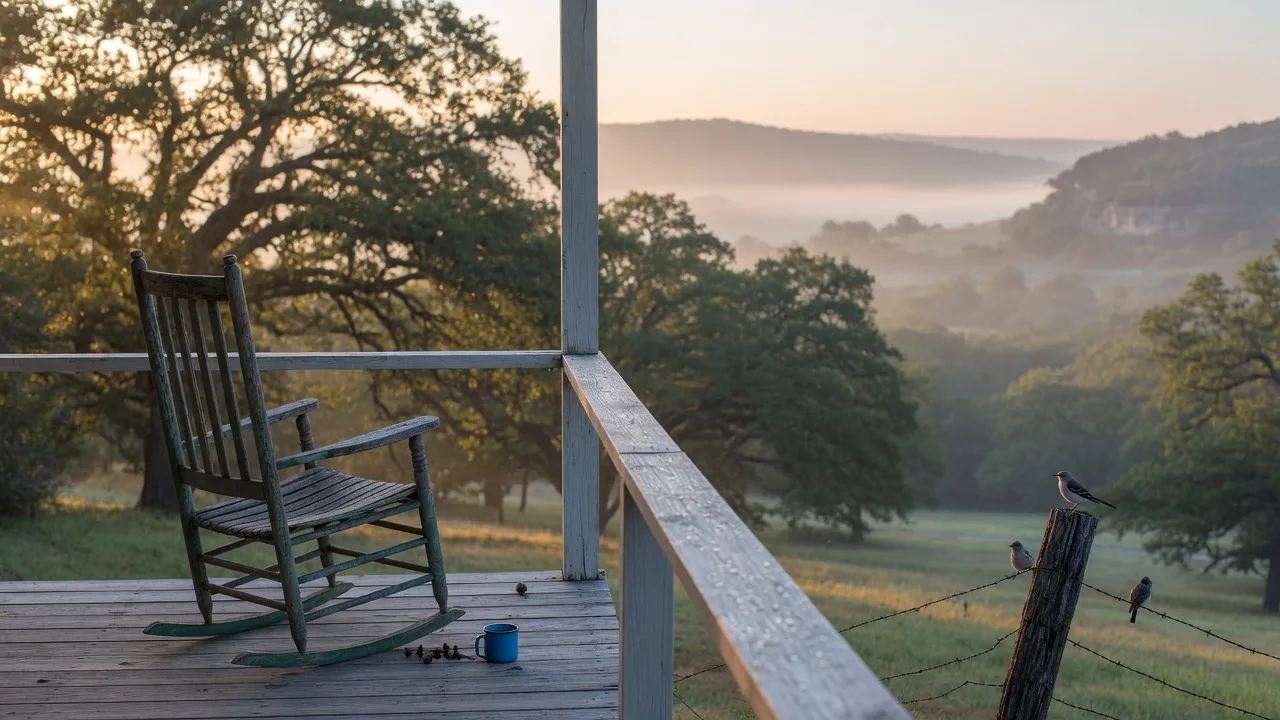
In the Hill Country, the background sound is often insects, birds, wind in the oaks, and not much else. At night, the quiet is pronounced. California transplants from urban areas frequently describe it as "eerie" for the first few nights. By the end of the first week, most describe it as "relief."
What you will hear: Cicadas in summer (loud and persistent from July through September), occasional gunshots from hunting season (legal and normal in rural Hill Country areas), the sound of wind through limestone canyons, and — in the early morning — the call of painted buntings, canyon wrens, and other Hill Country birds that California transplants have never encountered before. The soundscape is different, but it is not empty. It takes a week or two to learn the new sounds.
The Smaller Things Nobody Mentions
Beyond the big adjustments — space, pace, weather — there are smaller observations that accumulate in the first week:
- The lack of state income tax is tangible immediately. If you are still receiving California income during the transition, the absence of California state withholding on your first Texas-period paycheck is a real, felt difference — not an abstract policy advantage.
- Gasoline is cheaper. As of mid-2026, average gas prices in the San Antonio metro area run $0.60 to $1.00 per gallon below California prices. For a household that drives 1,000 miles per month, the annual fuel savings are $700 to $1,200 [8].
- License plates. You will see a disproportionate number of California license plates in Boerne and Fair Oaks Ranch. You are not the only one who made this move. The California transplant community in the Hill Country is large enough that you will encounter it organically — at the grocery store, at school events, at community gatherings.
- The grocery cart is bigger. H-E-B shopping carts are physically larger than most California grocery carts. This is a trivial observation until you realize it reflects the shopping pattern: Hill Country residents buy more per trip because the store is further away.
- Parking lots are enormous. The parking lots at H-E-B, Lowe's, Target, and most Hill Country commercial centers are significantly larger than their California equivalents. You will park closer to the entrance than you are accustomed to. This matters more than you think it should.
- The car is more important. In the Bay Area, you could (theoretically) survive without a car using Caltrain, BART, and ride-sharing. In the Hill Country, the car is not optional. Every errand, every social engagement, every medical appointment requires driving. This is a structural difference, not a lifestyle choice, and it shapes your daily routine from day one.
What the First Week Sets Up
The first week in the Hill Country is not just an adjustment period. It is the foundation for how you integrate into the community. The observations you make — about space, about pace, about people — become the framework for how you build your new life.
The California transplants who adapt fastest tend to share a few habits in their first week:
- They explore immediately. They drive the back roads. They visit the H-E-B. They walk downtown Boerne or drive through Fair Oaks Ranch. They do not wait for the community to come to them — they go to it.
- They accept the welcome. When the neighbor brings the casserole, they eat it. When someone recommends a doctor, they write it down. They treat the early social overtures as investments, not intrusions.
- They give the landscape a chance. They drive to Enchanted Rock. They float the Guadalupe. They visit a winery on the 290 corridor. They engage with the outdoor culture that defines the Hill Country, even if it is different from the outdoor culture they left in California.
- They resist the comparison reflex. The families who thrive do not spend their first week cataloging what is missing compared to California. They spend it discovering what is present in Texas.
The driveway moment — that first realization that you are living in a different physical and social world — is not something to resist. It is something to notice, understand, and ultimately appreciate. The space, the quiet, the warmth of the people, and the rhythm of the community are all part of what makes the Hill Country distinctive. They are also, for the families who settle here, part of what makes it home.
Planning the Move? Start With the Honest Version.
Every relocation involves a first week that is more disorienting than anyone expects. Having a clear picture of what that week actually looks like — the adjustments, the surprises, and the things you will grow to appreciate — is worth more than any checklist.
If you are evaluating a move from California to the Hill Country, I am happy to walk you through what the transition looks like in practice — not the brochure version, but the version based on real experience with real families. Having guided dozens of California-to-Texas transitions, I can tell you exactly what the first week feels like and how to set yourself up for a smooth first year.
For the financial comparison, see our home equity to Texas wealth breakdown. For community options, review the Downtown Boerne guide or the Fair Oaks Ranch community guide. And for the logistics, see the cross-state coordination guide.

Written by
Bill Ross
Hill Country Homesteads Group, brokered by KW Boerne
Bill Ross is a Texas real estate agent with nearly four decades in high-tech sales and a network of 1,000+ California real estate agents for coordinated cross-state transactions. Featured in national coverage discussing his family's relocation from Silicon Valley to the Texas Hill Country.
Related Guides
What Californians Miss Most After Moving to Texas
An honest look at the emotional side of relocation — what you lose, what you gain, and what you thought you would miss but do not.
Downtown Boerne: Local Life on the Hill Country Mile
A practical guide to daily life in downtown Boerne — the shops, restaurants, trail, and community rhythm.
Fair Oaks Ranch Community Guide
Home prices, neighborhoods, schools, and daily life in Fair Oaks Ranch for California relocators.
The Remote Tech Worker Relocation
What Bay Area and LA tech professionals should know about internet, home features, and cost savings in Texas.
Frequently Asked Questions
These are the first-week questions I hear most from California buyers who have just arrived in the Hill Country. The patterns are consistent — the surprises are predictable, and the adjustments are manageable.
What is the biggest culture shock Californians report in their first week in Texas?
The most consistent reports involve the physical space — lot sizes three to five times larger than what they had in California, driveways that stretch 60 to 80 feet from the street, and neighbors who introduce themselves within the first 24 hours. The combination of more room and more warmth is disorienting for people accustomed to dense California suburbs where privacy is the default.
How different are lot sizes between Bay Area suburbs and the Texas Hill Country?
In San Jose, the median residential lot is approximately 4,400 square feet (about 0.1 acres). In Boerne, typical residential lots range from 0.15 to 0.3 acres in established subdivisions and frequently exceed one acre in newer developments. A California transplant moving from a 5,000-square-foot lot to a half-acre property in Boerne is gaining roughly ten times the outdoor space.
Is the drive to the grocery store really longer in the Hill Country?
It can feel that way. Hill Country commercial development often clusters along highway corridors rather than at intersections. Your nearest H-E-B might be 12 to 18 minutes away depending on where you live, compared to a 5-minute drive in a dense California suburb. The trade-off is that the store itself is typically larger, less crowded, and stocked with products that consistently surprise California transplants — H-E-B is a regional chain that many describe as superior to California grocery options.
How long does it take to adjust to the Texas pace of life?
Most California transplants report that the first three months feel the slowest. By six months, new routines are established — the grocery run, the gym, the weekend drive into San Antonio. By the end of the first year, the majority describe the slower pace as one of the primary reasons they moved. The adjustment is less about learning a new place and more about unlearning the urgency that California suburban life requires.
What do Californians miss most in their first week?
The specific misses vary, but the most common first-week observations are: the absence of diverse restaurant options within a short drive, the feeling of distance from specialized retail (Trader Joe's, Costco, certain ethnic grocery stores), and the realization that Amazon delivery is two to three days instead of same-day. These are minor inconveniences, but they accumulate in the first seven days before new routines are established.
Sources
- California residential lot sizes by metro area — Mercury News / Bay Area News Group (February 2024). www.mercurynews.com/2024/02/15/a-california-homes-yard-is-31-below-average-size-where-are-the-biggest-lots/
- Texas residential density and lot size comparison with California — New Geography (2024). www.newgeography.com/content/006196-the-high-residential-densities-california-and-wild-wild-texas
- Boerne, TX lot sizes and neighborhood data — LRG Realty; HAR.com. lrgrealty.com/lrg-blog/boerne-tx-best-neighborhoods-for-homebuyers
- Boerne climate data — average monthly temperatures — Weather-US.com. www.weather-us.com/en/texas-usa/boerne-climate
- San Francisco climate data — average monthly temperatures — Weather-US.com. www.weather-us.com/en/california-usa/san-francisco-climate
- Texas-style culture shock observations from transplants — Cyburbia Forums (2024). cyburbia.org/forums/threads/texas-style-culture-shock.37581/
- H-E-B grocery chain cultural significance in Texas — Eater / Dallas Observer / KUT (2018–2024). www.eater.com/2018/12/11/18133776/heb-texas-origin-cult-following
- California-to-Texas culture shock — unexpected differences — SiliconCanals (2024). siliconcanals.com/i-left-california-for-texas-heres-what-i-didnt-expect-about-the-culture-shock/
- San Antonio, TX climate data — average monthly temperatures — Weather-US.com. www.weather-us.com/en/texas-usa/san-antonio-climate
- Los Angeles, CA climate data — average monthly temperatures — Weather-US.com. www.weather-us.com/en/california-usa/los-angeles-climate
Last reviewed: July 2026. Lot sizes and temperature data reflect published 2024–2026 sources. Individual property characteristics vary; verify specific lot dimensions and setbacks with the county or your agent.