
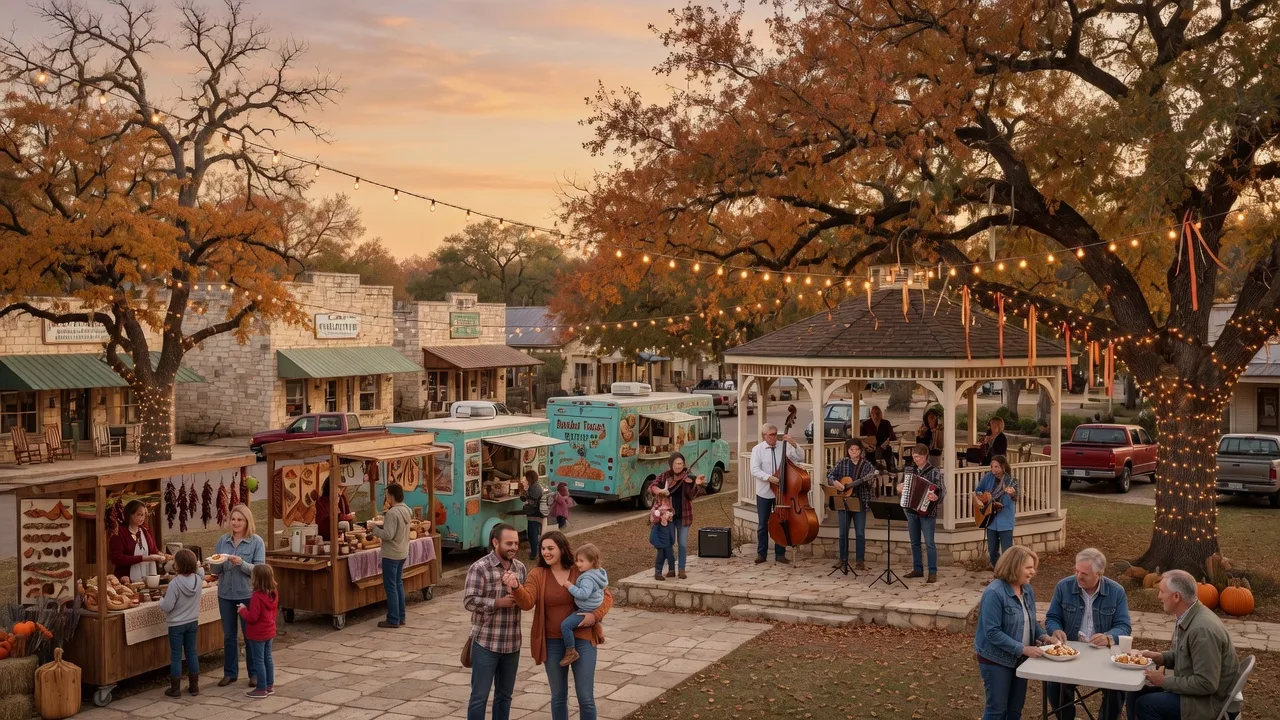
One of the quietest but most persistent adjustments California transplants face in the Texas Hill Country is the social calendar reset. It is not something anyone warns you about. There is no brochure titled "What Happens to Your Saturday Afternoons." But by the second or third month, it becomes unmistakable: the patterns of social life — when you gather, why you gather, what you do when you gather — operate on a fundamentally different schedule here.
In California, particularly in coastal areas from San Diego to the Bay Area, the social calendar is essentially weather-proof. Outdoor patios are usable 300 days a year. Farmers markets operate year-round. Beach days, hiking groups, outdoor concerts, and al fresco dinners are not seasonal activities — they are the baseline assumption of how social life works. The weather is mild enough that the calendar does not need to work around it [9].
In the Texas Hill Country, the calendar is structured around seasons. There are times of the year when outdoor gatherings are effortless, times when they require infrastructure (fans, misters, shade, insect repellent), and times when they simply do not happen. This is not a complaint about Texas weather. It is a description of a different social rhythm — one that has been shaped by climate, agriculture, and community tradition for generations. Learning that rhythm is part of settling in.
Where You Come From
To understand the reset, it helps to name the baseline. California's coastal climate is one of the most consistent in the United States. San Diego's average monthly high ranges from 66°F in January to 77°F in August — an annual swing of 11 degrees. San Francisco's ranges from 57°F to 69°F. Los Angeles ranges from 68°F to 84°F. These are not seasonal climates in the way most Americans understand the term. They are a single, mild, outdoor-friendly season that lasts 12 months [9].
This consistency shapes social patterns. In coastal California, the question "Is it nice enough to be outside?" is almost never the limiting factor. The question is simply what to do and who to do it with. The result is a social culture that defaults to outdoor gathering, spontaneous plans, and a calendar that does not have a distinct off-season. Restaurant patios are busy in January. Beach parking lots are full in February. The outdoor concert series runs year-round. There is no collective "winter hibernation" period because the weather never demands one [8][9].
The Hill Country is different. And the difference is not just about temperature — it is about how temperature, humidity, daylight, and seasonal traditions interact to create a social calendar with four distinct phases.
The Four Seasons of the Hill Country Social Calendar
The Texas Hill Country does not have a traditional four-season climate in the New England sense — the leaves do change, but winter is mild, and summer is long. But the social calendar does have four distinct seasons, each with its own character, activities, and community rhythms.
Spring (March through May): The Golden Window
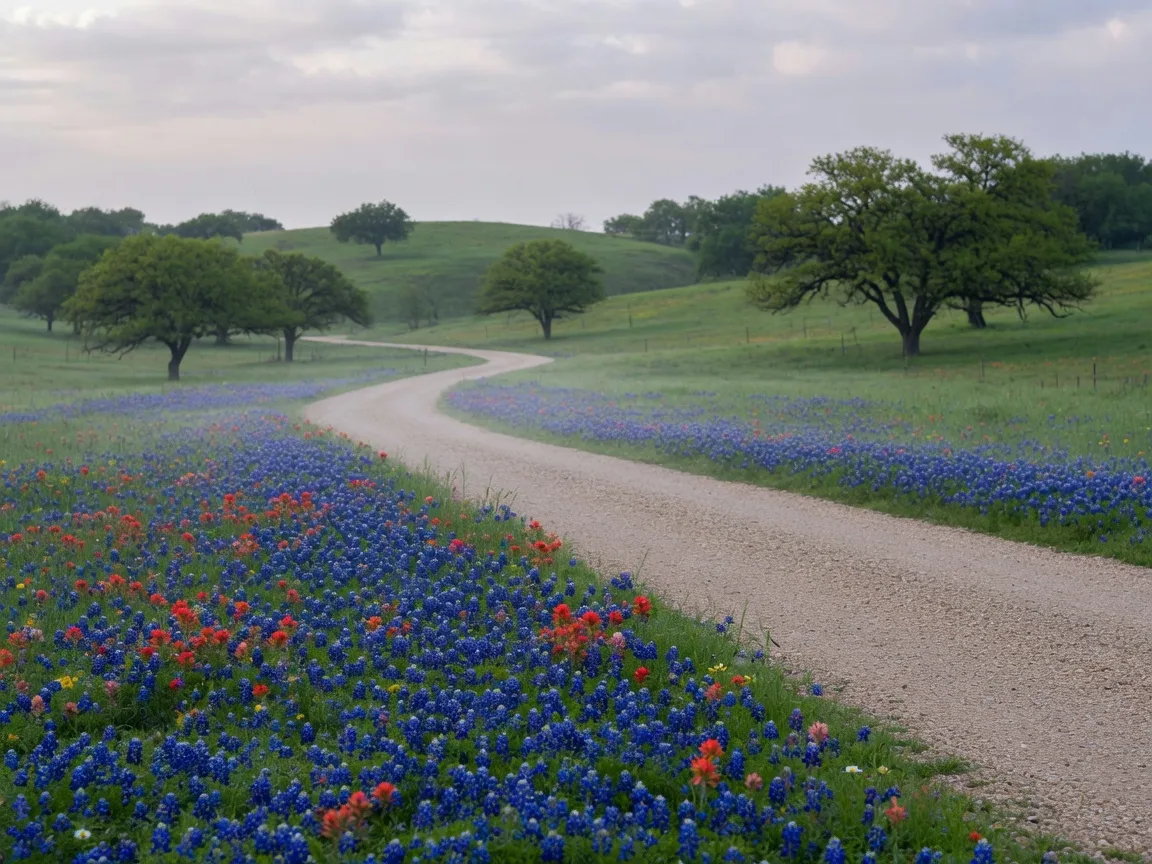
Spring in the Hill Country is the season that converts skeptics. Average highs in March are around 71°F, climbing to 79°F in April and 83°F in May [1][2]. Lows are in the 50s and low 60s. The humidity is still moderate. The wildflowers arrive in force — bluebonnets, Indian paintbrush, evening primrose, and black-eyed Susans carpeting open meadows and highway shoulders [10].
Social life in spring is exuberant. The Boerne Farmers Market returns with full force. The Boerne Berges Fest in May draws thousands to the Hill Country Mile for a parade, carnival, live music, and a celebration of the community's German heritage [7]. Market Days on the first Saturday of each month fill Main Plaza with vendors, artisans, and neighbors catching up after the winter lull [3]. Outdoor patios at The Dodging Duck Brewhaus, Creek Restaurant, and Peggy's on the Green are packed. Hiking groups at Cibolo Nature Center and the Crownridge Canyon Natural Area shift into high gear.
For California transplants, spring is the most familiar season. The weather is comparable to a good coastal California autumn: warm enough to be outside without thinking about it, cool enough that you are not managing heat. The difference is that in California, this weather lasts nine months. In the Hill Country, it lasts about eight to ten weeks, and everyone knows it, which gives the season an urgency that California never has.
Summer (June through August): The Infrastructure Season
Summer is where the reset becomes real. Average daily highs in Boerne range from 90°F in June to 94°F in August, with overnight lows in the low 70s [1][2]. The humidity is moderate but present — not Houston-level oppressive, but enough that the 1 p.m. sun hits differently than it does in dry-heat climates.
Social life in summer does not stop, but it moves. Outdoor gatherings shift to early morning, late evening, and water-adjacent locations. The Guadalupe River tubing season runs hard from Memorial Day through Labor Day, with outfitters on the Guadalupe near Kerrville and Sattler running shuttles all day. Pool parties, lake outings at Boerne City Lake or Canyon Lake, and evening cookouts with overhead fans and misters replace the all-day barbecues of spring.
The shift California transplants notice most: spontaneous midday plans decline sharply. In coastal California, you can text someone at 2 p.m. and suggest a hike. In the Hill Country, the 2 p.m. to 5 p.m. window is indoor time for most people. The social calendar consolidates into morning and evening blocks. This is not a problem once you adjust your expectations, but it takes a few months to stop reflexively suggesting outdoor plans in the heat of the day.
Summer also brings the Hill Country's signature community events. Fair Oaks Ranch hosts the Taste of Fair Oaks in late summer, a showcase of local restaurants and caterers [4]. San Antonio's Tejano Conjunto Festival in May and Jazz'SALive in September draw crowds from across the region [5]. Blue Bell Creameries runs at full production. The summer social calendar is full — it just looks different from California's.
Fall (September through November): The Second Golden Window
Fall in the Hill Country is the season most California transplants describe as "worth the summer." Average highs drop from 87°F in September to 79°F in October to 67°F in November [1][2]. The humidity drops. The light shifts to a warm, golden quality that photographers chase. The live oaks stay green — they are evergreens — but the deciduous trees along the creeks and rivers turn yellow and orange.
The social calendar peaks again. The Boerne Market Days run through December. Oktoberfest celebrations pop up in Boerne, Fredericksburg, and Comfort, reflecting the region's German heritage. San Antonio's Day of the Dead River Parade draws huge crowds [5]. The Hill Country Wineries along Highway 290 run harvest events and crush parties. High school football — a Texas cultural institution that California transplants quickly learn to appreciate — fills Friday nights from August through December.
For California transplants, fall is the season that confirms the move was right. The weather is as good as or better than coastal California's best months, with the added advantage of actual seasonal change. The leaves change color. The air has a snap to it in the evenings. The community comes alive in a way that feels earned after the long summer.
Winter (December through February): The Intimate Season
Winter in the Hill Country is mild by national standards — average highs range from 60°F to 64°F, with overnight lows in the mid-30s to low 40s [1][2]. Snow is rare, occurring every few years and melting within a day. What winter does bring is a reduction in outdoor social volume. Patio dining becomes less common. Evening gatherings move indoors. The pace of community life shifts inward.
This is the season that surprises California transplants most — not because it is harsh, but because it is quiet. In coastal California, winter is still patio season. In the Hill Country, winter is the season of small dinner parties, holiday gatherings, and a slower social cadence. The community does not disappear; it just concentrates.
Winter also features some of the Hill Country's most beloved traditions. Boerne's Dickens on Main the Friday after Thanksgiving draws thousands to the Hill Country Mile for carriage rides, roasted chestnuts, carolers in Victorian costume, and a holiday market that transforms the historic district [3]. Weihnachts Weekend the first weekend of December adds a Christmas market, a tree lighting ceremony, and an old-fashioned holiday atmosphere that California transplants consistently describe as "what a small-town Christmas should feel like" [3]. Fair Oaks Ranch's Tree Lighting and Festival of Trees offers a more subdued but equally warm community gathering [4].
The California adjustment: California transplants who lean into winter's intimacy — hosting friends for dinner, attending holiday events, joining a book club or a weekly poker game — integrate faster than those who resist the seasonal slowdown. The shift from constant outdoor-social mode to occasional indoor-social mode is not a deprivation; it is a different social fabric, one that prioritizes depth over volume.
How the Seasons Compare: A Temperature Snapshot
The numbers tell the story more clearly than any description. Here is how average monthly highs compare between the Hill Country and two common California origin markets:
Average Monthly High Temperature (°F): Hill Country vs. Coastal California
| Month | Boerne, TX | San Francisco, CA | Los Angeles, CA | San Diego, CA |
|---|---|---|---|---|
| January | 62°F | 57°F | 68°F | 66°F |
| March | 71°F | 62°F | 71°F | 68°F |
| May | 83°F | 64°F | 74°F | 70°F |
| July | 93°F | 68°F | 84°F | 77°F |
| August | 94°F | 69°F | 85°F | 78°F |
| October | 79°F | 68°F | 79°F | 75°F |
| December | 63°F | 57°F | 68°F | 66°F |
Source: Extreme Weather Watch (Boerne, 1991–2020 NOAA data); Weather-US.com (SF, LA, San Diego). [1][9]
What this table makes visible: the Hill Country's annual temperature range (62°F to 94°F, a 32-degree swing) is dramatically wider than San Diego's (66°F to 78°F, a 12-degree swing). The Hill Country is hotter in summer, but it is also cooler in winter. The seasonal variation is real, and the social calendar reflects it. Spring and fall in the Hill Country are comparable to a nice California day. Summer requires a different approach. Winter offers a coziness that coastal California cannot replicate.
What Actually Changes in Your Social Life
Beyond the temperature data, there are practical shifts that California transplants experience in their social patterns:
Holiday seasons have more texture. California's holiday calendar is real, but it competes with the reality that the weather is still nice enough to go to the beach. In the Hill Country, the holidays are a distinct season with specific weather (cool, occasionally cold), specific traditions (Dickens on Main, Weihnachts Weekend, tree lightings, holiday parades), and a community-wide participation that California transplants frequently describe as "more earnest." People decorate. People attend. The holidays feel like an event rather than a date on the calendar.
Weekend scheduling requires more planning. In California, a spontaneous Saturday afternoon hike or beach trip is always viable. In the Hill Country, summer weekend planning involves checking the forecast for temperature, humidity, and the likelihood of afternoon thunderstorms (which are common in spring and early summer). Spring and fall weekends are wide open. Winter weekends require checking whether an ice storm is possible. The need to plan ahead feels restrictive at first; most California transplants adjust by month six and stop noticing it by year two.
The concept of "inside season" returns. Many California transplants have never lived in a climate that has a genuine indoor season. In the Hill Country, summer afternoons and occasional winter evenings create a natural indoor social calendar. Dinner parties, game nights, home entertaining, and neighborhood gatherings inside homes replace the outdoor default. This is not a downgrade — it is different. California transplants who resist it and try to maintain year-round outdoor plans tend to be frustrated. Those who embrace indoor socializing — learning to host, accepting invitations to other people's homes — find that the relationships formed in these settings are deeper than the ones formed at outdoor group events.
School and sports shape the calendar. If you have school-age children, the social calendar is increasingly shaped by the school calendar, sports seasons, and extracurricular schedules. Texas high school football is a fall cultural event in its own right, with Friday night games drawing crowds that rival Saturday college atmospheres in some communities. Youth soccer, baseball, softball, volleyball, and basketball each have their seasons, and the schedules are relentless. For California families, the intensity of school-embedded social life is a notable shift — your social calendar becomes your children's calendar in a way that is more pronounced than in many California communities.
Annual Community Events That Anchor the Year
The Hill Country community events calendar is one of its strongest assets for new residents. These recurring events create a shared rhythm that California transplants can use to mark time and build connections:
Key Hill Country Community Events by Season
| Season | Event | Location | Description |
|---|---|---|---|
| Spring | Boerne Berges Fest | Downtown Boerne | May festival celebrating German heritage with parade, carnival, live music, and community fair [7] |
| Spring | Fiesta San Antonio | San Antonio | Ten-day citywide festival with parades, concerts, food, and cultural events [5] |
| Spring | Boerne Market Days | Main Plaza, Boerne | First Saturday monthly (Apr-Dec), artisan market with local vendors [3] |
| Summer | Taste of Fair Oaks | Fair Oaks Ranch | Late summer food and community festival [4] |
| Summer | Moondance Outdoor Concert Series | Boerne City Park | Summer evening concerts in the park [3] |
| Fall | Day of the Dead River Parade | San Antonio River Walk | November parade on the River Walk with altars, music, and traditional observances [5] |
| Fall | Hill Country Wineries Harvest Events | Hwy 290 corridor | Grape harvest festivals and crush parties at area wineries [6] |
| Winter | Dickens on Main | Hill Country Mile, Boerne | Friday after Thanksgiving — Victorian-themed holiday market with carriage rides, carolers, and roasted chestnuts [3] |
| Winter | Weihnachts Weekend | Downtown Boerne | First weekend of December — Christmas market, tree lighting, holiday parade [3] |
| Winter | San Antonio Holiday River Parade | San Antonio River Walk | Lighting ceremony and boat parade to open the holiday season [5] |
| Winter | San Antonio Stock Show & Rodeo | San Antonio | February rodeo, livestock show, concerts, and fair [5] |
Sources: City of Boerne Community Events [3]; Portfolio Real Estate [4]; Visit San Antonio [5]; Texas Happens [6]; Boerne Chamber of Commerce [7]. Dates and details subject to change; verify with organizers.
What California Transplants End Up Loving About It
Every California transplant I have worked with goes through a predictable arc on the social calendar question. In the first month, they notice what is missing. By month six, they notice what is present. By year two, most describe the seasonal rhythm as one of the things they value most about Hill Country life.
The reasons are consistent:
Seasonal anticipation is a pleasure. When you live in a climate where every season is the same, you lose the experience of anticipating spring, savoring fall, or hunkering down in winter. The Hill Country calendar gives you something to look forward to. The first cool front in October is genuinely exciting. The first bluebonnet sighting in March is a community event. The holiday decorations going up on the Hill Country Mile in late November feel earned in a way that year-round decorations in California never do.
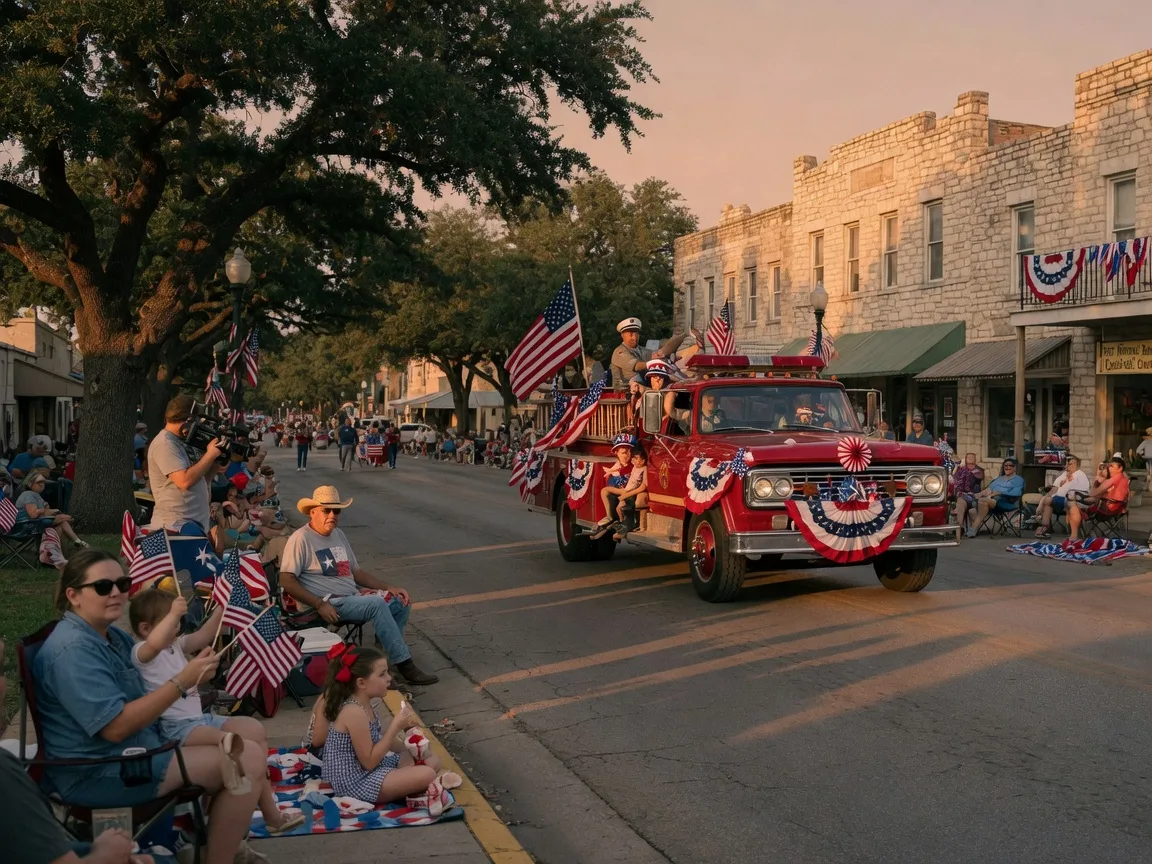
Community events feel meaningful. In California, the sheer volume of events and activities can create a paradox of choice — there is so much to do that nothing feels essential. In the Hill Country, the calendar is less crowded, which means individual events carry more weight. The Berges Fest, Dickens on Main, the Market Days, the local Fourth of July parade — these are not optional entertainment options. They are the moments when the community shows up for itself. Attending them is how you become part of the community.
The pace makes room for relationships. A social calendar that has built-in quiet periods — summer afternoons, winter evenings — creates space for the kind of relationships that require time rather than activity. The families who integrate most deeply in the Hill Country are not the ones with the busiest social calendars. They are the ones who show up to the neighborhood dinner party in January, who invite people over for a casual Sunday afternoon in the spring, and who invest in the relationships that persist across the seasons.
Practical Advice for the First Year
If you are relocating from California to the Hill Country, here is what I recommend for navigating the social calendar reset in your first year:
- Arrive in spring or fall if you can. These seasons offer the most welcoming introduction to Hill Country social life. Moving in August, while sometimes unavoidable, means your first impression of the community will be formed in the most heat-intense month. Moving in March or October gives you a gentler onboarding.
- Buy good outdoor infrastructure. A patio with ceiling fans, a misting system, and shade coverage extends your outdoor social window by several months. Hill Country residents invest in their outdoor spaces because they use them hard from March through May and September through November.
- Attend the major community events your first year. Even if you are tired, even if you do not know anyone, go to the Berges Fest, go to the Market Days, go to First Friday events in Boerne or San Antonio. These events are where the community's social fabric is visible, and they are the most efficient way to start building your own connections.
- Give yourself a full year before judging the social calendar. The Hill Country social rhythm only makes sense when you have experienced all four seasons. A summer transplant who judges the place in August is missing the spring and fall that make the summer bearable. A winter transplant who finds things quiet in January is missing the explosion of activity that starts in March. The full cycle is the only honest assessment.
- Introduce yourself to your neighbors within the first week. In the Hill Country, your neighbors are your primary social network. The families who integrate fastest are the ones who walk over with a plate of cookies and say hello on day three, not day 30. The seasonal social calendar is built on the foundation of neighborhood relationships.
Thinking About the Move? The Calendar Is Part of the Decision.
The social calendar reset is not a reason to avoid the move. It is a reason to make the move with open eyes, knowing that your patterns of social life will evolve in ways you cannot fully anticipate from a California perspective. The rhythm of small-town and Hill Country life — shaped by seasons, traditions, and a community that shows up for each other — is one of the things that makes this region distinctive.
If you are evaluating a move from California to the Hill Country, I am happy to talk through what the full-year calendar looks like for your specific situation — whether you are a family with school-age children, a retiree looking for community, or a remote worker building a new life in a new place. The conversation is free, the advice is practical, and the goal is simply to help you make a fully informed decision.
For more on the social side of relocating, see our guide to the first week in the Hill Country or the Boerne community events calendar. For the financial picture, read the home equity breakdown.

Written by
Bill Ross
Hill Country Homesteads Group, brokered by KW Boerne
Bill Ross is a Texas real estate agent with nearly four decades in high-tech sales and a network of 1,000+ California real estate agents for coordinated cross-state transactions. Featured in national coverage discussing his family's relocation from Silicon Valley to the Texas Hill Country.
Related Guides
The Texas Driveway Moment
What Californians notice the first week they live in the Hill Country — from lot sizes to neighborly warmth.
Boerne Community Events Calendar
A year-round guide to festivals, markets, parades, and seasonal gatherings in Boerne.
HOA Culture Shock
How Texas HOAs compare to California's — rules, fees, and what buyers should expect.
Wildlife You Did Not Sign Up For
Deer, armadillos, snakes, scorpions — coexisting with Texas fauna in the Hill Country.
Frequently Asked Questions
These are the questions I hear most from California buyers about how the seasonal and social rhythms of the Hill Country compare to what they are leaving behind.
How long does it take to adjust to the Texas seasonal rhythm?
Most California transplants report that the first full year feels like the adjustment period. By the second spring — when wildflowers bloom and the farmers markets reopen — the seasonal rhythm starts to feel natural. The key is not to fight it: lean into what each season offers instead of wishing for October in July.
What is the hardest season for California transplants in the Hill Country?
August is the most consistently challenging month, even for people who have lived in Texas for years. The combination of persistent 94–96°F highs, moderate humidity, and the feeling that summer has already lasted four months wears on everyone. The coping strategy is to reset expectations: August in Texas is for early-morning outdoor activity, pool time, and air-conditioned social gatherings. The rest of the year more than compensates.
Do Texas Hill Country communities have farmers markets and community events year-round?
Boerne has a vibrant year-round events calendar. The weekly farmers market runs spring through fall with limited winter availability. Signature events include the Boerne Berges Fest (May, celebrating the community's German heritage with a parade, carnival, and live music), the Boerne Market Days (first Saturday of each month, April through December), Dickens on Main (the Friday after Thanksgiving), and Weihnachts Weekend (first weekend of December, featuring a Christmas market, carriage rides, and a tree-lighting ceremony). These events create a rhythm that anchors the community across the year.
How does Texas summer compare to a California heat wave?
A California heat wave is an event — it lasts a few days to a week, breaks, and returns to normal. A Texas summer is a season. From mid-June through early September, daily highs consistently reach the low to mid-90s in the Hill Country. The difference is duration, not intensity. California transplants who prepare for a season of heat rather than episodes of heat adapt much faster. The adjustment is psychological as much as physical: resigning yourself to the fact that outdoor plans happen before 10 a.m. or after 7 p.m. for three months changes how you schedule your life.
What do California transplants miss most about the year-round outdoor culture?
The two most consistent answers are: (1) the ability to make spontaneous outdoor evening plans without checking the weather, and (2) the sheer variety of outdoor dining options. In coastal California, outdoor patios are usable 300+ days a year. In the Hill Country, they are genuinely comfortable about 200 days a year — spring and fall are excellent, summer evenings are usable with fans and misters, and winter requires jackets on cool nights. The trade-off is that when patio season arrives in March, the Hill Country community celebrates it in a way that coastal California never does.
Sources
- Boerne average monthly temperatures (1991–2020 NOAA data) — Extreme Weather Watch. www.extremeweatherwatch.com/cities/boerne/average-temperature-by-month
- Boerne climate and demographics — City of Boerne. www.ci.boerne.tx.us/2101/Climate-and-Demographics
- Boerne community events calendar — City of Boerne. www.ci.boerne.tx.us/811/Community-Events
- Fair Oaks Ranch seasonal traditions and events — Portfolio Real Estate. portfoliore.com/blog/fair-oaks-traditions-and-events-locals-love
- San Antonio annual event sampler — Visit San Antonio. www.visitsanantonio.com/media/media-kit/annual-event-sampler/
- Texas Hill Country annual festival calendar — Texas Happens. texashappens.com/texas-2026-a-comprehensive-statewide-calendar/
- Boerne Berges Fest details and history — Boerne Chamber of Commerce. boerne.org/berges-fest/
- Texas seasonal living observations from California transplants — SiliconCanals. siliconcanals.com/i-left-california-for-texas-heres-what-i-didnt-expect-about-the-culture-shock/
- California-to-Texas culture shock survey data — Cyburbia Forums. cyburbia.org/forums/threads/texas-style-culture-shock.37581/
- Wildflower season and Hill Country ecology — Lady Bird Johnson Wildflower Center. www.wildflower.org/learn/wildflower-season
Last reviewed: July 2026. Temperature data reflects 1991–2020 NOAA norms. Event dates and availability subject to change; verify with local organizers before making plans.