
If you are moving from California to the Texas Hill Country, nobody is going to mention the armadillos. Your real estate agent will tell you about the schools, the commute, and the property taxes. The relocation guide will cover H-E-B and the Hill Country Mile. But somewhere between your first week and your first spring, you will look out the window at a creature you have never seen in a residential setting before, and you will realize that nobody prepared you for this.
The Texas Hill Country supports at least 407 species of game and nongame wildlife [1]. A significant number of them share the same habitat that homeowners occupy — particularly in subdivisions built along the limestone ridges between Boerne, Fair Oaks Ranch, and San Antonio. The Hill Country's appeal is its natural landscape, and that landscape is populated. Deer browse through your flower beds. Armadillos dig up your lawn. Scorpions find their way inside. Snakes sun themselves on the path to the mailbox.
This article is a practical guide to coexisting with Hill Country wildlife. It is not meant to alarm you. The vast majority of wildlife encounters in the Hill Country are benign, and the risks are manageable with basic awareness. But the adjustment is real, particularly for California transplants whose previous experience with wildlife may have been limited to coyotes in the hills, the occasional raccoon in the trash, and deer on the shoulder of Highway 101. The Hill Country version is more intimate, more constant, and more varied than what most Californians expect.
The Deer Are Not a Novely. There Are Millions.
California has deer — black-tailed deer in the coastal ranges, mule deer in the Sierra — but they are not a daily residential presence in most suburban neighborhoods. In the Texas Hill Country, white-tailed deer are ubiquitous. The Edwards Plateau region supports an estimated 1.5 to 2.4 million white-tailed deer, representing more than 40% of the entire Texas deer population [2][3]. They are not confined to rural areas. They live in subdivisions, in parks, along roadways, and through residential yards at every hour of the day.
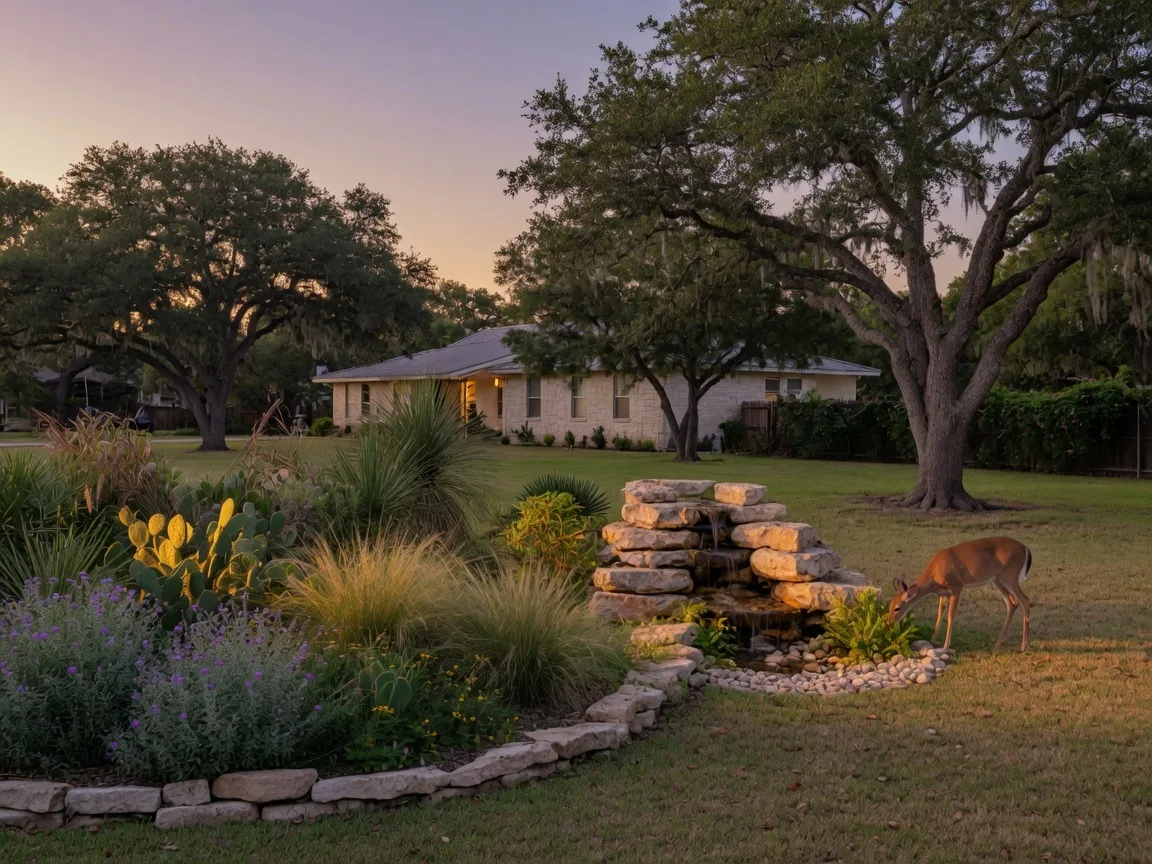
What this means for homeowners: Deer browse. They eat ornamental shrubs, flower beds, vegetable gardens, and the tender new growth on landscaping that California transplants spend thousands of dollars installing. A mature buck can clear a young rose bush in a single night. Azaleas, hostas, daylilies and pansies are deer favorites. Most Hill Country nurseries label deer-resistant plants clearly — Texas sage, red yucca, Russian sage, lavender, ornamental grasses, and many native perennials are reliably avoided [11].
Fencing is the only fully effective solution. An eight-foot fence is the standard recommendation. Shorter fences do not stop a motivated deer. However, many Hill Country subdivisions — particularly in Fair Oaks Ranch and newer Boerne developments — have HOA restrictions on fence height and materials. Before you plan a deer perimeter, check your covenants. Some homeowners use motion-activated sprinklers as a deterrent, which are moderately effective but require consistent maintenance.
Vehicle collisions are the real risk. Deer-vehicle collisions are the most serious wildlife hazard in the Hill Country. Deer are most active at dawn and dusk, and they travel in groups. If one deer crosses the road, more are likely following. In areas where deer density is high, such as along Scenic Loop Road, Ralph Fair Road, and sections of I-10 between Boerne and San Antonio, drivers should be especially cautious during crepuscular hours. Collisions are rarely fatal to humans but cause significant vehicle damage and can be dangerous for motorcyclists [3].
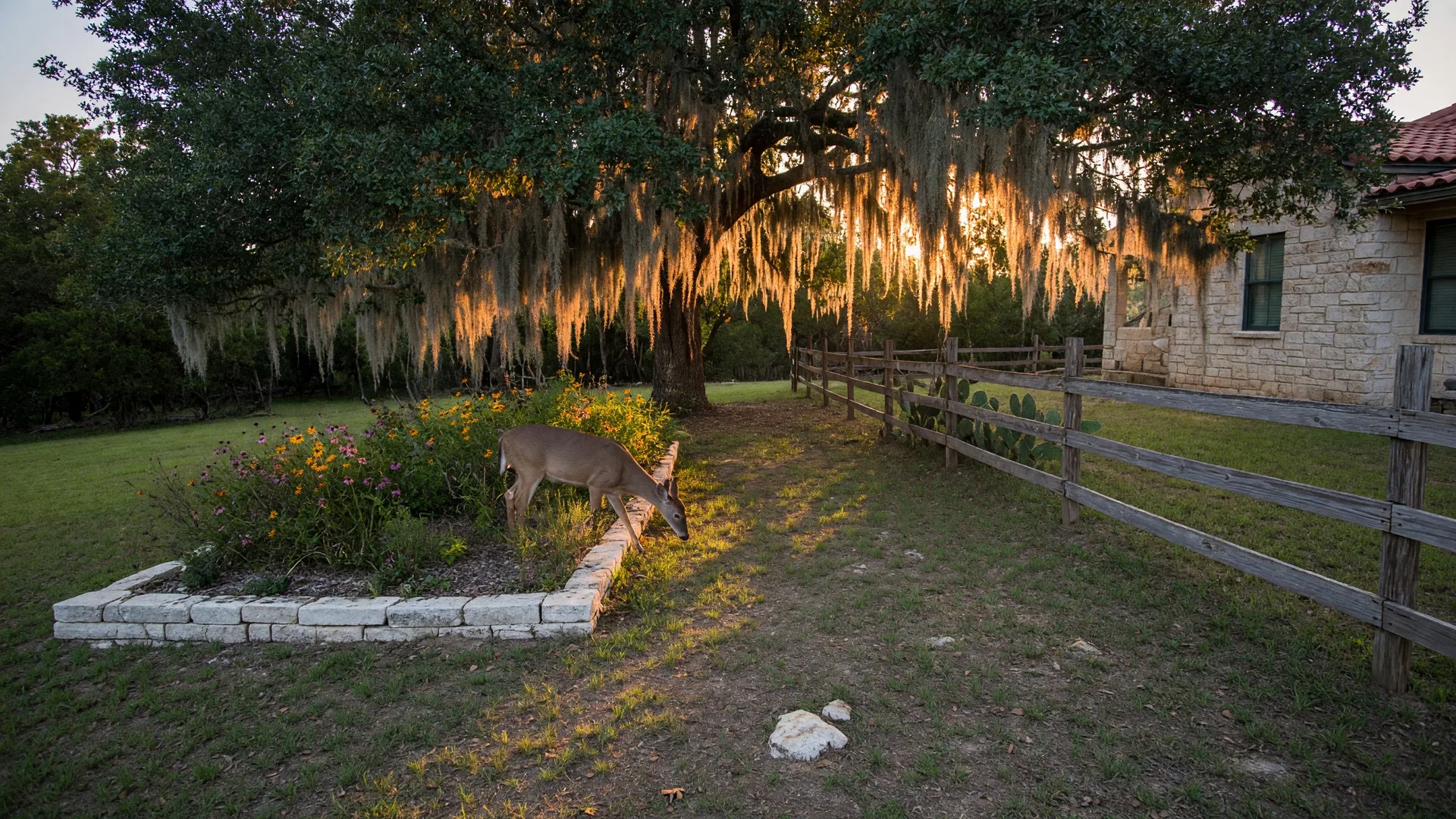
Deer in the Hill Country: Key Numbers
| Metric | Value |
|---|---|
| Total white-tailed deer in Edwards Plateau | 1.5–2.4 million |
| Share of Texas deer population | 40%+ |
| Recommended fence height | 8 feet |
| Peak activity times | Dawn and dusk |
| Most active season | October to January (rut) |
| Typical group size | 3–8 does and fawns |
Sources: TPWD 2024 Deer Season Forecast; Longhorn Realty / Texas Parks & Wildlife 2024.
The Armadillo Is Not a Joke. It Is a Digging Machine.
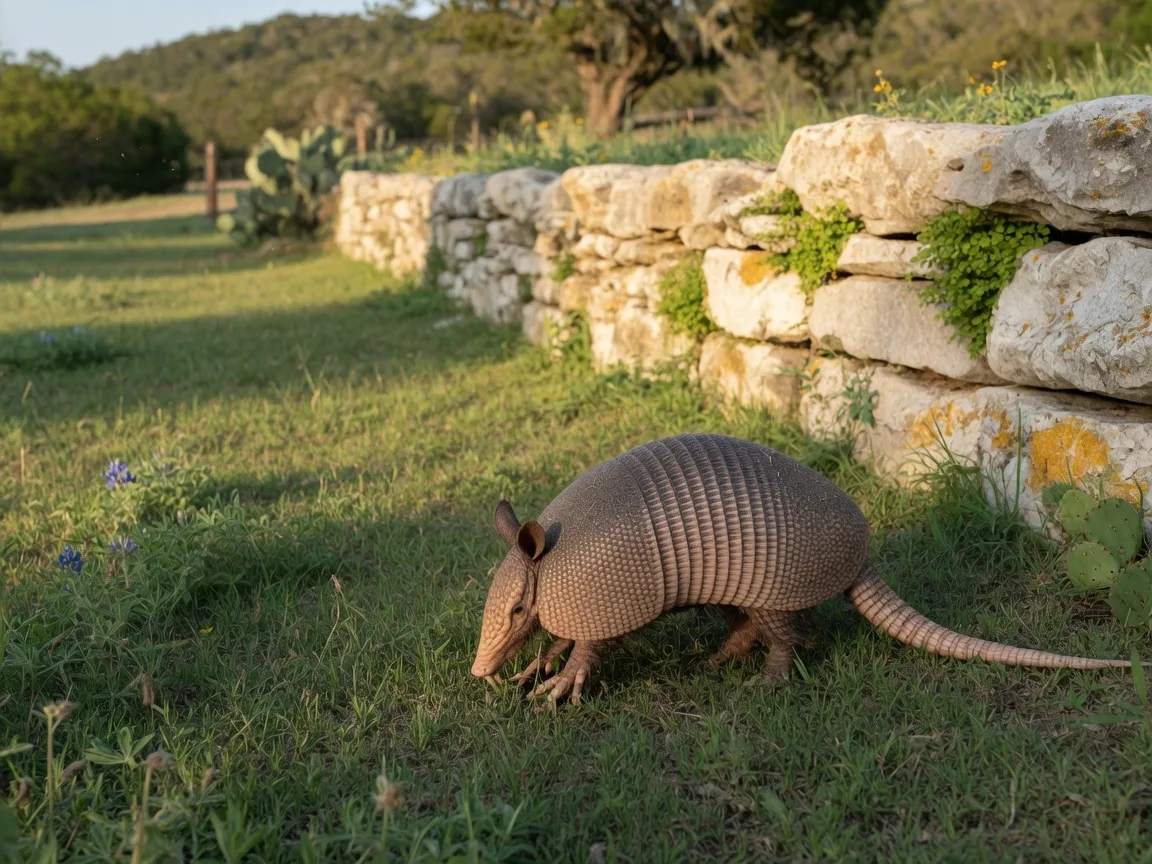
The nine-banded armadillo does not exist in California. It is the state small mammal of Texas, and it is everywhere in the Hill Country. If you move here, you will see them — armored, nocturnal, vaguely prehistoric creatures rooting through lawns with their snouts, digging for grubs, beetles, and insect larvae. They look harmless, and in most respects they are. But they do two things that create problems for homeowners.
First, they dig extensively. Armadillos create conical holes two to four inches deep while foraging for insects. Over the course of a single night, one armadillo can create 20 to 50 holes in a lawn. The damage is cosmetic but can be extensive enough to require lawn repair. More seriously, armadillos dig burrows that can extend several feet underground — beneath foundations, driveways, patios, and sidewalks. Burrowing under a foundation can cause settling and structural cracks over time [8].
Second, they carry Hansen disease (leprosy). The nine-banded armadillo is a natural reservoir of Mycobacterium leprae. Most documented human cases of armadillo-linked leprosy in the United States have occurred in Texas and Louisiana, and the CDC recommends avoiding direct physical contact with armadillos [9]. The transmission risk to humans who do not handle them is extremely low. The practical guidance is simple: do not pick up an armadillo. Do not let your dog investigate or mouth one. Wear gloves if you need to handle one for removal.
Control methods: Armadillos are unprotected nongame animals in Texas, meaning they can be trapped or hunted on private property with landowner permission [8]. The most effective removal method is cage trapping using a trap at least 10 by 12 by 36 inches, placed along fence lines or near active burrow entrances. Adding a wooden board in a V-arrangement in front of the trap helps funnel the animal inside. Habitat modification — removing brush piles, rock piles, and tall grass — reduces the cover that armadillos prefer. Beneficial nematodes applied to the lawn reduce grub populations, removing the food source that attracts them in the first place [8].
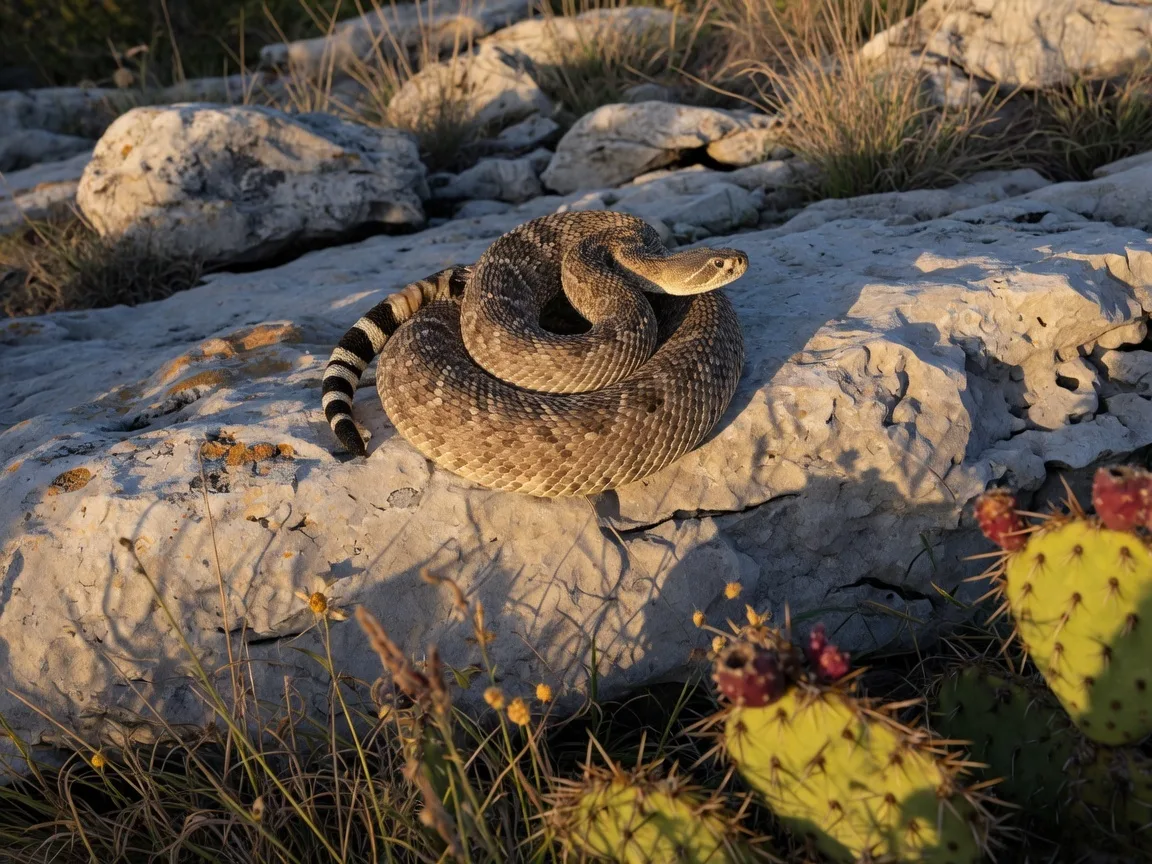
Snakes: Which Ones, Where, and How to Share Space
Of the 77 snake species native to Texas, 42 live in the Hill Country region [6][7]. The vast majority are harmless and beneficial — they control rodents and other pests. But four venomous species are present, and California transplants who are not accustomed to venomous snakes sharing their living space should understand where and when encounters happen.
The venomous four:
- Western diamondback rattlesnake — the most commonly encountered venomous snake in the Boerne and San Antonio area. Found in rocky terrain, brush-covered lots, and along dry creek beds. It rattles as a warning before striking. Most bites occur when someone steps on or near a concealed snake [6][7].
- Broad-banded copperhead — well-camouflaged in leaf litter and rocky areas. Copperheads are responsible for more venomous bites in Texas than any other snake because they freeze rather than flee when approached, and people accidentally step on them [6].
- Texas coral snake — recognizable by red, yellow, and black banding. Reclusive and rarely encountered. Its venom is neurotoxic, but bites are extremely rare because coral snakes are not aggressive [6].
- Western cottonmouth (water moccasin) — found near creeks, rivers, ponds, and seasonal drainage areas. Less common in the Hill Country than in East Texas but present along waterways in southern Kendall County and northern Bexar County [7].
Harmless snakes you will actually see more often: Texas rat snakes (which climb trees and enter attics hunting rodents), bullsnakes (large, impressive, and entirely non-venomous), coachwhips (known to prey on rattlesnakes), and garter snakes (common near water). Most people who think they have seen a rattlesnake have actually seen a rat snake or a bullsnake. Learning to distinguish them is worth the effort [6].
Practical prevention: Keep grass cut short near the house. Remove brush piles, rock piles, and debris that provide snake cover. Seal gaps in the foundation and around utility penetrations. Use a flashlight when walking outside at night from April through October, when snakes are most active. Rattlesnake aversion training for dogs is available in the San Antonio area and is recommended for households with properties bordering undeveloped land [7].
What to do if you encounter a snake: Give it space. Most snakes will move away if given the opportunity. Do not try to identify, handle, or kill it — most bites happen during attempts to kill or capture snakes. If someone is bitten, stay calm, remove jewelry or tight clothing near the bite, and get to an emergency room immediately. The Texas Poison Center Network recommends calling 1-800-222-1222 [12]. Do not cut the wound, apply a tourniquet, or attempt to suck out venom. These methods do not work and can cause additional harm.
Scorpions: The Hill Country Roommate Nobody Asked For
The striped bark scorpion (Centruroides vittatus) is the most common scorpion in the United States, and it is concentrated in Texas and the Hill Country [4][5]. It is two to three inches long, light brown, and capable of squeezing through gaps as thin as a credit card. Because Hill Country subdivisions are often built directly into rocky limestone terrain that is natural scorpion habitat, encounters are common in both rural and suburban settings.
The sting is painful but rarely dangerous. For most people, a striped bark scorpion sting feels comparable to a bee sting — sharp pain, localized swelling, tingling, and numbness that can last from 30 minutes to several hours. A small percentage of people experience more severe reactions, including nausea and difficulty breathing. People with allergies to insect venom, children, the elderly, and pets are at highest risk and should seek medical attention if stung [4][5].
Scorpions are surprisingly hard to keep out. A gap of 1/16th of an inch is enough for a scorpion to enter a home. Effective prevention requires a comprehensive approach:
- Seal all cracks in the foundation, around windows and doors, and where utility lines enter the house.
- Install door sweeps on all exterior doors.
- Keep grass trimmed and remove wood piles, rock stacks, and debris within 20 feet of the foundation.
- Reduce insect populations (their food source) by minimizing outdoor lighting and keeping trash sealed.
- Place glue traps along baseboards and in attics to monitor activity [5].
- Declutter indoor storage areas — scorpions hide in boxes, shoes, and clothing.
The black light trick works. Scorpions glow bright blue-green under ultraviolet (UV) light due to a protein in their exoskeleton. A handheld UV flashlight — available at any hardware store for $10 to $20 — is the most effective detection tool. Walking the house at night with a black light can reveal scorpions that would otherwise go unnoticed [4].
Seasonal patterns: Scorpions are active at temperatures from the mid-50s to over 100 degrees Fahrenheit, making them a year-round presence in the Hill Country. They tend to enter homes more frequently during hot, dry weather in July and August, when they seek moisture, and again in October and November, when cooler temperatures drive them indoors [4][5].
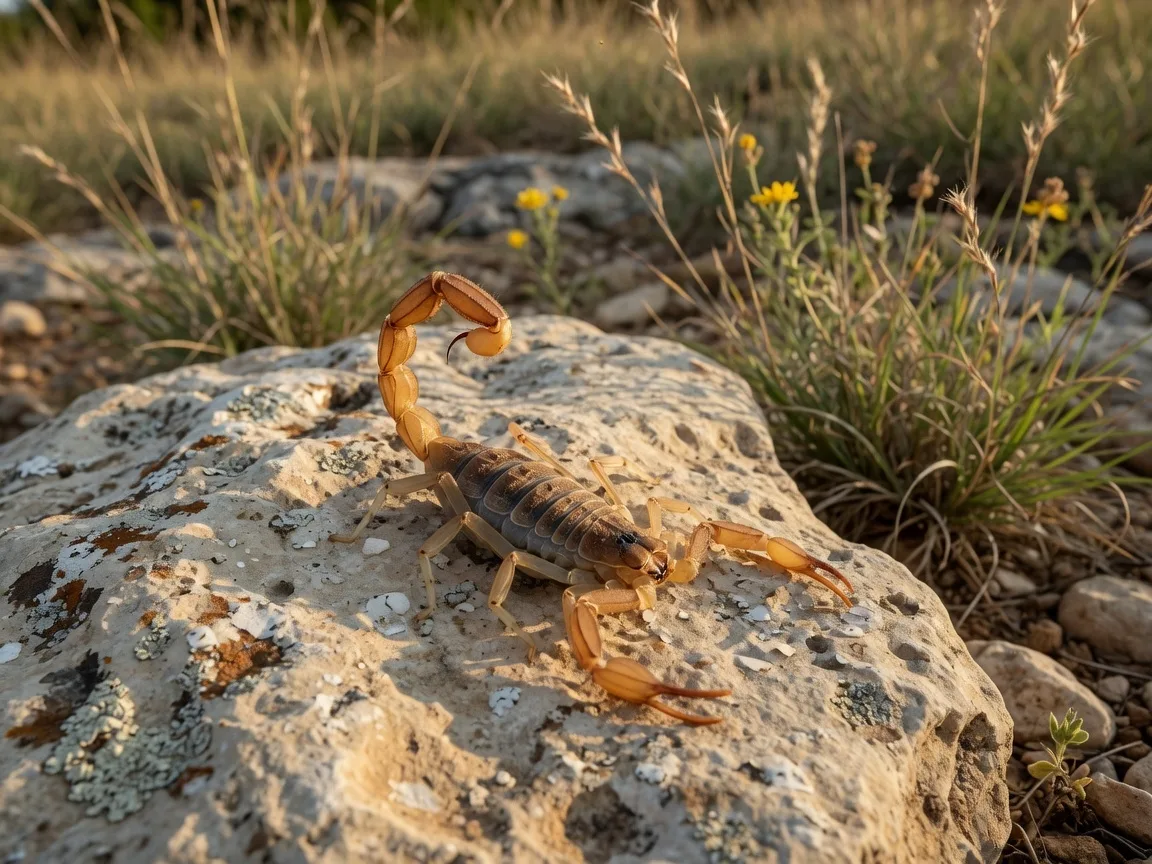
Striped Bark Scorpion: Key Facts
| Fact | Detail |
|---|---|
| Size | 2–3 inches |
| Gap they can squeeze through | 1/16 inch (thickness of a credit card) |
| Sting severity | Comparable to bee sting for most people |
| Peak indoor activity | July–August (seeking moisture) and October–November (seeking warmth) |
| Detection method | Glows under UV/black light |
| Primary defense | Seal foundation cracks, install door sweeps, remove debris |
Sources: Texas Monthly; Crush-a-Bug; Romex Pest Control; Texas A&M AgriLife Extension.
Coyotes, Javelinas, Tarantulas and the Rest of the Cast
Beyond the four main species, California transplants will encounter a wider cast of Hill Country wildlife that ranges from mildly startling to genuinely unfamiliar.
Coyotes are present throughout the Hill Country. They are most vocal at night and are heard more often than seen. In suburban neighborhoods, coyotes prey on small pets — particularly cats and small dogs left outside unattended at night. If you live on a property bordering open space, keep pets indoors between dusk and dawn. Coyotes are generally not a threat to adults, but they can habituate to human presence in neighborhoods where people feed them or leave pet food outside [10].
Javelinas (collared peccary) are pig-like animals that travel in herds of 10 to 30. They are more common in the western Hill Country south of Kerrville and along the Devils River, but sightings are reported as far east as western Kendall County. They have poor eyesight but a strong sense of smell and will defend themselves if cornered. They are not aggressive toward humans who keep their distance, but they can damage landscaping and should not be fed [1][10].
Tarantulas are common in the Hill Country, particularly in late summer and early fall when males emerge to search for mates. A tarantula crossing a rural road or a driveway is a memorable sight for California transplants. They are not dangerous — their venom is weaker than a bee sting and they are not aggressive. The best response is to observe and let them continue their journey [1].
Birds worth knowing: The golden-cheeked warbler, an endangered species that nests exclusively in mature Ashe juniper (cedar) stands in the Hill Country, is found in areas with undisturbed woodland. The presence of this bird on a property can carry regulatory implications for land development. The roadrunner — the state bird of New Mexico but abundant in Texas — is frequently spotted darting across roads and yards. Rio Grande wild turkeys are common in rural areas and occasionally wander into suburban neighborhoods [1][10].
The Perspective California Transplants Need
Every California buyer I work with who moves to the Hill Country goes through a wildlife adjustment curve. The first month is the hardest — every new creature is a surprise, and some of them are genuinely startling. By month three, the deer are part of the landscape. By month six, the armadillo holes are an annoyance rather than a concern. By year one, most transplants have a working knowledge of which snakes to watch for, what to do about scorpions, and how to share space with the animals that were here long before the subdivisions were built.
A few honest observations from experience:
- The Hill Country is not dangerous. The most serious real risk is deer-vehicle collisions, and those are manageable with defensive driving at dawn and dusk. Snake bites are rare, scorpion stings are painful but not dangerous for most people, and armadillos cause property damage rather than physical harm.
- The wildlife is a feature, not a bug. The biodiverstiy of the Hill Country is one of the reasons people move here. The same landscape that supports deer and armadillos and golden-cheeked warblers also supports the live oaks, the bluebonnets, and the limestone canyons that define the region. You cannot have the landscape without the wildlife.
- Adaptation is mostly about habits. Turn on exterior lights before walking outside at night. Watch for deer while driving. Seal cracks in the foundation. Keep a black light in the utility drawer. These habits become automatic within a few months.
- Neighbors are a resource. Hill Country homeowners have been dealing with this wildlife for years. Your next-door neighbor knows which pest control company handles scorpions, which nursery sells deer-resistant plants, and which stretch of road has the most deer at dusk. Ask them. They will tell you.
The wildlife adjustment is one of the aspects of relocating that nobody puts in the brochure, but it is also one of the aspects that makes the Hill Country feel like a different place. Not better or worse — different. And for most California families who make the move, that difference becomes part of what they value about living here.
Moving to the Hill Country? Ask the Questions Nobody Thinks to Ask.
The wildlife adjustment is one of those topics that real estate agents and relocation guides tend to skip. I include it because every California buyer I have worked with encounters it, and the ones who know what to expect adapt faster.
If you are evaluating a move from California to the Hill Country and want honest answers about what daily life actually looks like — including the parts that the brochures leave out — I am happy to walk you through it. No sales pitch, just the information you need to make a confident decision.
For more on what the first week feels like, read The Texas Driveway Moment. For an honest look at what Californians miss after moving, see What Californians Miss Most After Moving to Texas. And if you want the full climate picture, our El Niño and the Hill Country guide covers weather patterns in detail.

Written by
Bill Ross
Hill Country Homesteads Group, brokered by KW Boerne
Bill Ross is a Texas real estate agent with nearly four decades in high-tech sales and a network of 1,000+ California real estate agents for coordinated cross-state transactions. Featured in national coverage discussing his family's relocation from Silicon Valley to the Texas Hill Country.
Related Guides
The Texas Driveway Moment
What Californians notice the first week in the Hill Country — from lot sizes and grocery runs to the neighbor with the casserole.
Buying a Home With a Well in the Hill Country
What to ask about wells, flow rates, water quality, and costs when buying Hill Country property.
HOA Culture Shock: Texas vs. California
How Texas HOAs differ from California's in rules, fees, enforcement, and what buyers should know.
Texas Hill Country Landscape Guide
Terrain, climate, seasons, and vegetation of the Hill Country for California buyers evaluating the land.
Frequently Asked Questions
These are the wildlife questions I hear most from California buyers evaluating a move to the Hill Country. The concerns are consistent, and the answers are grounded in real experience.
Are scorpions really common in Texas Hill Country homes?
The striped bark scorpion is common in the Hill Country because neighborhoods are built directly into rocky limestone habitat that scorpions naturally inhabit. Suburban homes on the edge of undeveloped land see the most encounters. Scorpions can squeeze through gaps as thin as a credit card, so sealing cracks in foundations, installing door sweeps, and keeping mulch and woodpiles away from the house are the most effective prevention measures. Glue traps along baseboards help monitor activity, and scorpions glow under ultraviolet light, making nighttime checks with a black light an effective detection method.
How dangerous are rattlesnakes in the Hill Country?
The western diamondback rattlesnake is the most commonly encountered venomous snake in the Boerne and San Antonio area. Bites are rare — most happen when someone steps on or deliberately handles a snake. Standard precautions include watching where you step on rocky trails, keeping grass cut short near the house, and using a flashlight when walking outside at night from April through October. Dogs are at higher risk because they investigate snakes with their noses. Rattlesnake aversion training for dogs is available in the San Antonio area and is recommended for households with properties bordering undeveloped land.
Will deer destroy my landscaping?
Can armadillos damage my foundation?
Yes. Armadillos dig extensive burrows that can extend several feet into the ground and may undermine driveways, patios, walkways, and building foundations. They dig in lawns while foraging for grubs and insects. The most effective control is cage trapping, which requires a trap at least 10 by 12 by 36 inches placed along fence lines or near active burrow entrances. Reducing grub populations with beneficial nematodes removes their food source. Armadillos are also natural carriers of Hansen disease (leprosy), so direct contact should be avoided. The overall transmission risk is low, but the CDC recommends not handling armadillos.
Is the Hill Country dangerous because of wildlife?
No. The Hill Country is not dangerous. The wildlife described in this article is part of living in a region that has preserved its natural landscape. Deer-vehicle collisions are the most serious real risk — they cause property damage and can be dangerous. Taking reasonable precautions — watching for deer at dawn and dusk, sealing gaps in the home, using snake aversion training for dogs, and leaving wildlife alone — is sufficient for safe coexistence. Most California transplants adapt to the wildlife within their first year and come to appreciate the biodiversity as part of what makes the Hill Country distinctive.
Sources
- Hill Country wildlife species diversity — Texas Parks and Wildlife Department. tpwd.texas.gov/education/resources/texas-junior-naturalists/regions/hill-country
- White-tailed deer population in the Edwards Plateau — TPWD Game Management — Deer Season Forecast (2024). tpwd.texas.gov/huntwild/wild/game_management/deer/whitetaildeer-seasonforecast.phtml
- Overpopulation of white-tailed deer in the Texas Hill Country — Longhorn Realty / Texas Parks & Wildlife (2024). www.longhornrealty.com/blog/overpopulation-white-tailed-deer-texas-hill-country/
- Striped bark scorpion identification and prevention — Texas Monthly / Texas A&M AgriLife Extension. www.texasmonthly.com/travel/texas-scorpion-season/
- Scorpion control in the Texas Hill Country — Crush-a-Bug Pest Control / Romex Pest Control. crushabug.com/dealing-with-scorpions-in-the-texas-hill-country/
- Venomous snakes of the Texas Hill Country — Texas Hill Country (2023). texashillcountry.com/venomous-snakes-texas-hill-country/
- Dangerous snakes in San Antonio: identification and prevention — Varmint Masters LLC. varmintmastersllc.com/dangerous-snakes-in-san-antonio-how-to-identify-the-venomous-species-around-your-home/
- Managing armadillo damage — Texas A&M AgriLife Extension Service. agrilifeextension.tamu.edu/asset-external/managing-armadillo-damage/
- Armadillos in Texas: leprosy risk and homeowner concerns — Austin American-Statesman (2023). www.statesman.com/story/news/local/2023/05/26/texas-armadillos-leprosy-hansens-disease/70254652007/
- Texas nongame wildlife management — TPWD Nongame and Rare Species Program. tpwd.texas.gov/landwater/land/habitants/hillcountry/nongame/
- Deer-resistant plants for Texas landscapes — Texas A&M AgriLife Extension. aggie-horticulture.tamu.edu/earthkind/landscape/deer-resistant-plants/
- Snake bite statistics and treatment in Texas — Texas Poison Center Network (2023–2024). www.poisoncontrol.org/learn/snakes/
Last reviewed: July 2026. Wildlife populations, seasonal patterns, and local regulations reflect published 2024–2026 sources. Individual property experiences vary; verify specific concerns with local pest control, your county extension office, or HOA management.