
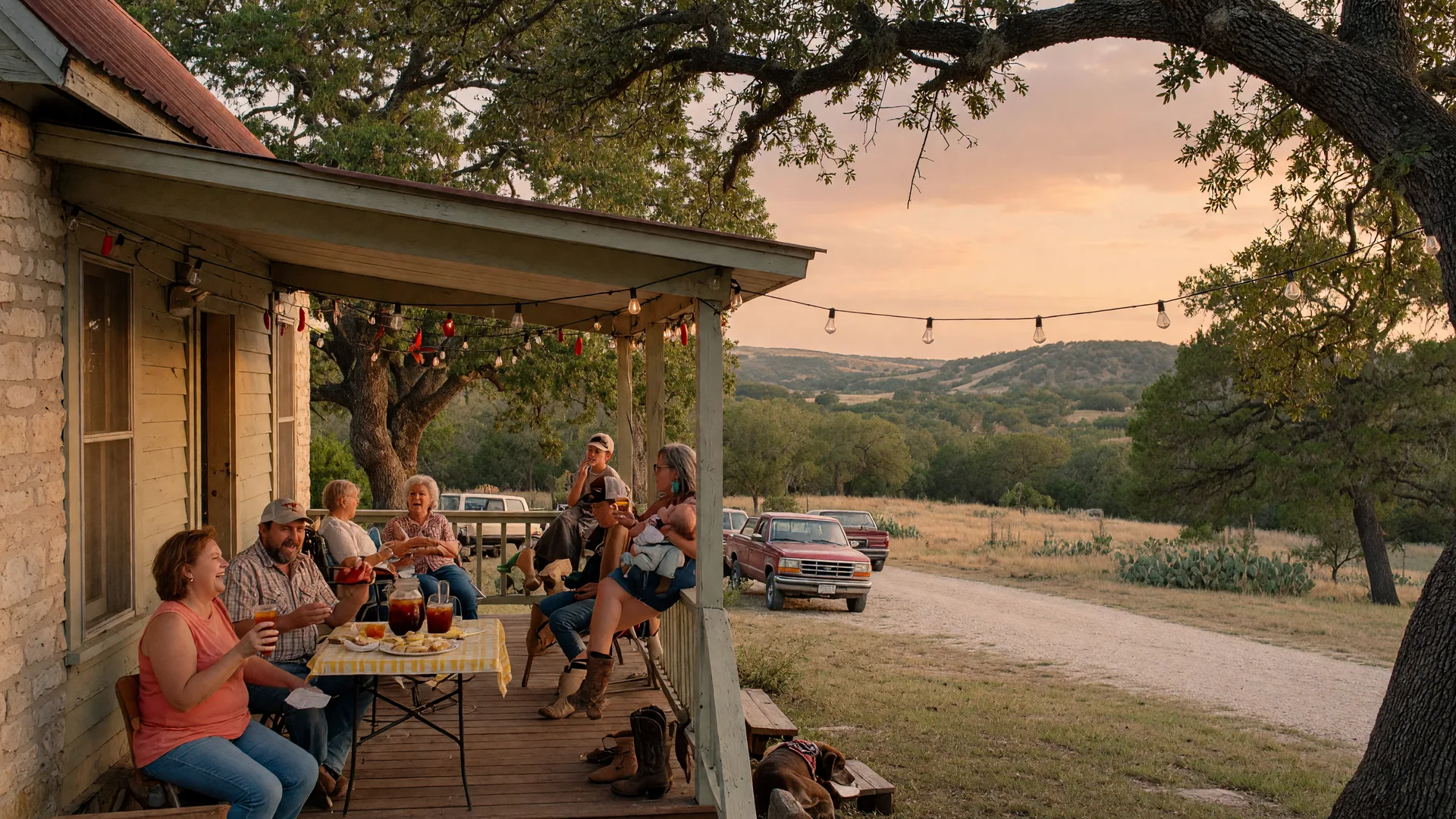
Every California transplant I have worked with tells me the same thing about their first month in the Texas Hill Country: everyone is friendly, but nobody is my friend yet.
This is not a complaint. It is an honest description of a social landscape that operates on different assumptions than what most Californians are used to. The wave from the pickup truck. The ten-minute conversation at the H-E-B checkout. The neighbor who brings a plate of kolaches on your second morning. These moments are real, and they are warmer than anything most Californians experienced in their previous suburbs. But warmth is not the same as connection, and the gap between being welcomed and belonging is where the real adjustment happens [1][2].
This article is about how social circles actually form in the Hill Country, what California transplants get wrong about the process, and the practical steps that turn friendly strangers into genuine friends. It is based on dozens of conversations with families who have made this transition, plus the available community resources that exist specifically to help newcomers integrate.
The Southern Hospitality Paradox
Let me start with the thing nobody warns you about, because it sounds like a contradiction until you experience it: the Hill Country may be the friendliest place you have ever lived, and also one of the hardest places to make close friends as an adult [1][3].
Both statements are true. The friendliness is genuine and pervasive. Strangers make eye contact. Cashiers ask about your day and wait for the answer. Neighbors wave from their driveways even before they know your name. In San Antonio, the habit of greeting people on the street is so deeply embedded that transplants from less effusive regions often wonder if they are being singled out for special attention. They are not. That is just how people interact here [2].
But friendliness and friendship are not the same thing. Texas social culture is built on a foundation of courtesy and openness that applies broadly to everyone. The person at the coffee shop who remembered your order after one visit is not necessarily offering a deeper relationship. They are practicing the social script that Hill Country culture runs on — one where acknowledgment and warmth are the default, not an invitation to intimacy [1][3].
The real challenge is that established social circles in Hill Country communities are, for understandable reasons, somewhat closed. Many residents have lived in the same county for decades. Their friends are people they grew up with, went to church with, or met through their children's schools years ago. These are not exclusionary communities — they are simply complete. The people in them do not need new friends the way a transplant does, and they are not actively recruiting [3][5].
A California transplant moving into this environment experiences a specific kind of loneliness. You are surrounded by warmth. People are kind to you. But the deep, unguarded friendships that you took for granted in California require a level of persistence and intentionality that most transplants do not anticipate [4][13].
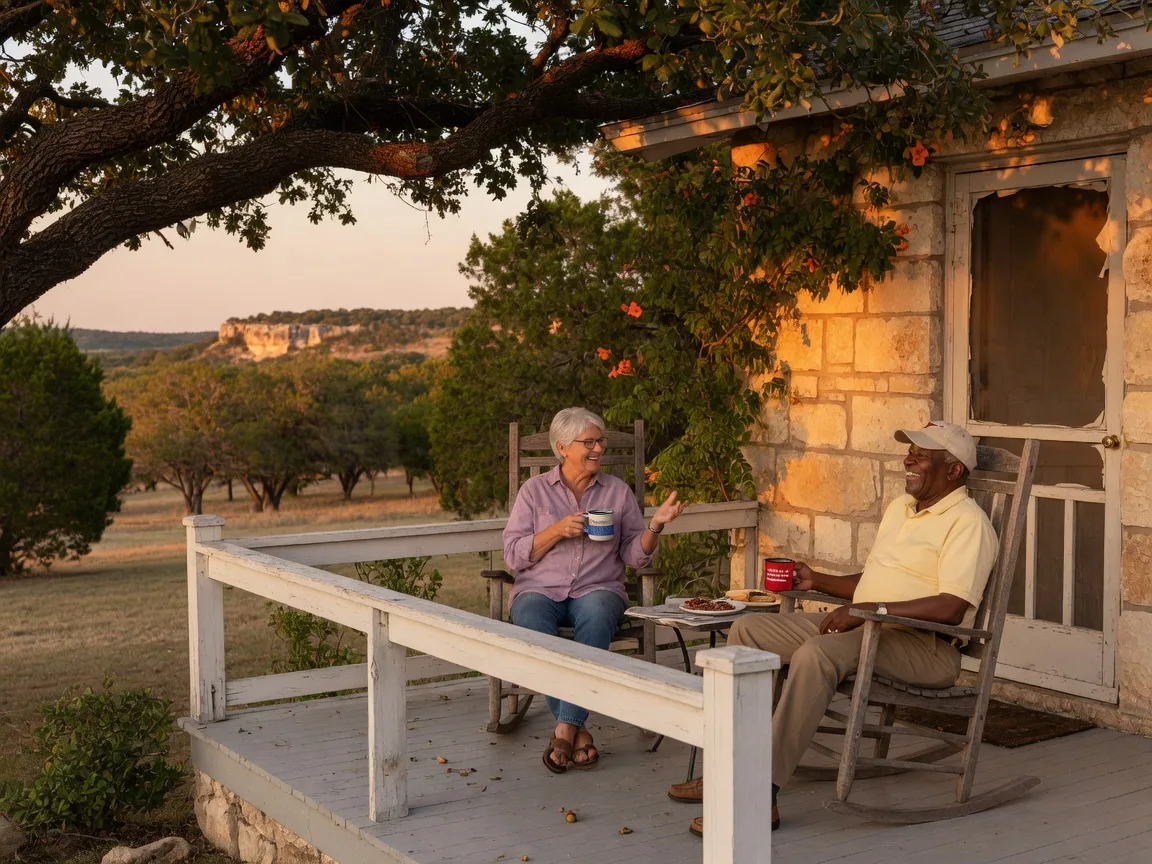
Where Hill Country Friend Circles Actually Come From
In California suburbs, adult friendships tend to form through proximity and convenience. You meet people at the dog park, at the gym, through your kids' school, at work, or at the neighborhood block party. The density of people and the frequency of casual encounters mean that friendships can form almost passively. You do not need to try very hard because the environment does some of the work for you.
In the Hill Country, the geography works against passive friendship formation. Lots are larger. Distances are greater. The daily routine does not produce the same density of casual encounters. Your neighbors may be physically closer in terms of community, but the distance from your front door to theirs is larger, and the spontaneous crossing of paths is less frequent [3][4].
This means that friendships in the Hill Country form through intentional structures. The most common channels are:
- Church or faith community: In the Hill Country, church is the single most common source of adult friendships — not just for spiritual reasons, but because churches organize the recurring social gatherings, small groups, and service projects that produce repeated exposure to the same people over time. If you are religiously inclined, joining a local congregation is the fastest path to a social network. The major denominations in Boerne and Kendall County include several large, active congregations with dedicated newcomer integration programs.
- Kids' activities and schools: For families with children, the school community is the primary social engine. School events, sports practices, PTA meetings, and parent volunteer days create the recurring contact that friendships require. Boerne ISD and surrounding districts have active parent communities where volunteering is both expected and socially rewarding.
- Community organizations: The Hill Country Newcomers Club in Boerne is a women's social club that meets monthly and organizes interest groups — hiking, book clubs, lunch groups, and card games. It exists specifically for people who have recently moved to the area and need a way to meet others [6]. Similar organizations exist for retirees, professionals, and hobbyists.
- Fitness and recreation: The Boerne Family YMCA, Fair Oaks Ranch Golf and Country Club, and Hill Country Outdoors all offer recurring group activities that naturally produce friendships. The key is choosing an activity that meets at the same time every week, not a drop-in class with rotating attendees [7][9][10].
- Work and professional networks: Remote workers who moved from California to the Hill Country face a specific challenge: without a physical office, they lose the workplace as a source of friendships. For these transplants, intentional social structures are not optional — they are the only path to building a local network [13].
The First 90 Days: A Social Timeline
Based on the experiences of dozens of California transplants I have worked with, here is what a realistic social integration timeline looks like:
Week 1: You will experience intense friendliness from everyone you encounter. The checkout clerk will ask where you moved from. Your new neighbor will introduce themselves. You will probably receive at least one unsolicited recommendation — a handyman, a restaurant, a scenic drive. This feels like friendship is happening fast. Enjoy it, but recognize it for what it is: hospitality, not intimacy.
Month 1: The surface-level friendliness continues, but you may start to feel the gap between being welcomed and belonging. This is the most emotionally vulnerable period for California transplants. The practical advice from those who have been through it: join something. A gym class. A church small group. A volunteer shift. A meetup group. The specific activity matters less than the commitment to show up regularly. The first month is the time to plant social seeds, not to expect harvest [6][7][11].
Month 3: If you have been attending a recurring activity for two to three months, you will begin to have real conversations with the people there. You will know names. You will have shared an experience. You may have exchanged phone numbers. This is the point where surface-level acquaintance starts to edge toward friendship. It is also the point where many transplants get discouraged, because three months of effort can feel like it should have produced more than it has. The ones who push through this period are the ones who have a social network by month nine.
Month 6: Regular interactions have become comfortable. You have had dinner at someone's house, or invited someone to yours. You have a small collection of contacts — maybe three to five people you would text about a weekend plan. This is not yet a deep social circle, but it is the foundation of one.
Month 12: Most California transplants who invested in recurring activities during the first six months report having a genuine social network by the one-year mark. It may not look like the network they left behind in California — it may be smaller, more intentional, and centered around shared activities rather than casual proximity — but it is real, and it is the basis for the long-term community ties that keep people in the Hill Country [13].
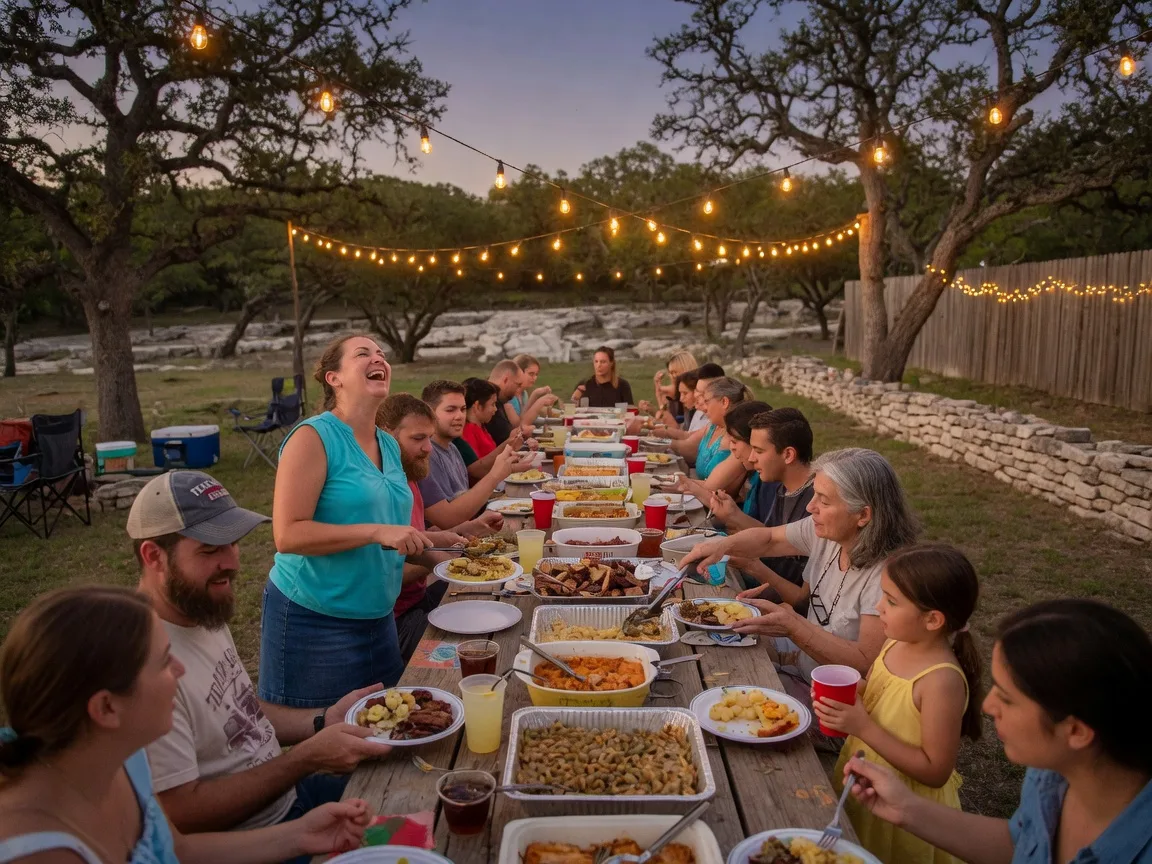
The California Connection: Fellow Transplants as a Social Bridge
One of the most useful social resources for California transplants is other California transplants. The Hill Country has attracted enough relocators from the West Coast that you will encounter them organically — at school events, in your neighborhood, at the H-E-B, and through the various relocation channels that serve the area [5][14].
Fellow transplants offer something that native Texans cannot: shared context. They understand what it means to leave behind a social network, a familiar landscape, and a way of life that was built over decades. They are navigating the same learning curve you are. The friendship that forms with a fellow California transplant often accelerates faster than friendships with native Texans, simply because the shared experience creates a natural bond [3][5].
But the California transplants who report the highest satisfaction at the two-to-three-year mark are typically those who built relationships with both groups. A social circle composed entirely of fellow Californians can become a bubble that insulates you from the community you moved to. The ideal balance is a transplant peer group for empathy and shared experience, combined with Texas-native friends for deeper integration, local knowledge, and the kind of long-term community roots that transplants cannot build on their own [5].
Where to find fellow transplants: Boerne and Fair Oaks Ranch neighborhoods with newer construction tend to have higher concentrations of out-of-state buyers. School pickup lines, neighborhood social events, and local Facebook groups are the most common points of connection. There is no formal California transplant association in the Hill Country, but the informal network is large enough that mentioning where you are from will reliably produce "us too" responses [5][14].
Where to Start: Specific Entry Points in the Hill Country
The following are real, active organizations and venues where California transplants have successfully built social networks. This list is not comprehensive, but it covers the most common entry points by demographic:
For adults of any age
- Hill Country Newcomers Club (Boerne) — A women's social club that meets monthly at St. Mark Presbyterian Church. Interest groups include hiking, book clubs, dining out, bridge, and mahjong. This is the single most effective entry point for women moving to the area [6].
- Boerne Family YMCA — Group fitness classes, pickleball, youth programs, and community events. The YMCA functions as a community hub in Boerne, and regular attendees report that classes produce reliable social connections within 6 to 8 weeks [7].
- Boerne Parks and Recreation — Adult sports leagues, cultural events, family movie nights, and seasonal festivals. Low commitment, low cost, and designed for community participation [12].
- Hill Country Outdoors — Organizes hiking, biking, and kayaking events across the Austin and Hill Country area. High proportion of transplant participants [10].
For families with children
- Boerne ISD school volunteer programs — PTA, booster clubs, classroom volunteering, and school events. School communities in Boerne ISD are active and parent participation is the norm, not the exception. This is the primary social engine for families with school-age children.
- Youth sports leagues — Boerne Soccer Club, Boerne Little League, Boerne Area Youth Football. The time commitment is substantial, but so is the social return.
- Fair Oaks Ranch Golf and Country Club — Youth programs, swim team, tennis, and social events for member families [9].
For retirees and empty nesters
- The Center Boerne (Kronkosky Place) — Social, fitness, and cultural programs for adults 55 and older. Includes classes, lunch programs, day trips, and volunteer opportunities [8].
- Boerne Public Library — Book clubs, lecture series, and community events. The library functions as a low-barrier social entry point for retirees.
- Local churches and faith communities — For those who are religiously inclined, the Hill Country's many congregations offer the most comprehensive social infrastructure available for retirees, including small groups, volunteer networks, and social events.
For remote workers and professionals
- Boerne Chamber of Commerce — Networking events, business mixers, and community leadership programs. Useful for both business owners and professionals who want to meet people outside their immediate industry.
- Coworking spaces — Several coworking spaces have opened in Boerne and the surrounding area, attracting the growing remote-worker population. These are natural venues for meeting other transplants who share the work-from-home lifestyle.
- San Antonio professional organizations — For professionals willing to drive into San Antonio, the city offers industry-specific networking groups, young professional organizations, and continuing education events that draw attendees from across the metro area.
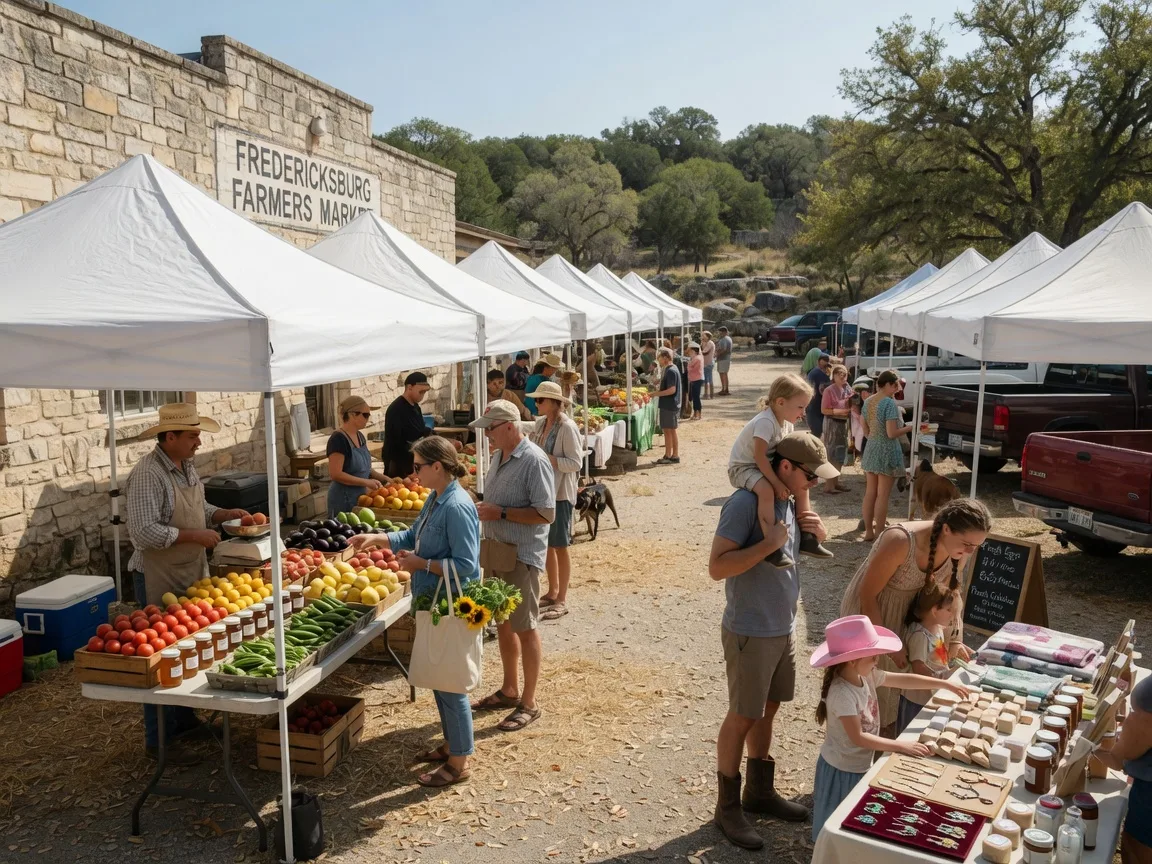
The Introvert's Guide to Making Friends in Texas
If you are introverted, the prospect of joining a newcomer club, attending a church social, or introducing yourself at a fitness class may sound worse than the solitude. That is fair. But there are lower-intensity paths that work:
- Activity-based groups — Groups that center on an activity rather than conversation reduce the social pressure. A hiking group, a cycling club, or a volunteer trail-cleaning day gives you something to do with your hands while conversation happens in the margins. The social connection builds naturally over shared experience rather than forced small talk [10].
- Library events and lectures — Attending a talk or a book club meeting requires no self-introduction. You can sit in the back, listen, and leave. Over time, the familiar faces become recognizable, and conversation can start around the subject rather than around you personally.
- Volunteering — Animal shelters, food banks, and conservation organizations need help and are grateful for it. Volunteering gives you a role and a purpose, which makes the social dynamic easier for introverts. The Boerne Feral Cat Coalition, Kendall County Food Pantry, and Cibolo Creek Watershed Association are all active volunteer opportunities in the area.
- The one-relationship strategy — You do not need to build a social network all at once. If you make one genuine friend in your first three months, that friend will eventually introduce you to others. Focus on quality over quantity, and give yourself permission to move slowly.
The Hidden Social Rules Californians Miss
Every region has unspoken social norms, and California transplants in the Hill Country consistently trip over a few of them:
Reciprocity matters more than you think. When a Texas neighbor brings you food or offers help, the expectation is not that you repay immediately, but that you acknowledge the gesture and reciprocate at some future point. Letting a kindness go unacknowledged reads as ungrateful. A handwritten thank-you note is never the wrong move.
Invitations are tests as much as offers. When a Hill Country acquaintance invites you to a barbecue or a community event, they are genuinely offering hospitality. But they are also testing whether you are open to becoming part of the community. Transplants who decline two or three invitations in a row are often not invited again. The signal sent is not that you are busy, but that you are not interested in building a relationship. If you cannot attend, a specific counter-offer — "we cannot make Saturday, but are you free the following weekend?" — preserves the social opening.
Volunteering is a social currency. In California suburbs, volunteering is often an individual choice. In the Hill Country, community participation is more structurally embedded. The volunteer fire department, the church potluck committee, the youth sports booster club, and the school fund-raising drive are how community happens. Participating in these activities is how you move from being a resident to being a neighbor.
Politics and religion come up differently. In California social culture, politics and religion are often treated as private matters that are discussed only with close friends. In Hill Country social culture, they are more likely to surface early in conversations, sometimes in ways that make transplants uncomfortable. The most productive response is not to avoid the topics entirely, but to engage with curiosity rather than argument. Transplants who treat these conversations as opportunities to understand local culture, rather than debates to win, build social credit faster [5].
What the Research Says About Adult Friendship
The difficulty of making friends as an adult is not unique to Texas or to California transplants. It is a documented feature of modern American life. Research in psychology and sociology consistently finds that adult friendships require three conditions: repeated proximity, unstructured conversation time, and a context that encourages vulnerability [13].
California suburbs satisfy these conditions passively — high density, walkable neighborhoods, frequent casual encounters. Hill Country communities require more intentional effort to create the same conditions. The underlying human need is the same; the mechanism for satisfying it is different.
What the research also shows is that the quantity of friendships matters less than the quality. A 2023 study on relocation and social health found that adults who made three to five close friends within their first year in a new location reported life satisfaction scores comparable to those who never moved. The critical threshold is not having a large network — it is having reliable, reciprocal relationships with people who know your circumstances and care about your well-being [13].
For California transplants in the Hill Country, this is encouraging news. You do not need to replicate the broad social network you may have spent decades building in California. You need a small number of people who genuinely know you. That is achievable within the first year if you are intentional about it.
Advice from California Transplants Who Made It Work
Over the course of working with California buyers relocating to the Hill Country, I have collected the following advice from families who successfully built social networks here. These are not theories. They are what actually worked:
- "Say yes to everything in the first three months." The most common piece of advice from successful transplants. Every invitation, every neighborhood event, every school function, every church social. Say yes even when you are tired, even when it is easier to stay home. The first three months are the window in which people are actively extending invitations. After that, the invitations slow down because people assume you are settled [4].
- "Pick one recurring activity and do not miss it." The trap is joining too many groups and attending each one inconsistently. Better to join one thing and show up every time than to join five things and rotate. The friendships come from the people who see you reliably, not from the people who see you occasionally.
- "Be the initiator, not the wait-er." Californians are accustomed to environments where friendships form organically. In the Hill Country, you need to initiate. Invite a neighbor for coffee. Suggest a group hike. Organize a block party. Propose a book club. The people who wait for friendship to happen to them often wait a long time [11].
- "Give it a year." Almost every California transplant who has been in the Hill Country for two years or more describes the first year as socially difficult and the second year as substantially better. The first year is the investment phase. The second year is when the investment starts to pay returns. The families who quit in month eight and move back to California often do so one season too early.
- "Volunteer for something that matters to you." Not just because it helps the community, but because volunteering alongside other people is one of the most efficient friendship-formation mechanisms available. The shared purpose creates natural conversation and mutual respect that does not require the social performance of a cocktail party.
The Investment That Compounds
Making friends in a new place is not a side benefit of relocation. It is the primary determinant of whether the move succeeds. Every study on geographic mobility and life satisfaction reaches the same conclusion: people who build strong social connections in their new location report higher well-being, lower stress, and greater persistence through the difficult early months [13].
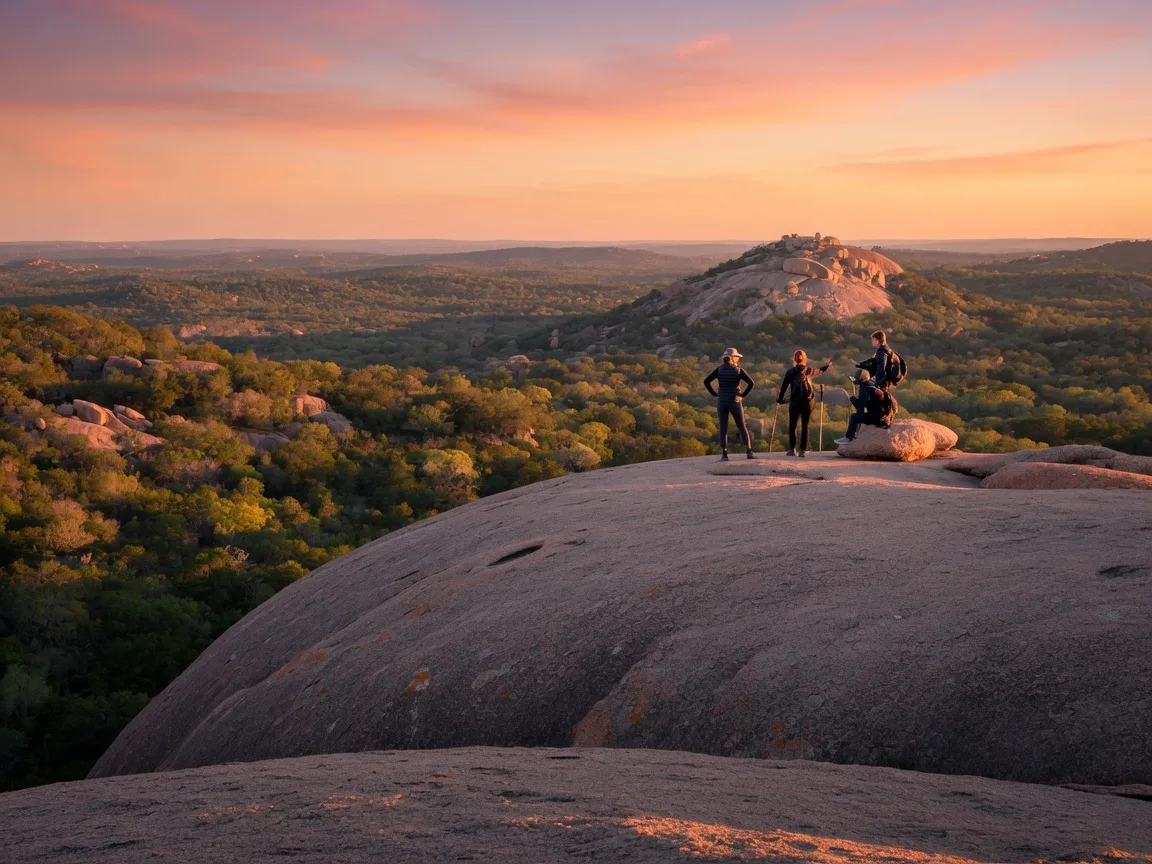
The Hill Country offers an unusually fertile ground for friendship, once you understand how the social landscape works. The warmth is real. The community structures are in place. The other transplants are out there. The missing ingredient is almost always intentionality: the willingness to show up, to extend the invitation, to accept the casserole, and to keep trying past the point where it feels awkward.
The driveway moment — the recognition that your physical world has changed — has a social parallel. It happens the first time a Texas friend texts you unprompted, the first time someone saves you a seat at an event, the first time you realize you are no longer the new person. That moment takes longer than the driveway moment. But it comes, and when it does, it is the one that makes a house feel like home.
Ready for the Move? The Social Side Matters as Much as the Financial Side.
Every relocation involves a period of social adjustment that is harder than people admit. Having a realistic picture of what that looks like — how long it takes, where to start, and what to expect — is worth more than any checklist.
If you are evaluating a move from California to the Hill Country, I can walk you through what the transition looks like in practice, including the social landscape of specific neighborhoods and communities. I have guided dozens of California-to-Texas transitions, and I can tell you which communities have the strongest newcomer networks, which school communities are most welcoming, and where you are most likely to find your people.
For more on the day-to-day adjustment, see our guides on the Texas Driveway Moment and HOA Culture Shock. For community-specific recommendations, review the Downtown Boerne guide and the Fair Oaks Ranch community guide.
Written by
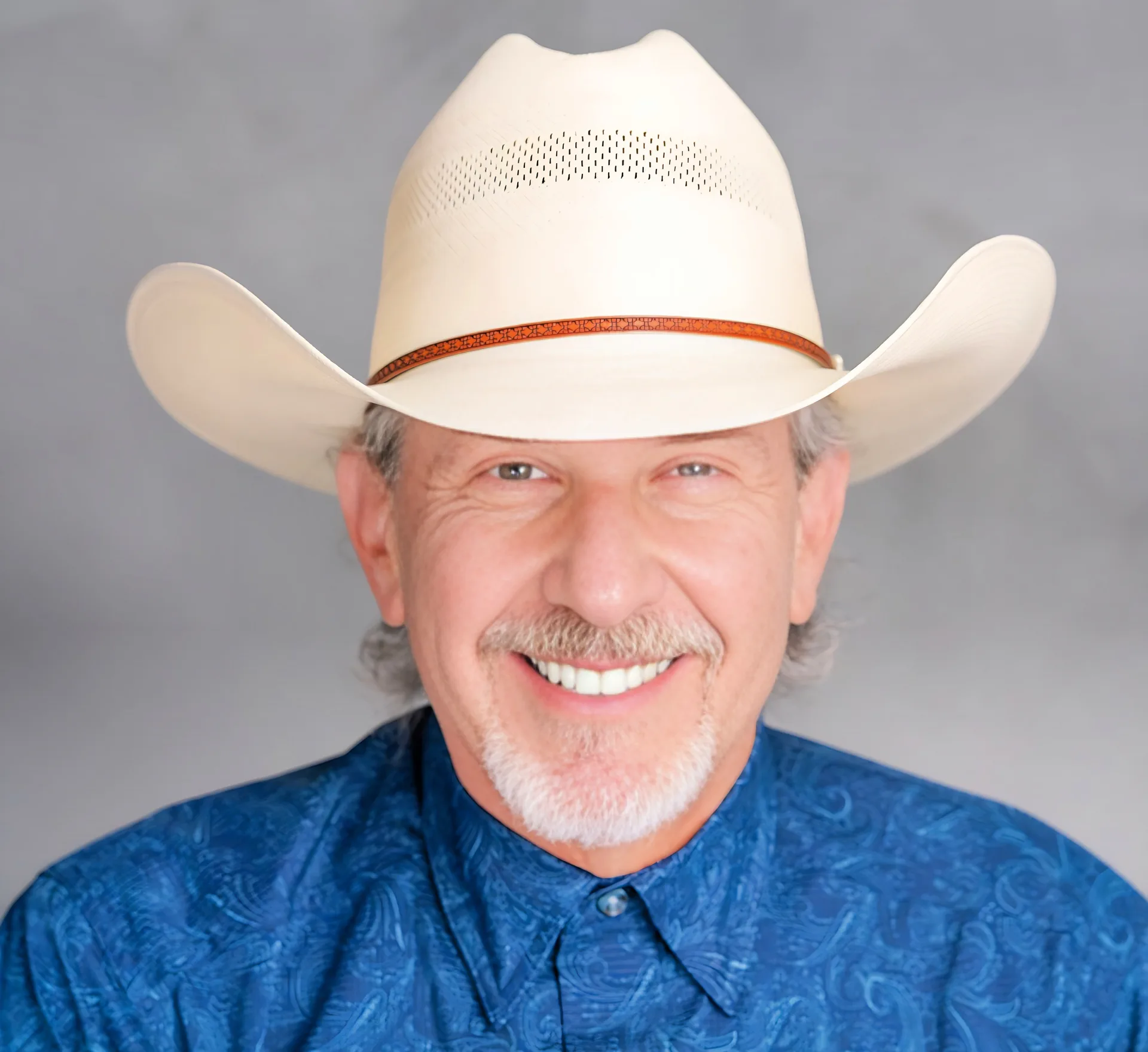
Bill Ross
Hill Country Homesteads Group, brokered by KW Boerne
Bill Ross is a Texas real estate agent with nearly four decades in high-tech sales and a network of 1,000+ California real estate agents for coordinated cross-state transactions. Featured in national coverage discussing his family's relocation from Silicon Valley to the Texas Hill Country.
Related Guides
The Texas Driveway Moment
What Californians notice the first week they live in the Hill Country, from lot sizes to H-E-B to the neighbor who walks over.
The Social Calendar Reset
How the events calendar, weather, and community life change by season when moving from California to Texas.
Fair Oaks Ranch Community Guide
Home prices, neighborhoods, schools, and daily life in Fair Oaks Ranch for California relocators.
Downtown Boerne: Local Life on the Hill Country Mile
A practical guide to daily life in downtown Boerne — the shops, restaurants, trail, and community rhythm.
Frequently Asked Questions
These are the social questions I hear most from California buyers during their first months in the Hill Country. The patterns are consistent, and the answers are grounded in real experience.
How long does it typically take for California transplants to build a meaningful social circle in the Texas Hill Country?
Most transplants report that surface-level friendliness is immediate, but genuine friendships take 6 to 12 months to solidify. The first three months are the hardest. By month six, regular activities like a weekly hiking group, a church small group, or a regular coffee spot begin producing repeat interactions. By the one-year mark, most California transplants report having at least two to three close friends and a broader network of acquaintances. The key variable is intentionality: those who join one or two recurring groups in their first month integrate significantly faster than those who wait for friendships to happen organically.
Is it harder to make friends in a small town like Boerne versus a city like San Antonio?
The short answer is that both have trade-offs. In Boerne and smaller Hill Country towns, existing social circles are tighter and often rooted in multi-generational family ties, church membership, or local school communities. Breaking in requires more intentional effort, but the friendships that form tend to be deeper and more durable. In San Antonio, the sheer population density means more potential social entry points — Meetup groups, professional organizations, fitness classes, cultural events — but the relationships can be more transactional and harder to deepen. The California transplants who integrate fastest in the Hill Country often start with one anchor community, such as a church, a club, or a regular volunteer commitment.
What is the best single step a California transplant can take in their first month to build a social network?
Join a recurring activity that requires showing up at the same time and place every week. The specific activity matters less than the recurrence. A weekly hiking group through Hill Country Outdoors, a Sunday service at a local church, a weekly yoga class at the Boerne YMCA, or a monthly book club through the Hill Country Newcomers Club all produce the repeated exposure that friendships require. One-time events like a festival or a concert are enjoyable but rarely produce lasting connections on their own. The mechanism that works is seeing the same faces every week until conversation becomes natural.
Do California transplants tend to cluster together, or do they integrate into existing Texas friend groups?
Both patterns are common. The Hill Country has a large enough California transplant population — particularly in Boerne and Fair Oaks Ranch — that it is easy to find fellow transplants. Many California buyers report that their first close friends in Texas were other Californians they met through their kids' school, a neighborhood gathering, or a transplant-specific Facebook group. However, the transplants who report the highest satisfaction at the two-year mark are typically those who also built relationships with native Texans. The combination of a transplant peer group (for shared experience) and local Texas friends (for deeper community integration and practical knowledge) produces the strongest social foundation.
What is the biggest mistake California transplants make socially in their first year?
The most common mistake is waiting. California transplants accustomed to dense, walkable social environments often expect friendships to form through casual proximity — neighbors met at the mailbox, colleagues at the office, parents at the school pickup line. In the Hill Country, where distances are greater and daily routines are less dense, those casual encounters happen much less frequently. The transplants who struggle are the ones who wait for friendships to happen to them. The ones who thrive are the ones who join a group, introduce themselves to a neighbor, attend a community event, and treat social integration as something that requires the same intentionality as finding the right home.
Sources
- Moving from California to San Antonio: Social Integration Challenges — LivingInSATX.com (2025). livinginsatx.com/moving-from-california-to-san-antonio/
- San Antonio Friendly Culture and Southern Hospitality — MySA.com (2024). www.mysanantonio.com/news/local/article/San-Antonio-friendly-hi-nod-southern-hospitality-16183103.php
- Is It Hard to Make Friends in San Antonio? — City-Data Forum (2025). www.city-data.com/forum/san-antonio/2575695-hard-make-friends.html
- Making Friends After Moving to San Antonio — A1 Freeman Realty (2025). www.a1freemansanantonio.com/blog/making-friends-after-moving-to-san-antonio
- Californians Could Ruin Texas — But Not the Way You Might Think — Texas Monthly (2024). www.texasmonthly.com/news-politics/californians-could-ruin-texas-but-not-the-way-you-might-think/
- Hill Country Newcomers Club — Boerne, TX — HillCountryNewcomers.com (2025). www.hillcountrynewcomers.com/
- Boerne Family YMCA Programs — YMCA of Greater San Antonio (2025). ymcasatx.org/boerne
- The Center Boerne — Kronkosky Place for Adults 55+ — TheCenterBoerne.org (2025). thecenterboerne.org/kronkosky-place/
- Fair Oaks Ranch Golf & Country Club — Social and Youth Programs — InvitedClubs.com (2025). www.invitedclubs.com/clubs/fair-oaks-ranch-golf-country-club/club-life/youth-family/
- Hill Country Outdoors — Social and Outdoor Events — HillCountryOutdoors.com (2025). hillcountryoutdoors.com/how-it-works/join-a-community/
- Boerne Love — Community Events and Women's Social Activities — BoerneLove.org (2025). www.boernelove.org/new-events-1
- Boerne Parks and Recreation Programs — City of Boerne, TX (2025). www.ci.boerne.tx.us/1192/Programs-and-Events
- How Social Isolation Affects Relocation Success — Psychology Today (2024). www.psychologytoday.com/us/basics/social-isolation
- San Antonio Population Growth and Demographic Shift — U.S. Census Bureau / San Antonio Express-News (2024). www.expressnews.com/business/article/san-antonio-population-growth-census-18514278.php
Last reviewed: July 2026. Community organizations, meeting times, and program availability may change. Verify current schedules and membership information directly with each organization.