
Published:
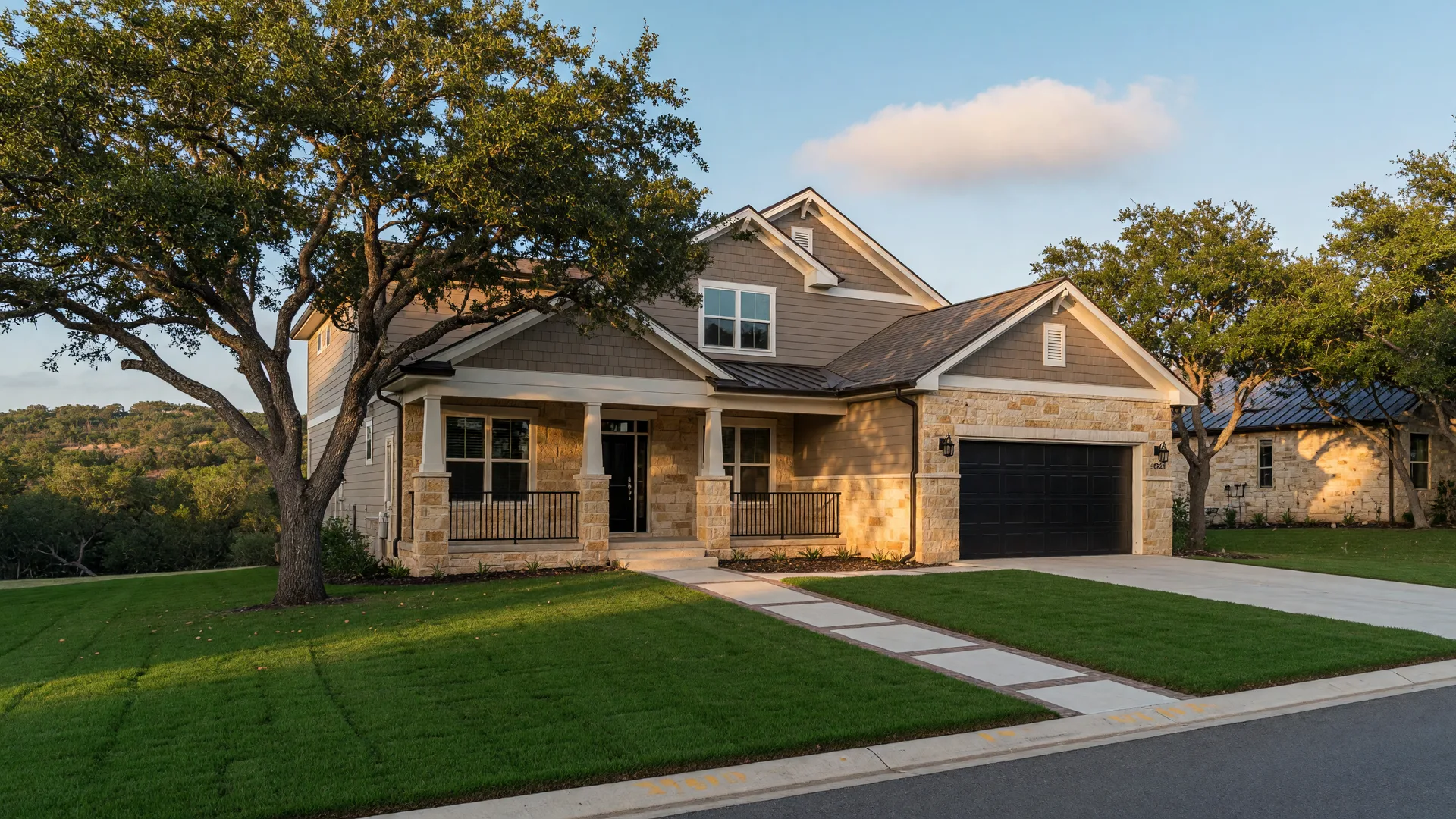
If you are a California investor weighing a Texas rental property, the honest 2026 headline is this: the landlord laws are friendlier to owners than California's, the cash-flow math is strongest in the San Antonio metro rather than the Hill Country towns, and the property tax line is the one that surprises people, because a rental does not get the homestead exemption that an owner-occupied home gets [16][17]. Texas has no rent control, a routine nonpayment eviction can move through a justice court in weeks rather than months, and a median-priced San Antonio single-family home can show a gross yield near 7.5 percent, while the same exercise in Boerne sits closer to 5 [4][6][8][12].
I am Bill Ross, a Texas real estate agent serving Boerne, Fair Oaks Ranch, San Antonio, and the surrounding Hill Country, and I work with California families on both sides of this question: the ones moving here to live, and the ones moving their money here while they stay in California. This article is the framework I use when an investor asks whether a Texas rental makes sense in 2026. We will cover the landlord law that actually differs, the yield picture across the metro, the tax lines that change when a home is a rental, the operating costs, the financing reality, and a return model with the numbers visible. No hype, no promises of passive riches. Just the rules and the math.
The First Recalibration: Texas Landlord Law Is Not California Landlord Law
California investors arrive conditioned by statewide rent caps, just-cause eviction rules, and a thicket of local ordinances. Texas runs the opposite philosophy, and the first step is to unlearn the California assumptions, not layer them on top of Texas rules. The most consequential difference is rent control: state law generally prohibits Texas cities and counties from enacting it, no Texas city currently has it, and your lease is the document that sets the rent and the renewal terms [4][5].
The security deposit rules are straightforward but specific. Texas sets no general statutory cap on deposit amounts, but the deposit must be refunded on or before the 30th day after the tenant surrenders the property, once the tenant has given you a written forwarding address, and you must provide a written itemized list of damages and charges in the same window [1][2]. Deductions are limited to actual damages beyond normal wear and tear, unpaid rent, and other obligations in the lease. Retain a deposit in bad faith, or fail to provide the itemization, and the landlord is liable for $100 plus three times the portion wrongfully withheld plus the tenant's reasonable attorney's fees, with bad faith presumed when the refund or itemization is not provided within the 30 days [3].
Late fees follow a three-part test: the fee must be written into the lease, it must be reasonable, and rent must have gone unpaid for more than two full days after it came due. A late fee is presumed reasonable at up to 12 percent of the rent in buildings with four or fewer units, and up to 10 percent in larger buildings [4]. Eviction runs through Property Code Chapter 24, the forcible entry and detainer process in the justice court for the precinct where the property sits, and before filing, the owner gives a written notice to vacate, at least three days for nonpayment unless the lease requires more [6][7]. One rule matters in both directions: a landlord may not use self-help to remove a tenant or change the locks, so the court process is the only lawful path [6].
The Texas Rules California Owners Actually Trip Over
| Topic | Texas rule | What it means for an owner |
|---|---|---|
| Rent control | Prohibited for cities and counties by state law; no Texas city has it [4][5] | The lease, not a statute, governs rent and renewals; between leases you set the number |
| Security deposit return | Refund plus itemized damages within 30 days of surrender and a written forwarding address [1][2] | Miss the window and bad faith is presumed, with triple damages and attorney's fees [3] |
| Late fees | Must be in the lease, reasonable, and charged only after rent is more than 2 days late [4] | A fee over the presumed cap can be unenforceable, so write the lease correctly |
| Eviction | Three-day notice to vacate for nonpayment, then a justice court forcible entry and detainer suit [6][7] | Routine cases move in weeks; no self-help lockouts or utility shutoffs are allowed [6] |
Summarized from the Texas State Law Library landlord-tenant guides and the cited Property Code sections [1][2][3][4][5][6][7]. This is general information, not legal advice; have a Texas attorney review your lease form before your first tenant signs.
The Yield Math: San Antonio vs. Boerne vs. Fair Oaks Ranch
Where you buy is the single biggest determinant of whether a rental makes sense, and the price-to-rent ratio, not the neighborhood's reputation, is the number that tells you. Late-2026 market reporting (FRED/Realtor.com, September 2026) puts the San Antonio metro median listing price near $320,000, with the city of San Antonio median sale price closer to $265,000 and single-family rents averaging around $2,000 a month, which implies a gross yield near 7.5 percent and a price-to-rent ratio around 12 times [8][9][10][11]. That is the cash-flow side of the region, and it is why investors shop the San Antonio zip codes rather than the Hill Country towns.
The Hill Country towns are a different asset class entirely. Boerne's median sits near $575,000 with typical rents closer to $2,350, an implied gross yield around 5 percent and a price-to-rent near 20 times [12][13]. Fair Oaks Ranch is more extreme: median values near $700,000, a rental market so thin that most of the community is owner-occupied, and an implied gross yield in the low single digits [14][15]. None of this makes Boerne or Fair Oaks Ranch wrong. It makes them appreciation plays rather than cash-flow plays, and an investor who buys there for rent alone will be disappointed [12][14].
The 2026 Snapshot for Single-Family Rentals
| Location | Median home price (mid-2026) | Typical monthly rent, single-family | Implied gross yield | Price-to-rent |
|---|---|---|---|---|
| San Antonio metro | ~$320,000 (median listing) | ~$2,000 | ~7.5% | ~12x |
| Boerne | ~$575,000 | ~$2,350 | ~5% | ~20x |
| Fair Oaks Ranch | ~$700,000 | Very thin rental market | ~3-4% | 25x+ |
Mid-2026 estimates compiled from the cited market reports [8][9][10][11][12][13][14][15]. Gross yield is annual rent divided by price; it is before vacancy, property taxes, insurance, management, and maintenance. Fair Oaks Ranch rental data is thin because the community is overwhelmingly owner-occupied, so treat that yield as an estimate, not a published figure [14][15].
The Tax Lines That Look Different on a Rental
This is the section that changes investor expectations. Texas property taxes apply to every parcel, but the exemptions and caps that make owner-occupied homes affordable simply do not exist on a rental. The homestead exemption is limited to the property that is the owner's principal residence, so a rental is assessed and taxed on 100 percent of its appraised value [16][17]. For 2026, the school homestead exemption on a primary residence is $140,000, and the 10 percent cap on annual appraisal increases applies to homesteads only, meaning a rental enjoys neither the exemption nor the cap [18][19].
The rate itself is worth planning around. Because Texas has no state income tax, property taxes carry more of the load, and the statewide average effective rate is roughly 1.63 percent, well above the national average near 0.99 percent [18]. On a $320,000 rental at about 1.7 percent, the annual tax line lands near $5,400, and it rises as the appraisal rises, with the county appraisal district revaluing each year. There is one legitimate offset: the federal depreciation deduction. Residential rental property depreciates on a 27.5-year straight-line schedule, which generates a paper loss that can shelter a meaningful share of the rental income on your federal return, so the after-tax picture is more favorable than the before-tax line suggests [17]. Run both numbers with your CPA before you commit.
Owner-Occupied vs. Rental: The Texas Tax Treatment
| Provision | Owner-occupied primary residence | Rental / investment property |
|---|---|---|
| Homestead exemption | Yes, on your principal residence [16] | No; taxed on 100% of appraised value [17] |
| 2026 school exemption | $140,000 [18][19] | Not available |
| 10% appraisal-increase cap | Applies to homesteads [18] | Does not apply |
| Depreciation | Not applicable | 27.5-year straight-line deduction [17] |
Exemption and cap rules from the Texas Comptroller, Texas Law Help, and the 2026 law-change summary [16][17][18][19]. Our homestead exemption guide and the line-by-line property tax comparison cover the owner-occupied side in full.
The Operating Line: Management, Insurance, and Maintenance
A California owner managing a Texas rental from 1,500 miles away should not try to do it personally. Property management companies in Texas typically charge 8 to 12 percent of collected rent for ongoing management of a single-family home, plus a separate tenant-placement fee, often 50 to 100 percent of one month's rent, when they find the tenant [22]. That management line is not optional overhead; it is the difference between a property that runs and a property that bleeds, and a licensed manager also keeps the Chapter 92 paperwork disciplined, the deposits itemized, and the notice timelines met [1][22].
Insurance is the second cost California owners underestimate. A landlord policy, the dwelling fire or DP-3 form, covers the structure and liability but not the tenant's belongings, and for a $300,000-class single-family rental in Texas typical premiums run roughly $1,300 to $2,500 a year depending on location, rebuild cost, roof age, and wind and hail exposure [23]. The roof and the air conditioner are the two Texas-specific budget lines: hail claims and hot summers make both more expensive to replace than California owners expect. A sensible reserve is 10 percent of collected rent set aside for maintenance and capital items, and properties on well, septic, or in wind-exposed Hill Country pockets need their own allowances, which our insurance comparison and insurance stack guide break down.

The Annual Cost Lines for a Typical Texas Rental
| Cost line | Typical range in 2026 | Notes for a California owner |
|---|---|---|
| Property management | 8-12% of collected rent, plus a placement fee [22] | The practical way to own from out of state; verify the firm is licensed and insured |
| Landlord insurance | ~$1,300-2,500 a year [23] | DP-3 policy; roof age and wind and hail exposure move the premium |
| Property taxes | ~1.7% of value, no exemptions [17][18] | Full appraised value; revalued annually with no homestead cap |
| Maintenance reserve | ~10% of collected rent | Roof, HVAC, and plumbing are the big-ticket items in Texas heat |
Management and insurance ranges from the cited industry sources [22][23]; the maintenance reserve is a common owner budgeting practice rather than a published figure, so adjust it to the property's age and condition.
Financing and the California Connection
The rate environment is the other half of the 2026 math. The national 30-year fixed average sat near 7.4 percent in early October 2026 (Freddie Mac), and lenders treat investment properties as riskier, typically pricing non-owner-occupied loans about half a point to a full point above primary-residence rates, so an investment-property 30-year fixed in late 2026 generally runs in the 7.9 to 8.4 percent range [20][21]. At those rates, a 20 percent down payment is the norm for a conventional investment loan, and the debt service on a $256,000 loan at 7.5 percent lands near $1,790 a month, a number that matters a great deal against a $2,000 rent [20][21]. Our California versus Texas mortgage guide walks through how lender underwriting and qualifying differ when the income is California income and the property is in Texas.
The tax strategy questions travel with you. A 1031 exchange can defer federal capital gains when you sell one investment property and buy another, including across state lines, as long as you hit the identification and closing windows, and the details are in our 1031 exchange guide [17]. California continues to tax California-source income, so if you keep a California rental and add a Texas one, your California tax return does not disappear; the income tax nexus guide explains what stays connected to the FTB. And if the rental is part of a broader business move, the business owner guide covers entity registration and the Texas franchise tax.
A Realistic Return Model, With the Numbers Visible
Here is a transparent model for the most common California investor scenario in 2026: a median-priced San Antonio single-family home bought as a rental with 20 percent down. The point is not to promise a number, it is to show where the money goes, because the tax line and the insurance line are the two that California owners consistently underestimate. Every figure below is an illustrative estimate built from the sources cited, and your property, price, and lease will move every line.
Illustrative Annual Model, Median-Priced San Antonio Single-Family Rental
| Line | Annual amount | Basis |
|---|---|---|
| Gross rent | $24,000 | $2,000 a month, mid-2026 SFR average [10][11] |
| Vacancy allowance | -$1,200 | 5% of gross rent |
| Property management | -$2,280 | 10% of collected rent [22] |
| Property taxes | -$5,400 | ~1.7% of $320,000, no exemption [17][18] |
| Landlord insurance | -$1,800 | Mid-range DP-3 estimate [23] |
| Maintenance reserve | -$2,400 | 10% of gross rent |
| Net operating income | $11,320 | Before debt service and depreciation |
| Cap rate on $320,000 | ~3.8% | NOI divided by purchase price |
Illustrative model compiled from the cited market, tax, and cost sources [10][11][17][18][22][23]. The gross yield of about 7.5 percent shrinks to a net operating yield near 4 percent once vacancy, management, taxes, insurance, and maintenance are subtracted.
Now add the debt. On a $320,000 purchase with 20 percent down, the loan is $256,000, and an investment-property rate near 7.5 percent puts the monthly payment around $1,790, or about $21,480 a year [20][21]. Against the $11,320 net operating income, the property does not cover its debt from rent alone in this illustrative case. The honest conclusion is not that the purchase is bad, it is that at 2026 prices and rates, the median-price San Antonio rental is a principal-paydown and appreciation play that roughly breaks even on cash flow, while a property bought below the median, or in a zip code with a stronger rent ratio, is where the actual cash flow lives [8][9][10]. Add the 27.5-year depreciation deduction and the after-tax position improves further, which is exactly why the CPA conversation comes before the offer, not after [17].
How to Vet a Property and a Manager Before You Buy
Out-of-state investors should treat the pre-purchase checklist as the whole game, because a mistake discovered after closing is expensive to unwind. Start with rental comps, not sale comps: ask your agent for the actual rent history on comparable properties, then verify the specific tax bill on the subject property through the county appraisal district, because two similar homes can carry very different effective rates depending on their exemption status and history [17][18]. Check the flood, wind, and hail exposure, and read the HOA or community covenants for rental restrictions, since some Hill Country and gated communities cap or ban short-term or long-term rentals entirely [23].
Vet the manager as carefully as the property: confirm a current license through the Texas Real Estate Commission, ask how many doors the manager runs, ask what the lease form says about late fees, deposits, and entry notice, and ask for the firm's eviction track record, because a manager who is slow to file is a manager costing you months of rent [1][22]. Use the Texas option period to run your inspections, since the Texas option period is your escape hatch in a way California contingencies are not, and have a Texas attorney or title company review the title and closing package before you sign.
The Bottom Line for a California Investor
The honest summary of Texas rentals in 2026 has three sentences. The legal environment is genuinely owner-friendly: no rent control, predictable security deposit rules, and an eviction process measured in weeks rather than months [1][4][6]. The economics depend entirely on location, with the San Antonio metro offering the cash flow and the Hill Country towns offering appreciation at a yield cost [8][12][14]. And the two lines that break California investors' models are the property tax on an unexempted rental and the full cost of management, insurance, and maintenance, which together can take half the gross rent before a single mortgage payment [17][22][23].
That is the framework I use with clients, whether they are relocating their family or just relocating their capital. If you are weighing a specific property, the most useful next step is to pull the actual rent comps, the actual tax bill, and the actual insurance quote for that address, and run the model above with real numbers instead of estimates. I help California buyers and investors with that process in Boerne, Fair Oaks Ranch, San Antonio, and the surrounding Hill Country, and a direct conversation about your situation costs nothing and saves the expensive mistakes.
Related Reading
The California Investor's First Guide
The foundational look at Texas rental market dynamics, landlord law, and ROI expectations.
1031 Exchange Across State Lines
Whether you can defer capital gains moving from one investment property to another, including into Texas.
Property Tax, Line by Line
The California versus Texas property tax comparison, including what exemptions and caps change.
The Business Owner Moving to Texas
Entity registration, the franchise tax, and the zero state income tax picture for owners and investors.
Frequently Asked Questions
These are the questions that come up after the initial walk-through, the ones that show whether an investor is really reading Texas rules and numbers or just hoping they work like California's.
Does Texas really have no rent control anywhere?
Correct. State law generally prohibits cities and counties from enacting rent control, with the only exception being a municipal ordinance adopted after a declared housing emergency caused by a disaster, and no Texas city currently has one [4][5]. Your lease sets the rent and the renewal terms, and between leases a landlord may raise rent by any amount. That is one of the sharpest differences from California, where statewide and local rules cap increases and add just-cause protections for many rentals.
Can I claim the Texas homestead exemption on a rental property I do not live in?
No. The homestead exemption is limited to the property that is the owner's principal residence, and a rental is taxed on 100 percent of its appraised value [16][17]. For 2026, the school homestead exemption on a primary residence is $140,000, and the 10 percent appraisal-increase cap applies to homesteads only, so a rental does not get either protection [18][19]. Budget the tax line on the full value, not on an exempted value.
How long does it actually take to evict a nonpaying tenant in Texas?
A routine nonpayment case can move through the justice court in a matter of weeks, which is far faster than most California timelines. The owner first gives a written notice to vacate, at least three days for nonpayment unless the lease requires more, then files a forcible entry and detainer suit in the justice court for the precinct where the property sits, and after a judgment a writ of possession is executed [6][7]. One hard rule cuts both ways: a landlord may not use self-help to remove or lock out a tenant, so the court process is the only lawful path [6].
Can I own a Texas rental property while living in California?
Yes, Texas has no residency requirement for property ownership, and out-of-state owners do it routinely with a licensed local property manager [22]. Two things to plan around: California continues to tax California-source income and watches its former residents closely, so talk to a CPA about your own position, and a 1031 exchange can defer capital gains when you move from one investment property to another, including across state lines, as long as you meet the timing and like-kind rules. The manager relationship, not your distance, is what determines how the property actually runs.
What is a realistic return on a San Antonio rental in 2026?
At the late-2026 metro median listing price of roughly $320,000 with single-family rents around $2,000 a month, the gross yield is near 7.5 percent and the net operating income yield lands closer to 4 percent before debt service [8][9][10][11]. Once you add a 20 percent down payment and an investment-property loan rate near 7.5 percent, many median-priced homes roughly break even on cash flow, and the return comes from principal paydown, appreciation, and depreciation. Properties bought below the median in the right neighborhoods can cash flow more, which is why the price-to-rent ratio, not the list price, is the number to start with [8][9].
Sources
- Security Deposits, Texas State Law Library, Landlord/Tenant Law. guides.sll.texas.gov/landlord-tenant-law/security-deposits
- Texas Property Code Section 92.103, Obligation to Refund Security Deposit, FindLaw. codes.findlaw.com/tx/property-code/prop-sect-92-103/
- Texas Property Code Section 92.109, Liability of Landlord, Justia. law.justia.com/codes/texas/property-code/title-8/chapter-92/subchapter-c/section-92-109/
- Rent (late fees and rent control), Texas State Law Library, Landlord/Tenant Law. guides.sll.texas.gov/landlord-tenant-law/rent
- Texas Local Government Code Section 214.902, Rent Control, Justia. law.justia.com/codes/texas/local-government-code/title-7/subtitle-a/chapter-214/subchapter-z/section-214-902/
- The Eviction Process, Texas State Law Library, Landlord/Tenant Law. guides.sll.texas.gov/landlord-tenant-law/eviction-process
- Texas Property Code Section 24.005, Notice Required Before Filing Certain Eviction Suits, Justia. law.justia.com/codes/texas/property-code/title-4/chapter-24/section-24-005/
- San Antonio Housing Market: Prices, Inventory & Forecast, LRG Realty, Mid-Year 2026 Update. lrgrealty.com/lrg-blog/san-antonio-housing-market-mid-year-2026-update/
- Housing Market in San Antonio, Texas: 2026 Trends & Forecast, DealMachine. dealmachine.com/blog/housing-market-in-san-antonio-texas
- San Antonio Rental Market Report, sarents.com. www.sarents.com/news/san-antonio-rental-market-report
- Average Rent in San Antonio, TX, Zumper. www.zumper.com/rent-research/san-antonio-tx
- Average Rental Price in Boerne, TX, Zillow Rental Manager. www.zillow.com/rental-manager/market-trends/boerne-tx/
- Boerne, TX Housing Market, Redfin. www.redfin.com/city/2371/TX/Boerne/housing-market
- Fair Oaks Ranch Housing Market, Redfin. www.redfin.com/city/6483/TX/Fair-Oaks-Ranch/housing-market
- Fair Oaks Ranch Real Estate Market, Niche. www.niche.com/places-to-live/fair-oaks-ranch-bexar-tx/real-estate/
- Property Tax Exemptions, Texas Comptroller of Public Accounts. comptroller.texas.gov/taxes/property-tax/exemptions/
- Rental Property Tax Laws and Regulations in Texas, Steadily. www.steadily.com/blog/rental-property-tax-laws-regulations-texas
- Property Taxes and Homestead Exemptions, Texas Law Help. texaslawhelp.org/article/property-taxes-and-homestead-exemptions
- 7 Texas Property Tax Law Changes for 2026, Ballard Property Tax Protest. www.ballardpropertytaxprotest.com/post/texas-property-tax-law-changes
- Primary Mortgage Market Survey, Freddie Mac. www.freddiemac.com/pmms
- Investment Property Mortgage Rates: How Much More Will You Pay?, The Mortgage Reports. themortgagereports.com/27698/investment-property-mortgage-rates-how-much-more-will-you-pay
- How Much Do Property Managers Charge in Texas?, HomeRiver Group. www.homeriver.com/blog/how-much-do-property-managers-charge-in-texas
- Texas Landlord Insurance Cost, Plan for Freedom. planforfreedom.com/how-much-does-texas-landlord-insurance-cost/
Last reviewed: October 9, 2026. This article reflects Texas law, market reporting, and rate data as of early October 2026, and it is general information rather than legal, tax, or financial advice. Verify every rate, tax figure, and rule with the county appraisal district, a Texas attorney, and your own lender and CPA before you act. Market prices, rents, and mortgage rates change weekly.