
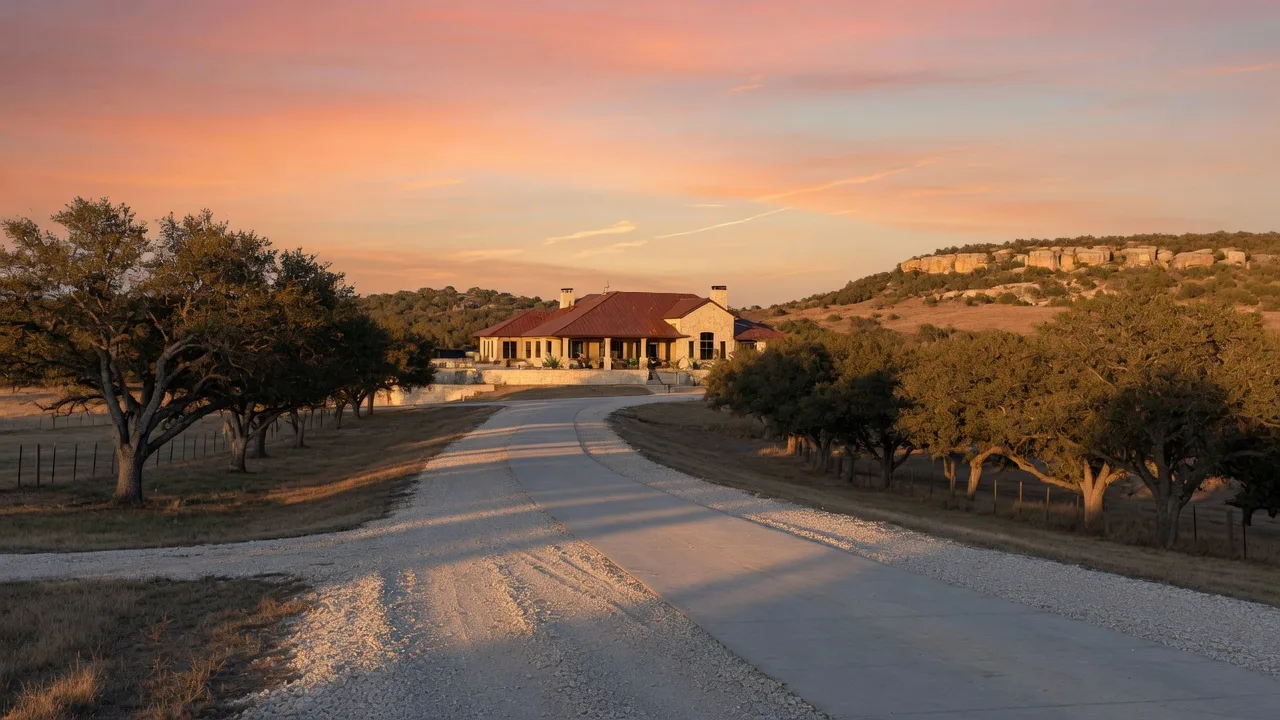
There is a moment, usually sometime on the first full day in a new house, when a California transplant steps out the front door and looks down a driveway that runs 60 or 70 feet to the street, and the move stops being a stack of logistics and becomes a felt experience. I call it the driveway moment. Every family I have helped relocate from California to the Texas Hill Country has described some version of it. The details differ, but the core realization is the same: this place operates on a different set of assumptions about space, time, and community [1][9].
This guide is organized the way the week actually unfolds, one day at a time. Not the mortgage paperwork and the closing table, those are covered in our cross-state coordination guide. This is about the daily observations that catch people off guard: the size of the property, the depth of the quiet, the shape of the grocery run, the deadlines nobody mentions, and the pace that quietly rewires your expectations.
Day 1: The Arrival and the Driveway Moment
The moving truck backs down the driveway and, for the first time, you see the distance between the street and the house with your own eyes. In the Bay Area, the median residential lot is about 4,400 square feet, roughly 0.1 acres, and in Los Angeles it is about 5,300 square feet. Many California homes share a wall, the driveway fits one car, and the backyard is a patio with a fence close enough to touch from the kitchen window [1][2].
In Boerne, subdivision lots typically run 0.15 to 0.3 acres, and newer or more rural properties frequently exceed one acre. In Fair Oaks Ranch, half-acre to two-acre parcels are common. The driveway alone is often two to three times the length of what you left behind, and the front yard is wide enough that you cannot see the details of what your neighbor is doing [3].
Lot Size Comparison: California vs. Texas Hill Country
| Location | Median Lot Size | Typical Setback from Street |
|---|---|---|
| San Jose, CA | ~4,400 sq ft (0.1 ac) | 15–20 ft |
| Los Angeles, CA | ~5,300 sq ft (0.12 ac) | 15–25 ft |
| Boerne, TX (subdivision) | 6,500–13,000 sq ft (0.15–0.3 ac) | 25–40 ft |
| Boerne, TX (newer / rural) | 20,000–40,000+ sq ft (0.5–1+ ac) | 40–80+ ft |
| Fair Oaks Ranch, TX | 20,000–80,000+ sq ft (0.5–2+ ac) | 50–100+ ft |
Sources: Mercury News / Bay Area News Group (2024); LRG Realty; New Geography (2024). Actual lot sizes vary by subdivision and zoning district.
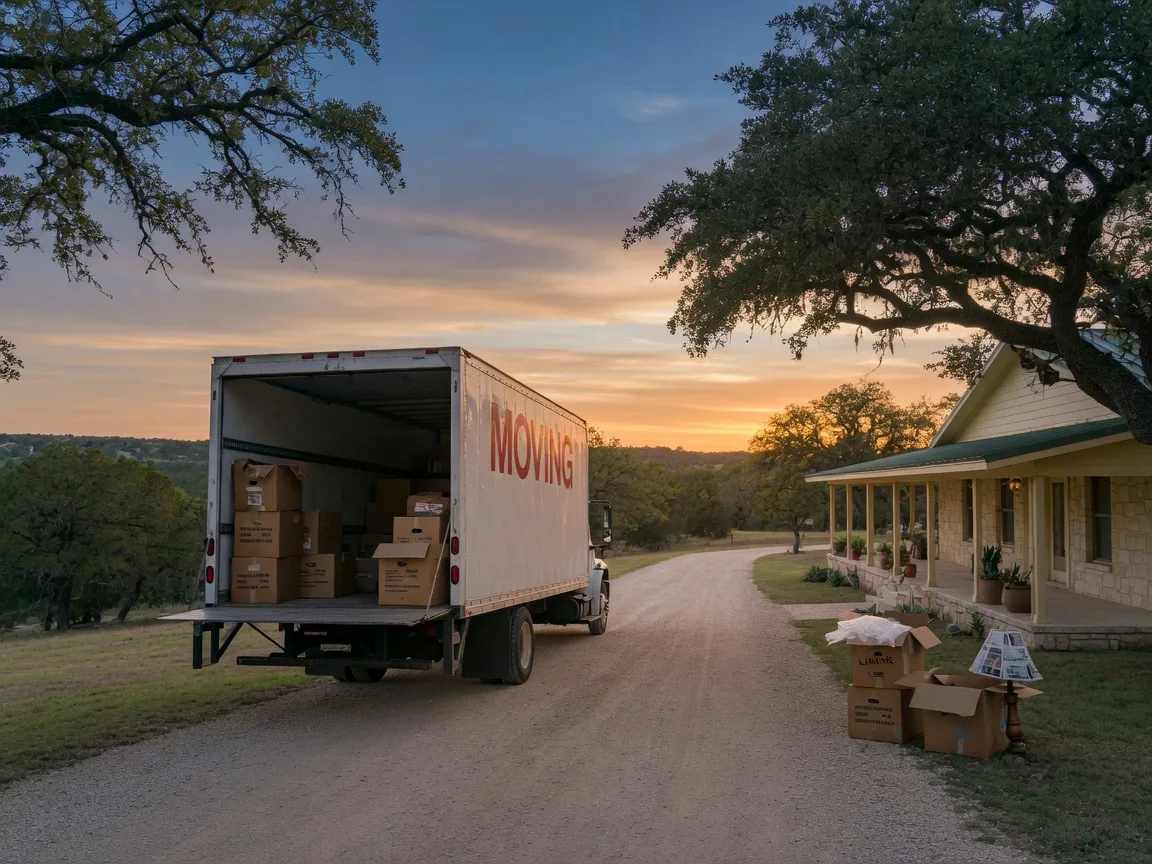
What this means in practice: your mailbox is further from your door, your neighbors are set further back, and the buffer between you and the rest of the world is two to three times what you had in California. It is genuinely unfamiliar for a week or two, and it takes a few days to stop feeling like you are somehow too far from everything. That feeling fades faster than people expect.
Day 2: The First Morning and the Quiet
The first morning is usually when the quiet announces itself. In the Bay Area and Los Angeles, there is a constant background hum of traffic, aircraft, delivery trucks, and the general density of a million people within a few miles. Even in California residential neighborhoods, the soundscape is never fully still [9].
In the Hill Country, the background sound is often insects, birds, and wind in the oaks, and not much else. Transplants from cities frequently describe the first nights as eerie, and then, by the end of the week, as relief. If you wake before the sun, you hear birds you have never encountered before, canyon wrens, painted buntings, and the soft percussion of wind through limestone canyons. The soundscape is different, but it is not empty. It takes a week or two to learn the new sounds [6][9].
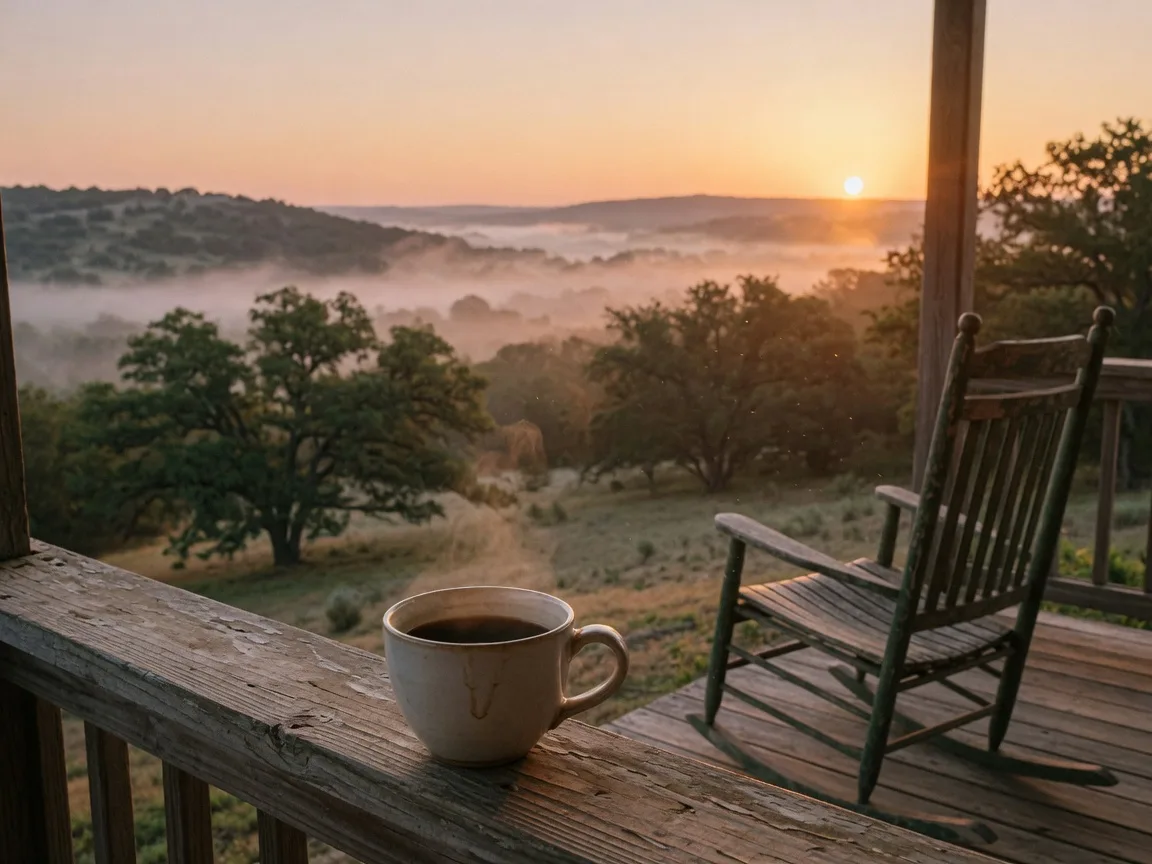
The first full day is also when you begin to read the weather honestly. Most California transplants arrive with a mental model that Texas summers are hot and everything else is mild. That is roughly true but incomplete. In Boerne, average daily highs run about 93°F in June and 96°F in August, with overnight lows in the low to mid-70s, and the city sits at a higher elevation than San Antonio, which buys it a couple of degrees and a bit of dryness [6].
Average Monthly High Temperature: Hill Country vs. Coastal California
| Month | Boerne, TX | San Francisco, CA | Difference |
|---|---|---|---|
| January | 62°F | 57°F | +5°F |
| March | 71°F | 62°F | +9°F |
| June | 93°F | 68°F | +25°F |
| August | 96°F | 69°F | +27°F |
| October | 79°F | 68°F | +11°F |
| December | 63°F | 57°F | +6°F |
Source: Weather-US.com climate data for Boerne, TX and San Francisco, CA.
The climate comparison that matters most is seasonal, not just hot. Fall and spring are the months that convert skeptics, with October highs near 79°F and lows in the mid-50s. For families who lived through Bay Area fog, the Hill Country's fall and spring are often better than what they left. Winter is mild but brings the occasional ice storm, which is the one weather risk California transplants consistently underestimate [6][7].
Day 3: The Errand Recalibration and the H-E-B Run
By the third day you need groceries, and the grocery run is usually the first errand that forces a new mental model. In California suburbia, a grocery store, a pharmacy, and a coffee shop are often within a two-mile radius, and you can chain errands into a 15-minute loop. In the Hill Country, commercial development clusters along highway corridors, and your nearest full grocery store, almost certainly an H-E-B, is likely 10 to 18 minutes away depending on where you live [3].
The trade-off becomes clear inside the store. H-E-B is a privately held Texas company founded in 1905 with more than 400 stores, and it is not a discount chain. It is a full-service grocer with a strong emphasis on prepared foods, Texas-sourced products, and store brands that regularly outperform national brands in blind taste tests [8]. California transplants are consistently surprised by three things: the quality of the prepared foods, the fresh tortilla section made in-store daily, and the size of the shopping carts, which are physically larger than California carts because Texas households buy more per trip.

What you will not find in the Hill Country is the ethnic specialty grocery landscape of California, the 99 Ranch Markets, H Marts, and Mitsuwa locations that many Bay Area families take for granted. San Antonio has a more diverse grocery selection, but it is concentrated 30 to 45 minutes from Boerne. Most transplants adjust by planning a monthly specialty run into San Antonio and building the rest of the weekly shop around H-E-B, which is a rhythm Texas residents have followed for generations [8].
The practical habit: batch your errands. Most Hill Country residents make one or two dedicated shopping runs per week rather than daily pop-ins. It forms quickly and saves more time than you would expect. The larger parking lots, shorter lines, and more generous store layouts make the fewer, bigger trips feel efficient rather than inconvenient.
Day 4: The Paperwork Deadlines Nobody Mentions
Day four is a good day to sort the documents, because the first week is the easiest time to forget the deadlines that quietly carry real costs. None of these are same-day emergencies, but each one has a window that starts the moment you become a Texas resident.
Texas law gives you 90 days to obtain a Texas driver's license from the Department of Public Safety. Your vehicles must be registered in Texas within 30 days of moving, through the county tax assessor-collector's office [4]. And if you bought your home this year, the homestead exemption that lowers your property tax bill can be filed for the year you purchased, with a purchase-year deadline of the first anniversary of your closing. The standard yearly deadline for homeowners filing in later years is April 30 [5].
First-Week Deadlines That Matter
| Item | Deadline After Moving | Where to Handle It |
|---|---|---|
| Texas driver's license | Within 90 days | Texas DPS office, appointment recommended |
| Vehicle registration | Within 30 days | County tax assessor-collector |
| Vehicle inspection | Before registration | Certified inspection station |
| Homestead exemption (purchase year) | By first anniversary of closing | County appraisal district |
| Utilities and internet | As soon as possible | Electric provider, ISP, water district |
| School enrollment (if applicable) | Before the school year or at move | Local ISD registrar |
Sources: TxDMV, New to Texas; Texas Real Estate Center. Deadlines are calendar windows, not first-week obligations, but the week they are written down is the week they get done.
If you are moving with school-age children, week one is also when to start the enrollment conversation with the local ISD, because Texas districts run their own calendars, academic calendars, and transfer policies, and the good programs fill early. Our school enrollment calendar guide walks through the timing in detail.
The first full week is also the moment to write down the water situation for your specific property. If you are on a well, book the well water test early, because labs run on their own schedule. Our well water buying guide covers what the test results actually mean.
Day 5: Finding the Town
By day five, the boxes are mostly unpacked and the curiosity takes over. This is the day to drive into town and let the community introduce itself.
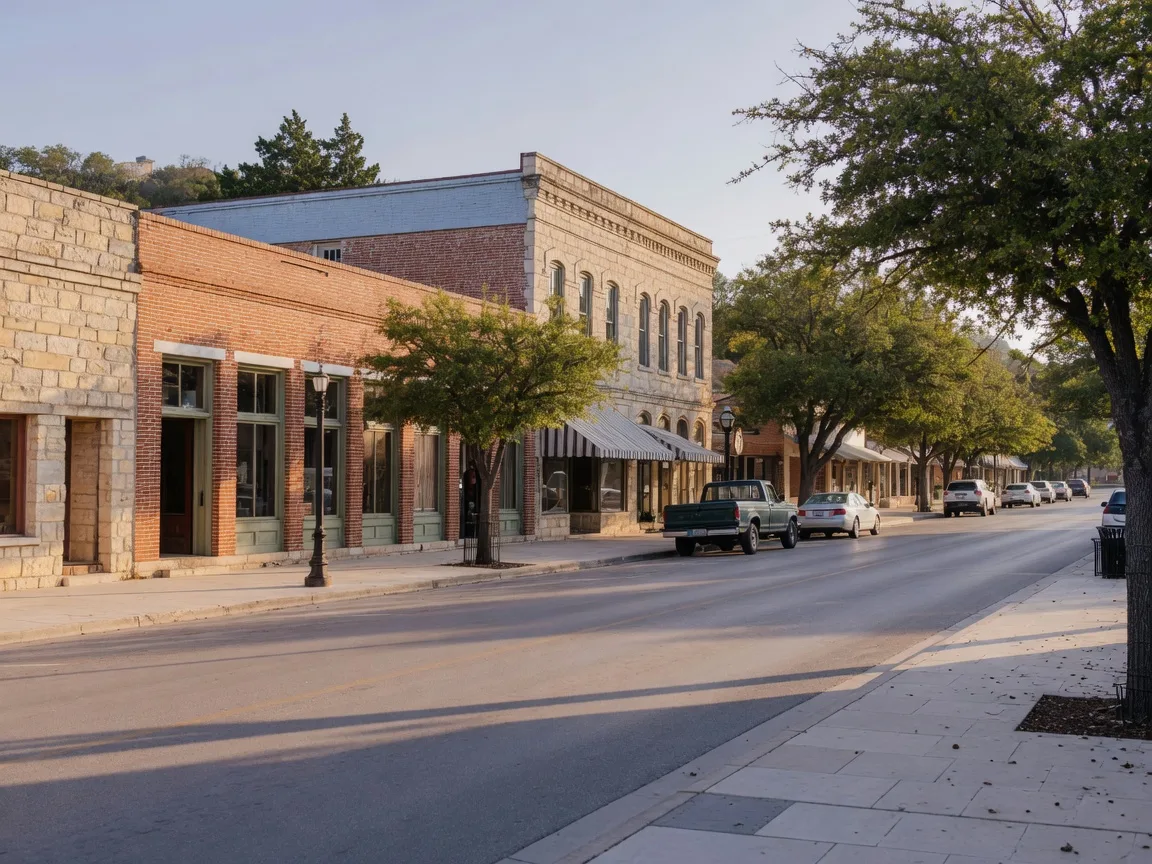
Boerne's historic Main Street, the Hill Country Mile, runs along Cibolo Creek with limestone storefronts, independent shops, and restaurants that fill on weekends. It is the small-town anchor of the area, and it is where new residents quickly learn the local rhythm: coffee in the morning, the creek trail in the afternoon, the farmers market on the weekend [3].
Fair Oaks Ranch offers a different profile, newer construction, larger acreage lots, and a country-club feel, while San Antonio brings the urban layer: the medical center, the airport, and the cultural depth of a city of 1.5 million people. Many Hill Country families run a weekly rhythm that touches all three, living in Boerne or Fair Oaks, working or doctoring in San Antonio, and treating the drive as part of the lifestyle rather than a commute.
The first week is also when the neighbor introductions accelerate. In Hill Country communities, the default is not polite distance but genuine welcome. Transplants routinely report that within the first day or two, a neighbor appeared with a plate of cookies, a contractor recommendation, or simply a handshake. It is not performative hospitality. It is how a community built on proximity, reciprocity, and volunteer fire departments maintains itself [9][10].
Day 6: The Pace and the People
Sometime around day six, most transplants notice the pace, and it is slower in ways that are structural, not just cultural. Stores open later. Service providers are less available. The person behind the counter at the hardware store will talk to you for ten minutes before asking what you came in for. The contractor shows up on Tuesday instead of Monday, and it is understood that this is how things work [9].
For the first few days, this reads as inefficiency. By month three, most families describe it differently. The slower pace is a feature of a community where people are not competing for the same resources, where the cost of living lets people work less or retire earlier, and where the social expectation is that human interaction is not an obstacle to productivity, it is part of the point.
This is the day to start building your local list, and the neighbor who brought the casserole is the best source for it. In Texas, the trusted local recommendations, for a plumber, a doctor, a restaurant, an electrician, travel by word of mouth more than by review site. The families who integrate fastest write down the list and work through it, rather than treating every service decision as a research project.
Day 7: Taking Stock Under a Bigger Sky
By the seventh night, the first layer of chaos has settled, and this is when transplants tend to sit outside and actually look up. The Texas sky is physically larger. Fewer buildings, a lower horizon, and a lower elevation profile mean you see more sky from any given point. Outside San Antonio's light dome, the stars are genuinely visible in a way they are not in most California metro areas [6].
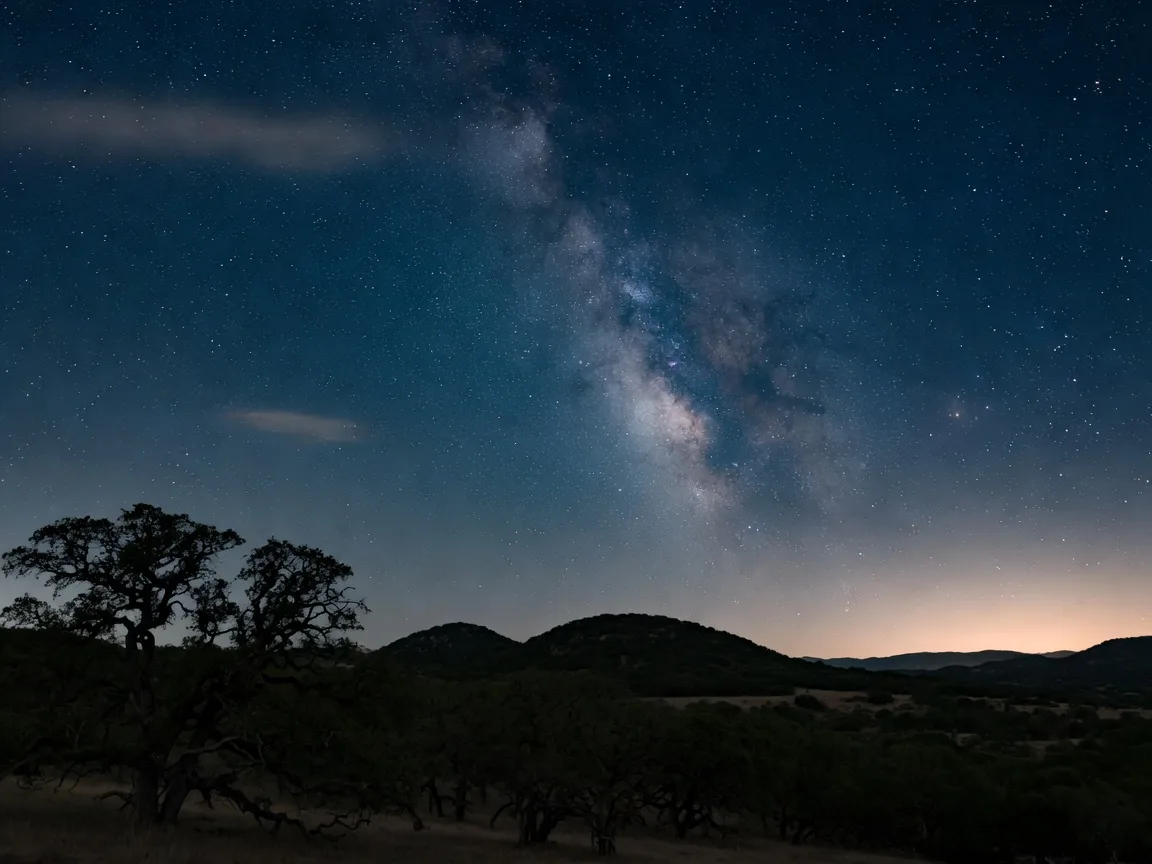
Taking stock at the end of week one usually produces an honest list. The things people miss: the density of restaurant choices, same-day delivery, the convenience of a familiar grocery chain. The things people already value: the space, the quiet, the neighbor who checks in, the sky, and the sense that a weekday evening can be spent on the porch instead of in traffic.
The families who thrive do not spend their first week cataloging what is missing. They spend it discovering what is present, and they give the landscape and the community a chance. They drive the back roads. They walk the creek trail. They say yes to the casserole. That is the pattern I see in every successful California-to-Hill Country transition [10].
What the First Week Sets Up
The first week in the Hill Country is not just an adjustment period. It is the foundation for how you integrate. The observations you make about space, pace, and people become the framework for the new life, and the habits you set in those first seven days, exploring, accepting the welcome, batching errands, writing down deadlines, tend to become the routines that last.
If you are evaluating a move from California to the Hill Country, I am happy to walk you through what the transition looks like in practice, not the brochure version, but the version based on real experience with real families. Having guided dozens of California-to-Texas transitions, I can tell you exactly what the first week feels like and how to set yourself up for a smooth first year.
For the deeper dive on the same territory, see the original Texas Driveway Moment guide. For the full transition, review our first 90 days in Texas guide, the Downtown Boerne guide, or the Fair Oaks Ranch community guide.

Written by
Bill Ross
Hill Country Homesteads Group, brokered by KW Boerne
Bill Ross is a Texas real estate agent with nearly four decades in high-tech sales and a network of 1,000+ California real estate agents for coordinated cross-state transactions. Featured in national coverage discussing his family's relocation from Silicon Valley to the Texas Hill Country.
Related Guides
The Texas Driveway Moment
What Californians notice the first week they live in the Hill Country, and why the things that surprise you most are the things that matter longest.
What Californians Miss Most After Moving to Texas
An honest look at the emotional side of relocation, what you lose, what you gain, and what you thought you would miss but do not.
First 90 Days After Leaving California
How to establish Texas residency properly, from driver's license and registration to banking, voting, and the homestead exemption.
Downtown Boerne: Local Life on the Hill Country Mile
A practical guide to daily life in downtown Boerne, the shops, restaurants, trail, and community rhythm.
Frequently Asked Questions
These are the first-week questions I hear most from California buyers who have just arrived in the Hill Country. The patterns are consistent, the surprises are predictable, and the adjustments are manageable.
What is the driveway moment, exactly?
It is the first time the move stops being logistics and becomes a felt experience, usually on day one or two. You step outside, look down a driveway that runs 60 or 70 feet to the street, and realize the physical world you now live in runs on different assumptions about space, time, and community than the one you left in California. Every family I have helped relocate to the Hill Country describes some version of it.
How much bigger are Hill Country lots than typical California lots?
The median residential lot in San Jose is roughly 4,400 square feet, about 0.1 acres, and in Los Angeles about 5,300 square feet. In Boerne, subdivision lots typically run 0.15 to 0.3 acres, and newer or more rural properties frequently exceed one acre. In Fair Oaks Ranch, half-acre to two-acre lots are common. A family moving from a typical California suburb to a half-acre Boerne property is gaining roughly ten times the outdoor space.
What are the most important deadlines in the first week in Texas?
Three dates matter most. Texas law gives you 90 days to get a Texas driver's license, and your vehicles must be registered in Texas within 30 days of moving. The homestead exemption that lowers your property tax bill can be filed for the year you buy, but the purchase-year deadline is the first anniversary of your closing, and the standard yearly deadline for later years is April 30. None of these are same-day emergencies, but they are easy to forget once moving chaos sets in.
Is the quiet really as noticeable as people say?
Yes, and it is usually the first thing transplants mention after the space. In the Bay Area and Los Angeles, there is a constant background hum of traffic, aircraft, and density. In the Hill Country the background is insects, birds, and wind in the oaks. People from cities often call it eerie for the first few nights, and then describe it as relief by the end of the week.
How long does it take to feel at home in the Hill Country?
Most California transplants say the first three months feel the slowest. By six months, new routines are in place, the grocery run, the gym, the weekend drive into San Antonio. By the end of the first year, most describe the slower pace and the community warmth as two of the main reasons they moved. The families who adapt fastest are the ones who explore immediately and accept the welcome when neighbors introduce themselves.
Sources
- California residential lot sizes by metro area: Mercury News / Bay Area News Group (February 2024). www.mercurynews.com/2024/02/15/a-california-homes-yard-is-31-below-average-size-where-are-the-biggest-lots/
- Texas residential density and lot size comparison with California: New Geography (2024). www.newgeography.com/content/006196-the-high-residential-densities-california-and-wild-wild-texas
- Boerne, TX lot sizes and neighborhood data: LRG Realty; HAR.com. lrgrealty.com/lrg-blog/boerne-tx-best-neighborhoods-for-homebuyers
- New Texas resident driver's license and vehicle registration rules: Texas Department of Motor Vehicles, New to Texas. www.txdmv.gov/motorists/new-to-texas
- Texas homestead exemption deadline for new home purchasers: Texas Real Estate Center, New Homestead Exemption Law. www.texasrealestate.com/members/posts/new-homestead-exemption-law-benefits-residential-purchasers/
- Boerne, TX climate data, average monthly temperatures: Weather-US.com. www.weather-us.com/en/texas-usa/boerne-climate
- San Francisco, CA climate data, average monthly temperatures: Weather-US.com. www.weather-us.com/en/california-usa/san-francisco-climate
- H-E-B grocery chain history and cultural significance in Texas: Eater (December 2018). www.eater.com/2018/12/11/18133776/heb-texas-origin-cult-following
- Texas-style culture shock observations from transplants: Cyburbia Forums (2024). cyburbia.org/forums/threads/texas-style-culture-shock.37581/
- Leaving California for Texas, unexpected culture adjustments: SiliconCanals (2024). siliconcanals.com/i-left-california-for-texas-heres-what-i-didnt-expect-about-the-culture-shock/
Last reviewed: September 2026. Lot sizes and temperature data reflect published 2024–2026 sources. Individual property characteristics vary; verify specific lot dimensions, setbacks, and deadlines with the county, your ISD, and your agent.