
Last updated: July 2026 — reflects current Texas Estates Code provisions.
If you have just lost a family member and discovered that you are named as executor — or if the family has asked you to step in — you are probably wondering where to begin. Filing for probate in Texas can feel like a mountain of paperwork and legal jargon at a time when you are already grieving. The good news is that the process, while real and important, is manageable when you understand the steps.
This guide explains how to determine whether a Texas probate proceeding may be needed, where and how the filing process begins, what happens at the initial hearing, and the most important deadlines that follow an executor's or administrator's appointment. It does not cover every issue that may arise during the later administration, distribution, and closing of an estate.
When Might a Texas Probate Proceeding Be Needed?
Not every estate requires a court proceeding, and "probate" does not always mean opening a full estate administration.
Texas law generally provides that a decedent's property passes at death to the devisees named in a valid will or, if there is no effective will, to the decedent's heirs. ("Devisee" refers to a person named to receive property under a will; "heir" refers to a person entitled to inherit under Texas intestacy law when there is no will; "distributee" is the broader term covering both, and is the term Texas Estates Code generally uses.) The property remains subject to estate debts, administration expenses, the surviving family's statutory rights, and any administration ordered by the court.
A probate proceeding may be needed when:
- A will must be admitted to establish who receives probate property.
- A court-appointed personal representative is needed to collect assets, deal with creditors, sign documents, sell property, or resolve disputes.
- The decedent owned real estate or other property without an effective survivorship provision, trust, beneficiary designation, or transfer-on-death arrangement.
- The decedent died without a will and a judicial determination of heirship is needed.
- A title company, financial institution, or other third party requires court-issued evidence of authority or ownership.
The first step is to separate probate assets from nonprobate assets. Property properly held in a trust, life insurance and retirement accounts with effective beneficiaries, payable-on-death accounts, survivorship property, and property covered by a valid transfer-on-death deed may pass outside probate. A trust avoids probate only for property that was properly transferred to the trust or otherwise made subject to it.

The County and Court Where You File
For a decedent who was domiciled in Texas, venue is generally in the Texas county where the decedent was domiciled at death. Domicile concerns both physical presence and the person's intent to make a place home. Do not determine the filing county from a city name or mailing address alone; confirm the actual county of domicile.
For example, if the decedent was domiciled at an address located in Kendall County but owned rental property in Kerr County, the primary Texas probate proceeding would generally begin in Kendall County.
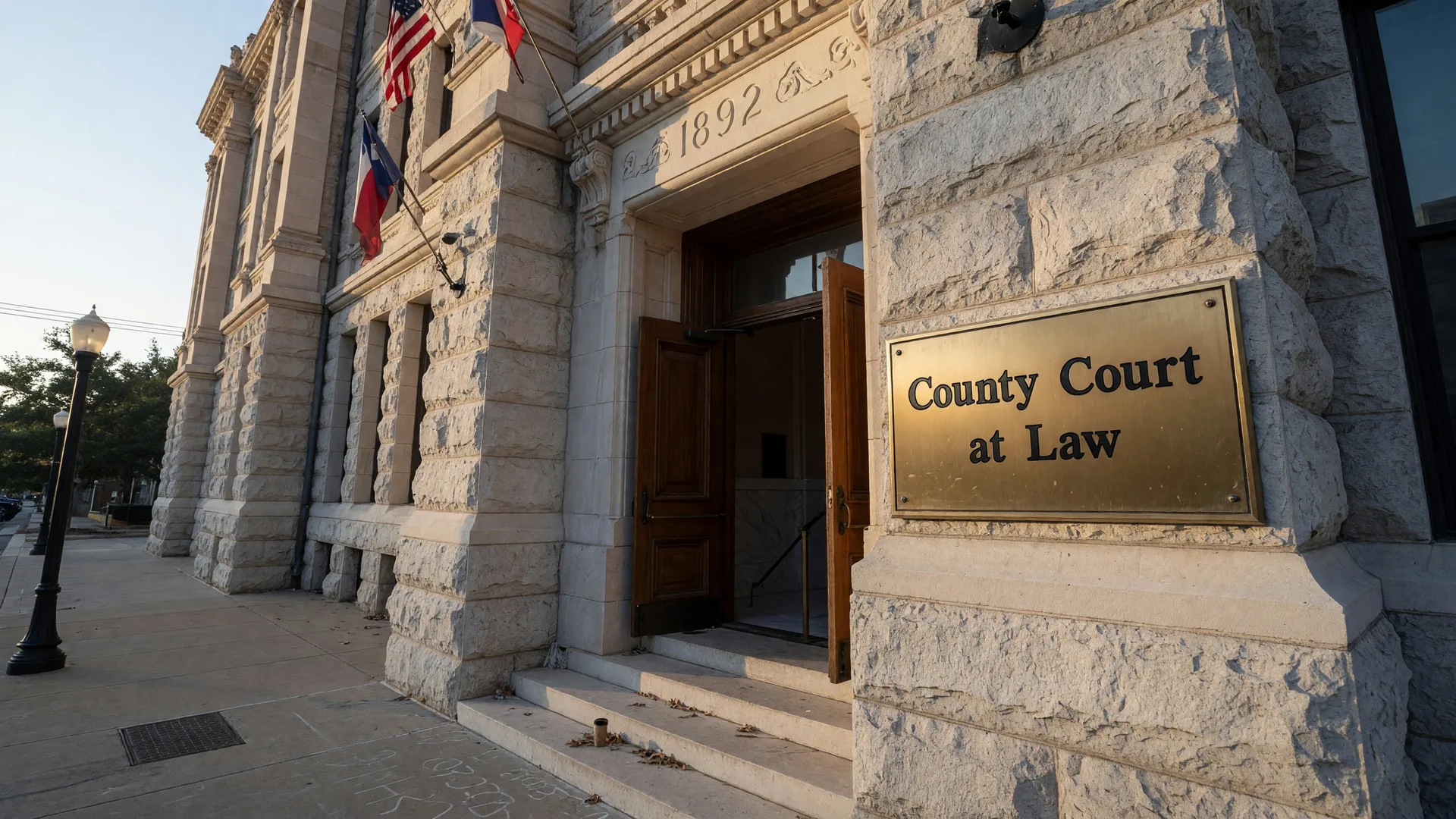
The court that handles probate varies by county. Depending on the county, the case may be heard by a constitutional county court, county court at law, or statutory probate court. The application is filed through the clerk serving the appropriate probate court.
If the decedent was domiciled outside Texas but owned property in Texas, Texas counsel should evaluate the venue rules for a nonresident decedent and determine whether the appropriate procedure is admission of a foreign will, ancillary administration, recording an authenticated foreign will and probate order, or another title-clearing procedure. A separate Texas administration is not required in every case.
Types of Probate in Texas
Texas offers several ways to administer an estate. The type you use depends on whether there is a will, whether the executor can act independently, and the complexity of the estate.
Independent Administration
Independent administration allows a qualified executor or administrator to handle many estate matters with limited continuing court supervision. Whether an independent executor may sell real property without a separate court order depends on the will, the court's appointment order, the purpose of the sale, and applicable statutory authority. Independent administration should not be described as an automatic, unrestricted power of sale.
A will may direct that the executor serve independently. When the will does not create an independent administration, or when there is no will, the distributees may, in qualifying circumstances, agree to an independent administration and request court approval. "Distributees" is the more accurate term because it includes people entitled to receive property under a will or by intestacy.
Dependent Administration
A dependent administrator operates under ongoing court supervision. Many significant actions, particularly selling estate property, borrowing money, compromising claims, paying certain claims, and making distributions, may require an application, court order, or subsequent court confirmation. The exact requirements depend on the action and the court's orders.
Dependent administration generally involves more court filings, expense, and time than independent administration, but it provides additional oversight for beneficiaries and creditors.
Muniment of Title
A will may sometimes be admitted to probate as a muniment of title without appointing an executor or opening a full administration. The court must be satisfied that the will should be admitted and that either:
- The estate owes no unpaid debt other than debt secured by a lien on real estate; or
- There is another reason no administration of the estate is necessary.
Potential Medicaid Estate Recovery Program (MERP) claims must also be investigated because an enforceable MERP claim is an estate debt. MERP allows the state to seek reimbursement from a deceased Medicaid recipient's estate for certain long-term care, nursing facility, and related medical costs the state paid on the recipient's behalf. If the decedent received these Medicaid benefits, the estate may not qualify for muniment of title (which requires no unpaid debt other than real-estate liens) until the MERP claim is resolved or a hardship waiver or exemption applies. Families should ask the attorney to check for a MERP claim before pursuing muniment of title or a small estate affidavit.
The will and the court's muniment order become evidence of the beneficiaries' ownership. When real estate is involved, certified copies generally must be recorded in the county's real-property records. Unless the court waives or extends the requirement, the applicant must file a compliance affidavit within 180 days describing which terms of the will have been fulfilled.
A muniment of title can be useful when the principal objective is to establish ownership or allow beneficiaries to collect property directly under the will. It is generally not appropriate when the estate needs a court-appointed personal representative to administer debts, manage property, pursue claims, resolve disputes, or perform transactions that the beneficiaries cannot complete using the will and muniment order alone [17].
The Probate Filing Process: Step by Step
Here is what the filing process looks like in practice.
Step 1: Locate the Will and Gather Essential Information
Locate the original will and all codicils. An original is preferable, but Texas law provides a procedure for proving a will that cannot be produced in court. Probating a copy or proving the contents of a lost will requires additional evidence, so contact a probate attorney immediately if the original cannot be found [1].
Also gather:
- Certified copies of the death certificate in a quantity appropriate for the estate's institutions and transactions
- Deeds, tax statements, mortgage information, leases, and insurance policies for real property
- Trust documents and amendments
- Bank, investment, retirement, and life-insurance statements
- Beneficiary, payable-on-death, transfer-on-death, and survivorship designations
- A preliminary list of assets, debts, recurring expenses, and possible creditors
- Marriage, divorce, adoption, and family-history information
- The decedent's tax records and Social Security number, maintained securely
Do not place a complete Social Security number in a publicly filed pleading unless an applicable rule or required form specifically calls for it. Follow the attorney's and clerk's redaction procedures.
Step 2: Determine Whether Legal Representation Is Required
Texas does not impose a simple rule that every executor must always be represented by an attorney. In 2025, the Texas Supreme Court held that an executor who is also the estate's sole beneficiary may represent the estate without an attorney because that executor is litigating only the executor's own interests.
That narrow ruling does not establish a general right for every nonlawyer executor or administrator to represent an estate when other beneficiaries, creditors, or interested parties are involved. As a practical matter, most Texas probate cases still require an attorney, and local courts may require counsel based on the parties and issues involved.
Check the local court's rules before attempting to file without counsel. A court clerk can explain filing procedures but cannot provide legal advice or determine whether self-representation is permitted or advisable in a particular case [9][24].
Step 3: Prepare the Correct Application
For a testate estate requiring an executor, an interested person generally files an Application for Probate of Will and Issuance of Letters Testamentary. The application must contain the information required by Texas Estates Code §256.052 and, when letters are requested, the applicable provisions of Chapter 301. Local courts may require additional forms or information.
If there is no will, the filing may include an Application for Letters of Administration and an Application to Determine Heirship. An heirship proceeding has separate citation and evidentiary requirements. The court generally appoints an attorney ad litem — an attorney the court assigns, at the estate's expense, to independently represent the interests of unknown or unlocated heirs — and heirship normally must be proved through qualified disinterested witnesses.
The correct filing depends on the will, the assets, the debts, the identity of the heirs or beneficiaries, and whether an administration is actually necessary [8].

Step 4: File the Application and Allow the Clerk to Issue Citation
The application and applicable filing fees are submitted to the clerk serving the proper probate court. The clerk issues citation notifying persons interested in the estate that the application has been filed and serves the citation through the statutory posting procedure.
In an ordinary uncontested will-probate proceeding, the court generally cannot act until the required posting period has expired. A hearing is commonly set for the first available court date after the Monday following the expiration of ten days from posting, subject to the court's docket and local procedures.
Do not confuse this citation with the newspaper notice to unsecured creditors. Creditor publication occurs after a personal representative qualifies and receives letters.
Step 5: Attend the Prove-Up Hearing
At the hearing, the applicant ordinarily presents testimony establishing the facts required to admit the will and, when requested, issue letters. The required proof depends on whether the will is self-proved, attested but not self-proved, holographic, contested, or unavailable in its original form.
A properly self-proved will usually reduces the witness testimony needed to prove execution. A will that is not self-proved may require testimony or deposition evidence from subscribing witnesses or other qualified witnesses.
Uncontested hearings are often brief, but their duration cannot be predicted. Scheduling, appearance requirements, remote-hearing availability, and required testimony vary by court.
Step 6: Qualify and Obtain Letters
After the court signs the appointment order, the executor or administrator must qualify by taking and filing the required oath or declaration and, when required, filing an approved bond. Qualification deadlines apply, so these steps should be completed promptly under the attorney's direction.
A will's bond waiver is important, but beneficiaries cannot necessarily eliminate a bond merely by agreement. The will, the type of administration, applicable statutes, and the court's appointment order control whether a bond is required [11][12].
After qualification, the clerk issues Letters Testamentary to a qualified executor or Letters of Administration to a qualified administrator. Certified letters serve as evidence of the personal representative's current authority, but third parties may require recently issued certified copies.
Step 7: Complete the Post-Appointment Notices
Several different notice rules may apply after appointment:
- Beneficiaries: Subject to statutory exceptions, the personal representative must provide the required notice to beneficiaries named in a probated will no later than 60 days after the court's order admitting the will. Proof of compliance generally must be filed by the 90th day after the order. Common exceptions include beneficiaries who have already appeared in the case, who are entitled to gifts valued at $2,000 or less, who already received their full gift within the 60-day window, or who signed a written waiver acknowledging the will.
- General unsecured creditors: Within one month after receiving letters, the personal representative must publish the statutory creditor notice in a qualifying newspaper.
- Secured creditors: Within two months after receiving letters, the personal representative must give the required actual notice to qualifying secured creditors.
- Other unsecured creditors: A personal representative may voluntarily give actual notice under Texas Estates Code §308.054, which starts a deadline requiring the creditor to present its claim before the 121st day after receiving the notice (roughly four months) or the claim is barred, unless the general statute of limitations already bars it.
These notices have different recipients, deadlines, wording, and legal effects. They should not be combined into one generic 'interested parties' notice [10].
Step 8: Obtain an EIN and Open an Estate Bank Account
When an administration is opened, the personal representative will ordinarily obtain a federal employer identification number for the estate and open an estate bank account. Estate income, sale proceeds, refunds, and other receipts should be deposited into the estate account, and authorized estate expenses should be paid from it.
Never deposit estate money into a personal account or use estate funds for personal expenses. Preserve statements, invoices, receipts, cancelled checks, closing documents, and an explanation of every transaction.
Step 9: File the Inventory or an Authorized Affidavit in Lieu
Unless the court extends the deadline, the personal representative generally must file the required Inventory, Appraisement, and List of Claims within 90 days after qualification.
The inventory covers property belonging to the probate estate and identifies the estate's interest in that property. It should distinguish separate and community property when applicable and state fair values as required. The 'List of Claims' refers to claims due or owing to the estate — not the decedent's bills and creditor claims against the estate.
A qualifying independent executor may be permitted to file an Affidavit in Lieu of Inventory when the statutory requirements are satisfied, including providing the verified inventory to beneficiaries entitled to receive it.
The court may appoint appraisers when appropriate, but a court-appointed 'full appraisal' is not automatically required in every estate [13][20].
What Happens After the Inventory?
After appointment and the initial filings, the personal representative may still need to:
- Secure, insure, collect, and value estate property
- Determine whether property is separate, community, exempt, or nonprobate property
- Address homestead rights, exempt-property claims, family allowances, and surviving-spouse rights
- Evaluate, allow, reject, classify, and pay creditor claims correctly
- File the decedent's final income-tax returns and any required estate fiduciary or federal estate-tax returns
- Obtain authority for and complete any sale of estate property
- Maintain adequate reserves for debts, taxes, expenses, and disputed claims
- Distribute the remaining property to the correct beneficiaries or heirs
- Provide any required accountings and complete the applicable closing procedure
Appointment as executor or administrator begins the fiduciary work; it does not end it.
For detailed guidance on selling estate property in Texas, visit TexasProbateHomes.net Probate Guide: Selling.
Independent vs. Dependent: How to Decide
If there is a will, the type of administration depends on what the will says.
| Scenario | Administration Type |
|---|---|
| Will grants independent authority | Independent administration |
| Will is silent on administration type | May be independent if all distributees agree and the court approves; otherwise dependent |
| No will (intestate) | Generally dependent unless all distributees request independent administration and the court approves it |
| Will specifically requires court supervision | Dependent administration |
The key difference is that an independent executor can perform many estate-administration acts without obtaining advance court approval, while a dependent administrator must obtain court approval for many significant actions. Independent administration generally involves less court supervision and may therefore be faster, less expensive, and more flexible [4][5].
Potential Probate Costs
- Court filing, citation, service, and clerk fees
- Certified copies of orders and letters
- Newspaper publication of the post-appointment creditor notice
- Attorney fees
- Bond premiums when a bond is required
- Attorney-ad-litem and heirship costs
- Appraisal, accounting, tax-preparation, survey, and title expenses when needed
- Property-preservation, insurance, maintenance, and sale expenses
Fees vary materially by county and case type. Obtain the current written fee schedule from the correct county clerk and a written explanation of the attorney's billing arrangement. Do not rely on a statewide dollar range.
What Happens If There Is No Will?
Texas intestacy cannot be summarized accurately without identifying:
- Whether the decedent was married
- Whether property was community or separate property
- Whether separate property was real or personal property
- Whether the decedent had descendants
- Whether all descendants were also descendants of the surviving spouse
In general:
- Community property: If every surviving descendant of the decedent is also a descendant of the surviving spouse, the decedent's community-property interest passes to the surviving spouse. If the decedent had a descendant who was not also a descendant of the surviving spouse, the decedent's community-property interest passes to the decedent's descendants.
- Separate personal property with descendants: The surviving spouse receives one-third, and the descendants receive two-thirds.
- Separate real property with descendants: The surviving spouse receives a life estate in one-third of the real property. The descendants receive the remainder in that one-third and ownership of the other two-thirds.
- Surviving spouse but no descendants: The surviving spouse receives all separate personal property and generally one-half of separate real property. The remaining separate real property passes under the statutory rules to parents, siblings, or their descendants. If none exist, the surviving spouse receives the remainder.
- No surviving spouse: Property passes first to descendants and, if there are none, through the statutory rules governing parents, siblings, and more remote relatives.
Adoptions, deceased descendants, half-blood relatives, disclaimers, and other circumstances can change the calculation. Do not distribute an intestate estate based on a simplified online formula [14].
If a formal administration is necessary, the court appoints an administrator rather than an executor. Administrators and executors share core fiduciary responsibilities, but their authority and the degree of court supervision may differ. An intestate administration is generally dependent unless all distributees request independent administration and the court approves it [8][14].
Alternatives to Probate
Texas provides several alternatives that can avoid formal probate:
Transfer on Death Deed (TODD)
A transfer-on-death deed allows real property to pass directly to a named beneficiary without probate. The deed must be signed, notarized, and recorded before the owner's death [15]. If properly executed, the beneficiary takes title automatically upon the owner's death.
The beneficiary receives only the interest the transferor owned, subject to existing mortgages, liens, encumbrances, and applicable estate claims. The beneficiary must also satisfy the title company's documentary requirements, which commonly include proof of death and confirmation that the beneficiary survived the transferor by the required period.
Affidavit of Heirship
An affidavit of heirship is nonjudicial evidence concerning a decedent's family and heirs that may be recorded in the real-property records. It is not limited to cases in which real estate was the decedent's only asset, and it is not the same as a judicial determination of heirship.
Recording an affidavit does not produce a court judgment, eliminate estate debts, or guarantee insurable title. Under Texas law, a properly recorded affidavit that has remained on record for the statutory period may become prima facie evidence of the stated facts, but title companies apply their own underwriting requirements. Some may require additional affidavits, supporting documents, heir deeds, indemnities, a waiting period, or a court proceeding.
Before relying on an affidavit of heirship, have the proposed title company review the facts and documents [18].
Small Estate Affidavit
A Texas small estate affidavit is available only when the decedent died without a will and the requirements of Texas Estates Code Chapter 205 are satisfied. Among other requirements:
- At least 30 days must have elapsed since death.
- No petition for appointment of a personal representative may be pending or previously granted.
- The value of estate assets, excluding homestead and exempt property, must not exceed $75,000.
- The value of qualifying assets must exceed the estate's known liabilities, excluding debts secured by homestead and exempt property.
- The affidavit must identify the heirs and their legal shares and must satisfy the signature, witness, and court-approval requirements.
- The only real property the decedent owned must have been the decedent's homestead. If the decedent owned any other real estate, a small estate affidavit is not available, regardless of the estate's total value.
A small estate affidavit has limited usefulness for real estate. It generally cannot transfer non-homestead real property, and its ability to transfer a homestead is restricted. Families should confirm eligibility with the court and a title professional before relying on it to establish marketable title [7].
Living Trust
If the decedent had a living trust and the property was properly transferred into the trust, the trust terms control distribution without probate. The successor trustee manages and distributes the trust assets according to the trust document [2].
A trust does not avoid probate for property that was never transferred to the trust and is not otherwise payable to it. A pour-over will does not itself move omitted property into the trust without the probate process that may be required to enforce the will.
For a guided resource on Texas probate property decisions, visit TexasProbateHomes.net Start Here.
For California Families Dealing With Texas Property
The correct procedure depends primarily on where the decedent was domiciled — not where the executor or beneficiary lives.
If the decedent was domiciled in Texas, the primary probate proceeding will generally be filed in the appropriate Texas county even if the executor and beneficiaries live in California.
If the decedent was domiciled in California but owned Texas real estate, Texas counsel should determine whether the family needs ancillary administration, admission of the California will in Texas, recording of an authenticated foreign will and probate order, or another title procedure.
A nonresident may be able to serve as a Texas executor or administrator but generally must appoint a Texas resident agent for service of process and satisfy the other qualification requirements.
Texas property does not always have to wait for the issuance of letters before it can be sold or transferred. Letters may be necessary when a personal representative is acting for the estate, but a trust, transfer-on-death deed, survivorship arrangement, muniment-of-title order, or properly recorded foreign-will proceeding may establish authority without letters.
California does not treat the value of an inheritance itself as personal income. However, a California resident may owe California income tax on income later produced by inherited property, including rent, interest, dividends, or taxable gain from a sale. Federal tax rules also generally make the property's date-of-death value important in calculating basis and later gain. Obtain a qualified date-of-death valuation and advice from an appropriate tax professional [22][23].
For more on how Texas probate interacts with real estate decisions, visit TexasProbateHomes.net.

How Long Does the Process Take?
Texas does not have a dependable statewide probate timetable. Timing varies according to:
- The county and court's docket
- Whether the will is self-proved
- Whether the original will is available
- Whether heirship must be determined
- Whether an attorney ad litem is required
- Disputes among heirs or beneficiaries
- Creditor and tax issues
- The need to sell real estate or other assets
- Whether the administration is independent or dependent
A small estate affidavit cannot be filed until at least 30 days after death, but that waiting period is not an approval timeline. A muniment-of-title proceeding may be relatively short when uncontested, but recording and post-order compliance remain necessary. An estate administration may remain open for months or longer even when the initial appointment occurs quickly.
Ask the attorney handling the case for an estimate based on the specific county, procedure, assets, and family circumstances.
Practical Tips for New Executors
Do not rush to sell the property
Stabilize the estate first — secure the property, cancel unnecessary services, maintain insurance, and gather documents.
Keep meticulous records
Every dollar in and out of the estate should be documented. The court and heirs may review your accounting.
Communicate with heirs regularly
Family conflict is common in probate. Transparent communication reduces misunderstandings and preserves relationships.
Do not use estate funds for personal expenses
The estate account is separate from your personal account. Mixing funds creates serious legal problems.
Ask questions
If you are unsure about anything, ask your attorney. The cost of a quick phone call is far less than the cost of a mistake.

Related Guides on This Site
This article is part of a broader set of resources for California transplants navigating Texas legal and financial systems. The following guides cover related topics in more detail:
Capital Gains and the Move
How the 2-out-of-5-year ownership-and-use rule affects cross-state relocators.
When California Can Still Tax Your Income
The FTB's 45-day rule, source income rules, and audit authority.
How Texas Law Affects Your California Trust
Community property vs. separate property: key differences between California and Texas.
First 90 Days After Leaving California
Establishing Texas residency — driver's license, vehicle registration, and homestead exemption filing.
Frequently Asked Questions
These are the questions I hear most often from families who are navigating the probate process for the first time. Every situation is different, but the patterns are consistent.
Do I have to hire a lawyer to file for probate in Texas?
Most Texas probate cases require an attorney, but the rule is not absolute. In 2025, the Texas Supreme Court held that an executor who is also the estate's sole beneficiary may represent the estate without an attorney. That narrow exception does not necessarily apply when other beneficiaries, creditors, or interested parties are involved. Some small estate affidavits may also be filed without counsel. Check the local court's rules and obtain legal advice before attempting to proceed without an attorney [9][24].
How much does probate cost in Texas?
Probate costs vary materially by county, procedure, estate complexity, and whether disputes or heirship proceedings are involved. Potential expenses include court and citation fees, certified copies, creditor-notice publication, attorney fees, bond premiums, attorney-ad-litem fees, appraisals, tax preparation, and property-preservation expenses. Obtain the current fee schedule from the correct county clerk and a written explanation of the attorney's billing arrangement [9].
Can I sell a house before probate is finished?
A sale may occur before the estate is formally closed, but the person signing must possess valid authority to convey title. An independent executor's power of sale depends on the will, appointment order, purpose of the sale, and applicable statutes. A dependent administrator generally needs court authorization and may also need confirmation of the sale. A muniment-of-title order, trust, survivorship arrangement, transfer-on-death deed, or foreign-will procedure may produce a different result. Obtain probate counsel and title-company approval before listing or contracting to sell [4][5].
What if there is no will?
If there is no will, Texas intestacy laws determine who inherits. An administrator is appointed to manage the estate. The administrator's duties are the same as an executor's, but the administration is generally dependent unless all distributees request independent administration and the court approves it [7][8][14].
How long do I have to file for probate after someone dies?
Texas generally requires an application to probate a will to be filed by the fourth anniversary of death. A will may be admitted later if the person offering it proves that person was not in default for failing to present it earlier. The deadline for applying for Letters Testamentary or Letters of Administration is governed separately and is also generally four years, subject only to specifically authorized exceptions. Do not assume that late admission of a will means the court can also issue letters [16].
What if the decedent owned property in multiple states?
The proper proceedings depend on the decedent's domicile and where the property is located. If the decedent was domiciled in Texas, the primary probate will generally be in Texas, and an ancillary or other proceeding may be needed in another state. If the decedent was domiciled elsewhere but owned Texas real estate, Texas counsel should evaluate ancillary administration, admission of a foreign will, recording an authenticated foreign will and probate order, or another title procedure. A separate administration is not required in every case [3][21].
Can I be executor if I live out of state?
A nonresident may be able to serve, but Texas generally requires the nonresident to appoint a Texas resident agent for service of process and satisfy all other qualification requirements. Whether an in-person hearing is required depends on the court and the evidence needed; remote appearance is not guaranteed [19].
Navigating Texas Probate? You Do Not Have to Do It Alone.
The Texas probate process is procedural, but it is also personal. Every estate has its own facts, and the steps that work for one family may not fit another. The information in this guide gives you a starting point, but it is not a substitute for professional advice tailored to your situation.
If you are a California family dealing with Texas probate property, or if you need a referral to a qualified Texas probate attorney who understands cross-state issues, I am happy to help point you in the right direction.

Written by
Bill Ross
Hill Country Homesteads Group, brokered by KW Boerne
Bill Ross is a Texas real estate agent with nearly four decades in high-tech sales and a network of 1,100+ California real estate agents for coordinated cross-state transactions. Featured in national coverage discussing his family's relocation from Silicon Valley to the Texas Hill Country, Bill helps California families navigate every aspect of the move to the Texas Hill Country. He holds the Certified Probate Expert designation and helps families with estate property sales in Texas.
Related Resources
Community Property vs. Separate Property
How Texas law affects your California trust and estate plan.
Healthcare and Estate Planning for Seniors
California vs. Texas estate planning laws and asset protection for retirees.
TexasProbateHomes.net: Start Here
A guided resource for Texas probate property decisions from the start.
Probate Guide: The Process
Step-by-step overview of the Texas probate process.
Probate Guide: Selling the Property
Detailed guidance on selling estate property in Texas.
Sources
- Texas Estates Code Chapter 256, Procedure for Probate of a Will (Sec. 256.156, Lost Will). — Texas Constitution and Statutes. statutes.capitol.texas.gov/Docs/ES/htm/ES.256.htm
- TexasLawHelp — How to Minimize the Need for Probate in Texas. — TexasLawHelp. texaslawhelp.org/article/how-to-minimize-the-need-for-probate-in-texas
- Texas Estates Code Chapter 33, Venue of Probate Proceedings. — Texas Constitution and Statutes. statutes.capitol.texas.gov/Docs/ES/htm/ES.33.htm
- Texas Estates Code Sec. 401.001 et seq., Independent Administration. — Texas Constitution and Statutes. statutes.capitol.texas.gov/Docs/ES/htm/ES.401.htm
- Texas Estates Code Chapter 356, Court-Supervised Estate Sales. — Texas Constitution and Statutes. statutes.capitol.texas.gov/Docs/ES/htm/ES.356.htm
- Texas State Law Library, Probate in Texas. — Texas State Law Library. guides.sll.texas.gov/probate
- Texas Estates Code Chapter 205, Small Estate Affidavit. — Texas Constitution and Statutes. statutes.capitol.texas.gov/Docs/ES/htm/ES.205.htm
- Texas Estates Code §301.052, Application for Letters of Administration; and Chapter 202, Determination of Heirship. — Texas Constitution and Statutes. statutes.capitol.texas.gov/Docs/ES/htm/ES.301.htm
- TexasLawHelp — Probate Court Basics. — TexasLawHelp. texaslawhelp.org/article/probate-court-basics
- Texas Estates Code Chapters 51 and 258, Citation on Probate Applications; and Chapter 308, Beneficiary and Creditor Notices. — Texas Constitution and Statutes. statutes.capitol.texas.gov/Docs/ES/htm/ES.308.htm
- Texas Estates Code Secs. 305.051-305.053, Oath or Declaration. — Texas Constitution and Statutes. statutes.capitol.texas.gov/Docs/ES/htm/ES.305.htm
- Texas Estates Code Chapters 305 and 306, Qualification and Issuance of Letters. — Texas Constitution and Statutes. statutes.capitol.texas.gov/Docs/ES/htm/ES.305.htm
- Texas Estates Code Sec. 309.051, Inventory, Appraisement, and List of Claims. — Texas Constitution and Statutes. statutes.capitol.texas.gov/Docs/ES/htm/ES.309.htm#309.051
- Texas Estates Code Secs. 201.001-201.003, Intestate Succession (community and separate property). — Texas Constitution and Statutes. statutes.capitol.texas.gov/Docs/ES/htm/ES.201.htm
- Texas Estates Code Sec. 114.051 et seq., Transfer on Death Deed. — Texas Constitution and Statutes. statutes.capitol.texas.gov/Docs/ES/htm/ES.114.htm
- Texas Estates Code §§256.003 and 301.002, Deadlines for Probating a Will and Applying for Letters. — Texas Constitution and Statutes. statutes.capitol.texas.gov/Docs/ES/htm/ES.256.htm
- Texas Estates Code Chapter 257, Muniment of Title. — Texas Constitution and Statutes. statutes.capitol.texas.gov/Docs/ES/htm/ES.257.htm
- Texas Estates Code Chapter 203, Affidavit of Heirship. — Texas Constitution and Statutes. statutes.capitol.texas.gov/Docs/ES/htm/ES.203.htm
- Texas Estates Code Sec. 304.003, Nonresident Personal Representatives. — Texas Constitution and Statutes. statutes.capitol.texas.gov/Docs/ES/htm/ES.304.htm
- Texas Estates Code Sec. 309.056, Inventory Affidavit in Lieu. — Texas Constitution and Statutes. statutes.capitol.texas.gov/Docs/ES/htm/ES.309.htm
- Texas Estates Code Chapters 501 and 503, Foreign Wills. — Texas Constitution and Statutes. statutes.capitol.texas.gov/Docs/ES/htm/ES.501.htm
- California Franchise Tax Board — Gifts and Inheritance. — California Franchise Tax Board. ftb.ca.gov/file/personal/income-types/gifts-and-inheritance.html
- Internal Revenue Service — Gifts and Inheritances: Basis and Taxation of Inherited Property. — Internal Revenue Service. www.irs.gov/faqs/interest-dividends-other-types-of-income/gifts-inheritances/gifts-inheritances
- Supreme Court of Texas — Maryvel Suday and the Estate of Olga Tamez de Suday v. Jesus Lozano Suday, No. 24-1009, Opinion delivered June 27, 2025. — Supreme Court of Texas. txcourts.gov/media/1460835/241009pc.pdf
Last reviewed: July 2026. Statutory references reflect current Texas law as of the date of publication. Laws change. Consult a qualified attorney for advice on your specific situation.