
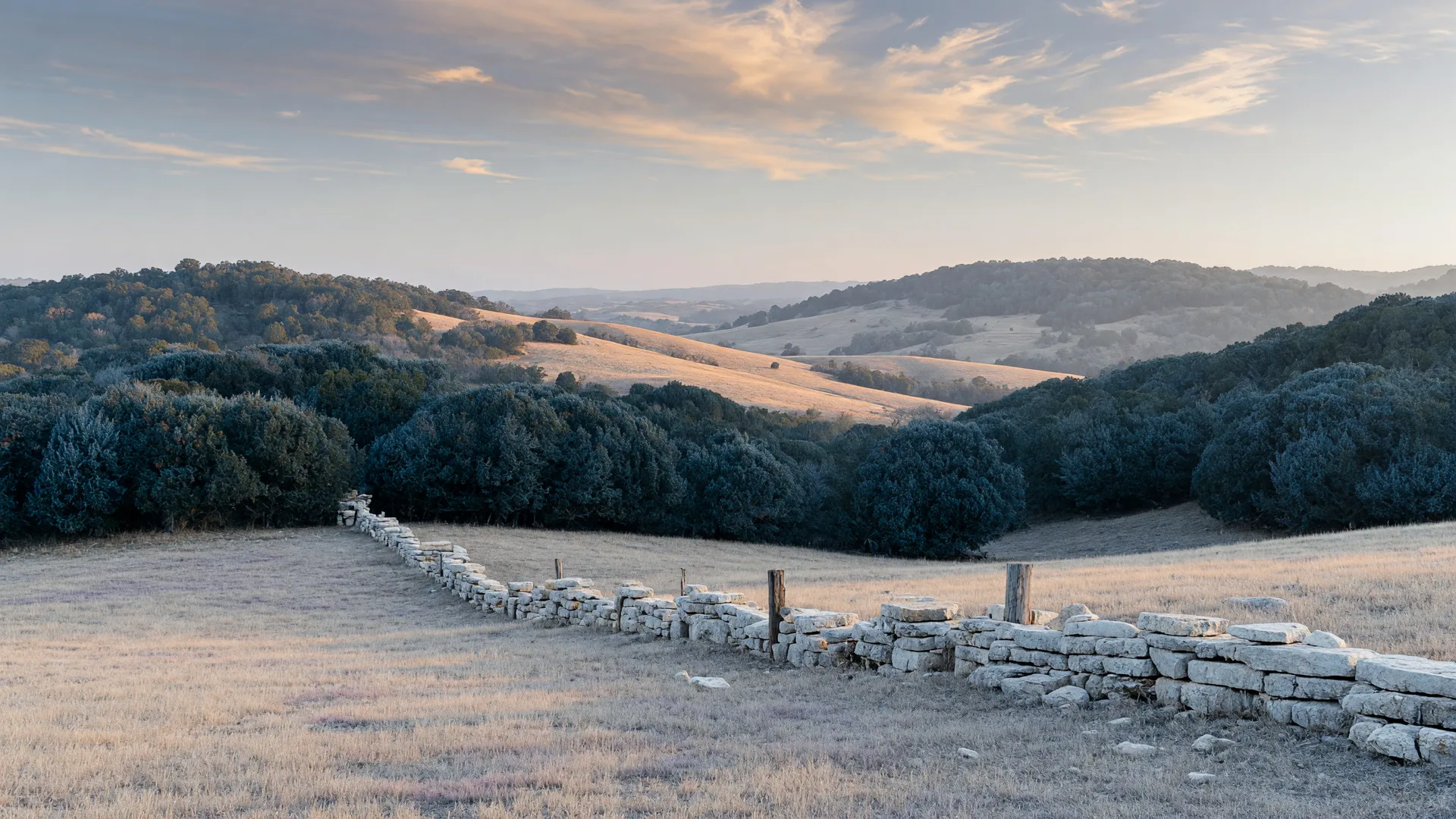
Cedar fever is not a virus and it is not a true fever. It is a seasonal allergic reaction, medically allergic rhinitis, to the pollen of Ashe juniper (Juniperus ashei), the wind-pollinated tree that covers the Hill Country and that nearly every Texan simply calls mountain cedar [1][2]. The "fever" part of the name comes from the inflammation response to an enormous winter pollen load, which can nudge body temperature up a fraction of a degree, and for a California transplant it is usually the first seasonal allergy they have ever had in December or January [1][3].
This guide covers the facts that matter before you move or in your first winter here: what cedar fever actually is, when the season runs, the pollen-count numbers that explain the misery, how it compares to California's spring tree-pollen season, how to tell it apart from the flu, and the practical steps that reduce the symptoms. Sources are listed at the end of the article and were checked October 16, 2026 [1][12][13].
Cedar Fever at a Glance
| What it is | A seasonal allergy (allergic rhinitis), not an infection |
| Cause | Pollen from Ashe juniper, commonly called mountain cedar |
| Season | Late November through mid-February, peaking in mid-January |
| Typical peak count | 9,000 to 12,000 grains per cubic meter in early January |
| All-time San Antonio record | About 80,000 grains per cubic meter (1982) |
| Is it a real fever? | No. A slight temperature bump from inflammation, not an illness |
| Best timing for relief | Start allergy medication in late November, before the peak |
Figures as published by Texas A&M, Cleveland Clinic, and KSAT San Antonio. Pollen counts vary by day and location.
What Cedar Fever Actually Is
Ashe juniper is a native evergreen that grows densely across Central Texas, the Hill Country, and the Edwards Plateau [2][7]. It is wind-pollinated, which is the whole problem: the tree does not need insects to move its pollen, so it releases enormous clouds of it into the winter air, and a single tree can release billions of pollen grains during a single event [8]. When a person allergic to that pollen breathes it in, their immune system overreacts, producing the classic allergy symptoms: a runny or stuffy nose, sneezing, itchy and watery eyes, a cough, a sore throat, sinus pressure, headaches, and fatigue [1][14].
The symptoms look like a cold or a mild flu, which is why so many new residents are convinced they are sick all winter. The difference is that cedar fever does not come with a true fever in the medical sense [1][14]. The allergic inflammation can raise body temperature slightly, often to the 99 to 100 degree range, but it stays well below the 100.4 degree mark that defines a real fever, and it clears when the pollen exposure drops [1][14].
The practical point for a transplant is simple: if you feel "sick" every January but the rest of the household is fine and the symptoms line up with warm, dry, windy days, you are almost certainly reacting to cedar pollen, not catching something [3][12].
When the Season Hits: A Winter Allergy, Not a Spring One
Mountain cedar is an unusually late pollinator. Most tree pollen in North America flies in spring, but Ashe juniper waits for the Hill Country's cool season and releases its pollen through the winter, which is what makes it so surprising to newcomers [2][11].
| Mid to late November | Season begins; first significant counts on warm, dry, windy days |
| December | Counts climb as the trees shed pollen ahead of the peak |
| Mid-January | Peak of the season; the worst counts of the year |
| February | Counts taper, though some years stretch into early March |
| Peak timing vs California | Texas mid-January peak runs two to four months before California's heaviest spring tree pollen |
The Numbers Behind the Misery
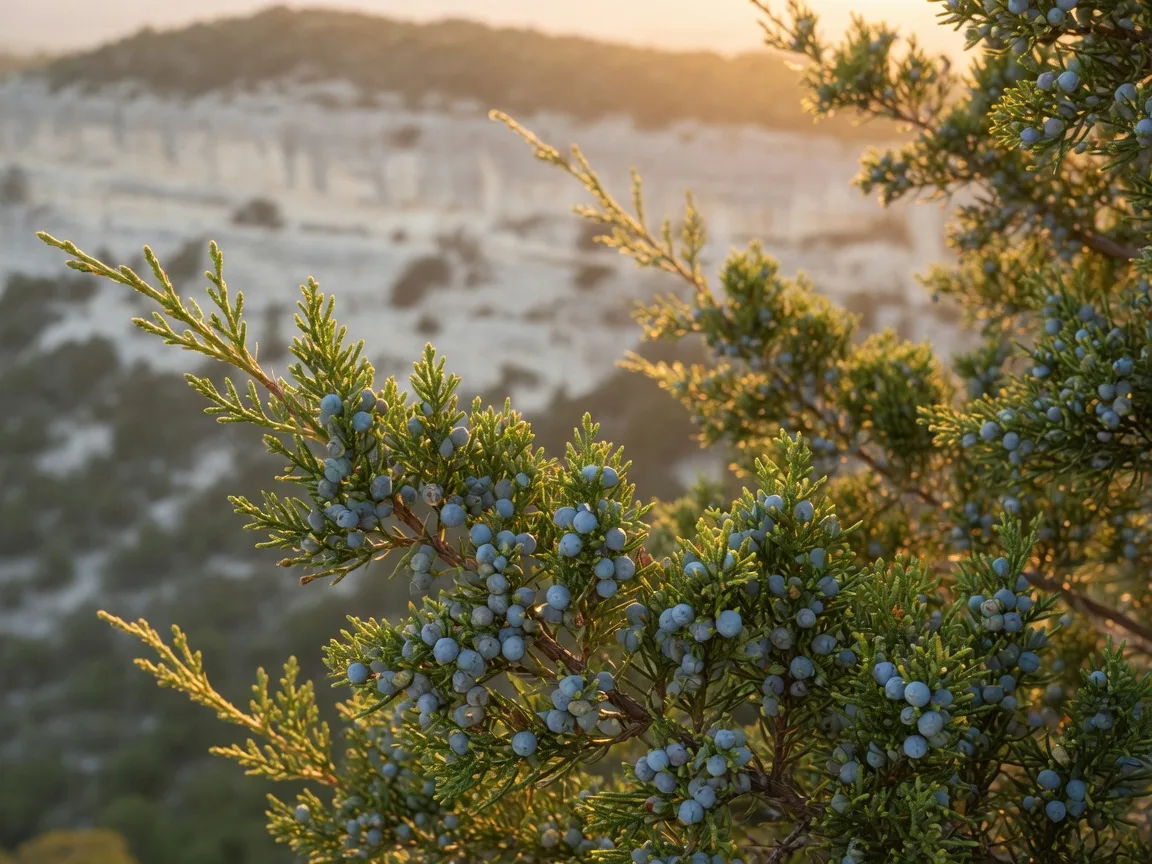
The pollen-count numbers are the part that surprises everyone from California, because no coastal city has anything like them. Early January 2026 readings in San Antonio ran roughly 9,000 to 12,000 grains per cubic meter of air, and the highest count ever recorded in the city was about 80,000, set back in 1982 [4][6]. For scale, most allergy tracking sites consider a tree pollen count above 1,500 grains per cubic meter to be very high [4].
| Early January 2026, San Antonio | Roughly 9,000 to 12,000 grains per cubic meter |
| Record count, San Antonio | About 80,000 grains per cubic meter (1982) |
| Severe season, 2011 | About 48,000 grains per cubic meter |
| Early February, tail of season | Still roughly 3,800 grains per cubic meter |
| Cedar in the region | More than 35 million tons by weight (Texas A&M Forest Service) |
| Rangeland covered | Ashe juniper covers roughly 8.6 million acres of Texas rangeland |
The acreage explains why cedar fever is a regional experience rather than a random one. The tree covers millions of acres across the Edwards Plateau, and the Texas A&M Forest Service puts the Hill Country's cedar at more than 35 million tons by weight [5][7][8]. When a warm, dry, windy January day hits, all of that releases at once, and the counts spike for a day or two before dropping again, which is why the season feels like a series of bad allergy days rather than one long constant [4][6].
Cedar Fever vs. the Flu: How to Tell Them Apart
Because the season overlaps with cold and flu season, new residents genuinely cannot always tell the difference. The comparison below is the shortcut allergists and urgent-care clinics use [1][12][14].
| True fever above 100.4 | Cedar fever: no. Flu: yes, common |
| Itchy, watery eyes | Cedar fever: yes. Flu: rare |
| Clear, runny nose | Cedar fever: yes. Flu: less typical |
| Body aches and chills | Cedar fever: mild at most. Flu: prominent |
| Sneezing | Cedar fever: frequent, often intense. Flu: uncommon |
| Timing | Cedar fever: matches warm, dry, windy pollen days. Flu: spreads person to person |
| Response to antihistamines | Cedar fever: symptoms ease. Flu: no change |
When in doubt, the test is straightforward: if the symptoms respond to an allergy medication within a day or two, it was pollen, and if they came with a real fever and aches and spread to other household members, it is more likely a virus [12][14]. The finding a Texas doctor guide covers how to build a relationship with a local provider for exactly these seasonal questions.
Why Californians Don't See It Coming
California has plenty of juniper, cedar, and cypress, but the state's heaviest tree pollen is a spring event. Oak, which is the big one for most California allergy sufferers, peaks from roughly March through mid-April, with the overall tree-pollen season running worst from March through May [9][10]. Northern California's juniper and cedar can pollinate from January into May, but the dominant, sneeze-inducing load is spring [9].
Texas mountain cedar flips that calendar. The Hill Country's peak lands in mid-January, which is two to four months ahead of California's heaviest spring tree-pollen season [9][10][11]. A Californian who has only ever thought of allergies as a March and April problem suddenly discovers a winter allergy season that coincides with the holidays, and because the counts run so high, the reaction can feel far more intense than the spring allergies they are used to [4][6].
The second surprise is geographic. Mountain cedar is everywhere in the Hill Country, not just in a specific city, so moving from one neighborhood to another rarely solves it. The Hill Country landscape guide and the what to expect overview both note the cedar brakes as part of the region's character, and they are part of its allergy profile too.
What Actually Helps: A First-Winter Playbook
The allergists' advice is consistent, and the single most important piece is timing: start treatment before the season peaks, not after you are miserable [12][13][15].
Start medication in late November. An over-the-counter nasal steroid spray, the kind with fluticasone or triamcinolone, plus a daily antihistamine, works best when it is already in your system as the counts climb. Beginning in November gives it weeks to take effect before the January peak [12][13].
Rinse your sinuses. A saline rinse, done with distilled water, flushes pollen out of the nasal passages and is the cheapest effective tool in the season. It pairs with the sprays rather than replacing them [1][12].
Watch the daily counts. San Antonio news outlets publish a daily mountain cedar count during the season. On very high days, keep windows closed, run an air purifier indoors, and limit time outdoors in the middle of the day, which is when wind-pollinated trees release most heavily [4][12][15].
Shower and change after being outside. Pollen clings to hair and clothing, so coming inside and changing keeps the day's load from living in your house. Removing shoes at the door and keeping bedroom windows closed at night makes a measurable difference [12][15].
Consider allergy shots for the long term. Allergen immunotherapy retrains the immune system and is the one treatment that changes the underlying sensitivity rather than managing symptoms. It requires a course of injections over years, so it suits people who plan to stay in the Hill Country, but it is the only route to genuine relief for severe cases [13][15].
The good news, for context: cedar season is finite. It runs roughly November through February, peaks in January, and then the counts collapse, usually by early March [2][11]. A first Hill Country winter is the hardest one because you do not know it is coming; the second one is manageable because you do.
What It Means for Buying a Hill Country Home
Cedar fever is a quality-of-life consideration, not a health or safety one, and it rarely changes a buying decision by itself. But a few practical points are worth knowing before you shop.
Nearly every Hill Country lot has juniper on or near it. Because the tree covers millions of acres, a "cedar-free" property barely exists. What varies is how much juniper sits immediately around the house, and some buyers with severe sensitivities prefer homes on cleared lots or with a line of hardwood trees as a partial buffer [7][8].
Indoor air quality becomes part of the house hunt. For allergy-sensitive households, a well-sealed home with central HVAC and quality air filtration is worth more in January than in June. This is one of the quieter reasons some Hill Country buyers prioritize newer, tighter construction.
Seasonal timing shapes how a house feels. The same view that reads as beautiful green winter hills is also the view of the pollen source. That is not a reason to avoid a property, but it is a reason to tour in January, not only in spring, if allergies run in the family.
If you are planning a move and want to talk through how the region's seasons, from the cedar season to the summer heat and the winter weather, fit your family's priorities, reach out for a no-pressure conversation.
The Bottom Line for Relocators
Cedar fever is the Hill Country's winter allergy season, caused by Ashe juniper pollen that peaks in mid-January at counts routinely in the thousands of grains per cubic meter, and it is the seasonal surprise Californians most often miss [1][4][6]. It is not a virus, it is not a true fever, and it is not permanent: the season runs roughly late November through February and then collapses [2][11].
The management playbook is straightforward: start a nasal steroid and antihistamine in November, use saline rinses, watch daily pollen counts, keep indoor air filtered, and shower after being outdoors [12][13][15]. For long-term relief, allergen immunotherapy is the option that treats the sensitivity itself [13][15]. Armed with that, the first Hill Country winter stops being a mystery and becomes what it actually is: a short, intense season with a known schedule and known solutions.

Written by
Bill Ross
Hill Country Homesteads Group, brokered by KW Boerne
Bill Ross is a Texas real estate agent (TX license 778434) serving Boerne, Fair Oaks Ranch, San Antonio, and the surrounding Hill Country, with a direct network of 1,100+ California real estate agents for coordinated cross-state relocations. He has been recognized in USA Today and The Washington Post for his relocation expertise, and his own family made the Silicon Valley to the Hill Country transition.
Related Guides
Winter in the Texas Hill Country
Climate averages, freezes, winterization, and the holiday calendar for your first Hill Country winter.
The Texas Heat Reality
What "hot" actually means coming from coastal California, with the month-by-month temperature picture.
Finding a Texas Doctor
How to navigate the healthcare system when you leave your California network behind.
Hill Country Landscape Guide
Juniper, live oak, limestone, and native grasses: the plants that define Hill Country property.
Fall in the Hill Country
The settling-in season for newcomers, before the winter cedar and holiday calendar arrive.
What to Expect
The honest climate, cultural, and seasonal overview for California relocators to the Hill Country.
Frequently Asked Questions
The questions California relocators actually ask about cedar fever, with answers traced to the sources below.
Is cedar fever contagious?
No. Cedar fever is an allergic reaction, not an infection, so it cannot be passed from person to person. It is caused by breathing in Ashe juniper pollen, and the people who react are allergic to that pollen. If you live in the same house and only one person has symptoms, that is the allergy working on the one who is sensitized, not a cold moving through the household.
Is cedar fever a real fever?
Not a true fever. The name comes from the inflammation response to a very heavy pollen load, which can push body temperature up a fraction of a degree. A real fever from an illness is usually 100.4 degrees Fahrenheit or higher and comes with the other flu markers. Cedar fever typically runs a slight elevation, around 99 to 100 degrees, and it clears once the pollen exposure drops.
When is cedar fever season in the Texas Hill Country?
Mountain cedar season runs roughly late November through mid-February, with the peak most often in mid-January. Pollen counts can climb through December, hit their worst readings around the middle of January, and then wind down through February. Some years stretch into March. Because the trees release pollen on warm, dry, windy winter days, the highest counts do not line up with cold weather.
How is cedar fever different from California's allergy season?
Timing, mostly. California's heaviest tree pollen is a spring event, with oak and other trees peaking from roughly March through May. Texas mountain cedar peaks in mid-January, two to four months earlier, which means a California transplant who only ever had spring allergies suddenly has a winter allergy season for the first time. The other difference is intensity: Hill Country counts routinely run in the thousands of grains per cubic meter, and the all-time San Antonio record is about 80,000.
What actually helps with cedar fever?
The effective playbook is to start before the season, not after symptoms peak: begin an over-the-counter nasal steroid spray and antihistamine in late November, use saline rinses, keep windows closed and run an air purifier, watch daily pollen counts, and shower or change clothes after being outdoors. For people with severe or recurring symptoms, allergen immunotherapy, commonly called allergy shots, treats the underlying sensitivity and is the long-term fix an allergist can offer.
Sources
- Cedar fever definition, symptoms, and treatment: allergic rhinitis to Ashe juniper pollen, not a true fever - Cleveland Clinic. my.clevelandclinic.org/health/diseases/25120-cedar-fever
- Cedar fever season in Texas: the tree, the pollen, and the timing - Texas A&M Forest Service. tfsweb.tamu.edu/cedar-fever-season-in-texas/
- 'Cedar Fever' season has arrived in Texas: what it is and when it peaks - Texas A&M Stories. stories.tamu.edu/news/2024/12/18/cedar-fever-season-has-arrived-in-texas/
- Mountain cedar approaching its peak: San Antonio readings of roughly 9,000 to 12,000 grains per cubic meter in early January 2026 - KSAT. www.ksat.com/weather/2026/01/03/mountain-cedar-approaching-its-peak/
- Mountain cedar season has begun for San Antonio: more than 35 million tons of cedar in the region per Texas A&M Forest Service - KSAT. www.ksat.com/weather/2025/12/08/achoo-mountain-cedar-season-has-begun-for-san-antonio/
- Highest mountain cedar count ever recorded in San Antonio: about 80,000 grains per cubic meter in 1982 and 48,000 in 2011 - KSAT. www.ksat.com/weather/2023/01/10/mountain-cedar-whats-the-highest-count-ever-recorded-in-san-antonio/
- Juniperus ashei (Ashe juniper): dense populations covering millions of acres on the Edwards Plateau - The Gymnosperm Database (conifers.org). www.conifers.org/cu/Juniperus_ashei.php
- Hill Country cedar guide: Ashe juniper covering roughly 8.6 million acres of Texas rangeland; a single tree releasing billions of pollen grains in an event - Hill Country Groundworks. hillcountrygroundworks.com/hill-country-cedar-guide/
- California juniper, cedar, and cypress pollen January to May; oak roughly March to mid-April - Chu Allergy & Asthma, California seasonal allergy plants. chuallergy.com/allergy-asthma-info/seasonal-allergy-plants/
- California allergy season: tree pollen worst March through May - Allermi. www.allermi.com/blogs/allergy-101/allergy-season-in-california-allergens-by-season-region-symptoms-treatment
- United States pollen calendar: mountain cedar November through February with a January peak, ahead of the national spring tree wave - Pollencount.org. pollencount.org/pollen/united-states/pollen-calendar/
- Cedar fever versus seasonal allergies: the difference and how to manage the season - Baylor Scott & White Health. www.bswhealth.com/blog/allergist-offers-tips-on-dealing-with-cedar-allergy-season
- Cedar fever in Texas: symptoms and relief, including starting medication before the season - Allergy Partners. www.allergypartners.com/articles/blog/cedar-fever-in-texas/
- Symptoms of cedar fever and why it is not the flu - Texas MedClinic. www.texasmedclinic.com/cedar-fever-is-here/
- Surviving mountain cedar season: tips from allergy specialists, including immunotherapy for long-term relief - Premier Allergy Texas. www.premierallergytx.com/blog/surviving-mountain-cedar-season-tips-from-allergy-specialists
Last reviewed: October 16, 2026. Sources verified for accuracy.