

Most relocation content about the Texas Hill Country is promotional. It highlights the tax savings, the lower home prices, the Hill Country charm, and the small-town feel. All of that is real. But it leaves out the parts that matter just as much when you are deciding whether to uproot your life and move 1,500 miles.
This article is different. It is a candid, data-driven assessment of who should probably not move to the Texas Hill Country — not because the area is bad, but because the realities of living here do not work for everyone. If you are evaluating this move, the most valuable thing you can do is understand the downsides clearly before you commit, not after you arrive.
Think of this as a go/no-go decision framework. Each section covers a real deal-breaker that causes some people to regret the move. A single non-negotiable issue may outweigh several acceptable trade-offs — and that is worth knowing now.
A note about geography: The Texas Hill Country is a large and varied region. This article focuses primarily on Boerne, Fair Oaks Ranch, Kendall County, northern Bexar County, western Comal County, and other communities connected economically to San Antonio. Conditions can differ materially in Kerrville, Fredericksburg, Wimberley, Dripping Springs, New Braunfels, and communities closer to Austin.
Automobile Dependence and Limited Public Transportation
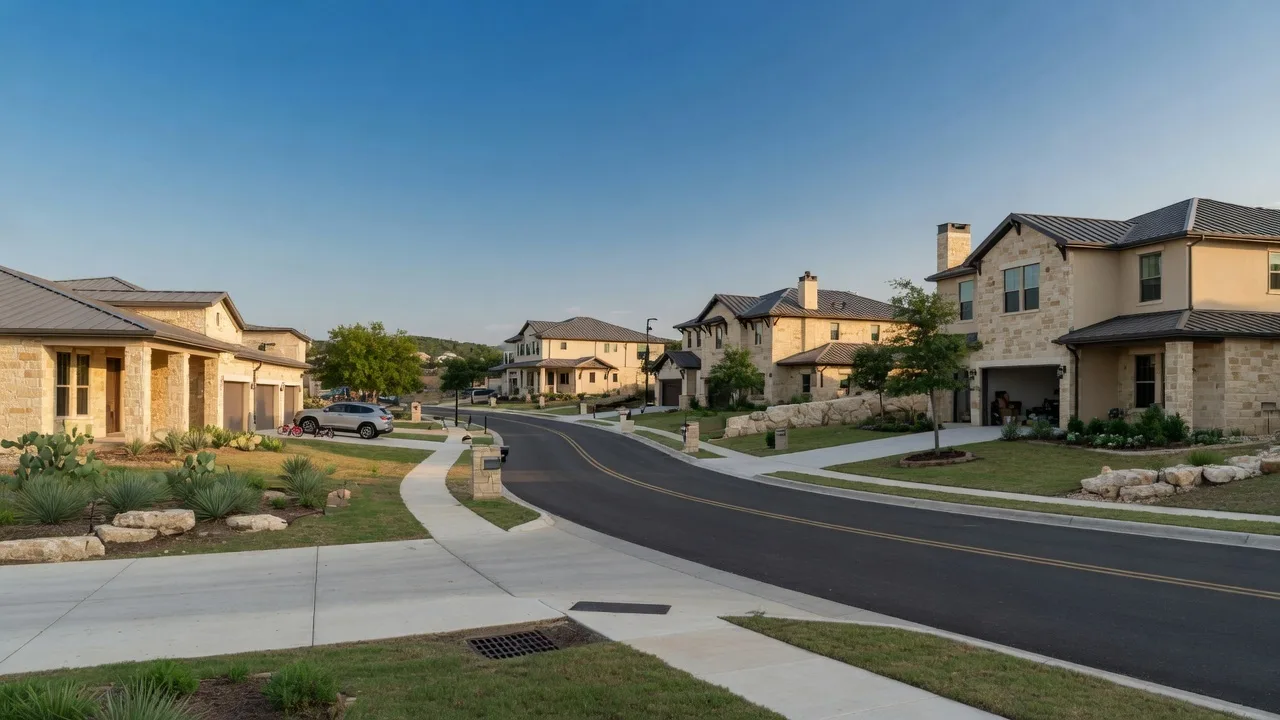
Boerne, Fair Oaks Ranch, and most nearby Hill Country communities do not have fixed-route local bus or passenger-rail systems. Limited demand-response transportation is available in parts of the region through Alamo Regional Transit, but it generally requires advance scheduling and is not a practical substitute for owning a vehicle.
San Antonio has a substantially larger public-transportation network through VIA, including fixed-route buses, express service, paratransit, and VIA Link on-demand service in designated zones. However, the system does not provide the geographic coverage or frequency many California residents may associate with major West Coast transit systems.
Every errand requires driving. Grocery runs, school drop-offs, medical appointments, pharmacy visits, dinner out — all of it happens by car. The nearest major medical centers (Methodist Hospital, University Hospital, the South Texas Medical Center) are 30 to 45 minutes from most Hill Country locations [1]. Specialist appointments, elective procedures, and emergency care beyond basic stabilization typically require a trip into San Antonio.
For families with teenage drivers, this means multiple vehicles. For retirees who may eventually give up driving, it means dependence on others or a significant reduction in independence. For remote workers who are accustomed to walking to a coffee shop, co-working space, or lunch spot, it means the car becomes the primary interface with the world outside your home.
Public Transit Availability: California Metro Areas vs. Texas Hill Country
| Location | Transit Type | Coverage | Practical Use |
|---|---|---|---|
| San Francisco / Bay Area | BART, Muni, Caltrain, AC Transit | Extensive — covers most urban/suburban areas | Car-free living is feasible in SF, Berkeley, parts of Oakland |
| Los Angeles | Metro Rail, Metro Bus, DASH | Growing — limited to core corridors | Partial use possible along rail lines; most areas car-dependent |
| Sacramento | SacRT Light Rail, bus network | Moderate — covers downtown and select suburbs | Functional for downtown commuters |
| Boerne, TX | Alamo Regional Transit demand-response | Limited demand-response service; no fixed-route local transit | Requires advance scheduling; not a practical daily substitute for driving |
| Fair Oaks Ranch, TX | Limited regional options | No citywide fixed-route transit; limited regional or eligibility-based options may vary by address | Not a practical daily substitute for driving |
| San Antonio (urban core) | VIA bus, express, paratransit, VIA Link | VIA bus, express, paratransit, and VIA Link service; no passenger rail | Substantially larger network than Hill Country communities, but not comparable to California metro transit systems |
Sources: U.S. Census Bureau, American Community Survey 2023 commute data; VIA Metropolitan Transit; San Francisco Municipal Transportation Agency [1].
The practical takeaway: if you or a family member do not drive, cannot drive, or strongly prefer not to drive for daily tasks, the Hill Country presents a genuine quality-of-life challenge that no amount of scenic beauty can offset.
Summer Heat and Extended Air-Conditioning Use
Texas summer heat is not a metaphor or an exaggeration. From June through September, normal afternoon highs at San Antonio International Airport range from approximately 90°F to 96°F. Hotter periods can reach or exceed 100°F, sometimes for consecutive days. The combination of direct sun, warm overnight temperatures, and prolonged air-conditioning use can be difficult for people who strongly dislike heat.
Air conditioning is not optional. It is a survival necessity. Your home's HVAC system will run nearly continuously from June through September, and potentially into October during warm autumns. Summer electricity bills can rise sharply, particularly in larger homes, older homes, houses with inadequate insulation, or properties with inefficient HVAC equipment. Actual costs depend on square footage, thermostat settings, insulation, HVAC efficiency, utility provider, electricity plan, occupancy, and whether the property has one or multiple systems. Before purchasing, ask for the property's actual utility bills for the previous 12 months rather than relying on a regional estimate.
Outdoor activity often needs to be scheduled for early morning or evening, with particular attention to National Weather Service heat advisories. Dogs and children require additional caution — sun-heated pavement can become hot enough to burn bare feet and pets' paws.
Average Monthly High Temperature: San Antonio, TX vs. Coastal California Cities
| Month | San Antonio, TX | Los Angeles, CA | San Francisco, CA |
|---|---|---|---|
| January | 63.3°F | 68°F | 57°F |
| February | 67.5°F | 69°F | 60°F |
| March | 73.8°F | 70°F | 62°F |
| April | 80.3°F | 73°F | 64°F |
| May | 86.6°F | 75°F | 66°F |
| June | 92.4°F | 79°F | 69°F |
| July | 94.9°F | 84°F | 70°F |
| August | 96.0°F | 84°F | 71°F |
| September | 90.1°F | 82°F | 72°F |
| October | 82.2°F | 77°F | 70°F |
| November | 71.7°F | 72°F | 63°F |
| December | 64.7°F | 67°F | 58°F |
Source: NOAA National Weather Service climate normals, 1991–2020 averages [2].
Summer High Temperature Comparison (°F)
Average July highs. San Antonio averages 12–26°F warmer than coastal California cities in summer.
If you thrive on year-round outdoor lifestyle — daily runs at noon, weekend beach trips, evening walks without checking the thermometer — the Hill Country summer will fundamentally change your routine. Most long-term residents adapt. But the adjustment is real, and it lasts four months every year.
Distance from Ocean, Mountains, Family, and Established Social Networks
The Texas Hill Country is landlocked. From Boerne, Corpus Christi is roughly 2½ to 3 hours away, Port Aransas approximately 3¼ to 3½ hours away, and Galveston approximately 4 to 4½ hours away, depending on traffic and the exact destination. These are Gulf Coast beaches, and they provide a different experience from the cooler water, coastal topography, and climate of the Pacific Coast.
There is no mountain skiing anywhere near the Hill Country. The nearest ski area in New Mexico is a 10-to-12-hour drive. The Hill Country hills, while beautiful, are 1,000 to 2,300 feet in elevation — limestone rolling terrain, not mountains in any recreational sense.
More importantly, moving to the Hill Country means leaving behind family, close friends, and social networks that may have taken decades to build. The distance to California is roughly 1,500 miles — a 3-to-4-hour flight plus airport transit on each end, or a two-day drive. Weekend visits are not practical. Holiday visits require advance planning. Aging parents, siblings with young children, college friends, professional networks — all of these relationships shift from "easy" to "scheduled" the moment you move.
The emotional weight of this distance is consistently underestimated by relocators. The first year feels adventurous. By year two or three, the missed birthdays, holidays, and spontaneous dinners begin to accumulate. Research on relocation and social isolation consistently identifies the loss of proximity to established relationships as one of the primary drivers of post-move regret [4].
Property Taxes — The Income Tax Trap
Texas has no state income tax. That is a real financial advantage, and it is the single most commonly cited reason people consider the move. But the mechanism Texas uses to fund government — primarily property taxes — creates a tax burden that many California buyers do not anticipate.
Texas property taxes are local and property-specific. The annual bill depends on the property's appraised value, the precise taxing entities serving the address, their adopted tax rates, and any applicable exemptions. Two homes with the same purchase price can have materially different tax bills because they are located in different school districts, cities, counties, emergency-service districts, municipal utility districts, or other taxing jurisdictions.
A qualifying Texas residence homestead currently receives a $100,000 exemption from school-district taxable value. Texas also generally limits annual increases in the appraised value of a qualifying residence homestead to 10%, plus the value of new improvements. The appraisal district may still increase the property's stated market value by more than 10%; the limitation applies to the appraised value used for taxation.
Before making an offer, review the property's prior tax bill, identify every taxing entity, estimate future taxes using the anticipated purchase price rather than the seller's current taxable value, and verify eligibility for homestead, over-65, disability, disabled-veteran, and local-option exemptions.
Property taxes may not be the only location-specific carrying cost. Some communities have homeowners-association dues, mandatory club charges, public-improvement-district assessments, municipal-utility-district taxes, water-service fees, transfer fees, or other recurring obligations. Review the title commitment, tax certificate, subdivision documents, HOA resale certificate, and every mandatory fee schedule before deciding what the home will actually cost.
Property-tax comparisons between states can be misleading because states differ in assessment practices, exemptions, appraisal caps, local tax structures, and other taxes. Buyers should compare the estimated tax bill for the specific Texas property with the actual tax bill on their current home rather than comparing statewide percentages.
Some California households may pay less in combined state and local taxes after moving to Texas, while others may not. Texas does not levy an individual state income tax, but property taxes, sales taxes, insurance, utility costs, and property-specific assessments can offset part of the difference. A household considering relocation should compare its complete projected budget and consult a qualified tax professional about its individual circumstances.
You Need an Insurance Quote Before You Commit
Homeowners insurance can materially change the monthly cost of ownership. Premiums and eligibility depend on the property, roof age and condition, construction type, prior claims, wildfire exposure, and insurer. Wind and hail deductibles may be percentage-based rather than fixed dollar amounts, and an older roof may receive depreciated actual-cash-value coverage instead of full replacement-cost coverage.
Obtain a property-specific insurance quote during the option period. Confirm the annual premium, convert percentage deductibles into dollars, ask whether the roof is insured at replacement cost or actual cash value, and determine whether the insurer has imposed exclusions or coverage limitations. A home that appears affordable based on principal, interest, and taxes may not be affordable after insurance is properly calculated.
Larger Properties Requiring More Maintenance
One of the appeals of Hill Country living is space. Where a California buyer might be looking at a 2,000-square-foot home on a 5,000-square-foot lot, the same budget in the Hill Country often buys a 3,000-plus-square-foot home on one to five acres. That additional space comes with additional responsibility.
Hill Country properties frequently operate on private well water and individual septic systems rather than municipal water and sewer. Wells require periodic testing, pump maintenance, and potential drilling costs if water tables shift. Septic systems — particularly aerobic systems, which are common in the region — require regular maintenance, quarterly monitoring in some counties, and eventual replacement at costs ranging from $15,000 to $30,000 [7].
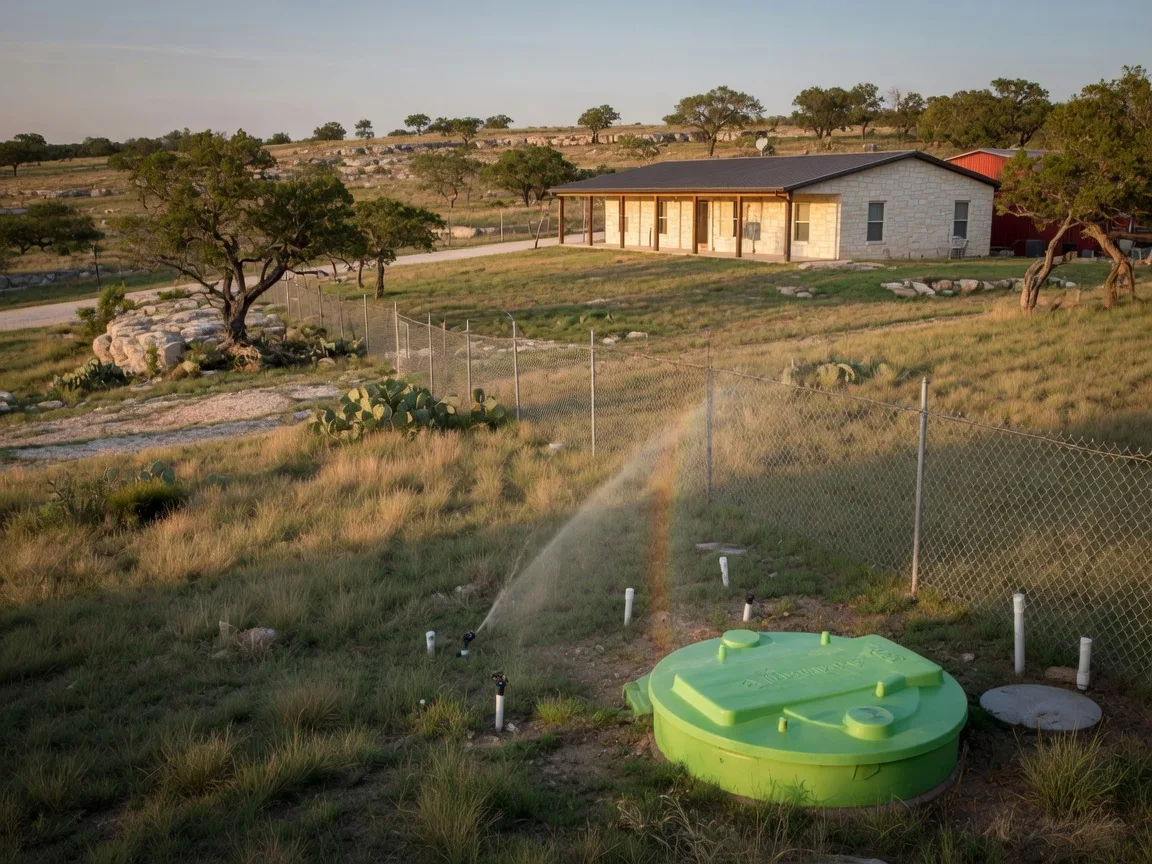
Rural Hill Country properties rely on private wells and septic systems — both require regular maintenance, professional inspection, and eventual replacement.
Some qualifying tracts receive agricultural-use appraisal through wildlife management. This is not an automatic tax reduction available to every acreage owner. The land generally must already qualify for open-space agricultural or timber appraisal, and the owner must actively perform and document qualifying wildlife-management practices. Prospective buyers should verify the property's current qualification, required management plan, filing obligations, and potential rollback-tax exposure with the appraisal district and a qualified tax adviser.
Acreage properties can carry substantial and unpredictable maintenance expenses. Costs vary according to the size and condition of the property, vegetation, fencing, access roads, equipment, well depth, water treatment, septic-system type, soil conditions, and previous maintenance. Before purchasing, obtain a septic inspection, a well inspection and water-quality test, available service records, the ages of pumps and major equipment, and written estimates for any known deficiencies.
Local Soil and Foundation Realities
Much of the Texas Hill Country sits on clay-rich or caliche soil that expands when wet and contracts during dry periods. This movement can stress residential foundations, particularly slab-on-grade construction. Unlike coastal California, where soil and climate impose different structural demands, many Hill Country homeowners schedule seasonal foundation watering during extended dry spells to maintain consistent soil moisture near the foundation. Before purchasing, request a foundation inspection, review any historical repair documentation, and ask whether the property has a active moisture-maintenance routine.

Hill Country clay and caliche soils expand and contract with moisture changes — a primary cause of foundation movement in slab-on-grade homes.
Remote Workers Must Verify the Exact Address
Broadband and cellular service can vary by street and even by individual property, particularly outside established subdivisions. A provider's general service-area map is not proof that a particular home has reliable high-speed service.
Before purchasing, identify the seller's current provider and plan, run wired and Wi-Fi speed tests at the property, verify upload speed and latency, determine whether fiber or cable is physically connected, test cellular service inside the home, and identify a workable backup connection. The FCC National Broadband Map is a useful starting point, but provider-reported availability should be confirmed directly.
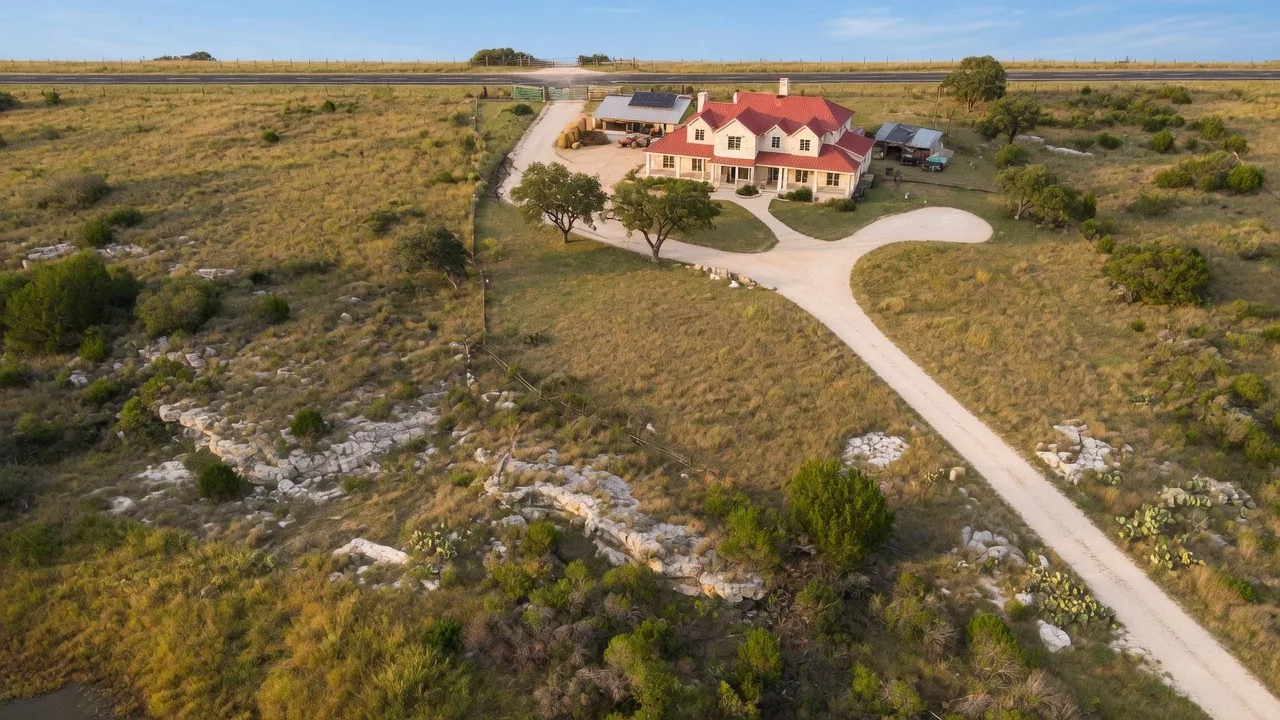
Hill Country properties on acreage offer space and privacy — but also require ongoing maintenance of wells, septic systems, and natural landscape.
Cedar Allergies, Insects, Wildlife, Drought, and Severe Weather
The Texas Hill Country's natural environment is one of its greatest assets — and one of its most persistent challenges. The ecosystem is fundamentally different from California's, and the adjustment affects daily comfort in ways that relocation guides rarely discuss.
Cedar Fever
Cedar fever is especially severe in Central Texas because of the region's concentration of Ashe juniper, although juniper-pollen allergies occur elsewhere. Symptoms can resemble a cold or flu and may include congestion, sneezing, itchy or watery eyes, coughing, sore throat, headache, and fatigue. Most people do not develop a true fever; a measured fever may indicate another illness.
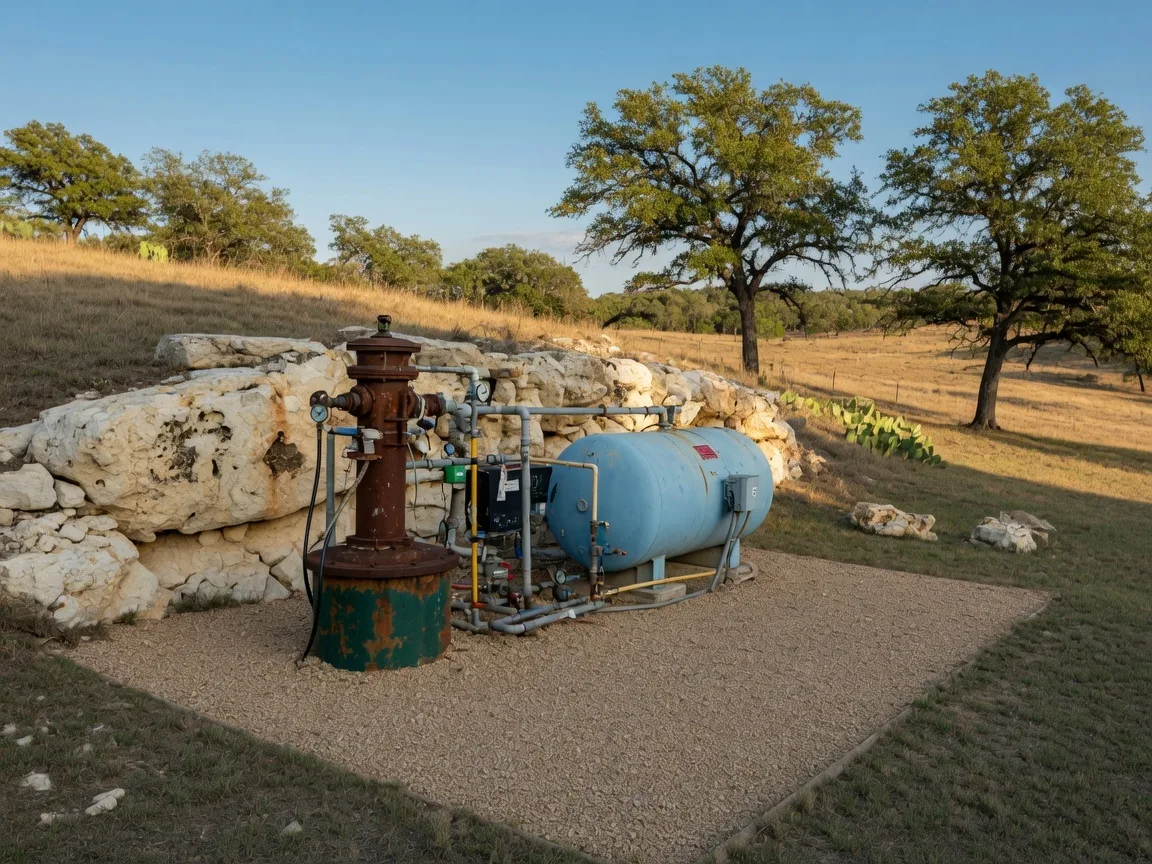
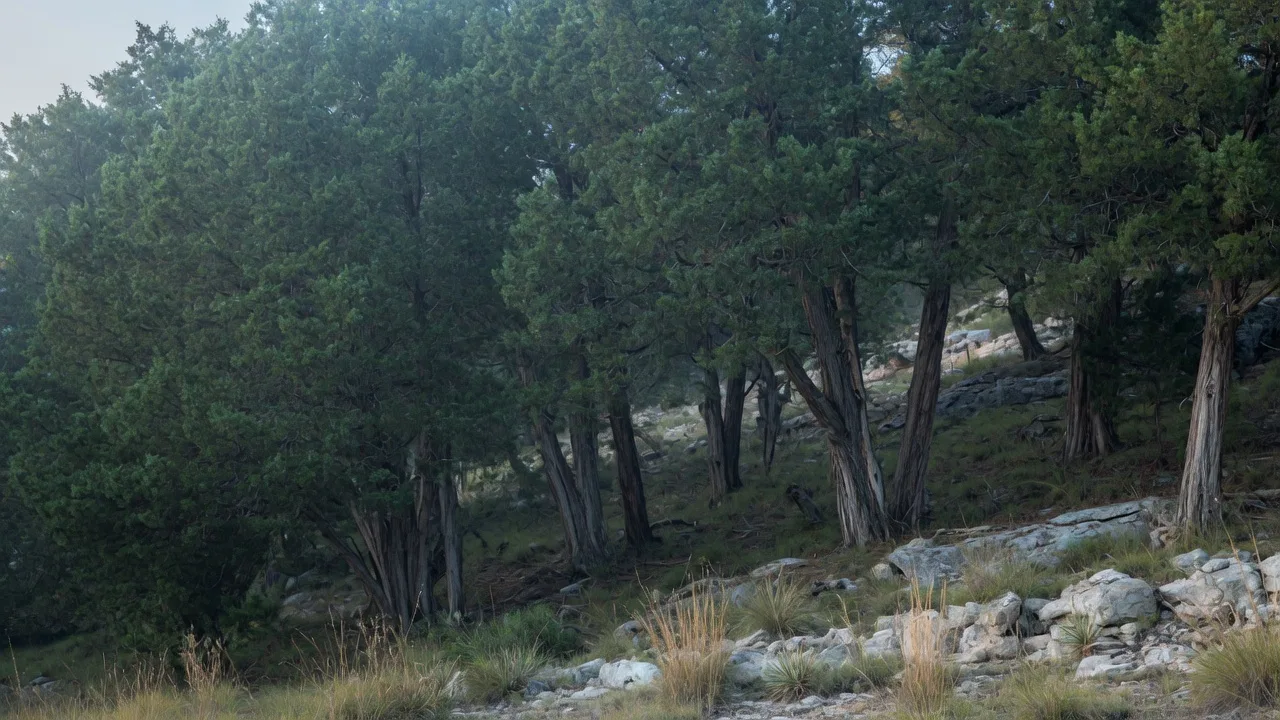
Ashe juniper — the "cedar" of cedar fever — is abundant throughout the Hill Country and releases heavy pollen loads from December through February.
Insects and Wildlife
Scorpions are common in Hill Country homes, particularly in properties near undeveloped land. Tarantulas, fire ants, ticks (including those carrying Rocky Mountain spotted fever), copperheads, and Western diamondback rattlesnakes are all part of the local ecosystem. Deer — beautiful to look at — are prolific and will eat ornamental landscaping, vegetable gardens, and even young trees if not protected with fencing. These are not occasional visitors. They are permanent neighbors.
Drought and Water Restrictions
The Hill Country experiences cyclical drought. In a recent extreme drought year, San Antonio recorded only 23.95 inches of rainfall — well below the 32.38-inch annual normal — illustrating how volatile the region's precipitation can be [10]. During drought conditions, municipal water providers impose outdoor watering restrictions — sometimes to one day per week or less. Properties relying on wells may see reduced water pressure or need to deepen wells. The Edwards Aquifer, which supplies much of the region's groundwater, is subject to withdrawal limits managed by the Edwards Aquifer Authority, and water levels fluctuate significantly with drought cycles.
Water Risk Is Property-Specific
Buyers should not assume that a scenic acreage property has abundant or inexpensive water. For a private well, obtain the available well report, depth and construction information, pump age, recent yield or flow information, storage capacity, water-quality testing, treatment-system records, and nearby well history. For a utility-served property, confirm the provider, base charges, current drought restrictions, connection capacity, and any impact or meter fees. Historical Texas well reports can be researched through state water-well databases, but the existing well and equipment should still be professionally evaluated.
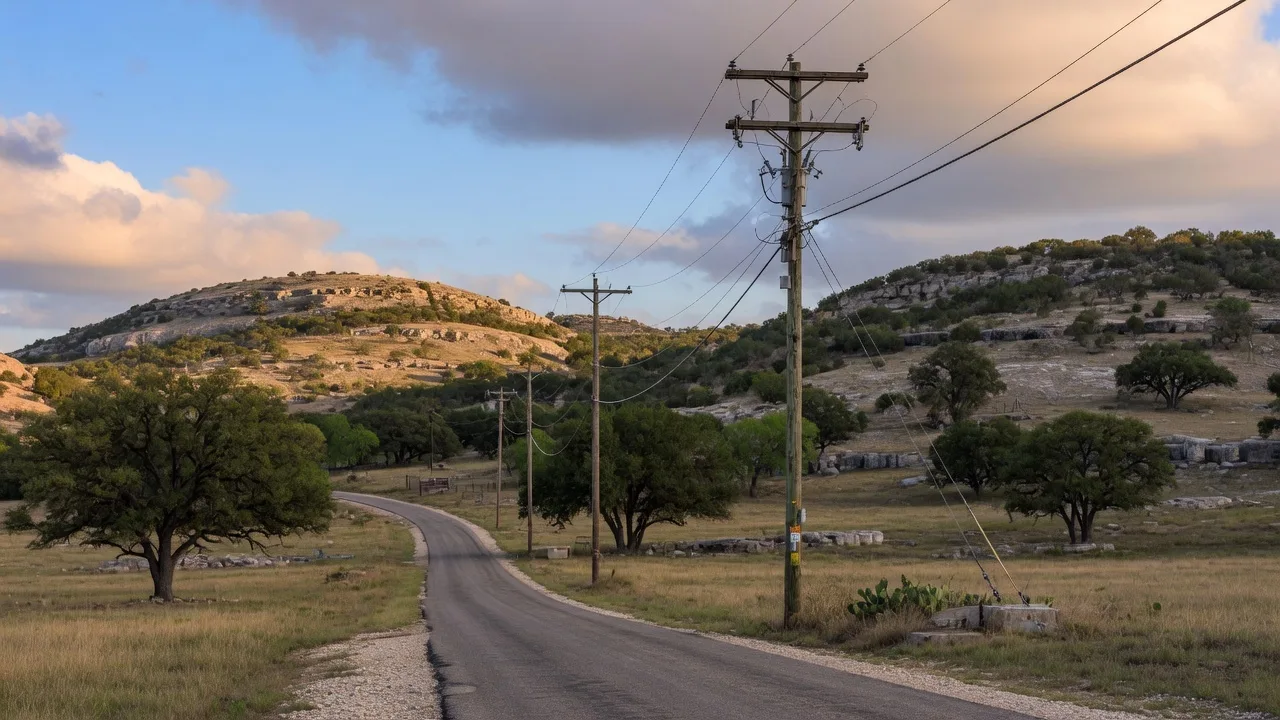
Hill Country well systems require periodic testing, pump maintenance, and professional evaluation before purchase — water quality and yield are never guaranteed.
Severe Weather
Hail storms are a regular occurrence in spring and early summer. Hill Country hailstorms can produce golf-ball-sized stones that damage vehicles, roofs, and windows. Wind and hail losses are commonly covered by homeowners policies in inland Texas, subject to the policy's terms. Deductibles may be percentage-based rather than a fixed dollar amount, and roof coverage may be limited to depreciated actual cash value as the roof ages. Obtain a property-specific insurance quote during the option period, convert every percentage deductible into dollars, and confirm how the insurer would settle a roof claim. Flash flooding is another serious risk — low-water crossings throughout the Hill Country can become impassable or deadly during heavy rain events. Texas leads the nation in flood-related fatalities [10].
Power Grid Considerations
Texas operates its own electrical grid through the Electric Reliability Council of Texas (ERCOT), which functions independently from the national grid. While reliability has improved since the 2021 winter storm, extended outages during extreme heat or severe weather remain possible, particularly in rural areas served by long distribution lines. For rural Hill Country homeowners, a standby whole-home generator is often a practical necessity rather than a luxury. Propane or natural-gas generators with automatic transfer switches can maintain critical systems — refrigeration, medical equipment, well pumps, and air conditioning — during prolonged outages. Buyers should budget for generator purchase, installation, fuel storage, and periodic maintenance as part of the true cost of rural homeownership.
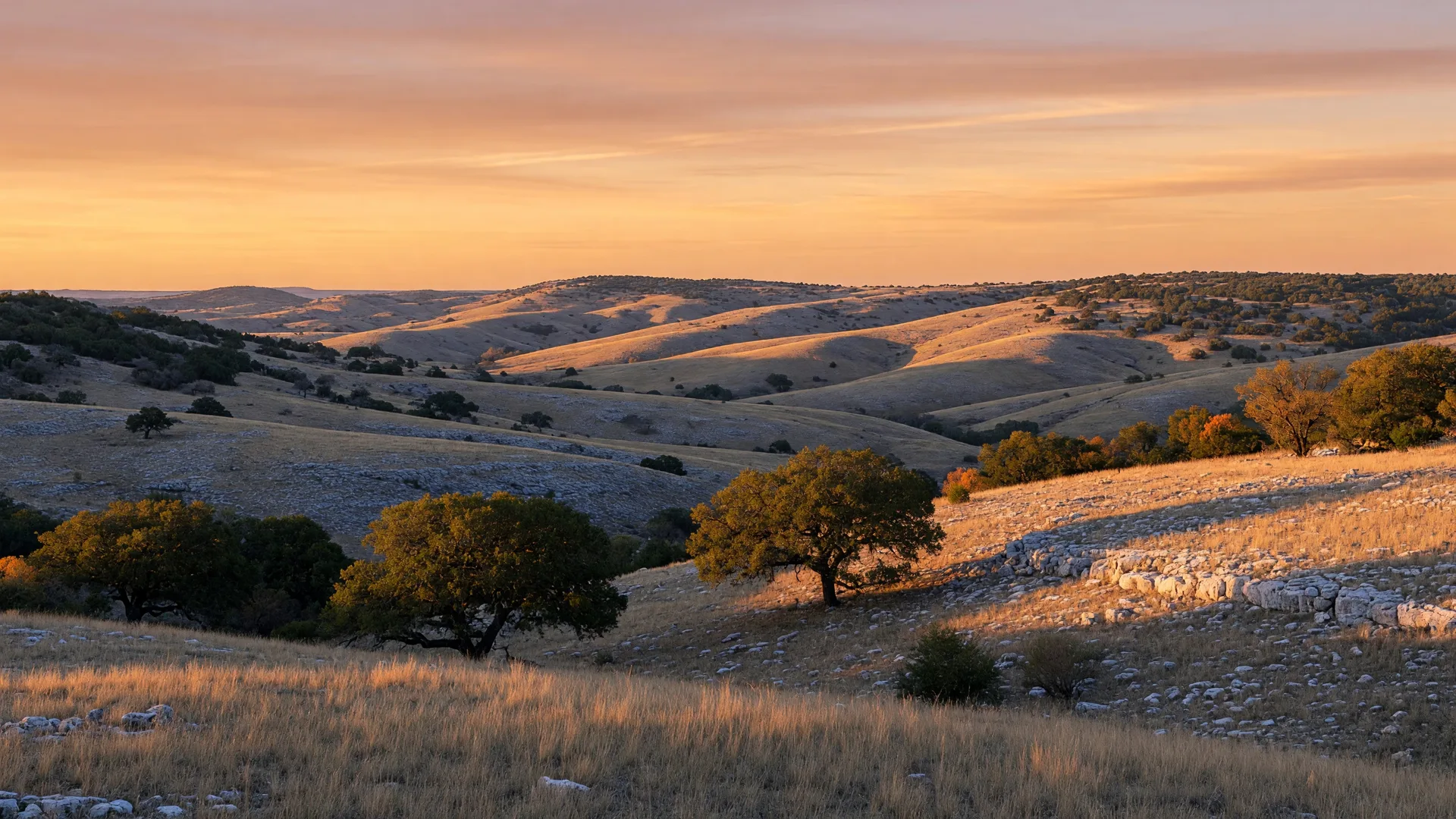
Rural Hill Country homes depend on long distribution lines — extended outages during extreme weather remain possible, making standby generators a practical necessity.
Hill Country Environmental Challenges: Month-by-Month Calendar
| Month | Primary Challenge | Intensity |
|---|---|---|
| January | Peak cedar pollen season; cold fronts with temperature swings | Severe |
| February | Cedar pollen subsides; early spring allergens begin | Moderate to High |
| March | Oak pollen season begins; spring storm season starts; tornado risk | Moderate |
| April | Peak oak and grass pollen; severe thunderstorm and hail season | High |
| May | Grass pollen peaks; flash flood risk increases; temperatures rise | Moderate to High |
| June | Extreme heat begins; afternoon thunderstorms | High |
| July | Peak heat (96–100°F+); drought risk | Severe |
| August | Sustained extreme heat; drought conditions; wildfire risk | Severe |
| September | Summer heat persists; increasing rainfall and flash-flood risk | Moderate |
| October | Cooler conditions often begin, but ragweed, occasional heavy rain, and severe-weather events remain possible. Overall disruption level: Low to Moderate. | Low to Moderate |
| November | First cold fronts; mild conditions; cedar pollen begins late month | Low |
| December | Cedar pollen season begins; holiday gatherings around outdoor fires | Moderate to High |
Source: Texas Department of State Health Services pollen monitoring; National Weather Service Austin/San Antonio [8][10].
Limited Walkability Outside Selected Neighborhoods
Walkability — the ability to accomplish daily tasks on foot — is one of the most significant lifestyle differences between California metro areas and the Texas Hill Country. Most Hill Country communities were designed around the automobile, not the pedestrian. Sidewalks are uncommon outside of downtown Boerne and a handful of master-planned developments. Bike infrastructure is limited. Mixed-use, walkable neighborhoods where you can live, shop, eat, and access services without a car are rare.
Boerne's downtown Hill Country Mile is a notable exception — a roughly 1.75-mile walkable district with locally owned businesses, restaurants, and the Cibolo Creek trail. It is genuinely walkable for daily tasks like coffee, meals, and small errands. But it serves a specific geographic area, and most residents still drive to it from surrounding neighborhoods.
Walkability varies significantly by address. Downtown Boerne and portions of the Hill Country Mile are comparatively walkable, while most subdivisions, gated communities, and acreage properties remain car-dependent. Buyers should evaluate the exact address, route conditions, sidewalk availability, road crossings, lighting, and walking distance to everyday services rather than relying on a citywide score.
For California relocators accustomed to the walkability of neighborhoods like San Francisco's Noe Valley, Berkeley's Elmwood, or Sacramento's Midtown, the adjustment to car-dependent Hill Country living is substantial. If daily walkability — walking to get coffee, stroll to a park, or bike to the grocery store — is central to how you experience your neighborhood, verify walkability in the specific area you are considering. It varies dramatically from one Hill Country location to the next.
Longer Drives to Major Employers, Airports, and Specialized Medical Care
The Hill Country's distance from major employment centers, airports, and specialized medical facilities is a daily reality that relocation brochures minimize. Boerne and Fair Oaks Ranch sit 25 to 45 minutes from downtown San Antonio and the South Texas Medical Center. For commuters, this means 45 to 90 minutes in the car each way, depending on destination and time of day. For medical care, specialty appointments, cancer treatment, and surgical procedures typically require trips to San Antonio.
San Antonio International Airport (SAT) is the primary airport for Hill Country residents. Drive times from Boerne or Fair Oaks Ranch to SAT range from 25 to 40 minutes [12]. San Antonio International Airport currently lists nonstop service to Los Angeles, San Diego, and San Francisco. Airlines, frequencies, and destinations change, so travelers should verify current service directly with the airport and carrier. Scheduled flight time to California is generally closer to three to four hours, depending on the destination, rather than a uniform 2½ hours. Connecting flights through Houston, Dallas, or Denver add additional travel time for many California destinations.
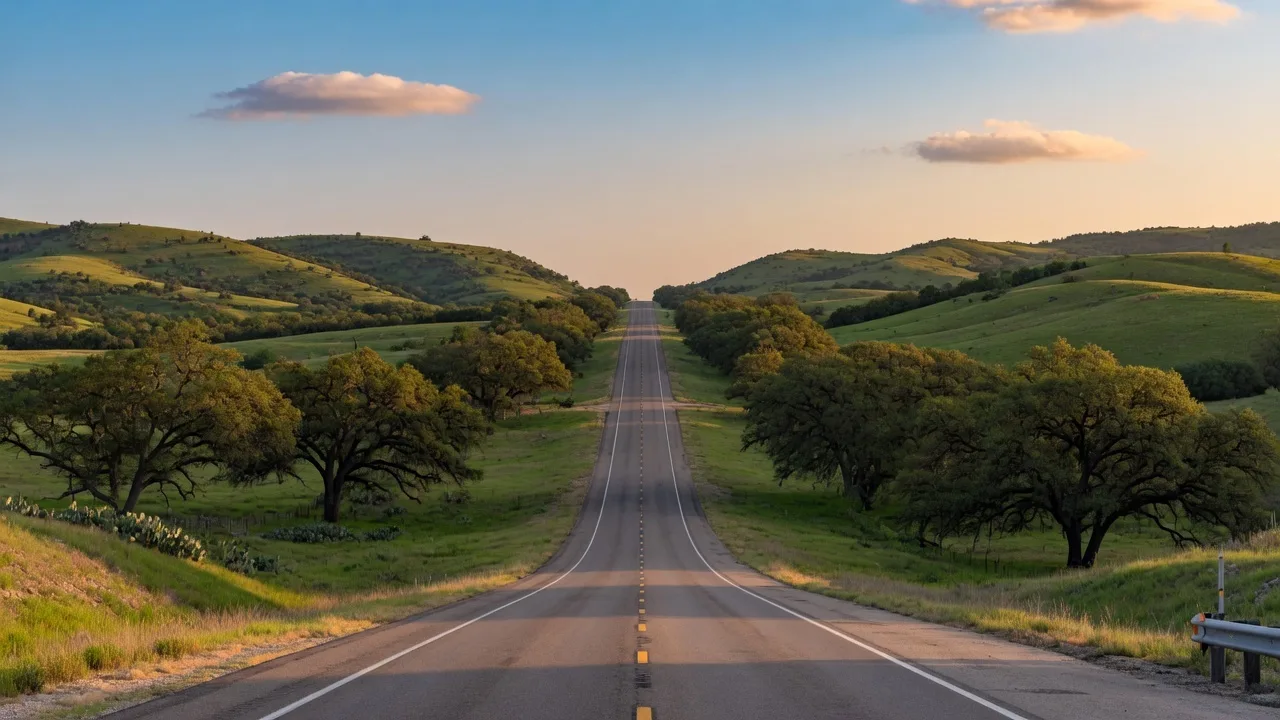
Hill Country driving distances are real — commutes to San Antonio, airports, and medical centers require 25 to 95 minutes depending on destination.
Drive Times from Boerne and Fair Oaks Ranch to Key Destinations
Driving-time note: These are approximate planning ranges, not guaranteed commute times. Travel can change substantially by departure time, crash activity, construction, weather, and the specific starting address. Anyone expecting to commute regularly should test the actual route during the relevant weekday morning and evening periods before choosing a home.
| Destination | From Boerne | From Fair Oaks Ranch | Notes |
|---|---|---|---|
| San Antonio Int'l Airport (SAT) | 25–35 min | 20–30 min | Primary airport for Hill Country residents |
| Downtown San Antonio | 35–45 min | 30–40 min | Via I-10; traffic varies by time of day |
| South Texas Medical Center | 35–50 min | 30–45 min | Major hospitals, specialty care, cancer center |
| The Domain (Austin tech corridor) | 60–75 min | 55–70 min | Via I-10 and TX-130; not a practical daily commute |
| Austin-Bergstrom Int'l (AUS) | 75–95 min | 70–90 min | Alternate airport with broader route network |
| Galveston Beach | Approx. 4–4½ hrs | Approx. 4–4½ hrs | Gulf Coast beach; approximate off-peak drive time; peak periods may be longer |
All times are approximate off-peak drive times. Approximate weekday peak-period ranges, checked on July 11, 2026, may be longer depending on departure time and conditions. Source: Google Maps driving-time estimates; San Antonio International Airport access data [12].
If your career requires regular access to a major tech campus, financial district, or industrial center, evaluate your actual commute before committing to a Hill Country address. The lifestyle benefits of Hill Country living are real — but they are harder to enjoy if you spend two hours a day in the car.
Retirees should evaluate more than their current ability to drive. Consider future access to groceries, primary care, specialists, pharmacies, home-health providers, emergency services, and transportation if one spouse eventually stops driving. A secluded acreage home that works well at 65 may become isolating or difficult to maintain at 80.
Rapid growth can change traffic, construction noise, school enrollment, drainage, views, and the rural character that attracted a buyer in the first place. Before purchasing, review nearby subdivision plats, zoning or development applications where applicable, roadway projects, utility extensions, annexation plans, and planned commercial development. Evaluate what may be built nearby, not merely what exists today.
Community Culture Is Highly Localized
Community culture varies substantially across the Texas Hill Country and even between adjacent neighborhoods. Political views, religious participation, civic traditions, attitudes toward firearms, and social expectations cannot be reduced to a reliable countywide stereotype.
Prospective residents should spend meaningful time in the communities they are considering, attend public events, visit local businesses and public facilities, review objective public information, and decide independently whether the environment fits their preferences. Housing options and professional real estate services should always be presented consistently without regard to religion, race, national origin, familial status, disability, sex, or any other protected characteristic.
Rebuilding Friendships and Community Later in Life
Building a new social network requires deliberate time and repetition. One study estimated that it takes approximately 50 hours of interaction to move from acquaintance to casual friend, about 90 hours to become friends, and more than 200 hours to become close friends. Those figures are estimates rather than a universal timetable, but they illustrate why relocation can feel socially incomplete long after the boxes are unpacked [4].
Texas Hill Country communities can be genuinely welcoming. Neighbors bring food when you move in. Local organizations hold community events. Churches and civic groups extend invitations. But there is a difference between being welcomed and being integrated. Breaking into established social circles — the families who have known each other since their kids were in kindergarten, the church groups that have met weekly for a decade, the neighborhood gatherings where everyone already has a role — takes years, not months.
For relocators in their 40s, 50s, or 60s, this challenge is compounded. College-age children may not return to the Hill Country after school. Professional networks take time to build. Spouses may find community at different rates, creating an imbalance that strains relationships. The loss of proximity to lifelong friends — the people who have known you for decades and do not need an introduction — is an emotional cost that does not appear on any financial spreadsheet.
In my experience working with relocating clients, many people say that feeling fully established takes longer than expected. Some develop strong connections quickly; others need several years. Personality, work arrangements, family responsibilities, health, neighborhood design, and willingness to participate in recurring activities all affect the process.
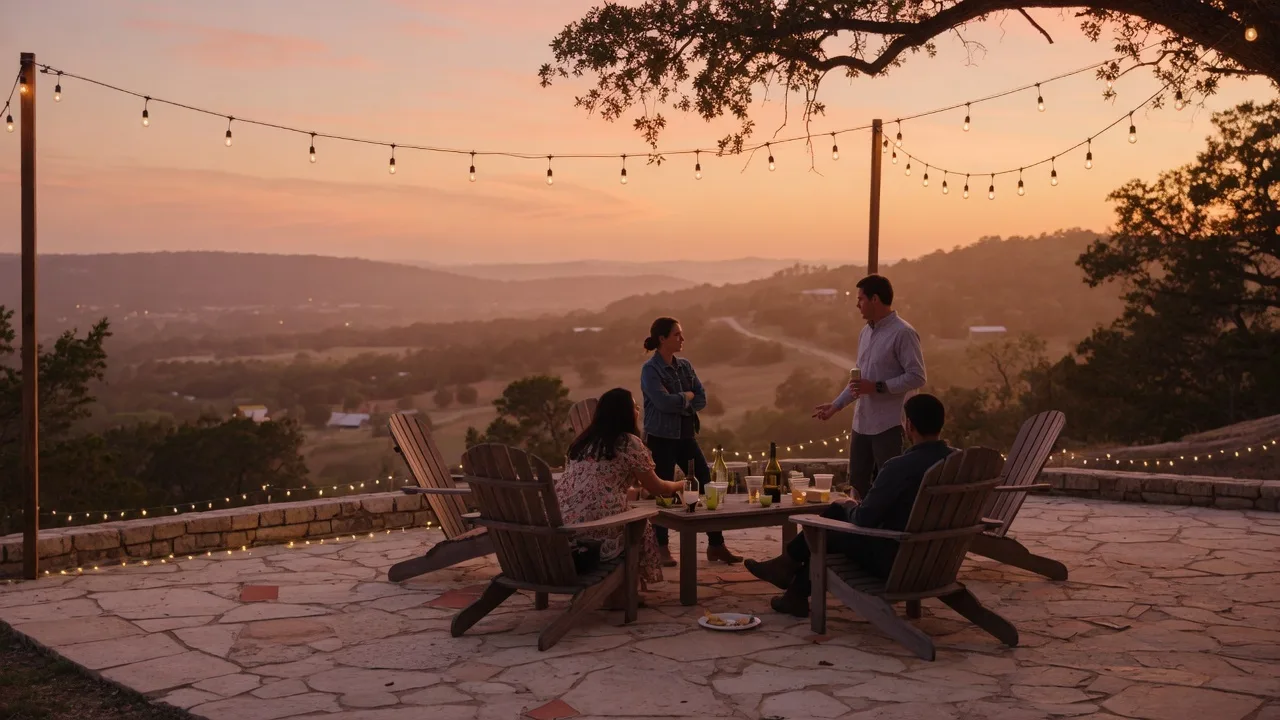
Building community takes time. Most relocated adults report two to five years before feeling genuinely settled in a new town.
Conduct a Real-World Relocation Test
Before making a permanent decision, rent in or near the actual target community and test ordinary life rather than treating the visit as a vacation. Whenever possible:
- Visit during July or August if heat tolerance is uncertain.
- Visit during cedar season if allergies are a concern.
- Drive the anticipated commute at the actual weekday departure time.
- Visit the grocery store, pharmacy, hospital, airport, and other frequently used services.
- Test cellular and broadband service at the exact property or neighborhood.
- Obtain a sample property-tax calculation and property-specific insurance quote.
- Spend evenings and weekends in the community, when traffic, noise, and social activity may differ.
- Calculate the cost and time required for regular trips back to California.
The purpose is not to prove that the Hill Country is right or wrong. It is to determine whether the compromises required by a particular location are compatible with the life you actually intend to live.
Decision Framework: Go or No-Go Checklist
Use this checklist to evaluate whether the Hill Country's realities align with your priorities. Do not treat this checklist as a numerical test. A single non-negotiable issue — such as inability to drive, serious heat intolerance, dependence on nearby family, or frequent need for distant specialty medical care — may outweigh several acceptable trade-offs. Separate true deal-breakers from conditions that can be mitigated through location, housing choice, budgeting, or advance planning.
| Factor | Reality | If This Is You, Proceed With Caution |
|---|---|---|
| Car dependence | No public transit; every errand requires driving | You do not drive, or you strongly prefer not to rely on a car daily |
| Summer heat | Normal summer highs of approximately 90°F to 96°F, with hotter periods reaching 100°F or more; A/C is mandatory | You require year-round outdoor activity or struggle in extreme heat |
| Distance from ocean and mountains | Nearest beach 3.5+ hours; no skiing; landlocked terrain | Ocean access or mountain recreation is central to your lifestyle |
| Distance from family and friends | 1,500 miles from California; weekend visits impractical | You have aging parents, young children near family, or deep community ties you cannot replace |
| Property taxes | 1.7–2.3% effective rate; no Prop 13-style assessment lock | You are on a fixed income, or your California tax bill is locked well below market rate |
| Property maintenance | Wells, septic, acreage, and natural landscape require ongoing investment | You want a low-maintenance, turnkey lifestyle |
| Allergies and wildlife | Severe cedar pollen season; scorpions, snakes, fire ants, deer | You have severe allergies or are uncomfortable with venomous wildlife |
| Walkability | Car-dependent outside downtown Boerne; limited bike infrastructure | Daily walkability is essential to your quality of life |
| Commute and medical access | 30–60+ minutes to major employers, airports, and specialty care | You commute daily, or require frequent specialized medical appointments |
| Community fit | Local culture and civic life vary by town, neighborhood, and social circle | You have not spent meaningful time locally to evaluate the community using your own priorities and observations |
| Building community | Two to five years to develop meaningful local friendships | You need immediate social connection or have limited capacity for community investment |
A Personal Note

I have lived this transition. I moved to the Texas Hill Country after decades in California, and I built this practice around helping others make the same move. The Hill Country is home now, and I would not change that. But I also would not pretend that every part of the adjustment was easy.
The heat took two summers to truly acclimate to. I missed the ocean more than I expected in the first year. Building a real social network here took longer than I thought it would, even as someone who is naturally outgoing and involved. And the property tax bill was a genuine surprise the first time I opened it.
The people who thrive here are the ones who come in with clear eyes. They love the space, the community, the pace of life, and the financial advantages — and they have accepted the trade-offs honestly. The people who struggle are the ones who moved for the savings alone and did not account for what they were leaving behind.
If you are evaluating this move, I am happy to have a direct conversation about whether the Hill Country fits your specific situation. No pressure, no pitch — just an honest assessment based on what I have seen work and what I have seen not work.
Frequently Asked Questions
What is the most commonly underestimated cost of relocating to the Hill Country?
In my experience, one of the most commonly underestimated costs is the loss of proximity to family, longtime friends, and established support networks. The financial benefits of the move are real, and most people adjust to the heat, the driving, and the cultural differences. But the emotional weight of being 1,500 miles from parents, siblings, lifelong friends, and the community you built over decades is consistently the hardest part of the transition. The first year feels like an adventure. By year two or three, the accumulated missed gatherings, holidays, and spontaneous dinners take a toll that no spreadsheet captures.
Can I survive without a car in the Hill Country?
Not comfortably. There is no meaningful public transit in Boerne, Fair Oaks Ranch, or most Hill Country communities. You need a vehicle for virtually every daily task — groceries, medical appointments, school, work, and errands. If you live very close to downtown Boerne, you can walk to some restaurants and shops, but you will still need a car for most of your life. For households with multiple drivers, this typically means owning two or more vehicles.
How bad are the allergies really?
Cedar fever — the allergic reaction to Ashe juniper pollen from December through February — is genuinely severe. Many people who have never had allergies before develop symptoms in the Hill Country. The reaction can mimic the flu, with congestion, headaches, body aches, and fatigue lasting weeks. Antihistamines help but do not eliminate symptoms for many sufferers. People with severe seasonal allergies should consult an allergist before moving or before cedar season. Allergen immunotherapy is a long-term medical treatment, often continuing for several years, and should be considered only after clinical evaluation.
Are property taxes worth it compared to California?
California levies a graduated individual state income tax. Texas does not levy an individual state income tax. The property tax bill in Texas is higher than most California buyers expect. A $600,000 Hill Country home may carry $10,000 to $14,000 in annual property taxes, which is higher than what many California homeowners pay on homes assessed under Prop 13. Some California households may pay less in combined state and local taxes after moving to Texas, while others may not — it depends on the household's complete financial picture. A qualified tax professional can assess individual circumstances.
How long does it take to build a social network after moving?
Most relocated adults report two to five years before they feel genuinely settled. The first year is typically disorienting. By the second year, you begin to identify recurring activities and groups. Meaningful friendships — the kind where you call someone when you need help or invite them to dinner without planning — tend to solidify in years three through five. The timeline compresses for families with children in school (kids' activities create natural social connections) and extends for retirees or remote workers who have fewer structured social touchpoints.
What should I do before committing to the move?
Visit during the worst time of year — July or August for heat, or January for cedar pollen. Rent for a few weeks rather than touring for a long weekend. Drive the actual commute you would have to your workplace or medical providers. Visit the grocery store, the hardware store, and the local hospital. Talk to people who moved and people who considered moving but decided not to. Read this article again and be honest about which items on the checklist are deal-breakers for you. The Hill Country rewards people who come in with clear expectations — and it can disappoint people who arrived with assumptions.
Considering the Hill Country? Talk It Through First.
Whether you are six months out or still on the fence, an honest conversation about your specific situation saves time, money, and regret. Reach out for a no-pressure discussion about whether the Hill Country is the right fit for your family.
Contact Bill Written by
Bill Ross
Hill Country Homesteads Group, brokered by KW Boerne
Bill Ross is a Texas real estate agent with nearly four decades in high-tech sales and a network of 1,100+ California real estate agents for coordinated cross-state transactions. Featured in national coverage discussing his family's relocation from Silicon Valley to the Texas Hill Country.
Related Guides
What Californians Miss Most After Moving to Texas
Even when the move is right, there are things Californians miss — from ocean access to diverse food to cultural institutions.
What California Retirees Should Know Before Moving to Texas
California retirees gain zero state income tax and lower costs — but face higher property taxes and summer heat.
Why California Buyers Underestimate Texas Property Taxes
A detailed breakdown of what you actually pay on a Texas property tax bill — and why it catches California buyers off guard.
The Texas Hill Country Landscape: What California Buyers Should Know
Terrain, climate, seasons, vegetation, and how daily life differs from California's coast, valley, and mountain regions.
Sources
- U.S. Census Bureau, American Community Survey 2023 — Commuting characteristics, public transportation usage, and vehicle availability data for California and Texas metropolitan areas. census.gov. Accessed July 11, 2026.
- National Weather Service, San Antonio/Austin — 1991–2020 Climate Normals — Monthly temperature normals for San Antonio International Airport. weather.gov/ewx. Accessed July 11, 2026.
- U.S. Energy Information Administration — Electric Power Monthly, Table 5.6.A — Residential electricity consumption and average monthly bills for Texas and California. eia.gov. Accessed July 11, 2026.
- Jeffrey Hall, "How many hours does it take to make a friend?" — University of Kansas study on friendship formation and time investment, published in the Journal of Social and Personal Relationships, 2019. sagepub.com. Accessed July 11, 2026.
- Texas Comptroller of Public Accounts — Residence Homestead Exemption Guidance — $100,000 school-district homestead exemption and 10% appraisal-cap information. comptroller.texas.gov. Accessed July 11, 2026.
- Texas Comptroller of Public Accounts — Property Tax Appraisal Cap Guidance — Annual appraisal-increase limitations for qualifying residence homesteads. comptroller.texas.gov. Accessed July 11, 2026.
- Texas Commission on Environmental Quality (TCEQ) — On-site sewage facility (septic) regulations, permitting requirements, and aerobic-system maintenance guidelines. tceq.texas.gov. Accessed July 11, 2026.
- Texas Department of State Health Services — Airborne Pollen Monitoring — Cedar (Ashe juniper) pollen counts and seasonal patterns for Central Texas. dshs.texas.gov. Accessed July 11, 2026.
- Cleveland Clinic — Cedar Fever Overview — Medical guidance on Ashe juniper allergy symptoms, diagnosis, and treatment. clevelandclinic.org. Accessed July 11, 2026.
- National Weather Service Austin/San Antonio — Severe Weather and Flash Flood Data — Annual rainfall, drought conditions, and flash flood statistics for Central Texas. weather.gov/ewx. Accessed July 11, 2026.
- Texas Department of Insurance — Homeowners Insurance Guidance — Deductible types, roof-loss settlement, and coverage information for Texas residential property. tdi.texas.gov. Accessed July 11, 2026.
- San Antonio International Airport (SAT) — Nonstop Destinations — Current airline route network and nonstop service information. sanantonio.gov/SAT. Accessed July 11, 2026.
- Kendall County Appraisal District; Bexar County Appraisal District; Comal County Appraisal District — Local property tax rates and homestead exemption information by taxing entity. kcad.org; bcad.org; comalad.org. Accessed July 11, 2026.
- Texas Comptroller of Public Accounts — Wildlife Management Appraisal Requirements — Qualification criteria, management-plan obligations, and rollback-tax exposure for wildlife-management land. comptroller.texas.gov. Accessed July 11, 2026.
- Alamo Regional Transit — Demand-Response Service Information — Eligibility, scheduling, and service-area coverage for demand-response transit in the greater San Antonio region. alamoregionaltransit.com. Accessed July 11, 2026.
- VIA Metropolitan Transit — Current Service Descriptions — Fixed-route bus, express, paratransit, and VIA Link on-demand service information for the San Antonio region. viainfo.net. Accessed July 11, 2026.
- City of Boerne — Trails and Municipal Amenities — Cibolo Creek trail information and downtown Hill Country Mile details. ci.boerne.tx.us. Accessed July 11, 2026.
Last reviewed: July 2026. Data reflects the most current publicly available sources at time of publication.