
Published:
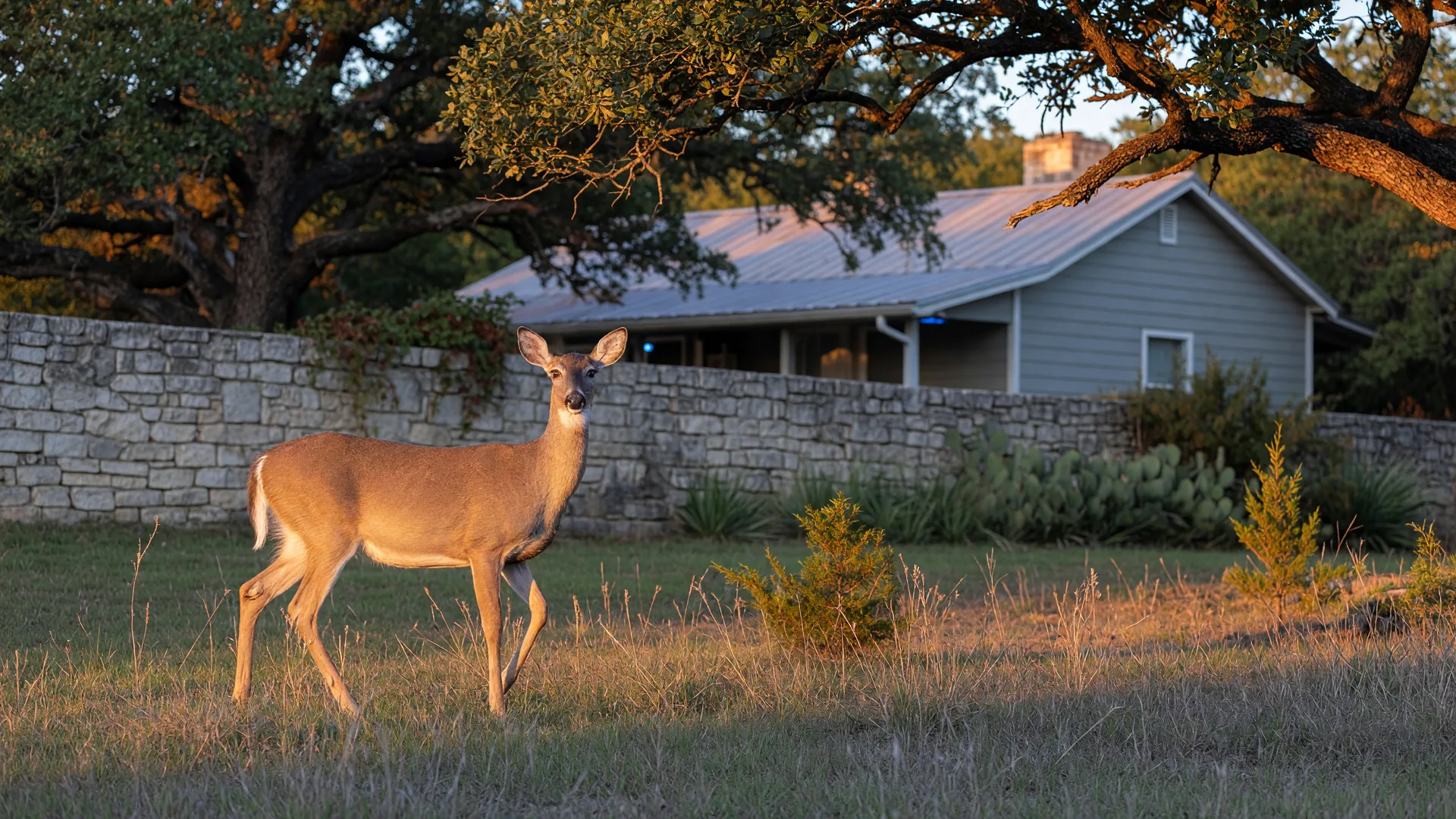
When a California buyer asks me about wildlife in the Hill Country, they usually mean it as a question about danger. The honest answer is that the danger is small and the adjustment is real. You are trading morning doves and the occasional raccoon for a property where deer bed down in the side yard, armadillos dig up the lawn, scorpions show up in the garage, and a rattlesnake sighting once or twice a year is completely normal. None of that is a reason to avoid the move. All of it is a reason to arrive informed, because almost every wildlife problem here is preventable with a few habits and a little knowledge.
I am Bill Ross, a Texas real estate agent serving Boerne, Fair Oaks Ranch, San Antonio, and the surrounding Hill Country. I have walked hundreds of properties with California families over the years, and wildlife questions come up on nearly every acreage showing. This guide is the field manual I wish I could hand every client on the first tour: who you will meet, when they show up, what they can damage, and the five-minute habits that keep coexistence boring. This is the companion piece to my earlier deep dive on the specific species of the region; here we focus on the first-year experience, the seasonal rhythm, and the practical checklist. Every number and recommendation is sourced, and the sources are linked at the end.
The Cast: Who Actually Shows Up on a Hill Country Property
Before the fear, here is the frequency. The table below reflects what I see across the properties I show in Boerne, Fair Oaks Ranch, and the surrounding acreage market. "Daily" means you will see the animal or its evidence every day. "Seasonal" means predictable bursts tied to weather or breeding. Everything on the list is manageable; the families who struggle are the ones who never expected the list at all. [1][3][8]
| Animal | How often you will meet it | When | Real risk |
|---|---|---|---|
| White-tailed deer | Daily to weekly, especially at dusk and dawn | Year-round, heaviest October to December | Vehicle collisions, landscaping damage |
| Nine-banded armadillo | Weekly evidence: dug-up lawn, burrows | Most active spring and fall, dusk and night | Lawn, garden, and burrow damage near foundations |
| Rattlesnakes and other snakes | A few sightings a year on acreage; rare in town | March through October, peak spring and early summer | Low; bites are rare and mostly preventable |
| Striped bark scorpion | Indoor sightings a few times a year once established | Year-round indoors; outdoors peak in warm months | Painful sting, low medical danger for healthy adults |
| Feral hogs | Rare on small lots; real risk on 5+ acre tracts | Spreads are erratic; damage spikes in wet years | Property damage; rooted pastures and creek beds |
The pattern across thousands of relocations is consistent: the deer are the daily presence, scorpions are the indoor surprise, snakes and armadillos are the outdoor surprises, and feral hogs are the wild card that only matters on larger acreage. Everything else, the raccoons, opossums, foxes, and the occasional coyote, behaves the way it does everywhere else in the country. [8][11]
Deer Are Not Visiting. They Live Here.
The first morning of almost every acreage purchase includes a deer in the yard, and most California families love that moment. What they do not expect is how permanent the relationship becomes. The Edwards Plateau, the broad region that includes Boerne, Fair Oaks Ranch, and the surrounding Hill Country, holds the highest deer population in Texas. Texas Parks and Wildlife pegged the region at roughly 1.5 million deer in its 2024 season forecast, and the latest estimate ticks slightly higher at about 1.63 million. The long-term average density across the region is roughly 65 deer per 1,000 acres, with local pockets, especially around creeks and managed hunt areas, running much denser. [1][2][3]
What that density means for a homeowner is simple: deer browse ornamentals, roses, and vegetable gardens, and they do it at dusk, at dawn, and again at 2 a.m. The fully reliable deterrent is an eight-foot fence, and many Hill Country subdivisions restrict fence height through HOA covenants, so fence planning is a check-the-books activity before you buy, not after. Deer-resistant landscaping, which the Texas A&M AgriLife Extension publishes a practical list for, moves the yard from a salad bar to a snack bar, which is usually enough. [4][17]
The most serious deer risk in the Hill Country is not the yard, it is the road. Texas insurers estimate roughly 86,000 deer-claim collisions a year statewide, and the state documented 51,522 animal-related crashes between 2010 and 2016 that cost Texas motorists more than $1.3 billion a year. The odds math is useful context: the average driver faces about a 1-in-145 annual chance of an animal collision, and deer crashes concentrate in October through December, at dawn, and at dusk. On Hill Country highways like I-10 and the back roads into Boerne, that means the two habits that matter are slowing at dawn and dusk in the fall and scanning the shoulders, not the lane ahead. [5][6][7]
Armadillos and the Art of Digging
Armadillos are the lawnmower of the Hill Country in the worst possible way. They dig conical holes in turf while foraging for grubs and insects, and on the acreage market they dig burrows that can extend several feet underground, sometimes undermining driveways, patios, and walkways. A small suburban lot sees the cosmetic damage: brown spots and dirt piles where the lawn used to be. A large tract sees the structural question. [14]
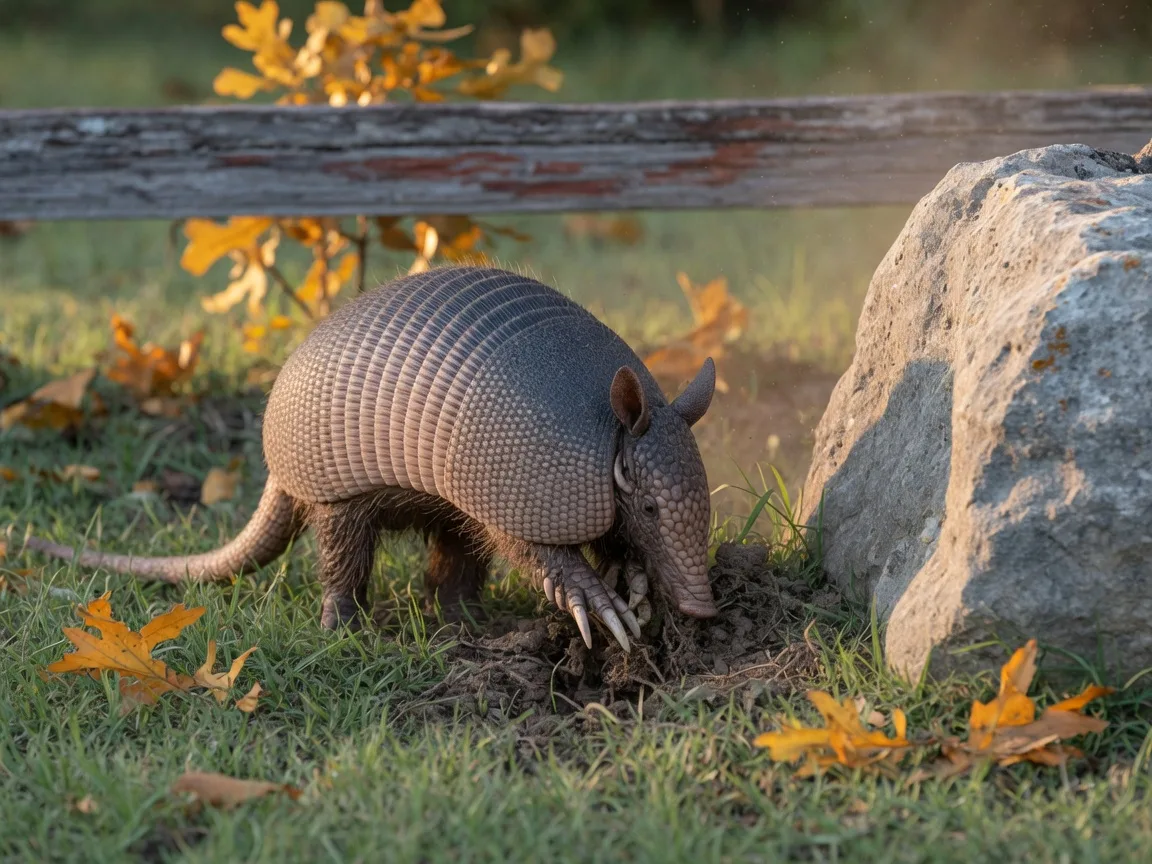
Two other armadillo facts are worth knowing before you buy. First, the animal is a natural carrier of the bacteria that causes Hansen disease, so the CDC guidance is to never handle them, and to keep dogs from mouthing them. The practical transmission risk to people is very low, but the rule is simple: admire, photograph, do not touch. Second, the effective control is exclusion. Cage trapping works when done to professional specifications, a trap of at least roughly 10 by 12 by 36 inches placed along fence lines or burrow entrances, and removing the grub food source with beneficial nematodes reduces the incentive to dig. Fencing that is buried a few inches below grade blocks the burrowing entry to crawl spaces and foundation areas. [14][15]
Snakes: The Ones to Learn and the Ones to Leave Alone
The Hill Country has four venomous snakes: the western diamondback rattlesnake, which is the one you will most likely meet; the copperhead, found mostly in rocky, wooded creek areas; the Texas coral snake; and the cottonmouth, which hugs waterway corridors and is the least common of the four in this region. Every other snake you see, the Texas rat snake, coachwhip, and various nonvenomous species, is a free pest control service for rodents, and experienced Hill Country residents leave those alone. [8][9]
Snakes emerge from winter dormancy in late February to early March once temperatures rise above roughly 60 degrees, and the active season runs through October, with peak activity in spring and early summer. In hot weather they shift their movement to early morning, late evening, and night. Practical habits follow directly: keep grass short near the house, clear rock and brush piles, watch where you step on limestone trails from March through October, and use a flashlight when walking outside at night. Dogs are the one household member that investigates snakes on purpose, and rattlesnake aversion training is available in the San Antonio area for dogs on property bordering undeveloped land. [9][10]
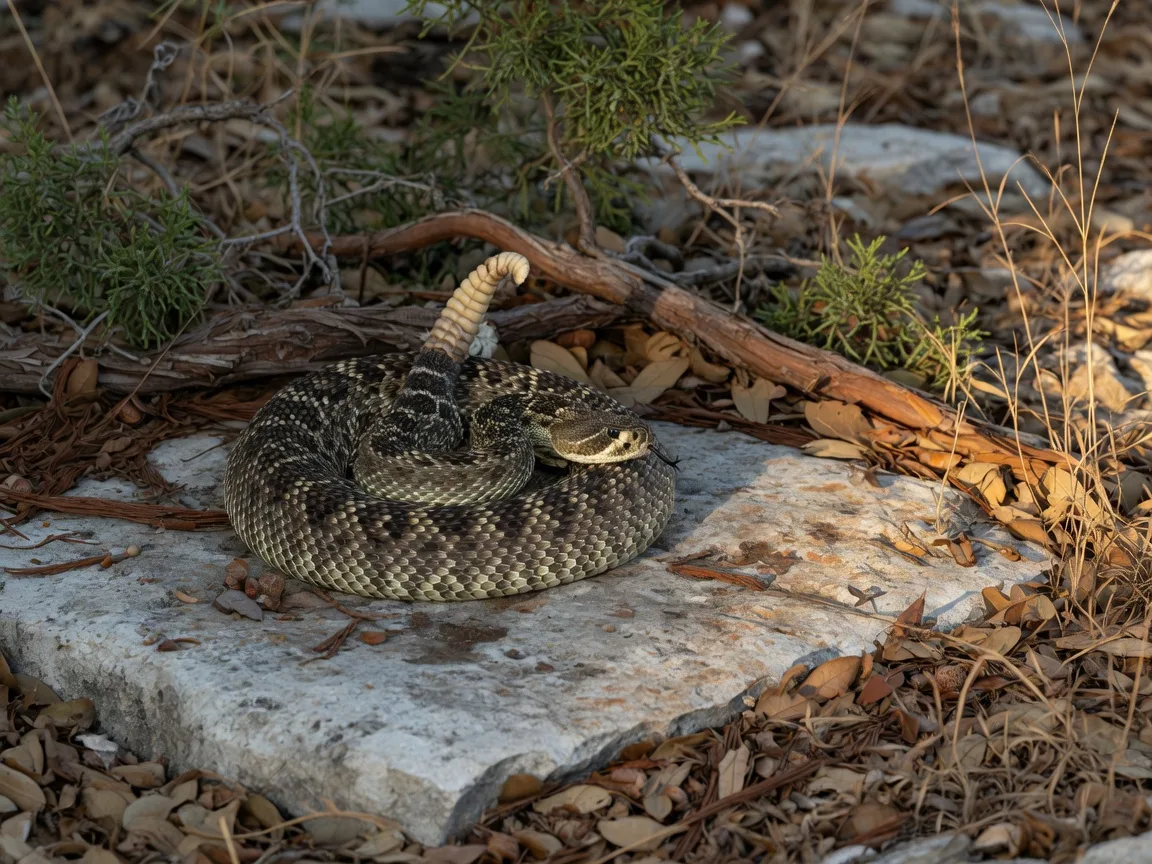
When you do see a rattlesnake on your property, the answer from Texas Parks and Wildlife is one sentence: leave it alone, keep pets and children back, and let it move on, or call a relocator if it is in a high-use area. Do not try to kill it. Most bites in Texas happen during attempted killing or handling, and a cornered snake strikes. Banner days for sightings are after spring rains, when snakes move across open ground, so the highest-value routine is simply watching the ground during the first warm days of the year. [8][10]
Scorpions Are a Home Problem, Not a Hiking Problem
Californians know scorpions as a desert backcountry thing. In the Hill Country, the striped bark scorpion is a home thing, because subdivisions are built directly into the rocky limestone habitat it naturally occupies. Scorpions get inside through gaps as thin as a credit card, so the entire prevention playbook is sealing: caulk foundation cracks, install door sweeps, weather-strip garage gaps, and keep mulch and woodpiles away from the house exterior. [16]
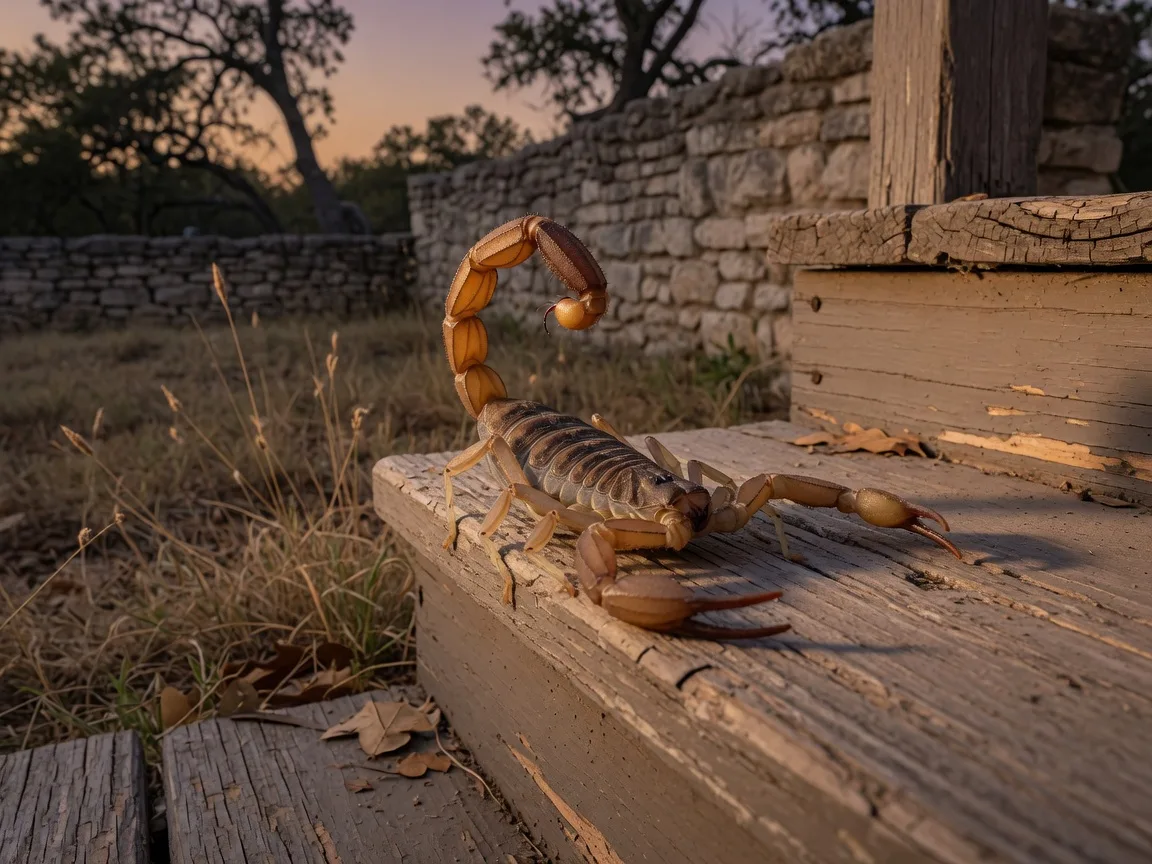
The sting is painful and startling, comparable to a bee sting for most people, and it is not a medical emergency for healthy adults. The useful part: scorpions fluoresce under ultraviolet light, so a cheap black-light flashlight check of baseboards, closets, and the garage is the standard monitoring trick, and glue traps along baseboards do the quiet population census between checks. If a property is on heavy limestone and backs onto undeveloped land, expect a few indoor sightings a year after the first season, and consider a quarterly perimeter pest treatment as routine maintenance rather than a crisis response. [16]
Feral Hogs: The Hill Country's Other Invader
Feral hogs are the one animal on this list that Californians genuinely do not expect, and the one that can do real financial damage. Texas holds the largest feral hog population in the country, roughly 2.6 million animals, present in more than 200 of the state's 254 counties, and the Hill Country sits squarely in the heavy-density band. Hogs root up pastures, creek beds, and lawns in their search for food, they damage fences and water systems, and Texas Parks and Wildlife lists them among the world's worst invasive species. The older statewide damage estimate runs in the tens of millions of dollars a year, and more recent Texas A&M projections put the combined damage and control cost in the hundreds of millions. [11][12]
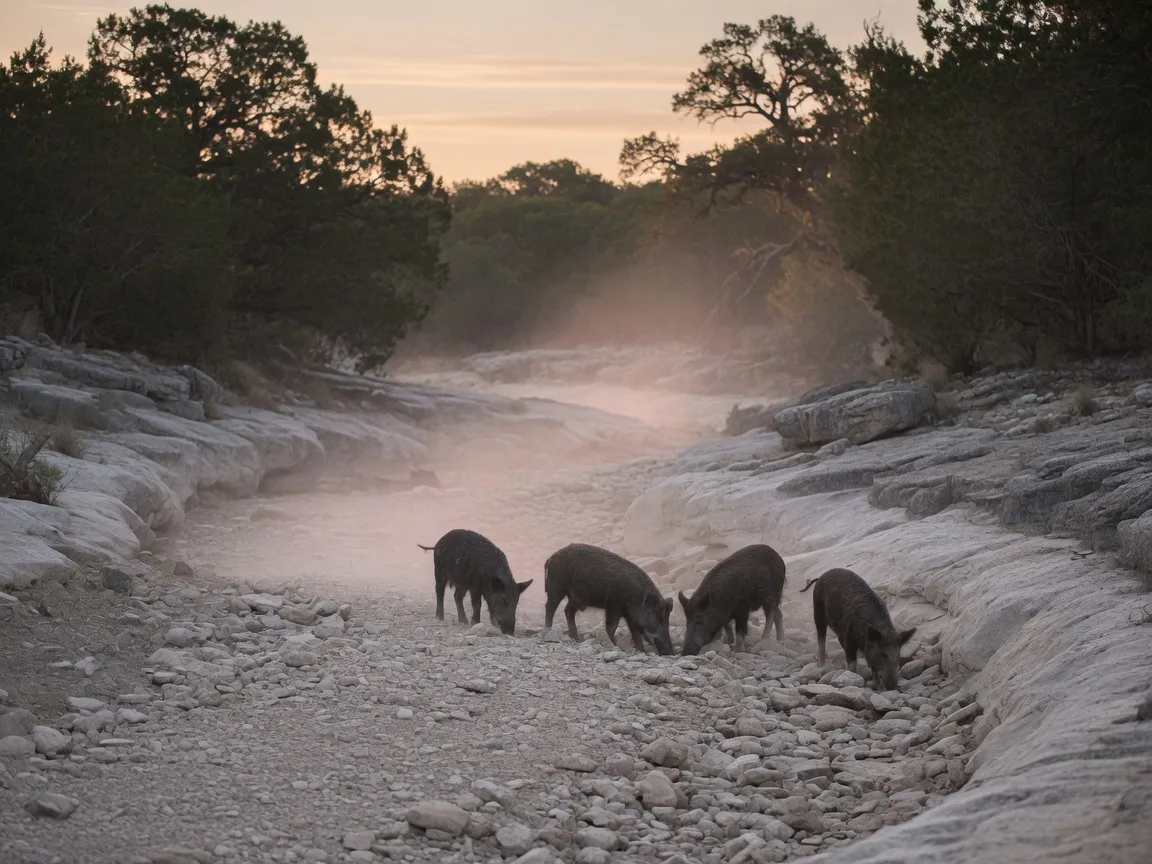
Here is the practical reality for a California buyer. On a half-acre lot in Fair Oaks Ranch or a subdivision lot in Boerne, hogs are an occasional passing sight at best. On a 5-to-10-acre tract, which is exactly the kind of property many California families come for, the probability of hog traffic goes up sharply, and the question belongs on the due diligence list. The good news is that Texas is unambiguous about control: hogs can be hunted and trapped year-round, and since 2019 no hunting license is required to take them on private land, with the landowner's permission. Both TPWD and Texas A&M recommend integrated control, corral and snare trapping plus coordinated removal of whole groups, because hogs learn to avoid traps quickly, and they stress that the native collared peccary, the javelina, is a protected species with a small Hill Country presence that must not be confused with the feral hog. [11][13]
If your dream property is acreage, ask the seller and the neighbors about hog activity before you write an offer. Active rooting on a creek bed within sight of the house is a fact you want to know while you still have contingencies, not after closing. [11][12]
The First-Year Wildlife Calendar
Every wildlife conversation in the Hill Country is really a calendar conversation. The animals are predictable once you know the rhythm, and the rhythm is the same every year:
| Season | What shows up | What to do |
|---|---|---|
| Late winter (Feb-Mar) | Snakes emerge as temperatures pass about 60 degrees | Walk the property after the first warm spell; clear brush piles near the house [9][10] |
| Spring (Mar-May) | Peak snake activity; armadillos dig fresh burrows; fawns are born | Start the perimeter pest schedule; keep grass short; do not touch fawns [8][14] |
| Summer (Jun-Aug) | Snakes shift to dawn and night; scorpions most active; hogs root wet areas | Use a flashlight outdoors at night; check garage and baseboards with UV light monthly [10][16] |
| Fall (Sep-Nov) | Deer rut peaks; deer-vehicle collisions at their annual high | Slow down at dawn and dusk on Hill Country roads; watch shoulders [5][6][7] |
| Winter (Dec-Jan) | Most reptiles dormant; armadillos and deer stay active in mild spells | Seal gaps and door sweeps while exterior work is comfortable [16] |
One note on the fall deer season: it is also the season when half of all Texas deer-vehicle collisions happen, and the Hill Country's two-lane highways with scenic curves are exactly where they concentrate. The calendar is not a warning, it is simply the information that lets you enjoy the first year instead of react to it. [5][6]
The Buyer's Wildlife Checklist: Five Questions Before You Offer
On every acreage showing, I run the same five wildlife questions with the seller and the neighbors. They take ten minutes and they have saved clients from more surprises than any inspection line item:
- What does this yard look like in October? The seller knows exactly which plants the deer trim. Ask which landscaping they protect and how. [4][17]
- Is there hog activity on the property or the neighboring tract? Rooted creek beds, torn fences, and displaced soil tell the story. Ask directly and walk the creek if there is one. [11]
- What are the fence, pet, and wildlife rules in the HOA covenants? Fence height limits decide your deer strategy, and some associations restrict feeders and poultry that attract wildlife. Read the resale certificate before you fall in love. [4]
- Has the house had a scorpion, rodent, or pest issue? Ask for the treatment history from the pest company. A property backed up to undeveloped limestone escarpment starts with a known population baseline. [16]
- Where is the dangerous ground? On acreage, ask where snakes are most often seen, usually rock piles, brush lines, and the shaded side of the house, so the maintenance plan starts at the right corner. [8][9]
Answer those five and wildlife on your new property stops being a source of anxiety and becomes what it actually is: the everyday texture of living in one of the most beautiful parts of Texas. If you want the deepest dive on any individual species, my full wildlife species guide covers deer, armadillos, snakes, and scorpions in detail, and the what to expect guide places them in the wider adjustment picture.
Coexistence Is a Skill, and You Will Learn It Fast
There is a reliable arc in the families I work with. The first month, every deer in the yard is a photo and every scorpion is a story. By month six, the deer are background and the scorpion protocol is muscle memory. By year two, the wildlife is one of the reasons people tell me they would not move back, not despite the armadillos, but because living beside the natural Hill Country is the whole point of being here. [8][11]
The difference between the families who love it and the ones who struggle is never the animal density. It is preparation. The properties are not dangerous, the wildlife is not hostile, and the habits that make coexistence boring are cheap and permanent: watch the ground in warm weather, seal the house in fall, protect the high-value plants, slow down on the back roads in deer season, and ask the right questions before you write an offer. If you are evaluating Hill Country properties and want someone who has walked this exact wildlife conversation with a hundred California families, reach out for a no-pressure conversation. I will tell you honestly what the wildlife on any specific property will mean for your family, and the shortcuts to a peaceful first year. [1][8]
Frequently Asked Questions
Should I worry about wildlife when buying a home in Boerne or Fair Oaks Ranch?
Not as a safety question. In-town subdivision lots in Boerne and Fair Oaks Ranch see deer, the occasional armadillo, and a scorpion or two a year, and none of those rise to a hazard for a normal family. The real considerations are property-specific: how much acreage, what backs the lot, and what the HOA allows you to do about fencing and pest treatment. On larger tracts, add hog activity to the due diligence list. The wildlife is a lifestyle feature, not a danger. [1][8][11]
How common are rattlesnake bites in the Hill Country, really?
Bites are rare, and the overwhelming majority happen when someone steps on a snake or deliberately tries to catch or kill one. The preventive routine is basic: watch the ground on limestone trails from March through October, keep grass short near the house, clear brush and rock piles, and use a flashlight outdoors at night in warm weather. If you see a rattlesnake, give it space and let it move on, or call a relocator for high-use areas. Rattlesnake aversion training for dogs is widely available near San Antonio and worth it on acreage. [8][9][10]
Is it safe to let kids and dogs play in a Hill Country yard?
Yes, with the same sensible habits every Texas family practices: keep the lawn short near the house, check the yard at dawn and dusk when deer and snakes are moving, keep dogs on aversion training or at least on lead on larger tracts, and do not leave pet food outside, which attracts wildlife closer to the house. Scorpions are the main indoor concern, handled by sealing and monitoring. Children raised here play outside all day; the key is knowing the calendar and the habits. [8][16]
Do I need an eight-foot fence to keep deer out?
Only if you insist on a flower garden full of deer favorites. Most families reach a comfortable middle: protect the valuable beds with netting, motion-activated sprinklers, or a low fence around the specific garden, plant the rest with the deer-resistant varieties Texas A&M publishes, and let the deer browse the perimeter. An eight-foot fence is the only fully reliable barrier, but HOA covenants often cap fence height, so check the rules before planning one. [4][17]
What should I ask before buying acreage with possible feral hog activity?
Ask the seller and the neighbors three things: whether hogs have been seen or rooted on the tract, whether any trapping or exclusion has been done, and what the neighboring properties look like, because hogs travel. Walk the creek beds and fencerows yourself if you can. On private land, hogs can be hunted and trapped year-round without a hunting license, and TPWD and Texas A&M both recommend integrated trapping of whole groups rather than shooting single animals. Know the situation before you offer, and manage it as an ongoing chore after. [11][12][13]
Sources
- [1] Texas Parks and Wildlife Department, "Stellar Deer Season Expected This Fall" (October 2024), Edwards Plateau deer population. tpwd.texas.gov/newsmedia/releases/?req=20241029b
- [2] TPWD White-tailed Deer Season Forecast, Edwards Plateau estimate. tpwd.texas.gov/huntwild/wild/game_management/deer/whitetaildeer-seasonforecast
- [3] TPWD, "Quality Deer White-tailed Deer Management in the Texas Hill Country," Edwards Plateau density data. tpwd.texas.gov/publications/pwdpubs/media/pwd_rp_w7000_0828.pdf
- [4] Texas Landowners Association, "How Many Deer Are in Texas: White-tailed Deer Populations by Region." landassociation.org/how-many-deer-are-in-texas
- [5] PubMed / "Animal-vehicle collisions in Texas, 2010-2016," 51,522 crashes and $1.3B annual cost. pubmed.ncbi.nlm.nih.gov/31277019
- [6] State Farm, "How Likely Are You to Have an Animal Collision?" (annual odds, October-December peak). statefarm.com/simple-insights/auto-and-vehicles/how-likely-are-you-to-have-an-animal-collision
- [7] MoneyGeek, "Deer-Vehicle Collisions by State" (Texas claim estimates). moneygeek.com/living/driving/deer-car-accidents
- [8] Texas Parks and Wildlife Department, "Venomous Snake Safety." tpwd.texas.gov/education/resources/texas-junior-naturalists/be-nature-safe/venomous-snake-safety
- [9] Texas Hill Country, "Venomous Snakes of the Texas Hill Country." texashillcountry.com/venomous-snakes-texas-hill-country
- [10] San Antonio Express-News, "It's rattlesnake season in Texas. What you need to know." expressnews.com/lifestyle/travel-outdoors/article/rattlesnake-texas-snake-season-17810700
- [11] Texas Parks and Wildlife Department, "Feral Hogs" (wild pig population, invasive status, year-round take rules). tpwd.texas.gov/huntwild/wild/nuisance/feral_hogs
- [12] Texas A&M AgriLife Extension, "Feral Hog Management" (population estimates and damage figures). agrilifeextension.tamu.edu/asset-local/feral-hog-management
- [13] Texas A&M Natural Resources Institute, "An Update on Feral Pig Laws and Regulations in Texas" (2026 no-license rule on private land). nri.tamu.edu/blog/2026/april/an-update-on-feral-pig-laws-and-regulations-in-texas
- [14] Texas A&M AgriLife Extension, "Managing Armadillo Damage." agrilifeextension.tamu.edu/asset-external/managing-armadillo-damage
- [15] Austin American-Statesman, "Texas Armadillos: Leprosy (Hansen's Disease) Risk and Homeowner Concerns." statesman.com/story/news/local/2023/05/26/texas-armadillos-leprosy-hansens-disease
- [16] Texas Monthly, "Texas Scorpion Season" (striped bark scorpion identification and prevention). texasmonthly.com/travel/texas-scorpion-season
- [17] Texas A&M AgriLife Extension, "Deer-Resistant Plants for Texas Landscapes." aggie-horticulture.tamu.edu/earthkind/landscape/deer-resistant-plants
Last reviewed: September 2026. Deer population, collision, snake season, and feral hog figures reflect published TPWD, Texas A&M, and insurance industry data; local densities vary by tract, county, and season. Verify covenants, pest history, and wildlife activity for the specific property with your agent and the seller.