
Published:
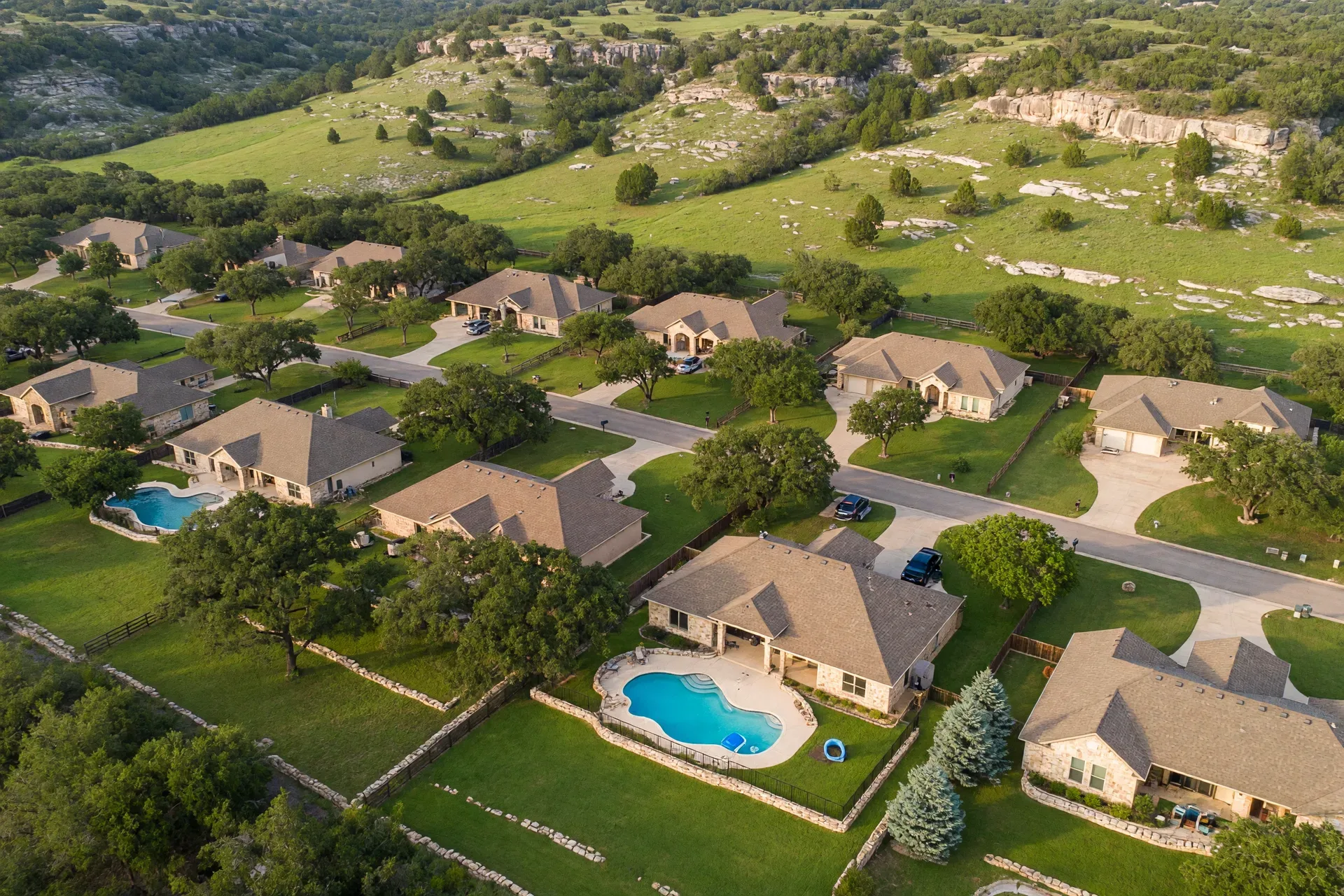
If you are moving to the Texas Hill Country from California, one of the first documents you will ever be handed is a thick stack of association rules, and one of the first questions you will ask is whether a Texas HOA can really control your paint color, your fence height, and whether you can park a boat in your driveway. The honest answer is yes, in many neighborhoods, and that can feel jarring if your only experience was a California association that barely had an opinion. The good news is that Texas law also changed on September 1, 2025 in ways that give homeowners more transparency and more protection than a lot of relocators realize. This guide walks through the rules, the fees, and the enforcement, in plain English, so you know what you are signing before you commit to a home.
I am Bill Ross, a Texas real estate agent serving Boerne, Fair Oaks Ranch, San Antonio, and the surrounding Hill Country. I have walked a lot of California families through their first Texas HOA packet, and the misunderstandings I hear most are about three things: how much the fees really run, how much authority the board actually has, and what happens when a rule is violated. None of this is designed to scare you. It is designed to make sure the neighborhood you fall in love with does not surprise you six months after closing.
What Changed in Texas HOA Law on September 1, 2025
Texas passes HOA legislation in odd-numbered years, and most of the new rules from the 89th Legislature took effect on September 1, 2025. [1] For a California buyer, the headline is Senate Bill 711, which shifted the balance toward homeowner transparency. The biggest changes are worth knowing before you shop for a home:
- Public websites become more common. Many associations with 60 or more units, or those under a management company contract, must now maintain a public website with their governing documents. [1][2] That means you can often read the full set of rules before you even make an offer, instead of discovering the paint palette after you close.
- Management certificates get tighter. Every HOA must record a management certificate in each county where the subdivision sits and then e-file it with the Texas Real Estate Commission. [2] This makes it far easier to find out who actually runs an association, a document a buyer should request before closing.
- Resale certificate fees are capped at $375. The fee an association can charge to pull the documents you need at closing is now capped. [1] California buyers are used to a disclosure-heavy process, so this fee cap is actually a welcome change.
- Architectural review committees get cleaner. Board members and their spouses can no longer serve on the architectural review committee, which removes a conflict of interest that California buyers sometimes assume is normal. [1]
Alongside SB 711, Texas also passed SB 2629, which lets associations hold electronic meetings and votes, and HB 517, which bars fines for a brown lawn during city watering restrictions. [1] These are not headline-grabbing changes, but they move Texas associations in a direction that will feel familiar and manageable to someone coming from California's more heavily regulated Davis-Stirling system. [5]
| New Texas law (effective Sep 2025) | What it does for homeowners |
|---|---|
| SB 711 | Public websites for many associations, tighter management certificates, resale fee capped at $375, cleaner architectural review committees |
| SB 2629 | Permits electronic ballots and electronic meetings/votes |
| HB 517 | Bars fines for brown turf during city water restrictions and for 60 days after |
The takeaway is not that Texas HOAs have become soft. It is that the deck is more honest now. A California buyer who reads the rules before buying, asks for the management certificate, and budgets the real dues has a very manageable experience. The problems I see in the field almost always come from buyers who skip that reading. [1][2][3]
The Fee Reality: What You Actually Pay in Boerne and Fair Oaks Ranch
Let me give you real numbers, because this is where California buyers get pleasantly surprised. In California's larger master-planned communities, annual association dues frequently run $3,000 to $6,000 or more, and that is before special assessments. In the Texas Hill Country, typical HOA dues in Boerne's master-planned subdivisions run about $50 to $200 per month, or roughly $600 to $2,400 a year. [6][9]
Fair Oaks Ranch is a special case, because it is not one uniform association. Some older sections are entirely voluntary, with no dues at all, while golf and country club communities carry higher costs because they bundle amenities. [7][8] If club membership is part of the equation in Fair Oaks Ranch's golf communities, expect meaningful monthly club dues on top of the base association fee. [8]
The statewide median Texas HOA fee sits around $120 per month, with most associations running between $50 and $700 a month. [9] That range is real, and it is why the single most important question to ask your agent is not "is there an HOA" but "what exactly does the HOA cover and what amenities or services are bundled into the fee."
| Community type | Typical HOA dues | Notes |
|---|---|---|
| Boerne master-planned subdivisions | $50 to $200 per month | Includes many newer developments; some run about $1,200 a year [6] |
| Fair Oaks Ranch voluntary sections | $0 | Older sections carry no mandatory dues [7] |
| Fair Oaks Ranch golf / club communities | Higher, with club dues added | Bundled amenities; confirm both association and club fees [8] |
| Texas statewide median | About $120 per month | Most associations run $50 to $700 a month [9] |
For context, California buyers frequently tell me they expect Texas to be cheap on housing and then discover the HOA line is more modest than they feared. The bigger line item to budget for is property tax, which is a separate conversation. On the association side specifically, the Hill Country is generally far gentler on the budget than a comparable California master plan. [6][9]
Enforcement: where Texas and California Actually Diverge
The fees are smaller in Texas, but the enforcement culture can feel stronger, and that catches people off guard. The reason is not that Texas boards are mean. It is that most Hill Country HOAs rely heavily on consistent architectural compliance because, in a community where homes are a large share of a family's wealth, appearances and consistency protect resale values. [4]
Here is the legal comparison that matters. Under the Texas Property Code, an association must give you written notice of a violation, describe the violation, and tell you that you have a right to a hearing before the board. [4] If an association skips that procedure, a fine may be unenforceable. Two things California buyers should specifically understand about Texas:
- Foreclosure is reserved for unpaid assessments, not fines. A Texas HOA can pursue foreclosure for unpaid regular or special assessments, but it cannot foreclose over fines and penalties alone. [4] California has its own limits under AB 130, but the rules differ, and Texas requires a court proceeding for residential foreclosures.
- The notice-and-hearing requirement is your shield. Because the Property Code sets a clear procedure, a calm, written response to a violation notice is often enough to resolve things. Selective enforcement, where a rule is applied to one home and not its neighbors, is also a valid defense to raise. [4]
The practical lesson is the same one I give every client: a Texas HOA enforces rules, but it must follow its own rules to do it. Read the notice, respond in writing, keep a copy, and do not ignore a letter, because the one thing that genuinely escalates a matter is staying silent until dues are in arrears.
Mandatory vs Voluntary: Not Every Home Has an HOA
One of the most useful facts for a California transplant, because it expands your options, is that large parts of the Hill Country have no HOA at all. In Boerne's historic downtown and many older Kendall County areas, properties are governed by city ordinances or county rules rather than a private association. [7] A home without an HOA gives you freedom, but it also means a neighbor's fence color, vehicle storage, and landscaping are only as regulated as county ordinances allow, which is typically less restrictive than a set of covenants.
The decision is a lifestyle tradeoff, not a value judgment. Some families love the predictability of a well-run association that keeps streets and front yards consistent. Others want the freedom and buy acreage outside any subdivision. The mistake is assuming every Hill Country home has an HOA, because that assumption narrows your search and can push you out of exactly the neighborhood that fits you.
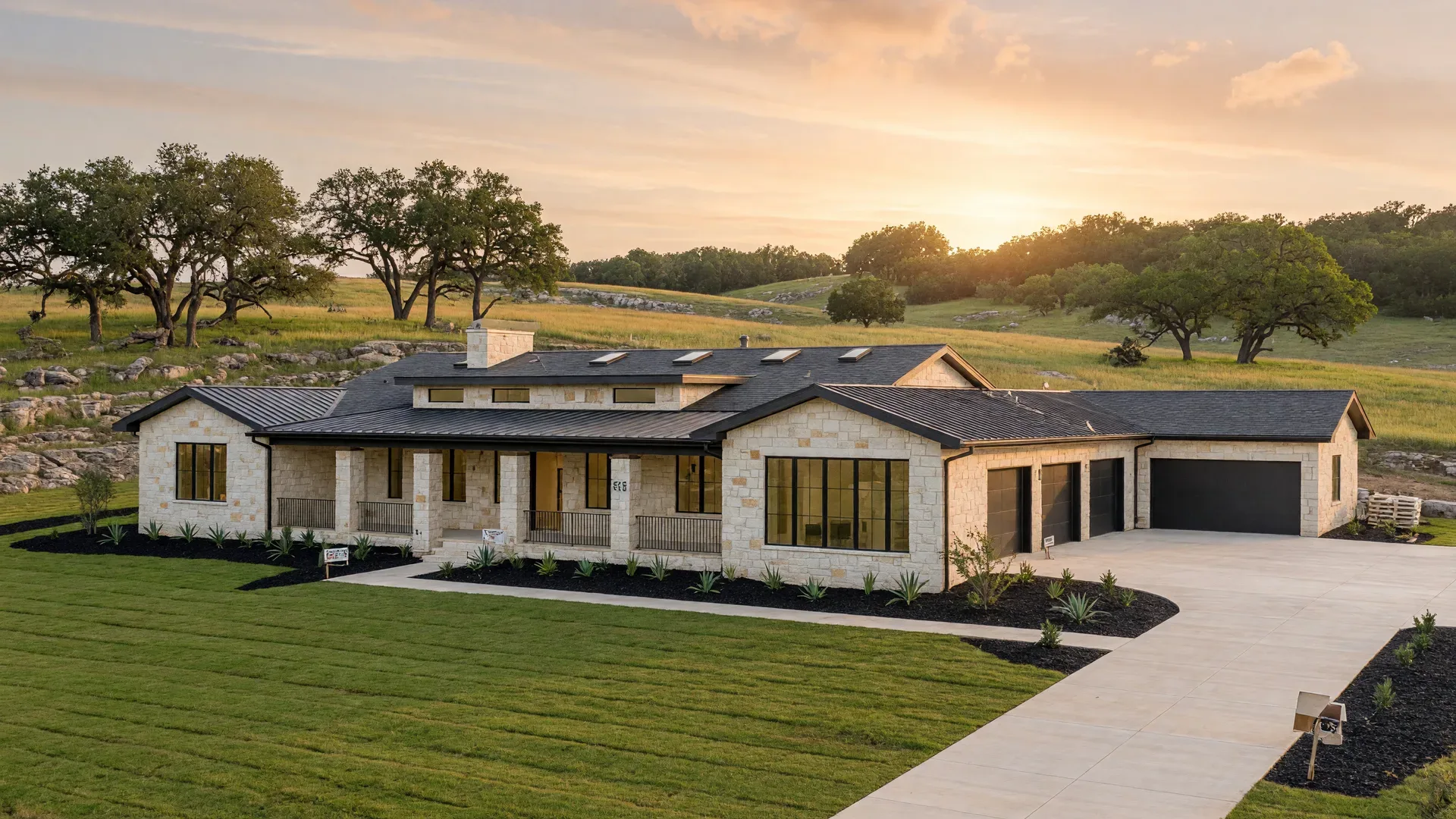
Wherever you land, I recommend confirming three things about any association before you sign: whether it is mandatory or voluntary, what the dues cover, and whether it owns or maintains any common infrastructure you are relying on, such as a gate, a road, or a pool. Those three answers will tell you a great deal about your monthly cost and your ongoing obligations. [6][8]
A Short Checklist for Reading a Texas HOA Packet
You do not need a law degree to vet a Texas HOA well. You need to read six things carefully and ask a couple of pointed questions. Here is the list I walk through with every California buyer:
- Find the documents online first. Because of SB 711, many associations must publish governing documents on a public website. [1][2] Read them before you make an offer, not after.
- Get the management certificate. Request the recorded management certificate so you know exactly who runs the association and how to reach them. [2]
- Ask what the dues cover. Find out if the fee includes amenities, common area maintenance, insurance, or a gate, and whether special assessments are common in the community's history. [6]
- Check the resale certificate and its fee. The fee is capped at $375, but the contents matter: financial status, pending violations, and any planned special assessments all belong in the packet. [1]
- Review the architectural standards. Look at paint, fencing, roofing, and outbuilding rules against your own plans, and confirm who sits on the architectural review committee. [1][4]
- Ask your agent about enforcement culture. A good local agent knows whether a board is pragmatic or heavy-handed. That reputation rarely shows up in the documents, and it is worth an honest conversation. [4]
Take your time with the packet. A well-run HOA is a real benefit, and an underfunded or poorly run one is a genuine cost. The fifteen minutes it takes to read the rules is the cheapest protection you will buy on the whole transaction.
The HOA Question Is Part of Choosing the Right Neighborhood
When a California family asks me whether they should look at HOA or no-HOA neighborhoods, I always answer the same way: it depends on the life you want to live, and on the specific association, not on a blanket preference. A graceful Hill Country community with a responsive board and modest dues is one of the smoother parts of the transition to Texas. A neglected association in arrears is a genuine burden regardless of the rules. [6][9]
My job is to help you match a home to the way you actually want to live, and that includes the fine print. Reach out for a no-pressure conversation about the Hill Country communities you are considering, and I can help you read what each association really requires before you commit. [10]
Frequently Asked Questions
Are Texas HOA fees cheaper than California HOA fees?
Usually, yes, and often by a wide margin. Typical HOA dues in Boerne master-planned subdivisions run about $50 to $200 per month, compared to several thousand dollars a year for many California master plans. Fair Oaks Ranch varies because some older sections have no mandatory dues while golf communities bundle club fees on top. The statewide Texas median is around $120 per month. Always confirm what the fee covers and whether amenities are included. [6][7][8][9]
What changed in Texas HOA law for 2025 and 2026?
Most new Texas HOA rules took effect September 1, 2025. The headline is Senate Bill 711, which requires many associations to maintain a public website with governing documents, tightens management certificate requirements, caps the resale certificate fee at $375, and keeps board members and their spouses off architectural review committees. SB 2629 permits electronic meetings and votes, and HB 517 bars fines for a brown lawn during watering restrictions. [1][2]
Can a Texas HOA foreclose on my home?
A Texas HOA can pursue foreclosure for unpaid regular or special assessments, but it cannot foreclose over fines and penalties alone, and residential foreclosures require a court proceeding. In practice, foreclosure is rare and typically follows prolonged, serious delinquency. The best protection is to read every notice and respond in writing. [4]
Can I fight a Texas HOA fine or violation notice?
Yes. Under Texas Property Code Chapter 209, an association must give you written notice of a violation and the right to a hearing before the board. If it skips that procedure, a fine may be unenforceable. Selective enforcement, where a rule is applied to you but not to your neighbors, is also a viable defense. [4]
Do all Hill Country homes belong to an HOA?
No. Many older Boerne and Kendall County areas, including historic downtown, have no HOA and are governed by city ordinances or county rules. Newer subdivisions almost always have one. A no-HOA home offers more freedom, but your neighbor's choices are then only as regulated as county ordinances allow. [7]
Sources
- [1] Steadily, "Texas HOA laws, rules and regulations in 2026." steadily.com/blog/texas-hoa-laws-regulations
- [2] CCM, "Texas HOA Laws: A Board Member's Reference (2026)." cmgt.org/resources/hoa-laws/texas
- [3] My Neighborhood News, "New Texas Laws Will Impact HOA and Condo Residents Across the State Starting September 2025." myneighborhoodnews.com/new-texas-laws-will-impact-hoa-and-condo-residents-across-the-state-starting-september-2025
- [4] Texas Property Code, Chapter 209. statutes.capitol.texas.gov/Docs/PR/htm/PR.209.htm
- [5] California Davis-Stirling Common Interest Development Act. leginfo.legislature.ca.gov
- [6] Weigand Real Estate, "HOA Fees Boerne TX: What Buyers Should Know Now." weigandrealestate.com/blog/hoa-fees-boerne
- [7] Weigand Real Estate, "Boerne vs Fair Oaks Ranch: Which Hill Country Fit?" weigandrealestate.com/blog/boerne-vs-fair-oaks-ranch
- [8] The Gahm Real Estate Team, "Fair Oaks Ranch Golf Course Homes (2026)." thegahmrealestateteam.com/fair-oaks-ranch-golf-course-homes-guide/
- [9] HOA Costs, "Average HOA Fees in Texas." hoacosts.com/fees/texas
- [10] Weigand Real Estate, "Average Cost of a Home in Boerne, TX: 2026 Price Breakdown." weigandrealestate.com/blog/average-home-cost-in-boerne