
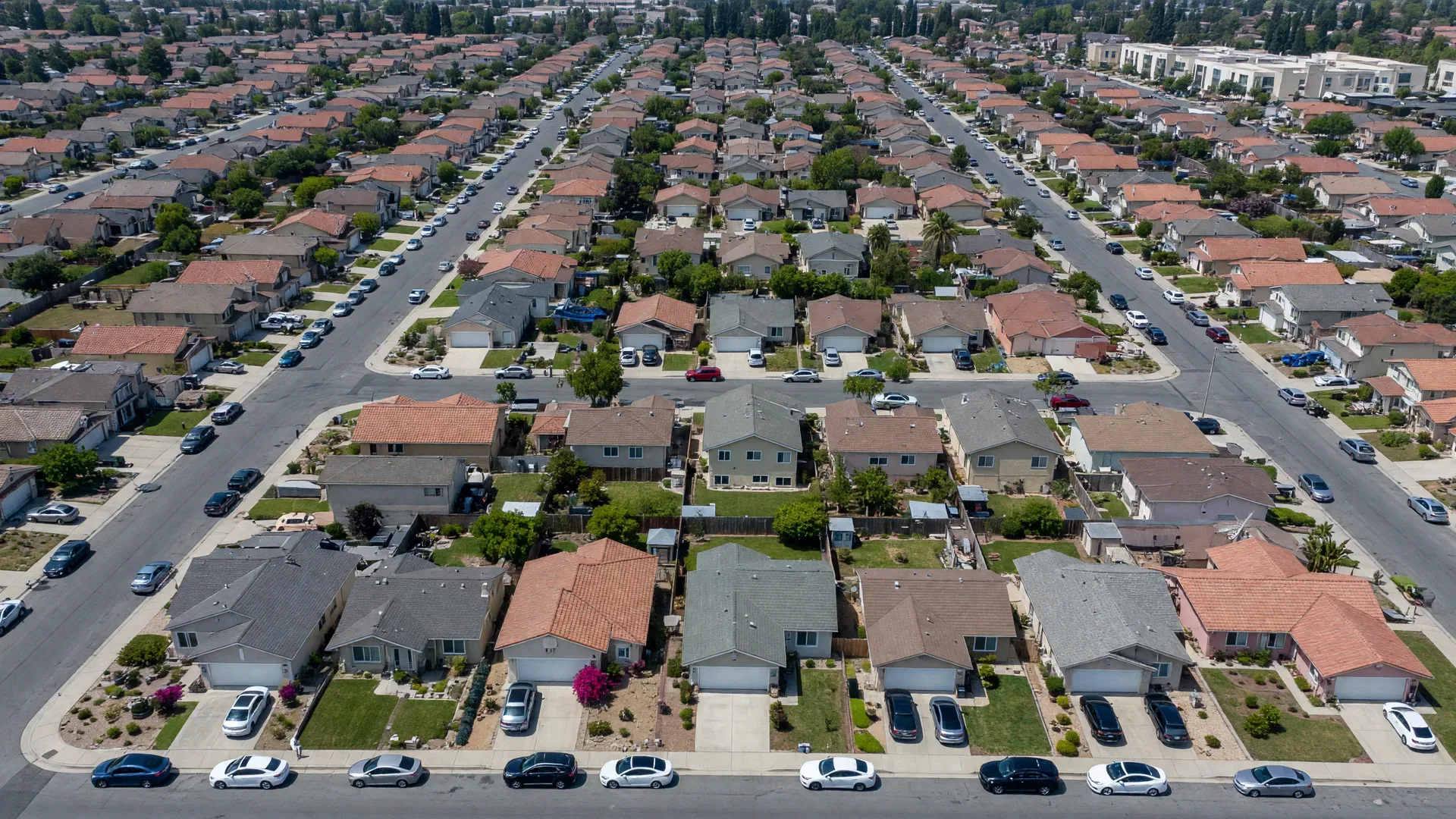
Every family weighing a California-to-Texas move starts with one question: what does my equity actually become? The cheerful answer is that you sell high, buy low, and pocket the spread. The honest answer is a chain of line items, and the chain is where plans get built or broken [1][2][3].
This article takes a single, realistic example and works through it line by line: a couple selling a Bay Area home for $1.2 million and buying a home near the current Boerne median of roughly $668,000 [1]. Every line is labeled, every assumption is stated, and the sources are at the bottom. Your numbers will differ, but the structure of the math will not, and that is the part worth understanding before you pick a sale date [6].
The Example Family and Its Assumptions
The example is deliberately ordinary. A married couple in Santa Clara County sells the house they have lived in for the past eight years. They bought in 2016 for $600,000, put down 20%, and their current mortgage balance after eight years of payments is roughly $400,000. Both are relocating to Boerne, and both will work from Texas, with a combined annual income around $250,000.
The sale price of $1.2 million sits below San Jose's reported median sale price near $1.4 million [2], and above the nine-county Bay Area median reported around $1.45 million in 2026 [3], a reasonable mid-price point for a couple with an average home rather than a top-of-market property. The Boerne purchase at $650,000 sits just under the March 2026 median of about $668,000 for the 78006 ZIP [1]. This is not a quote, a listing, or a guarantee. It is a transparent model you can adjust with your own numbers.
The Starting Assumptions
| Item | Assumption |
|---|---|
| California sale price | $1,200,000 |
| Original purchase year / price | 2016 / $600,000 |
| Remaining California mortgage | $400,000 |
| Texas purchase price | $650,000 (78006 median near $668,000) |
| Down payment | 20% ($130,000) |
| 30-year fixed mortgage rate | 6.5% (near the June 2026 Freddie Mac survey) |
| Filing status | Married filing jointly, sold primary residence after 2 of prior 5 years |
Median price anchors from HAR.com and SoFi / California Association of Realtors [1][2][3], mortgage rate from Freddie Mac [6]. Actual values vary by market timing and exact property.
Part One: What You Actually Net From a $1.2 Million Sale
The most common mistake in this conversation is comparing the sale price to the Texas purchase price. The money that crosses state lines is not the empty price, it is the net proceeds, and they are carried by four costs plus the mortgage payoff:
Seller Side: Line by Line
| Line item | Amount | How it is estimated |
|---|---|---|
| Contract sale price | $1,200,000 | Assumed scenario |
| Listing + buyer agent commissions | - $60,000 | 5% total, typical range 4.5% to 5.5% |
| Seller closing, title, and escrow | - $12,000 | ~1% of sale price |
| County documentary transfer tax | - $1,320 | ~$1.10 per $1,000; can be higher in cities with local transfer taxes |
| Mortgage payoff | - $400,000 | Assumed remaining balance |
| Capital gains taxes | - $1,700 | After the $500,000 exclusion, small taxable gain |
| Net proceeds estimate | $725,300 | Cash wireable on closing day |
Commissions and transfer-tax assumptions are typical ranges; actual costs vary by broker, county, and city. Sources: IRS [8]; California Franchise Tax Board [9].
The Capital Gains Question, Answered With Real Math
On a primary residence owned and lived in for at least two of the five years before the sale, the IRS allows married couples filing jointly to exclude up to $500,000 of gain [7][8]. With a $600,000 original purchase, some capital improvements, and about $73,000 in selling costs deducted, the gain in this example is roughly $507,000. The exclusion covers all but about the last $7,000 of it, so the tax bill on this sale is small: roughly $1,000 in federal long-term capital gains, plus California tax on the same small slice, around $700 [8][9].
Notice what is not taxed: in Texas there is no state income tax at all, so a Texas capital gain carries no state tax [9][10]. California treats long-term capital gains as ordinary income up to a combined 13.3% top rate [9], but that only applies to the gain you fail to shield with Section 121. The families who end up with big tax bills are the ones who sell a non-primary home, sell before the two-year requirement, or sell after claiming Texas residency while California still says they left. Plan the sale date, keep the paperwork, and the bill is usually small to zero.

Part Two: What That Equity Actually Buys in Boerne
With roughly $725,300 in hand, this family crosses into Texas and buys a Boerne-area home at about $650,000, 80% of the current 78006 median of about $668,000 [1]. Twenty percent down is $130,000, and buyer-facing closing costs, title, lender, and county fees, often run 2% of the purchase price, about $13,000 [2].
The freed-equity number
$725,300 in net proceeds, minus a $130,000 down payment and approximately $13,000 in buyer closing costs, leaves roughly $580,000 in liquid equity after the Texas purchase closes. That is not money the family had before. It was equity in walls, and it became spendable capital without triggering a taxable event on the core amount, because Section 121 did its job [7][8].
The Mortgage Side of the Same Coin
The family is financing $520,000 (80% of $650,000). At a mid-2026 rate of about 6.5%, principal and interest on a 30-year fixed loan is roughly $3,290 a month [6]. That is the part of the Texas budget most California transplants underestimate, not because the payment is high, but because the property tax and insurance lines are bigger than the analogous California lines [4][5].
Part Three: The Monthly Carry, Compared
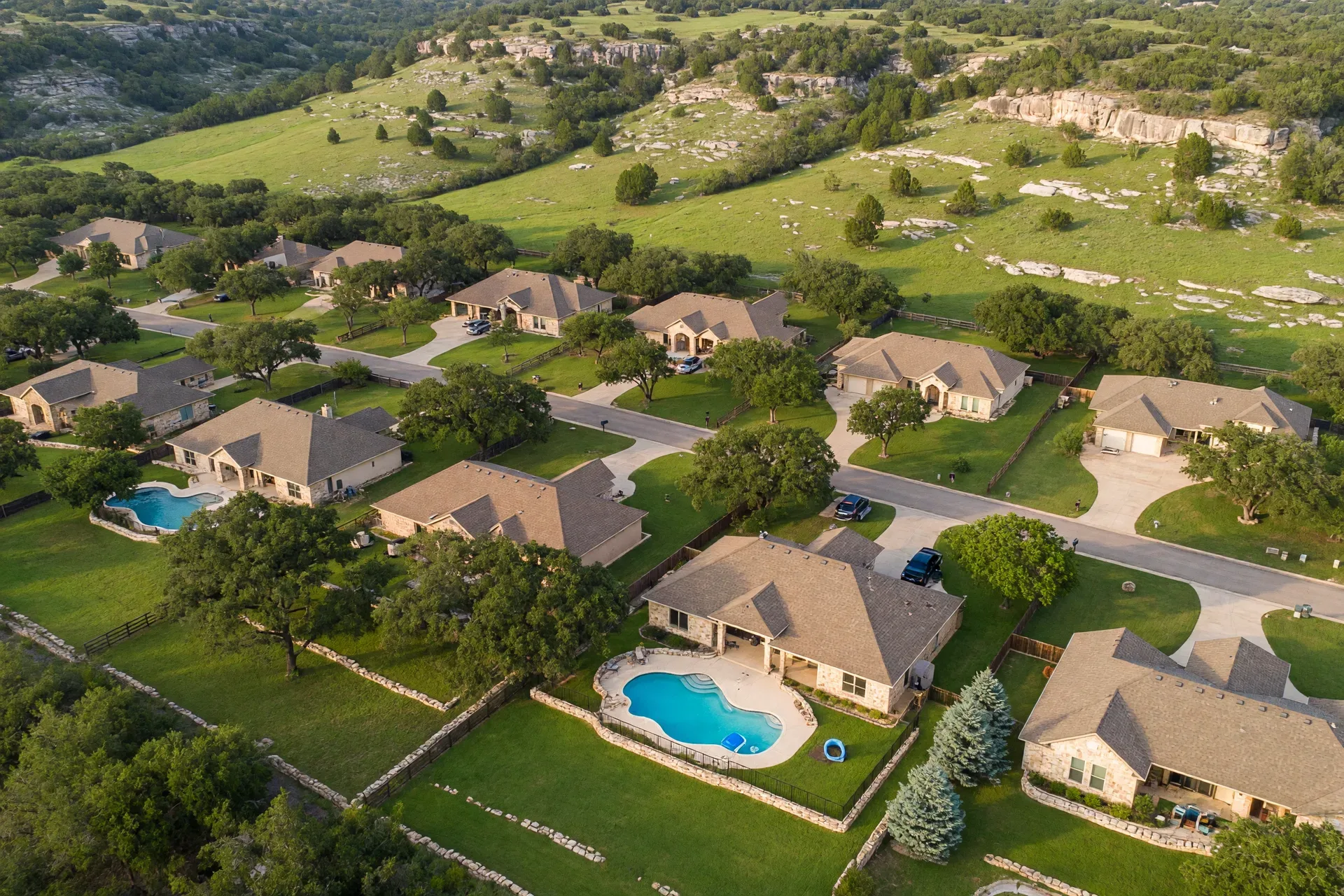
Monthly carry is where the move's wealth math becomes real, because it is the number that repeats 12 times a year. The comparison below is apples-to-apples in one sense only: both columns assume a 20% down payment and a 30-year fixed mortgage around 6.5%. California, the left column, shows what the same $1.2 million house costs to carry. Texas, the right column, shows the $650,000 Boerne house this family actually bought [4][6][9][10].
Monthly Housing Carry: California vs. Texas
| Line item | California ($1.2M home) | Texas ($650K Boerne home) |
|---|---|---|
| Principal + interest | $6,070 | $3,290 |
| Property taxes | ~ $1,200 | ~ $1,000 |
| Homeowners insurance | ~ $260 | ~ $330 |
| State income tax | ~ $1,450 | $0 |
| Total monthly | ~ $8,980 | ~ $4,620 |
California property tax modeled at ~1.2% of a new purchase price, because a new buyer's Prop 13 base is set at the sale price [9]. Texas tax is modeled at the nominal Boerne combined rate near 1.86%, the conservative figure before the homestead exemption and appraisal cap [4][5]. Insurance is an estimate. State income tax is modeled for a ~$250,000 California household; Texas has no state income tax [9][10]. Actual payments vary by lender, escrow, and district.
Where the Monthly Savings Actually Comes From
The roughly $4,360 a month difference is not one big thing. It is four smaller ones that stack: a cheaper house means a smaller mortgage ($2,780), Texas assesses a higher property-tax rate but on a much smaller base, the income tax line in California is simply not a Texas line, and the pure rate comparison nets out within a couple hundred dollars. The freed cash is not a one-time bonus; it reruns every single month.
Where a $1,200,000 Housing Budget Goes, Compared
Illustrative comparison, drawn from the assumptions above. Bar widths are proportional (1 unit = $86.9).
Part Four: The Five-Year Wealth View
The monthly line alone is a strong argument, but the five-year view is what actually changes a family's life. It has three layers:
- Freed equity at work: roughly $580,000 of liquid equity, if held in a conservative allocation that historically yields around 5% a year, adds roughly $29,000 in interest during the first year alone, before the principal ever changes [6].
- Monthly gap saved: about $4,360 a month, or roughly $52,320 a year, and that is before the homestead exemption pushes Texas taxes lower than the table shows [4][5].
- Zero income tax on the money held in Texas: no state income tax means interest, dividends, and later gains are not trimmed by a state line, the kind of quiet advantage that compounds [9][10].
Illustrative Five-Year Path, From Pure Math
| Year | Monthly gap savings | Freed equity income (~5%) |
|---|---|---|
| Year 1 | ~ $52,320 | ~ $29,000 |
| Year 2 | ~ $52,320 | ~ $30,400 |
| Year 3 | ~ $52,320 | ~ $31,900 |
| Year 4 | ~ $52,320 | ~ $33,500 |
| Year 5 | ~ $52,320 | ~ $35,200 |
| Five-year total | ~ $261,600 | ~ $160,000 |
This is a modeled illustration, not an estimate of future returns. Home values fall as well as rise, interest rates move, and neither column is a promise.
That is the honest shape of it. In the space of five years, this family's wealth is not mostly in a single over-apprecating roof; it is spread across a paid-down home, a cash-generating balance, and a monthly rhythm that leaves ~$4,000 breathing room every single month. It is the same family, the same work, and the same money, arranged differently because the tax and cost structures of the two states are structurally different [4][5][9][10].

What to Do With the Money (The Short Version)
The math is the easy part. The money management is where families actually succeed or stumble. Here is the checklist I give clients who are about to make this exact move:
- Build the Texas emergency fund first. Six to eight months of expenses in a fresh Texas bank account, before any discretionary spending. The Hill Country has plenty of ways to spend money; only one of them is a bedrock of security that pays you calmly.
- Kill the small tax acres. File the homestead exemption in the first year you buy. The deadline for the purchase year is the first anniversary of closing, and the general deadline in later years is April 30. The check is worth the paper it takes [4][5].
- Size the budget from the monthly line, not the purchase price. A $650,000 home at ~1.9% taxes costs more per month than a $650,000 home in a district at 1.3%. Buy the bracket that keeps the monthly carry under control, district by district [4][5].
- Park the freed equity safely. High-yield savings or short Treasuries for anything you will use within three years, and a sensible long-term allocation for the rest. Texas applies no state income tax to interest, dividends, or distributions, which quietly raises what the money earns [9][10].
- Talk to a CPA twice. Once before you set the sale date, to lock in the exclusion timing, and once after closing, to set up the new tax identity in Texas. The cost of one session is negligible next to the line items above.
The families I see do this well do not treat the equity like a windfall. They treat it like what it is: their own saved work product, finally liquid, and finally allowed to behave like the asset it always has been. That is the whole of the real math.
The Math Is Yours to Run
The line-by-line framework above is the same structure I walk through with every California family before they set a sale date, adjusted to their own equity, their own mortgage, and their own target price point in Boerne, Fair Oaks Ranch, or San Antonio. Some of the numbers will surprise you, and the ones to watch are the repeating ones: property tax, insurance, and the income tax line that disappears.
If you want to run this exact model with your own numbers, I will happily sit with you and do it, no pressure and no obligation. It is easier to confirm the destination math on a spreadsheet than it is to discover it a year after closing.

Written by
Bill Ross
Hill Country Homesteads Group, brokered by KW Boerne
Bill Ross is a Texas real estate agent (TX License 778434) whose practice is built on guiding out-of-state relocations, with a direct network of 1,000+ California real estate agents for coordinated cross-state sales. Recognized in USA Today and The Washington Post for relocation expertise. His family made the same Silicon Valley to the Hill Country transition.
Related Guides
California Home Equity to Texas Wealth
The three-scenario version of this is the same topic: San Jose, LA, and Sacramento each with their own numbers from seller costs to monthly budgets.
Property Tax Shock or Relief
The line-by-line property tax comparison between California and Texas, including why the tax rate is high but the bill is small.
Coordinate a California Sale and Texas Purchase
Bridge loans, contingencies, and synchronized closing coordination for selling one state while buying in another.
The Capital Gains Trap Californians Don't See
How the Section 121 exclusion timing and California domicile rules interact, and the mistakes that erase the shield.
Frequently Asked Questions
These are the follow-up questions I hear after a first pass through the equity math, the ones that show whether a family has really absorbed the numbers or is still working from the assumption that the spread is too good to be true.
How much of my California sale price do I actually keep?
In the worked example in this article, a $1.2 million sale nets roughly $725,000 after commissions, closing costs, a modest documentary transfer tax, the mortgage payoff, and a small capital gains bill. The single biggest line item is the mortgage payoff. For most long-time owners the capital gains number is small, because the $500,000 married-filing-jointly exclusion under Section 121 covers most gains on a primary residence sold after living there two of the last five years.
Do I owe California taxes on the gain if I move to Texas first?
The federal Section 121 exclusion applies to your primary residence regardless of what state you live in when you sell, and Texas has no state income tax at all. California can treat the sale as California-source income in special situations, usually when a seller keeps strong California ties or sells within a short window of leaving. That is a narrow but real edge case, and it is exactly the situation worth one conversation with a CPA before you pick a closing date. A clean residency break, a later sale date, and clear records usually settle it.
Should I pay cash or carry a mortgage at 6.5%?
The working assumption in this article is a 20% down payment and a 30-year fixed loan at around 6.5%. On the freed-up equity, there is no single right answer. If the money parked in a high-yield account earns less than the mortgage rate, paying the loan down faster is mathematically the better return and it lowers your monthly property-tax-serviced escrow. Liquidity and your comfort matter as much as the rate, and most families want a cash cushion after the move rather than an all-cash closing.
Do the property tax numbers in the comparison include the homestead exemption?
The monthly comparison shows the nominal combined tax for a Boerne city home, roughly 1.86% of assessed value before exemptions, which gives the most conservative picture: about $1,000 a month on a $650,000 home. After you file the Texas homestead exemption, the general $40,000 residence exemption plus the 10% appraisal cap, the effective out-of-pocket rate on a Boerne home typically settles closer to 1.0%-1.3%, which pushes the monthly tax well below the conservative figure in the table.
What should I do with the equity the day after closing in Texas?
Keep it out of the move-in rush. Start with a Texas-sized emergency fund, six to eight months of expenses in a liquid account, then fund the deferred maintenance items the Hill Country always offers, the fence, the well equipment, the pool pump. Keep the rest in something simple if you expect to use it within a few years, and pace any large purchases slowly. Buying the biggest house the equity will allow is the one move that quietly costs you, because Texas taxes, insures, cools, and heats every square foot of it.
Sources
- Boerne 78006 median home price trends: HAR.com (March 2026). www.har.com/zipcode_78006/pricetrends
- San Jose housing market, median sale price: SoFi (2026). www.sofi.com/san-jose-housing-market/
- Bay Area and California median home prices, record highs: NBC Bay Area / California Association of Realtors (2026). www.nbcbayarea.com/news/local/housing-prices-rise-bay-area/4100779/
- City of Boerne current tax rates, combined county, city, and ISD rates: City of Boerne (2025 rates). www.ci.boerne.tx.us/646/Current-Tax-Rates
- Kendall County and Boerne effective property tax rates after exemptions: Ownewell (2026). www.ownwell.com/trends/texas/kendall-county
- 30-year fixed mortgage rate, average 6.52%: Freddie Mac Primary Mortgage Market Survey (June 11, 2026). www.freddiemac.gcs-web.com/news-releases/news-release-details/mortgage-rates-average-652
- IRS Section 121, gain from selling your home, home sale exclusion: IRS Publication 523, Selling Your Home. www.irs.gov/publications/p523
- IRS capital gains and investment income tax basics: IRS Tax Topic 409, Capital Gains and Losses. www.irs.gov/taxtopics/tc409
- California income tax brackets and rates, including long-term capital gains as ordinary income: California Franchise Tax Board. www.ftb.ca.gov/file/personal/tax-rates.html
- Texas has no state income tax: Texas Comptroller of Public Accounts. comptroller.texas.gov/faq/
Last reviewed: September 8, 2026. Median prices, tax rates, and mortgage rates reflect published mid-2026 sources. The worked example in this article is an illustrative model built on the stated assumptions, not a quote, appraisal, or estimate for a specific property, and this is general information rather than legal, tax, or financial advice. Verify every line with your own escrow, tax assessor, lender, and a CPA before you rely on it.