
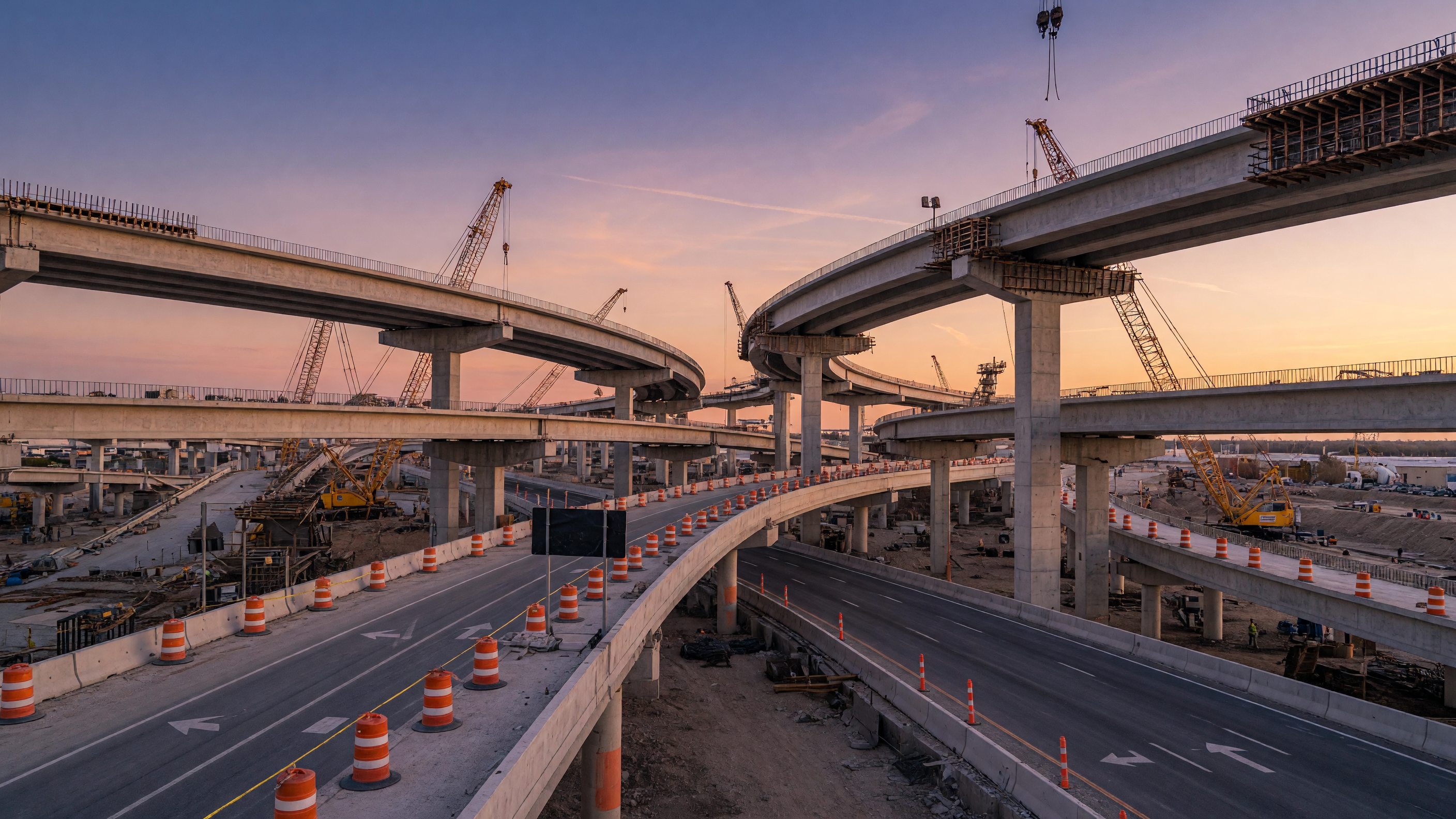
If you live in Boerne, Fair Oaks Ranch, northwest San Antonio, or anywhere along the I-10 west corridor, you have felt the construction. Lane closures, detours, noise, and frustration have become part of the daily commute [7]. It is easy to look at the disruption and wonder whether the region's growth has stalled.
The data says otherwise. The massive rebuild of the Loop 1604 and Interstate 10 interchange — a $1.4 billion project by TxDOT — is one of the clearest infrastructure signals in the San Antonio region [1]. It reflects current congestion, an outdated interchange design, safety concerns, and long-term expectations for continued population and traffic growth west and northwest of San Antonio.
For Hill Country homeowners, and for buyers considering communities along this corridor, the project is more than a construction headache. It is a signal about where regional growth is moving — and why state and regional planners are betting heavily on it.
Executive Summary
Here is the short version: the San Antonio housing market is soft right now. Inventory is up, days on market are longer, and some sellers are adjusting expectations. That is real, and it would be dishonest to pretend otherwise. But market conditions are not the same as market trajectory. In my assessment, the long-term outlook for home values in the northwest San Antonio and Hill Country corridor remains strong — and one of the most important indicators of that is the $1.4 billion investment the state is making in the I-10 and Loop 1604 interchange. Large-scale infrastructure spending of this magnitude does not happen in regions that planners expect to stagnate. This post explains, in detail, why I believe the data supports that view.
The Interchange Was Built for a Different San Antonio
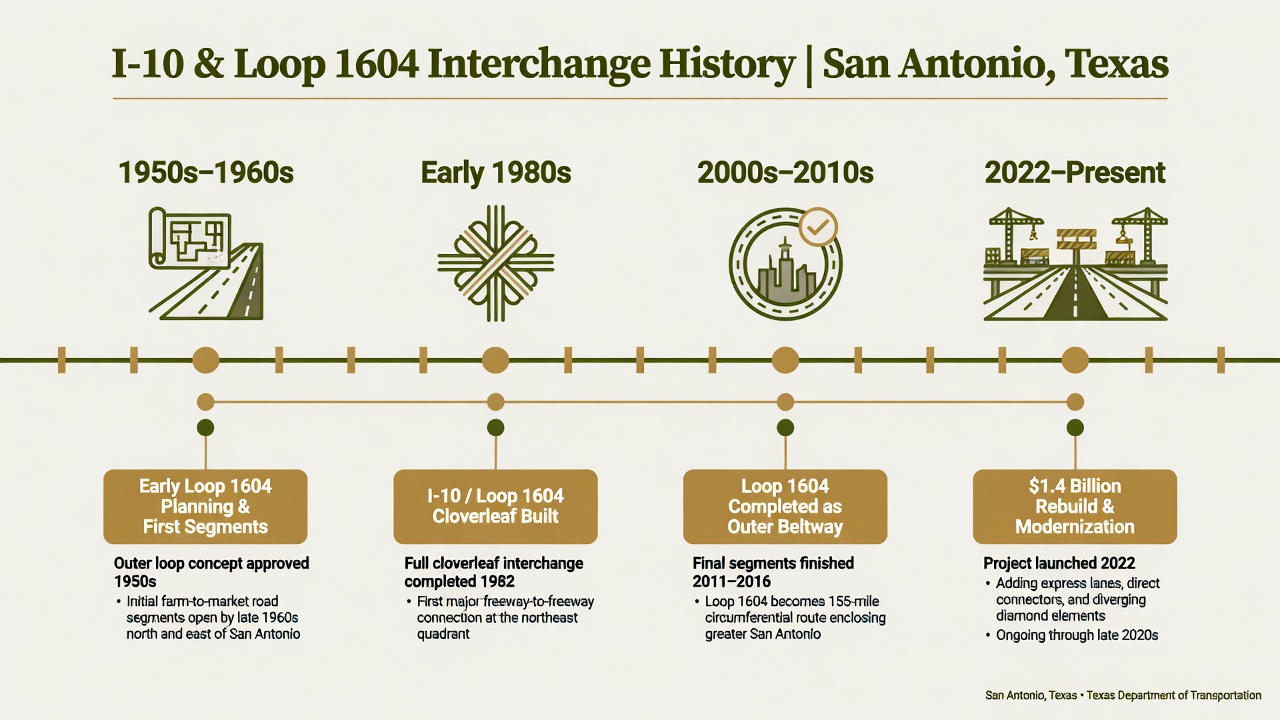
Loop 1604 was not originally conceived as the high-volume outer beltway it has become today. Planning for an outer loop around San Antonio dates back to the 1950s, and construction of early segments began in the 1960s [3]. The northern half of Loop 1604 was completed over a period when northwest San Antonio was far less developed than it is today [3].
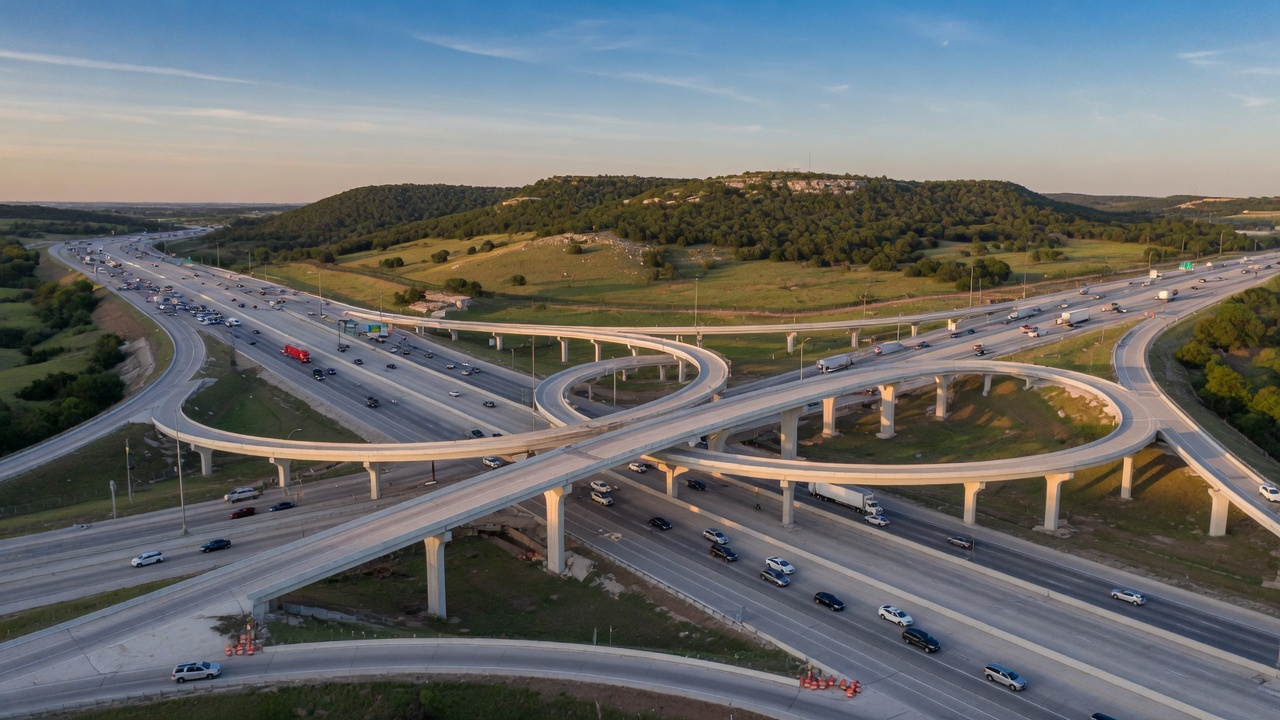
The Interstate 10 and Loop 1604 interchange itself largely reflects planning and construction from the early 1980s, long before the explosive growth of areas such as La Cantera, The Rim, UTSA, northwest Bexar County, Boerne, Fair Oaks Ranch, and Kendall County [4][5]. The original design was a cloverleaf-style interchange — a common pattern for that era, but one that creates dangerous weaving conflicts as traffic volumes increase.
The interchange was adequate for its time. It is not adequate for today.
That historical context matters. The current interchange was not merely being "improved." It was being replaced because the original design belonged to a very different version of San Antonio.
Why This Project Matters
Corridor Map
A simplified view of the I-10 west corridor and its key anchors, from Boerne in the Hill Country to the Medical Center east of the interchange.
The Loop 1604 North Expansion is a $1.4 billion, 23-mile transportation project designed to improve mobility, reduce congestion, and enhance safety along one of the busiest corridors in the San Antonio region [1]. The project includes widening Loop 1604 from a four-lane expressway to a ten-lane expressway with high-occupancy vehicle lanes, auxiliary lanes, and improved entrance and exit ramps [1][2].
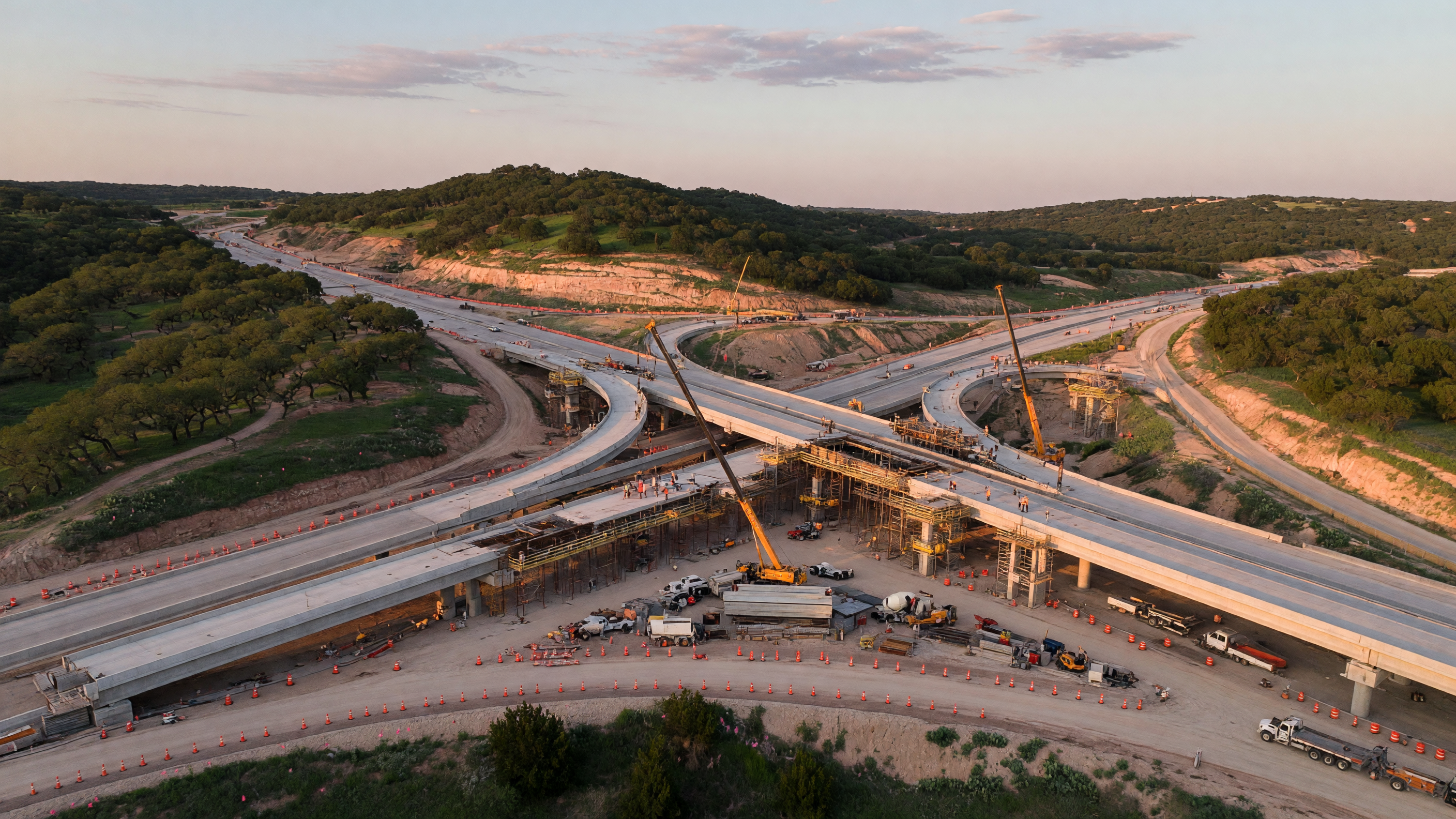
One of the most important pieces is the complete reconstruction of the Loop 1604 and Interstate 10 interchange. TxDOT's project replaces the older cloverleaf with a modern five-level direct-connect interchange intended to reduce weaving, improve safety, and move traffic more efficiently between Loop 1604 and Interstate 10 [1][2].
This is not a minor widening project. It is a generational infrastructure investment — the kind of project that state and regional planners undertake when they expect a corridor to remain busy and growing for decades.
The population numbers confirm that expectation. As the consolidated data below shows, all three Hill Country counties have grown meaningfully since the 2020 Census — Kendall County grew 20.3%, Comal County grew 29.6%, and Bexar County grew 7.5%.
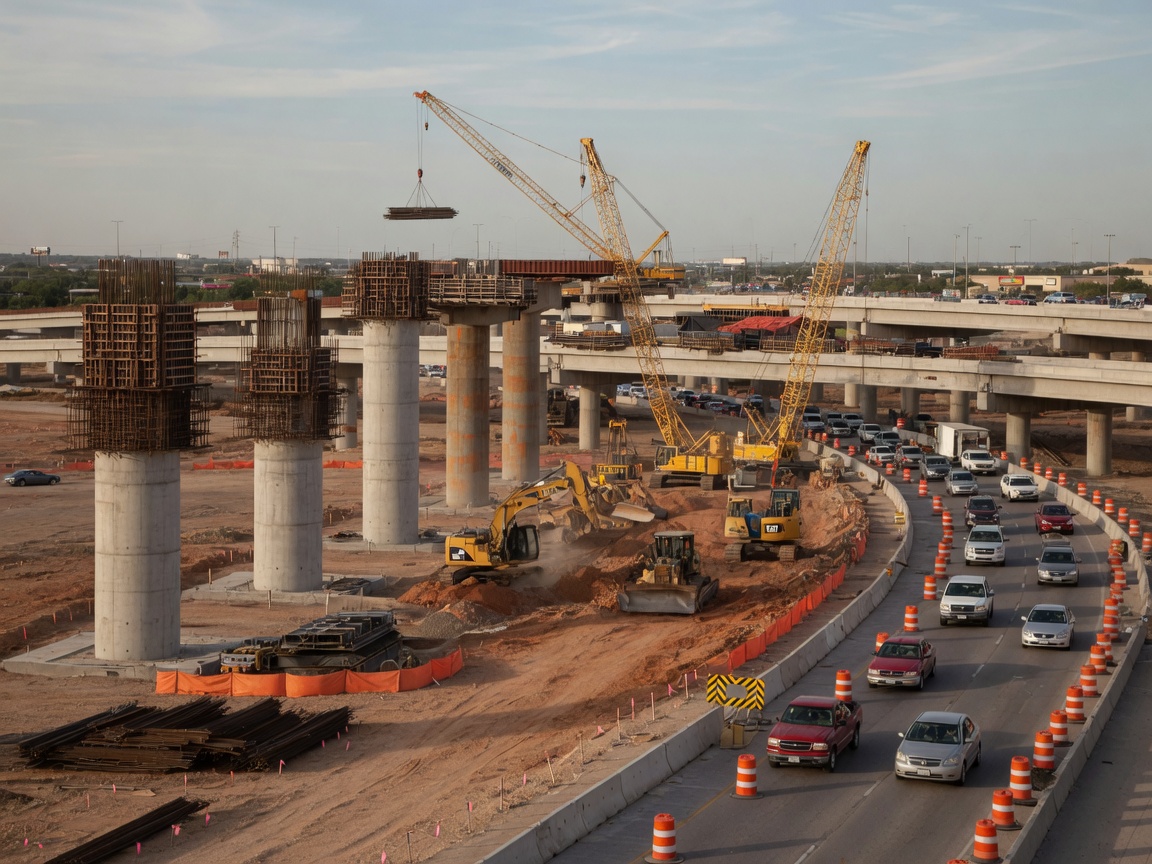
The construction phase is real and ongoing [7]. Anyone who regularly drives through the corridor knows the daily frustrations. But large infrastructure projects have a lifecycle, and this one is moving forward at a pace that reflects the urgency TxDOT places on the corridor.
What the Finished Interchange Will Look Like
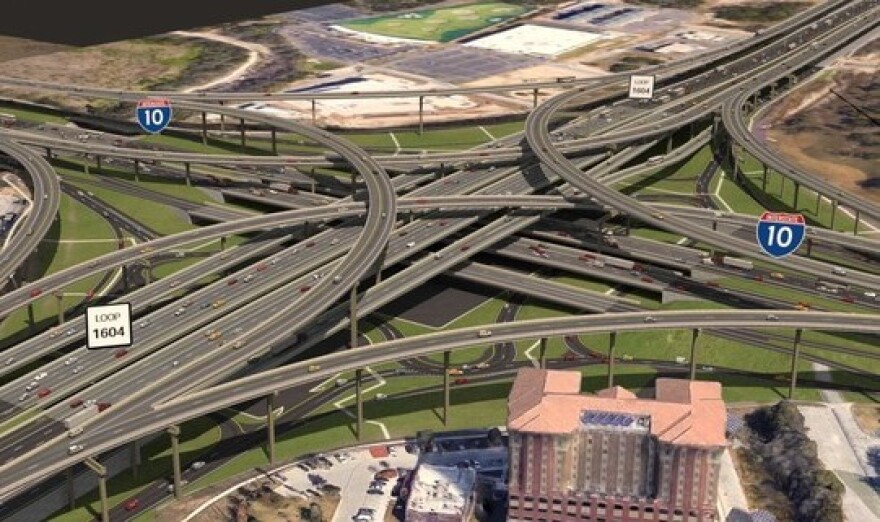
TxDOT's project is officially designated as the Interstate 10–Loop 1604 Interchange reconstruction, and it is one of the most complex interchange projects in the state. The scope is specific and significant.
The new interchange is a five-level direct-connect stack — replacing the old cloverleaf with modern flyover ramps that eliminate the weaving patterns responsible for collisions and bottlenecks. The design carries six general-purpose mainlanes (three in each direction) through the interchange on both I-10 and Loop 1604, with additional pavement pre-built for future high-occupancy vehicle (HOV) lane extensions [1][2].
Eight flyover ramps connect the two highways at the new interchange. The final ramp — the project's eighth — opened to traffic in February 2026, marking a major milestone [15][16]. TxDOT has described it as the tallest flyover ramp in the San Antonio region [16]. The flyover connections now provide direct, non-stop movement between Loop 1604 and I-10 without the stop-and-go conflicts of the old design.
The interchange itself represents a $463 million investment within the larger $1.4 billion Loop 1604 North Expansion Program [1][15]. Construction at the interchange began in July 2022 [17]. While the flyover ramps are now complete, the broader 23-mile corridor project — widening Loop 1604 from four to ten lanes with HOV lanes, auxiliary lanes, and improved ramps between SH 16 and I-35 — continues toward phased completion, with major segments scheduled to come online through 2028 and some related work extending into 2029 [1][17].
In practical terms, the finished product is a modern, high-capacity interchange designed to serve projected traffic volumes through 2045 and beyond — when TxDOT expects daily traffic on the Loop 1604 corridor to roughly double from current levels [6].
Segment Breakdown
TxDOT divides the Loop 1604 North Expansion into six segments spanning 23 miles from SH 16 to I-35. The table below summarizes each segment's scope and current status.
| Segment | Description | Status / Estimated Completion |
|---|---|---|
| Segment 1 | SH 16 to I-10 | Under construction |
| Segment 2 | Loop 1604 / I-10 interchange | Estimated completion 2028 |
| Segment 3 | I-10 eastward (to Sonterra Blvd area) | Under construction |
| Segment 4 | Sonterra Blvd to UE 518 | Under construction |
| Segment 5 | UE 518 to UE 521 | Under construction |
| Segment 6 | UE 521 to I-35 | Estimated completion 2029 |
Major segments are scheduled to come online in phases through 2028, with some related work extending into 2029. Source: TxDOT.
What Changes for Commuters?
The I-10/Loop 1604 interchange currently handles roughly 250,000 drivers daily, and that number is projected to double by 2045 as the region continues to grow [San Antonio Report]. TxDOT is not designing this interchange for today's traffic alone. The rebuild expands the corridor from four lanes to ten, including dedicated high-occupancy vehicle lanes, and replaces the old cloverleaf with a five-level interchange designed to move volume at a scale the current configuration simply cannot.
The practical impact for daily commuters is significant. TxDOT projects the rebuilt interchange will cut congestion by 76% compared to pre-construction conditions [San Antonio Report]. For anyone who currently sits through the I-10/1604 merge during peak hours, that is a material change — not a incremental improvement, but a fundamental redesign of how the two highways connect.
That is the point. TxDOT is building for the demand that is already arriving, not waiting for traffic to become unmanageable before acting. For people relocating to the Hill Country, the infrastructure is being sized for the growth that is already underway.
Not just flyovers
The rebuild extends well beyond the main roadway and interchange flyovers. Underpass improvements include redesigned turnarounds and roundabouts that replace awkward U-turn movements with continuous flow. The project adds improved parking configurations at key access points, a new VIA Park & Ride bus lane and platform to support transit ridership, dedicated bicycle parking, and EV charging stations. Taken together, these elements signal that the corridor is being designed as a multi-modal mobility hub — not simply more concrete for cars.
Regional Population Growth Supports the Investment
Infrastructure does not happen in a vacuum. State and regional planners do not commit $1.4 billion to a corridor based on current traffic alone. They invest based on growth projections — and the projections for the San Antonio region are unambiguous.
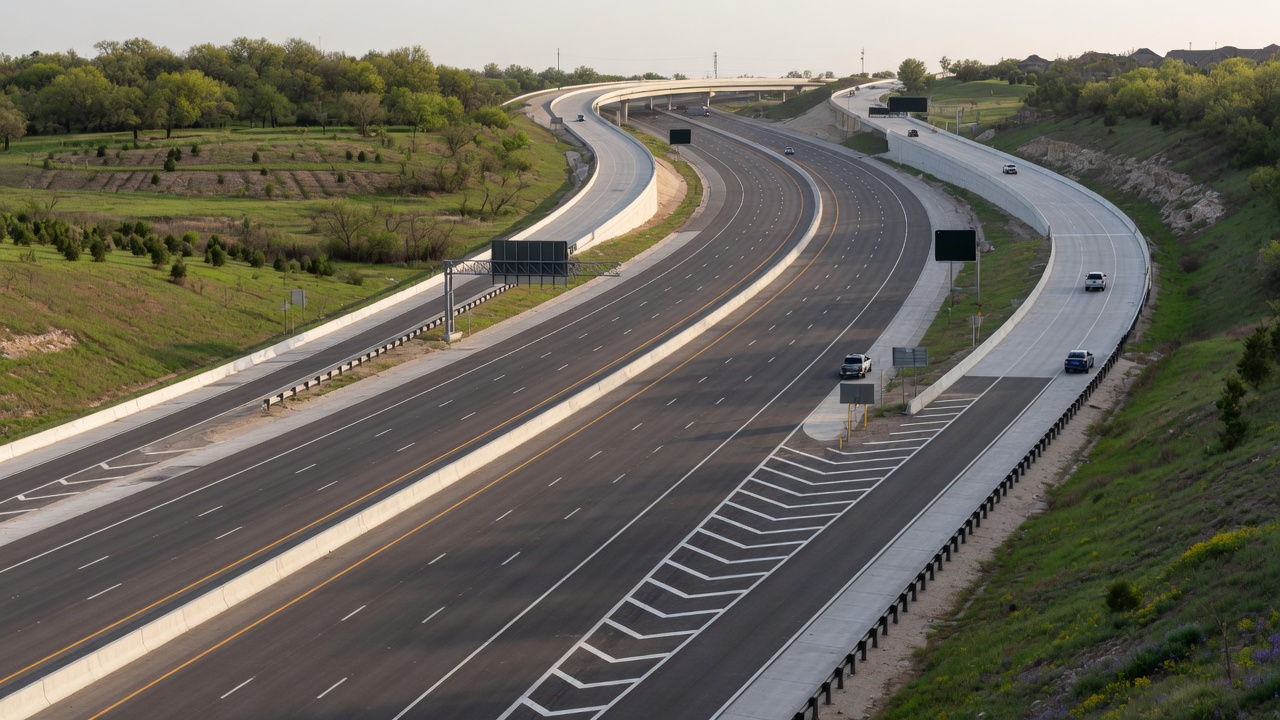
The Alamo Area Metropolitan Planning Organization's long-range planning documents project major continued population growth across the San Antonio region through 2050 [8][9]. The region is projected to grow substantially, with particularly strong expansion expected in fast-growing counties such as Kendall, Comal, Guadalupe, and Bexar [8][9]. The same regional planning framework projects daily vehicle miles traveled to rise sharply in the decades ahead [8].
Recent Census estimates support the trend. The table below consolidates population figures from the U.S. Census Bureau for the three counties most directly affected by the I-10/Loop 1604 corridor [10][12][13]. Kendall County grew 20.3% from 2020 to 2025, Comal County grew 29.6%, and Bexar County grew 7.5%. These are recorded population changes from the U.S. Census Bureau, not projections.
The broader San Antonio-New Braunfels metro area has also continued to grow, rising from roughly 2.6 million people in 2021 to more than 2.8 million by 2025, according to Federal Reserve Economic Data (series SATPOP) using U.S. Census Bureau population estimates [14]. The Texas Demographic Center's Vintage 2024 projections confirm this trajectory, forecasting continued metro-area growth through 2050 [30]. That kind of sustained metro-wide growth generates real transportation demand — and it is exactly the growth pattern that drives major infrastructure investment.
Hill Country Population Growth (Census & Estimates)
| County | 2020 Census | 2025 Est. | Change | Median Home Value (2020–2024) |
|---|---|---|---|---|
| Kendall County | 44,279 | 53,289 | +20.3% | $512,700 |
| Comal County | 161,501 | 209,166 | +29.6% | $427,200 |
| Bexar County | 2,009,324 | 2,160,088 | +7.5% | $262,200 |
Source: U.S. Census Bureau QuickFacts, 2020 Census to 2025 estimates.
Median Home Values: Hill Country Counties, 2021–2025
The table below shows approximate median home values across the three counties most affected by the I-10/Loop 1604 corridor. Figures reflect a synthesis of U.S. Census Bureau American Community Survey estimates, Redfin market data, and San Antonio Board of Realtors (SABOR) quarterly reports [24][25][26][27][28]. All figures are approximate and represent the general trajectory rather than precise monthly snapshots.
| County | 2021 | 2022 | 2023 | 2024 | 2025 (Mid-Year) |
|---|---|---|---|---|---|
| Kendall County Boerne, Fair Oaks Ranch | $440,000 | $535,000 | $490,000 | $513,000 | $555,000 |
| Comal County New Braunfels, Garden Ridge | $360,000 | $425,000 | $399,000 | $427,000 | $445,000 |
| Bexar County San Antonio, Leon Valley | $270,000 | $335,000 | $280,000 | $280,000 | $280,000 |
What the data shows: Kendall and Comal Counties — the Hill Country counties most directly affected by the I-10/Loop 1604 corridor — have seen median home values rise 20–25% since 2021 despite a broader market correction in 2023. Bexar County, which is more urban and price-sensitive, peaked in 2022 and has since stabilized. The Hill Country premium has widened, not narrowed, over this period. Sources: U.S. Census Bureau ACS [24][25][26], Redfin market data [27], SABOR quarterly reports [28].
The US 281 example does not prove home appreciation, but it shows that major highway projects can materially alter mobility patterns in north-side growth corridors.
Why This Matters to Hill Country Homeowners
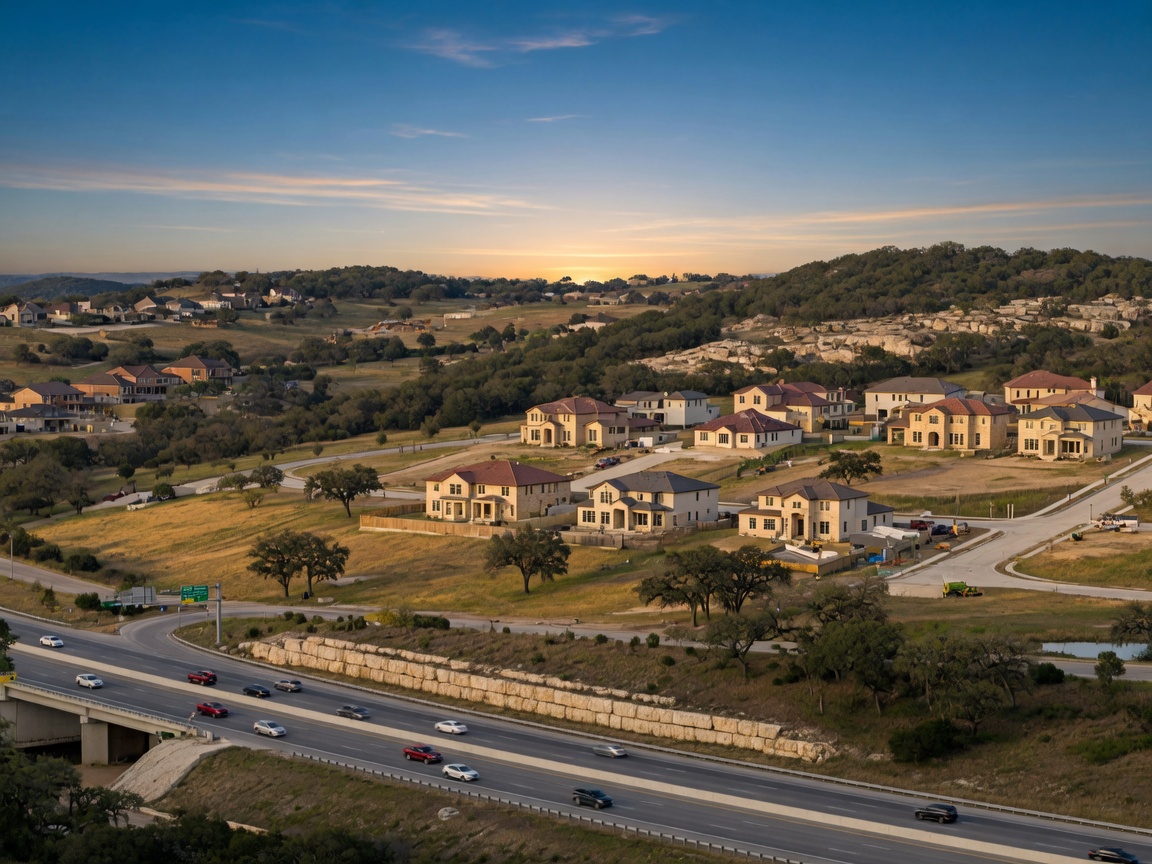
For Hill Country homeowners, the Loop 1604 and I-10 rebuild is a mixed reality. In the short term, it means construction delays, closures, noise, and frustration [3]. Anyone who regularly drives through the corridor understands that.
But in the long term, infrastructure follows growth. When the state commits more than a billion dollars to a major corridor, it is because planners expect that corridor to matter for decades. Improved access to job centers, medical facilities, retail hubs, San Antonio International Airport, UTSA, La Cantera, The Rim, and the broader metro area can help support long-term housing demand.
That does not mean every property will automatically appreciate. Real estate values still depend on interest rates, inventory, affordability, property condition, schools, taxes, water, insurance, and the broader economy. Anyone who tells you that a road project guarantees appreciation is selling something.
But the infrastructure signal is still meaningful. Texas is investing heavily in the corridor because the region is growing, and because officials expect the movement of people, jobs, and vehicles to continue. That kind of long-term commitment from the state is one of the more reliable indicators of sustained demand in a region.
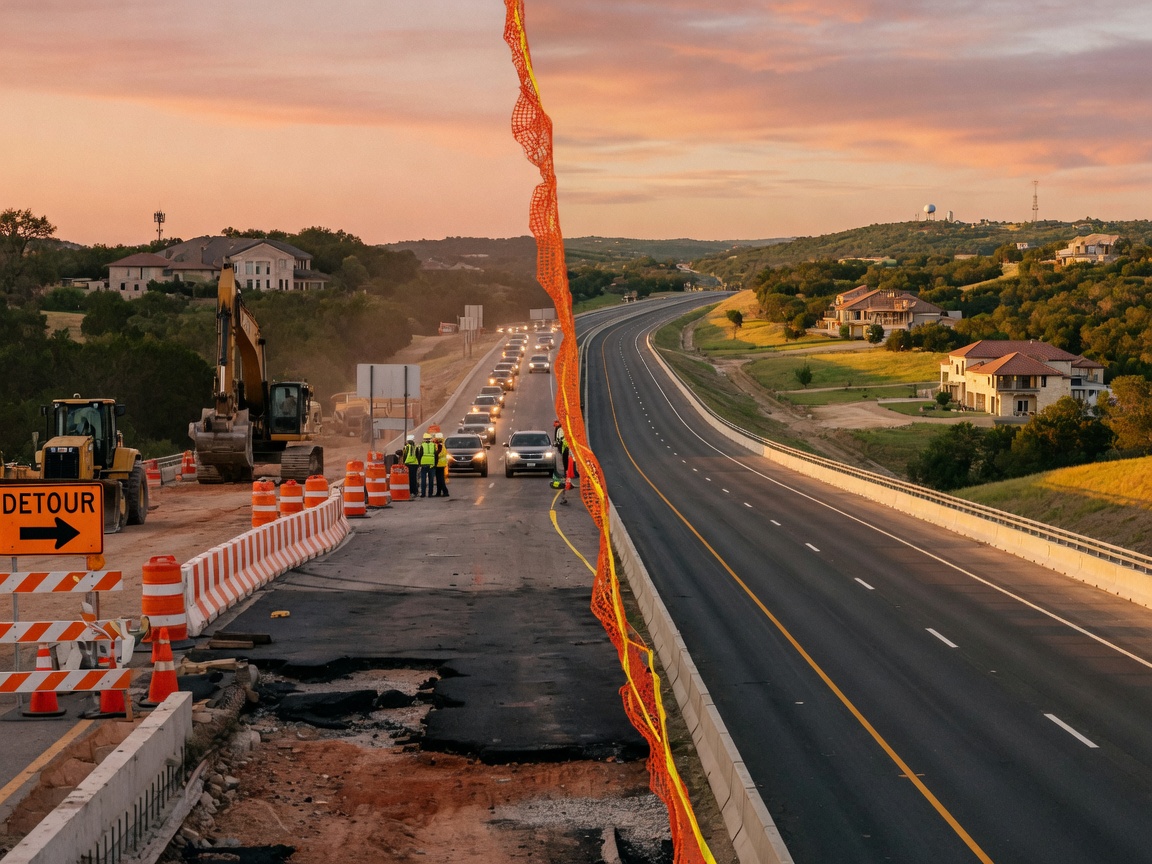
Following a Proven Pattern: The US 281/Loop 1604 Precedent
The I-10/Loop 1604 rebuild is not the first major interchange project in the San Antonio region. A direct predecessor — the US 281 and Loop 1604 interchange improvements on the north side — offers a useful case study for what happens when the construction ends and the new infrastructure is fully operational.
The US 281 interchange at Loop 1604, located in the Stone Oak corridor north of San Antonio, underwent a major construction phase that included flyover ramps and corridor expansion. The initial primary phase was completed around 2012 at a cost of approximately $109 million, with subsequent improvements continuing through 2021 as part of the broader US 281 North expansion from Loop 1604 to Borgfeld Drive [21][22].
The results are documented. A 2025 study by the Texas A&M Transportation Institute (TTI) found that while total miles traveled in the San Antonio area increased by 14% over the past decade, regional traffic delays decreased by 21% — driven in significant part by the US 281 improvements [21]. The US 281 corridor, formerly one of the most congested road segments in the state, dropped dramatically on the TTI's annual list of Texas's most congested roadways [21]. TxDOT estimated that commuters on the US 281 corridor save approximately $350 per year in time and fuel costs as a direct result of the completed infrastructure [22].
The development pattern around the US 281/Loop 1604 interchange also followed a predictable trajectory. Before the improvements, the Stone Oak area was already growing but constrained by congestion. After completion, the corridor saw continued residential expansion, commercial development, and retail growth — with proximity to the improved interchange remaining a primary driver of property values [23]. The US 281 north corridor transformed from one of the region's worst bottlenecks into a functional, high-capacity artery that supported decades of subsequent growth.
The I-10/Loop 1604 project follows the same playbook: replace outdated infrastructure, eliminate safety hazards, add capacity, and serve a corridor that planners expect to keep growing. The US 281 precedent suggests that the benefits are real, measurable, and arrive on a predictable timeline once construction concludes. For the I-10 west corridor, the full benefit is expected as major segments come online in phases through 2028, with some related work extending into 2029.
Why This Matters to Buyers
For buyers relocating from California or other high-cost states, the project offers a useful lesson: do not evaluate a Hill Country home only by the house, the lot, the view, or the current commute. Evaluate the corridor.
A home in Boerne, Fair Oaks Ranch, northwest San Antonio, or the I-10 west corridor is connected to a much larger regional growth pattern. That pattern includes population growth, employment growth, expanded infrastructure, and continued outward movement from San Antonio into Hill Country communities. If you are comparing communities along this corridor, see our city comparison for a side-by-side look at Boerne, Fair Oaks Ranch, and San Antonio — and our cost of living breakdown for the full financial picture of relocating to this region.
The I-10/1604 rebuild is not a guarantee of future home appreciation. No infrastructure project can provide that. But it is evidence that state and regional planners expect this side of San Antonio to keep growing. For buyers making a long-term bet on a community, that is worth understanding.
When I work with California buyers evaluating communities along this corridor, I make sure they understand both the short-term construction timeline and the long-term investment thesis. The construction will end. The infrastructure it produces will serve the region for the next 30 to 40 years.
What This Means for Buyers and Sellers
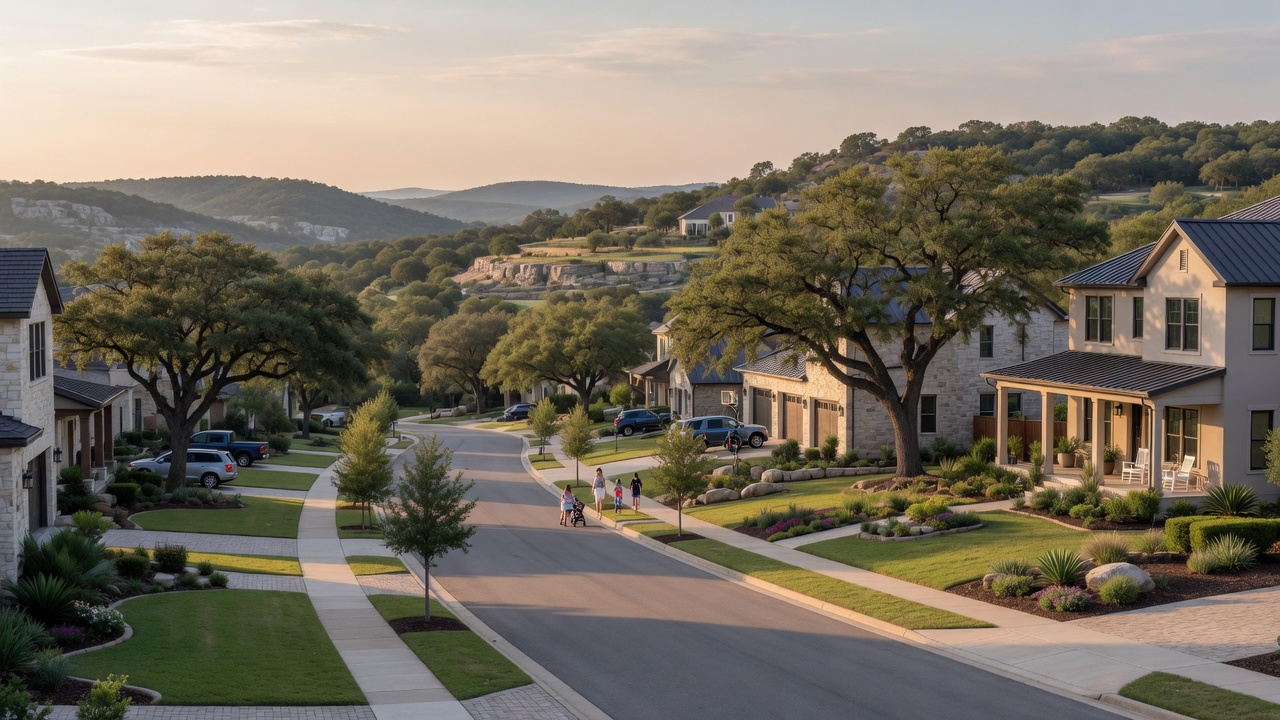
The I-10/Loop 1604 interchange rebuild is not an abstract infrastructure story. It has direct implications for people buying or selling property along this corridor now.
Corridors with the strongest appreciation potential
Properties closest to the interchange and along the I-10 west corridor between Loop 1604 and Boerne stand to benefit most from improved accessibility once the full project is operational. The communities along this stretch — including the Dominion, Cross Mountain, Leon Springs, and the western edge of the loop near the Rim and La Cantera — will see reduced commute friction to downtown San Antonio, the airport, and the northwest employment centers. Reduced commute time is one of the most consistent drivers of property value premiums in suburban markets, and the interchange completion directly addresses the worst bottleneck on this corridor.
Neighborhoods that benefit from reduced commute times
For residents of Boerne and Fair Oaks Ranch, the project primarily improves access to I-10 eastbound toward downtown and to the interchange connections with Loop 1604. Once the remaining corridor widening is complete, commuters from these communities should see more reliable travel times to the Medical Center, the airport, UTSA, La Cantera, and the broader northwest employment zone. The improvements are designed to reduce travel times across North Bexar County by more than 76% compared to pre-construction conditions [1].
When the full benefit arrives
The flyover ramps — the most visible and impactful piece — are now complete as of February 2026 [15][16]. The remaining work on the 23-mile Loop 1604 corridor (mainlane widening, auxiliary lanes, HOV lanes, and ramp improvements across various segments) is scheduled for completion in phases through 2028, with some related work extending into 2029 [1]. Drivers should expect continued construction activity through that timeline, with progressive improvements as individual segments open. The full operational benefit — the interchange plus the widened corridor working together — will not be fully realized until the entire project is complete.
Buying now versus waiting
Buyers evaluating Hill Country property along this corridor face a practical question: does it make sense to buy during active construction, or wait until the project is finished?
There is no single right answer. Buying during construction means lower competition, potentially more negotiating leverage, and the possibility of capturing appreciation as the project nears completion — but it also means living with construction delays and detours for one to two more years. Waiting means a cleaner commute from day one, but likely higher prices and more competition once the project is done and the corridor's improved accessibility is fully demonstrated.
The historical pattern from comparable projects suggests that the most significant value gains tend to occur in the years surrounding project completion, not years before or after. For buyers with a five-to-ten-year horizon, the current construction period may represent a window. For sellers, the completion timeline provides a concrete milestone to plan around.

How Buyers Should Use This Information
If you are using this post to evaluate a purchase along the I-10 or Loop 1604 corridor, these are the practical steps worth taking before you make an offer.
- Test-drive the commute during peak periods — do not rely on off-peak drive times
- Compare neighborhoods west and northwest of San Antonio — the rebuild changes access patterns differently by area
- Evaluate tax rates by jurisdiction — Kendall, Comal, and Bexar counties have different rate structures
- Check school district boundaries — they do not always follow county lines
- Review HOA restrictions — they vary widely and can affect what you do with the property
- Consider construction-period inconvenience versus long-term access — the near-term disruption is real, but the completed project fundamentally changes commute times
How Sellers Should Use This Information
Sellers and their agents can reference the I-10/Loop 1604 rebuild in listing materials and conversations with buyers, but the framing matters. Accurate, defensible positioning protects both the seller and the listing agent.
- Frame the listing around long-term access — the completed interchange improves commute times to major employment centers, not just current drive times
- Reference regional job centers — the rebuild connects Hill Country neighborhoods to downtown, the medical center, the airport, and the far west side more efficiently
- Lean into Hill Country demand — the infrastructure investment confirms what the market already shows: people want to live here
- Highlight improving mobility — the HOV lanes, VIA Park and Ride, and multimodal features signal a modernizing corridor, not just a road widening
- Avoid claiming the project guarantees appreciation — frame it as improved access and infrastructure quality, not a price prediction
Any listing language referencing the I-10/Loop 1604 project should be reviewed against applicable TREC advertising rules and TARP guidelines before publication.
The Bottom Line
The Loop 1604 and Interstate 10 rebuild is not just a road project. It is a regional growth signal.
The project is being built because the old infrastructure was no longer suited to the volume, safety demands, and long-term growth expectations of northwest San Antonio and the Hill Country corridor. For Hill Country homeowners, it supports the argument that this region remains positioned for long-term demand. For buyers, it reinforces the importance of looking beyond today's construction delays and understanding what the investment says about where the San Antonio region is headed.
The short-term pain is real. The long-term signal is also real. Texas is building for the growth it expects to arrive.
Frequently Asked Questions
Why is the Loop 1604 and I-10 interchange being rebuilt?
The interchange is being rebuilt because the old cloverleaf design is outdated for current and projected traffic volumes. TxDOT's project is intended to improve safety, reduce congestion, and create more efficient direct connections between Loop 1604 and Interstate 10. The modern five-level direct-connect interchange eliminates the weaving patterns that cause collisions and bottlenecks in cloverleaf designs.
Was the project built because the area was already at capacity?
Not only because of current congestion. The project also reflects long-term traffic and population forecasts. Public reporting has cited TxDOT officials saying daily traffic on Loop 1604 was expected to roughly double by 2045 [6]. The investment is forward-looking — designed to serve projected demand, not just current conditions.
What does this have to do with Boerne and the Hill Country?
The growth affecting the corridor is not limited to San Antonio. New residential development north of Loop 1604 and along Interstate 10 into Bexar and Kendall Counties is adding traffic and increasing regional connectivity needs [7]. Boerne, Fair Oaks Ranch, and surrounding Hill Country communities are part of the same growth pattern that the interchange rebuild is designed to accommodate.
Is this a sign that Hill Country home values will rise?
It is not a guarantee. Infrastructure investment does not automatically cause home values to rise. However, major transportation investment is one of the strongest indicators that state and regional planners expect sustained growth in a corridor. For the Hill Country, that is a positive long-term signal — even if short-term market conditions remain mixed.
When will the construction be finished?
The full Loop 1604 North Expansion project is being delivered in phases, with work continuing across the 23-mile corridor. Individual segments and the I-10 interchange reconstruction have their own timelines, and TxDOT publishes updated schedules on the project page. Drivers should expect construction activity to continue for several more years, with progressive improvements as segments are completed.
Why is this investment often a sign that planners expect continued population, employment, and traffic growth?
Major transportation investment is often a sign that planners expect continued population, employment, and traffic growth. That can support long-term housing demand, especially in desirable growth corridors.
Why should relocating buyers care about this project?
Relocating buyers should care because transportation access affects daily life, commute patterns, resale potential, and long-term convenience. The I-10/1604 project shows that northwest San Antonio and the Hill Country corridor are part of a major regional growth plan.
What is the main takeaway for homeowners?
The main takeaway is that the state is investing heavily in infrastructure serving the northwest San Antonio and Hill Country growth corridor. For homeowners, that supports the case that the area remains strategically important over the long term.
What is the main takeaway for buyers?
The main takeaway is to evaluate not just the home, but the corridor. A home's long-term appeal is influenced by access to jobs, medical care, shopping, airports, schools, and regional transportation infrastructure.

Written by
Bill Ross
Hill Country Homesteads Group, brokered by KW Boerne
Bill Ross is a Texas real estate agent with nearly four decades in high-tech sales and a network of 1,100+ California real estate agents for coordinated cross-state transactions. Featured in national coverage discussing his family's relocation from Silicon Valley to the Texas Hill Country.
Related Guides
City Comparison for California Relocators
Boerne, Fair Oaks Ranch, and San Antonio compared side by side for families, retirees, and remote workers.
Cost of Living: California vs Texas
Housing, taxes, insurance, utilities, and daily expenses compared with real numbers.
Why California Buyers Underestimate Texas Property Taxes
Prop 13 vs Texas tax rates, homestead exemptions, and how to budget accurately.
90-Day Relocation Checklist
A step-by-step countdown from listing your California home to closing in Texas.
Data Sources
Population and demographic data cited in this article come from the following primary sources:
- U.S. Census Bureau — Population Estimates Program. Annual county and metro population estimates used for 2021–2025 growth figures. census.gov
- U.S. Census Bureau — QuickFacts. County-level 2020 Census counts and 2024 estimates for Kendall, Comal, and Bexar Counties. census.gov
- Texas Demographic Center — Vintage 2024 Population Projections. State-produced county population projections through 2060. demographics.texas.gov
- FRED Economic Data — San Antonio-New Braunfels MSA Population. Metropolitan statistical area population series (SATPOP), sourced from Census estimates. fred.stlouisfed.org
- Alamo Area Metropolitan Planning Organization — Mobility 2050. Long-range transportation planning projections for the San Antonio region. alamoareampo.org
- U.S. Census Bureau — American Community Survey (ACS) 1-Year Estimates. Median home value data for county-level property value trends. census.gov
- Redfin Data Center. Median sale price data for San Antonio and surrounding counties. redfin.com
- San Antonio Board of Realtors (SABOR). Quarterly and annual housing market reports for the San Antonio metropolitan area. sabor.com
Sources
- [1] Texas Department of Transportation — Loop 1604 Project Overview. txdot.gov
- [2] Texas Department of Transportation — Loop 1604 Project Segments. txdot.gov
- [3] San Antonio Express-News — Loop 1604 Construction Coverage. expressnews.com
- [4] Texas Highway Man — Loop 1604 History. texashighwayman.com
- [5] Texas Highway Man — Loop 1604 Historical Timeline. texashighwayman.com
- [6] San Antonio Report — $291M Phase 2 of Loop 1604 Expansion Begins. sanantonioreport.org
- [7] Texas Public Radio — Full Closures at I-10/Loop 1604 Interchange. tpr.org
- [8] Alamo MPO — Mobility 2050 Section 2: Alamo Area Today. alamoareampo.org
- [9] Alamo MPO — Mobility 2050 Section 1: Introduction, Vision and Goals. alamoareampo.org
- [10] U.S. Census QuickFacts — Kendall County, Texas. census.gov
- [11] U.S. Census QuickFacts — Boerne City, Texas. census.gov
- [12] U.S. Census QuickFacts — Comal County, Texas. census.gov
- [13] U.S. Census QuickFacts — Bexar County, Texas. census.gov
- [14] FRED Economic Data — San Antonio-New Braunfels, TX MSA Population (SATPOP). fred.stlouisfed.org
- [15] Community Impact — Final Flyover Ramp Opens at Loop 1604 and I-10 Interchange. communityimpact.com
- [16] KSAT — TxDOT Opens Eighth, Final Loop 1604 Flyover Ramp. ksat.com
- [17] Texas Highway Man — Loop 1604 North Expansion Program. texashighwayman.com
- [18] KSAT — Robust Growth Projected for San Antonio Region After Pandemic. ksat.com
- [19] KSAT — Study Shows Drop in Congestion on US 281. ksat.com
- [20] TxDOT — TxDOT Projects Save San Antonio Drivers Time and Money. txdot.gov
- [21] MySA — Watch the Incredible, 20-Year Development Boom in Stone Oak. mysanantonio.com
- [22] Texas Highway Man — US 281/Loop 1604 Interchange Project. texashighwayman.com
- [23] TIA Price — Loop 1604 Flyover Ramp Opens: A Major Win for San Antonio Commuters. tamiprice.com
- [24] U.S. Census Bureau — American Community Survey (ACS) 1-Year Estimates, Kendall County. census.gov
- [25] U.S. Census Bureau — American Community Survey (ACS) 1-Year Estimates, Bexar County. census.gov
- [26] U.S. Census Bureau — American Community Survey (ACS) 1-Year Estimates, Comal County. census.gov
- [27] Redfin — San Antonio Housing Market Data. redfin.com
- [28] San Antonio Board of Realtors (SABOR) — Quarterly Housing Market Reports. sabor.com
- [29] Community Impact — Kendall County Population Increases 20.3% from 2020–2025. communityimpact.com
- [30] Texas Demographic Center — Vintage 2024 Population Projections. demographics.texas.gov